PLANTING NATIVE TREES
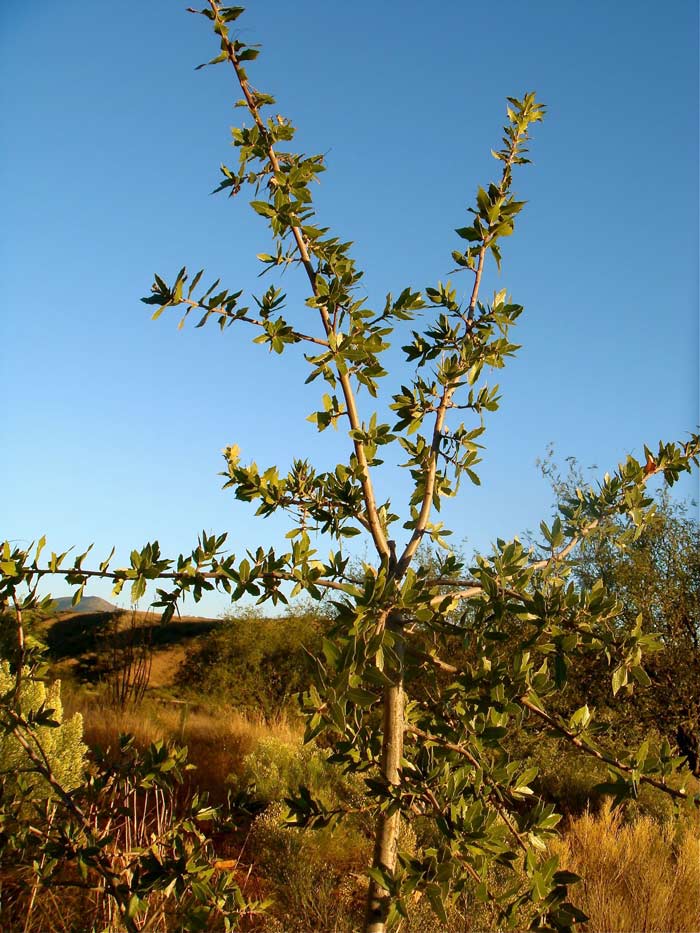
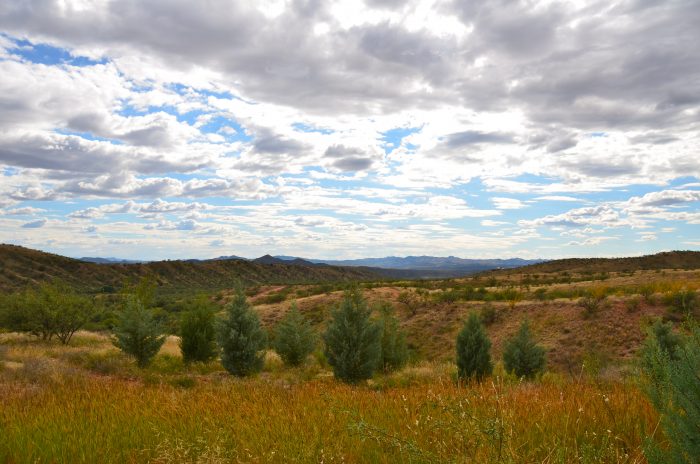
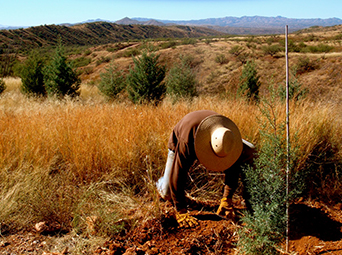
Since our arrival Raven’s Nest Nature Sanctuary in March 2008, Vincent designed a multi-faceted Ecological Restoration Strategy to create healthy, diverse and resilient Wildlife Habitats for generations to come. The trees in our Nature Sanctuary are a vital force in nature, absorbing carbon dioxide from the air through photosynthesis and thereby helping to offset the carbon footprint of humans. In exchange trees give off oxygen as a waste product helping to enrich the air. Scientifically speaking, the direct action of Planting Trees at our Nature Sanctuary has provided us with the rewarding opportunity to help offset our collective carbon footprint over the lifetime of that tree.
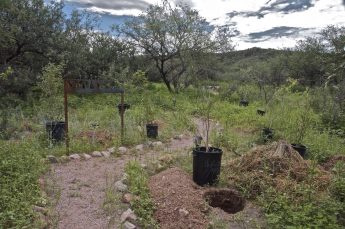
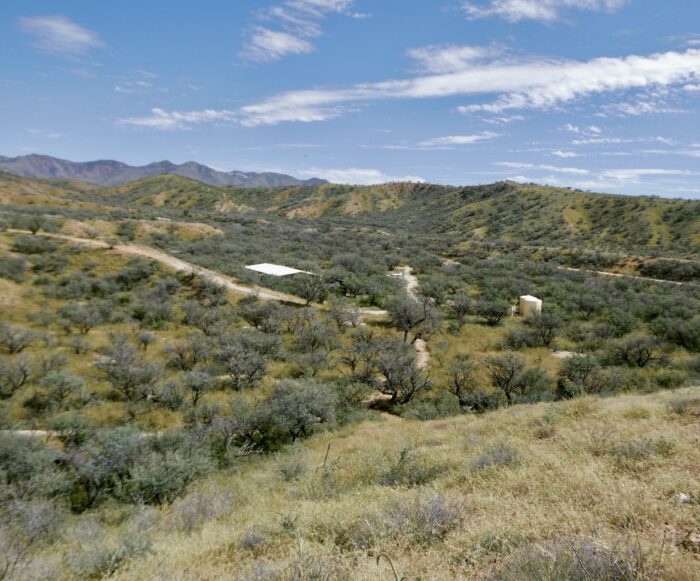
When planting and nurturing native trees, we use both our efficient 20,000-gallon Rainwater Harvesting System, and the rain water that we have collected via our Passive Rainwater HarvestingTechniques throughout the 42-acre Nature Preserve.
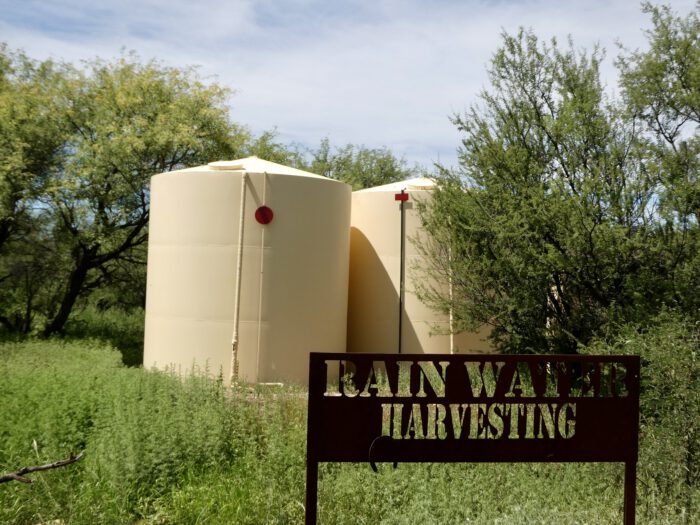
Both Monsoon and Winter precipitation help to fill the metal rainwater tanks, which in turn allow for many habitat restoration successes. Organic Compost produced from our organic food scraps, and the rich mulch from dried Mesquite leaves and non-native grasses go into and on top of every native tree that we plant. Finally, the strategic location of every planted tree is essential, helping to maximize the benefits of each species to wildlife.
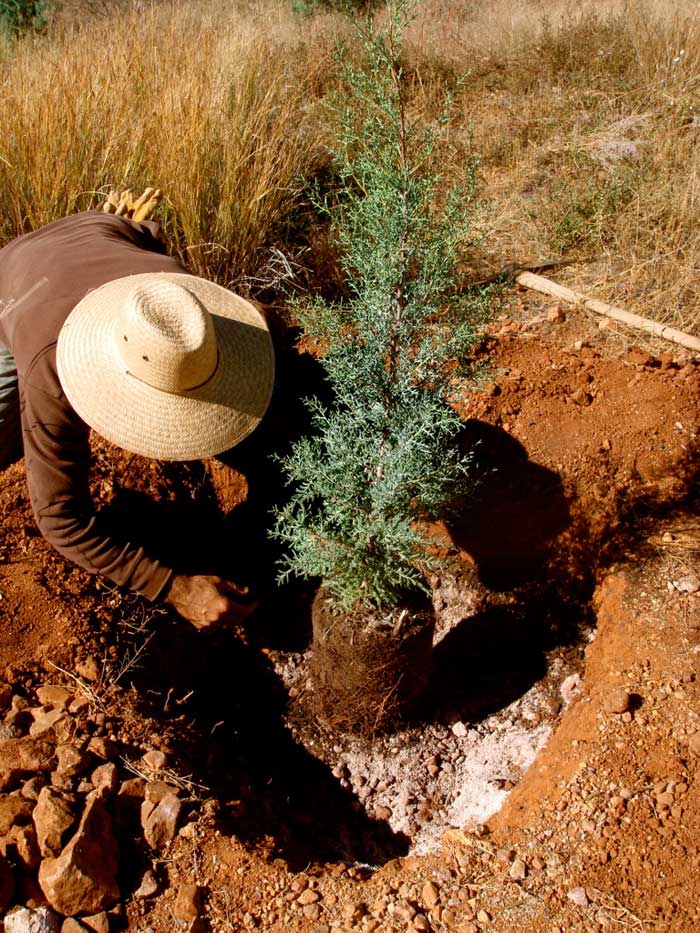
Planting trees to reduce carbon dioxide is more important than ever given the effects global warming is having on our planet! At Raven’s Nest Nature Sanctuary we are very mindful of the daily human actions that contribute to an excess of greenhouse gases, mainly Carbon dioxide (CO2), in the atmosphere and their detrimental environmental consequences. Every time we turn on the lights, drive a car, or take a flight we are unwittingly producing CO2, linked by countless scientific studies to the rise of global temperatures and major climate changes. The greenhouse gases responsible for global warming are in part measured in units of carbon dioxide or CO2. Hence, the amount of CO2 that each person is responsible for producing is termed our “Carbon Footprint”.
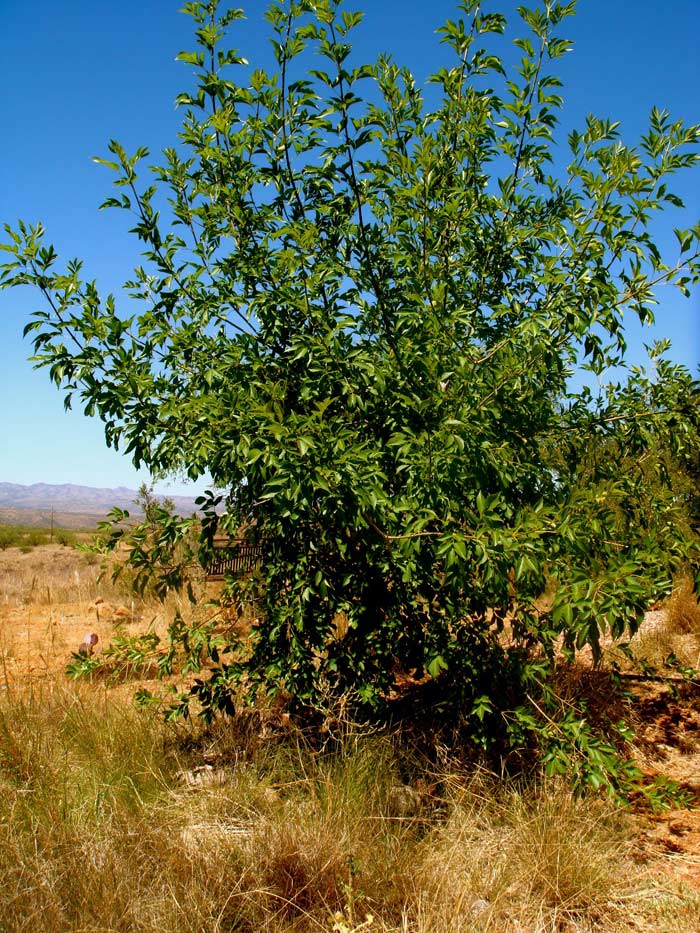
We all can modify our behaviors, making green changes – both big and small – to help reduce the amount of carbon that we place into the atmosphere. At Raven’s Nest Nature Sanctuary we strive to minimize the CO2 that we produce through a “sustainable carbon offsetting lifestyle” – planting trees, rainwater harvesting, organic gardening & composting, etc. Firmly believing that every inch of habitat is sacred, we have actively restricted the amount of land devoted to buildings and human artifices of any kind, including parking and driving areas. We have rehabilitated many formerly denuded areas into thriving wildlife habitat. Our aspiration on a daily basis is to be as carbon neutral as possible.
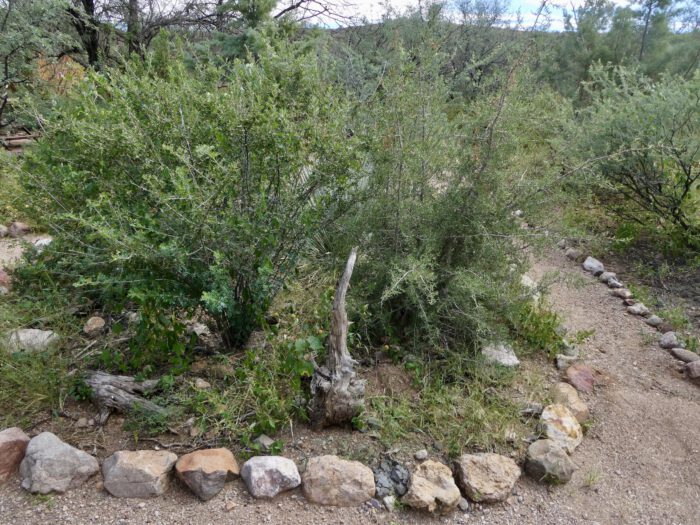
Hence, by Planting Native Trees at Raven’s Nest Nature Sanctuary we strive to:
- Help offset the Carbon Footprint – 1 mature tree can absorb one ton of carbon dioxide over the lifetime of that tree!
- Contribute to the unique Biodiversity of the Sky Islands region
- Benefit Wildlife by improving resilient Native Habitats
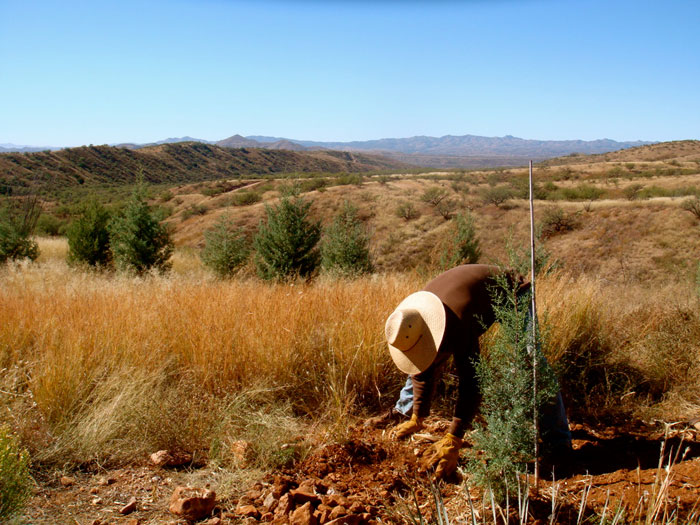
OUR TREE CHOICES & BENEFITS TO WILDLIFE
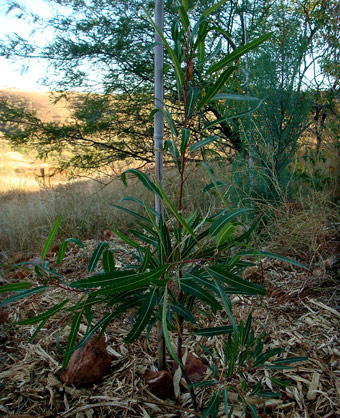
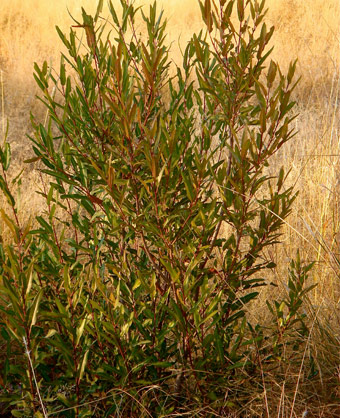
| SPECIES | EVERGREEN | FRUIT | NECTAR/SAP | SEEDS/NUTS | SHELTER |
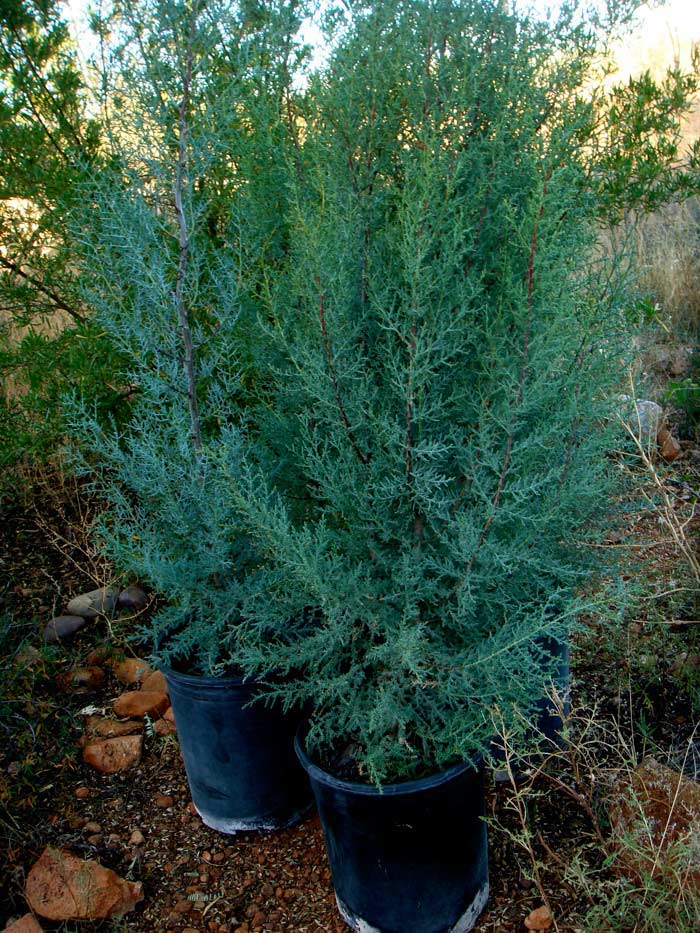
| ARIZONA CYPRESS (Cupressus arizonica) |
X | X | X | ||
| ARIZONA JUNIPER (Juniperus arizonica) | X | X | X | ||
| EMORY OAK (Quercus emoryii) |
X | X | X | X | |
| SCRUB OAK (Quercus emoryii) | X | X | X | X | |
| VELVET ASH (Fraxinus velutina) |
X | X | X | ||
| ARIZONA ROSEWOOD (Vaquelinia californica) |
X | X | X | X | |
| EVERGREEN SUMACH (Rhus choriophylla) |
X | X | X | X | X |
| DESERT WILLOW (Chilopsis linearis) |
X | X | X | ||
| YELLOW TRUMPET (Tecoma stans) |
X | X | X | ||
| MEXICAN ELDERBERRY (Sambucus mexicana) |
X | X | X | ||
| NETLEAF HACKBERRY (Celtis reticulata) |
X | X | X | ||
| WESTERN SOAPBERRY (Sapindus saponaria) | X | X |
 |
 |
 |
 |
ETHNOBOTANY LANDSCAPE BY DISCOVERY CENTER
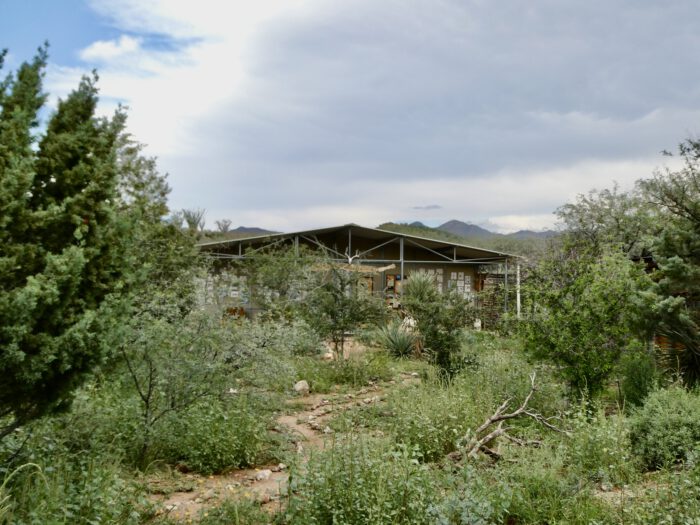
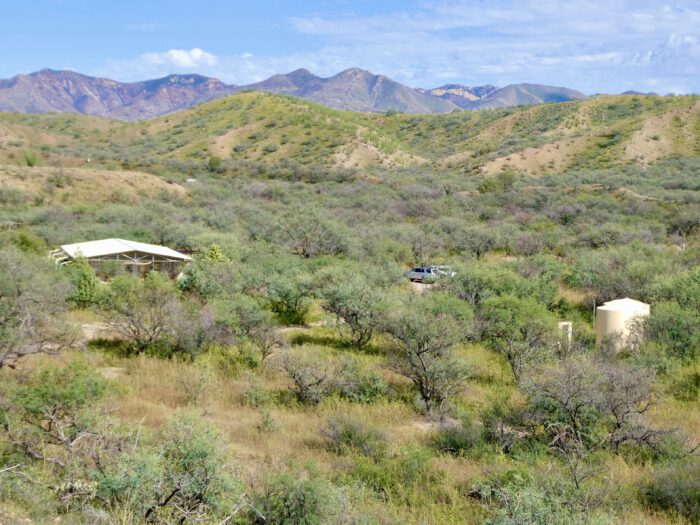
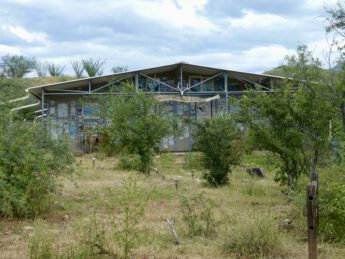
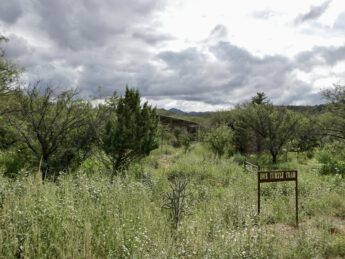
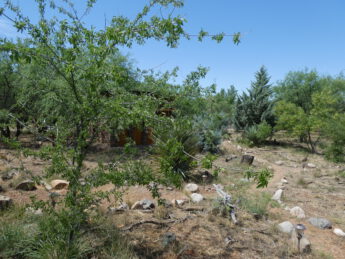
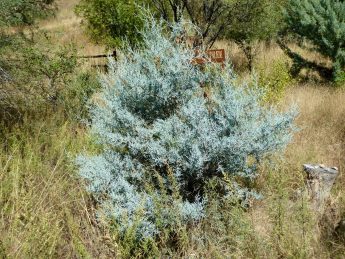
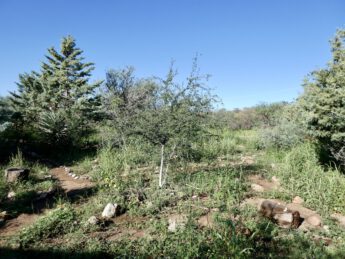
As a professional Ethnobotanist, Vincent wanted to create an Edible, Medicinal, and Useful Landscape surrounding the Sky Islands Discovery Center. Therefore, every native species he planted has important human uses. Some species provide food, others herbal medicine, while select plants produce parts useful for rope, tools, soap, aromatherapy, and other uses. Additionally, all of the species listed below support native pollinators – either as a larval food source and/or as a source of nectar. Thus, countless species of insects, butterflies in particular, as well as dashing Hummingbirds of various species are a common sight at Raven’s Nest, especially where we have performed Ecological Restoration.
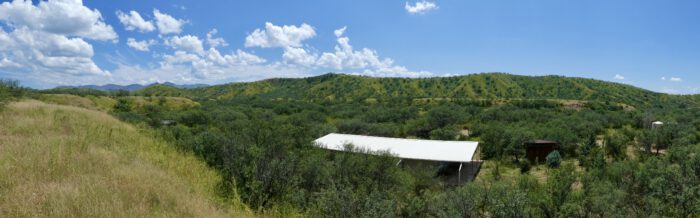
The species Vincent planted around the Sky Islands Discovery Center include:
Trees
- Scrub Oak – edible acorns, tannic acid for medicine
- Velvet Mesquite – edible pods, edible sap, firewood
- Catclaw Acacia – firewood, topical wound care from leaves
- Arizona Rosewood – wood-working
- Velvet Ash – medicine
- Netleaf Hackberry – edible fruit
- Desert Willow – edible flowers, medicinal leaves
- Texas Mulberry – edible fruit, rope from inner bark
- Western Soapberry – soap and medicine from fruit
- Alligator Juniper – edible fruit, medicine from leaves, aromatherapy from sap and leaves
- Arizona Cypress – medicine and aromatherapy from leaves, tinder from inner bark, glue from sap
Shrubs
- Cat Claw Mimosa – medicine from leaves
- Apache Plume – tinder from shedding bark
- Evergreen Sumac – edible/medicinal fruit
- Wild Cotton – rope from inner bark
- Fremont Wolfberry – edible fruit
- Mariola – aromatherapy and medicine from leaves
- Dalea – aromatherapy and medicine from leaves and flowers
- Graythorn – edible fruit
- False Indigo – kindling from stems and dye source
- Mexican Elderberry – edible flowers and fruits, fire-by-friction sets from wood
- Wright’s Silktassel – medicinal leaves – used as an anti-malarial medicine in WWII
- Oreganillo – spice and aromatherapy from leaves
- Desert Honeysuckle – basketry
- Seepwillow – hand-drills for fire-by-friction kits, medicine from leaves
- Arroyo Willow – basketry from stems, medicine from leaves and inner bark
- Broom Snakeweed – tinder, medicine from leaves

Succulents
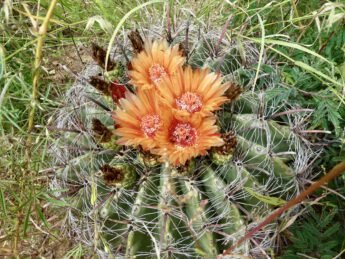
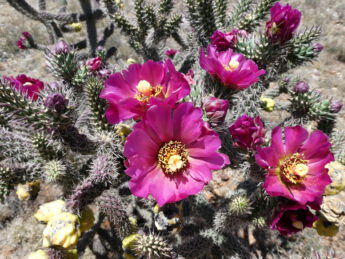
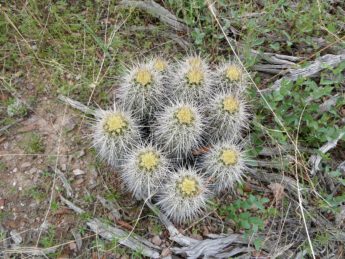
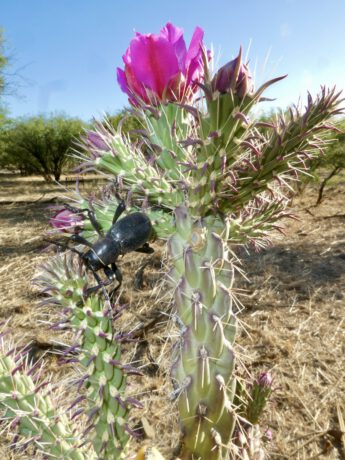
- Cane Cholla – edible fruit, woody skeleton for tool handles
- Chainfruit Cholla – edible fruit
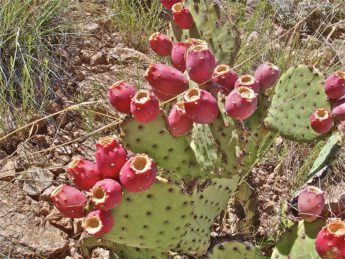
- Santa Rita Prickly Pear – edible fruit, medicinal pads
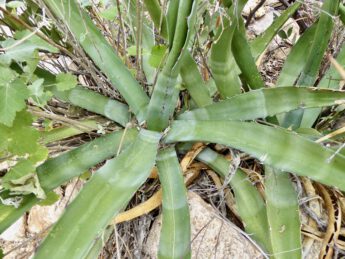
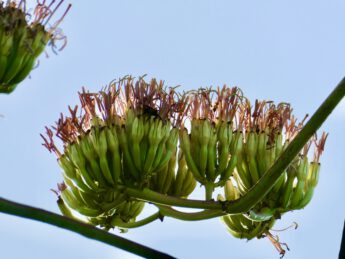
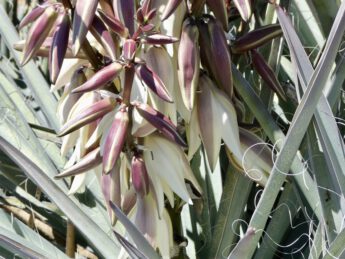
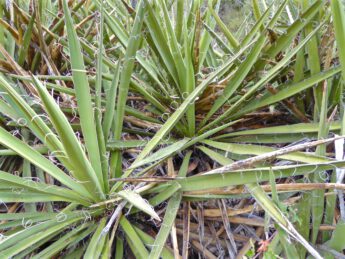
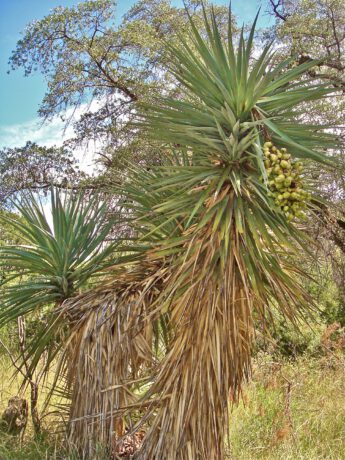
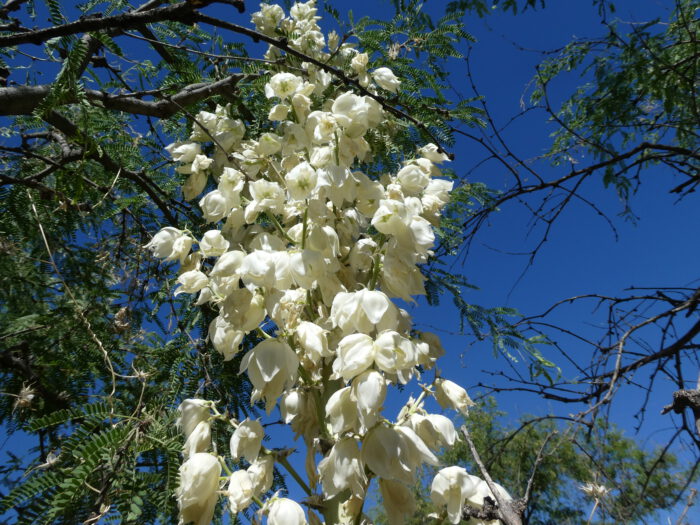
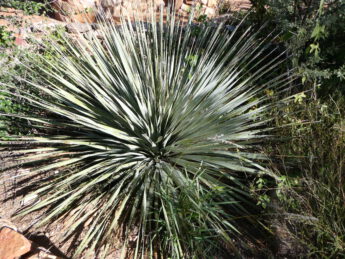
- Mountain Yucca – edible fruit, rope from leaves, medicine from roots
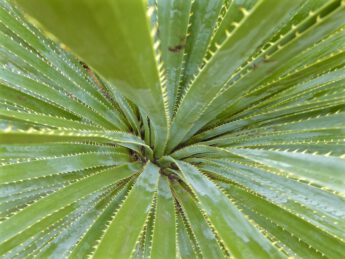
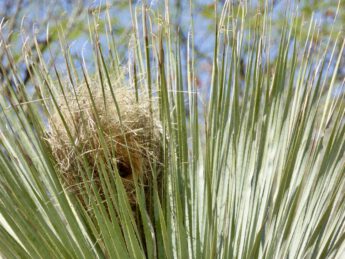
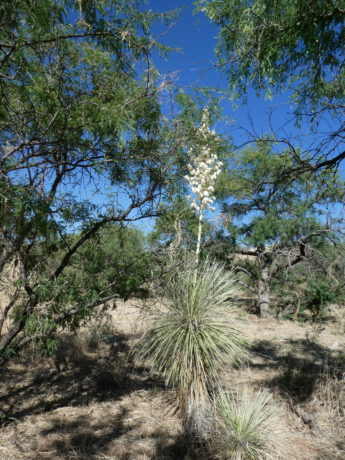
- Soaptree Yucca – edible flowering stems, soap and medicine from roots, fire-by-friction sets from dried flowering stalk
Other Plants
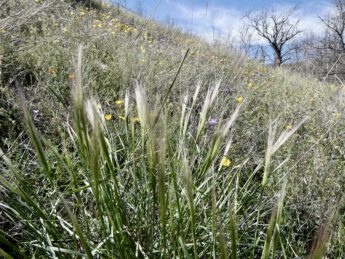
- Arizona Cottontop grass – tinder, basketry
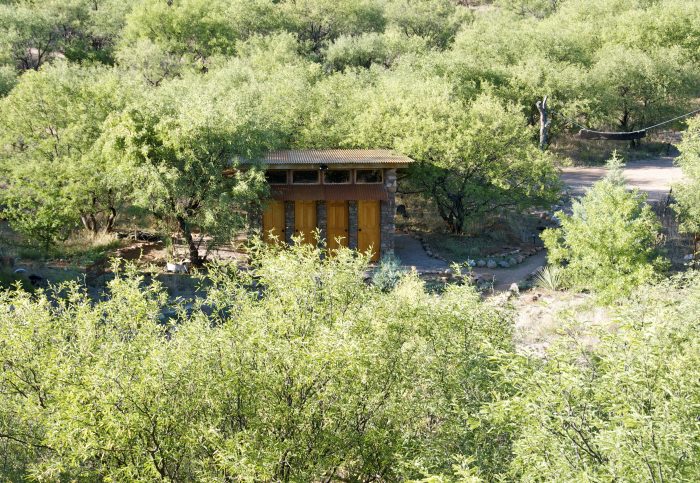
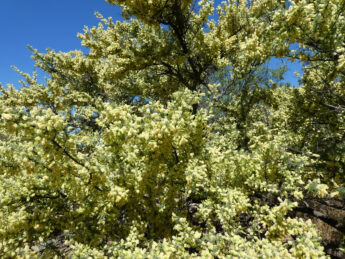

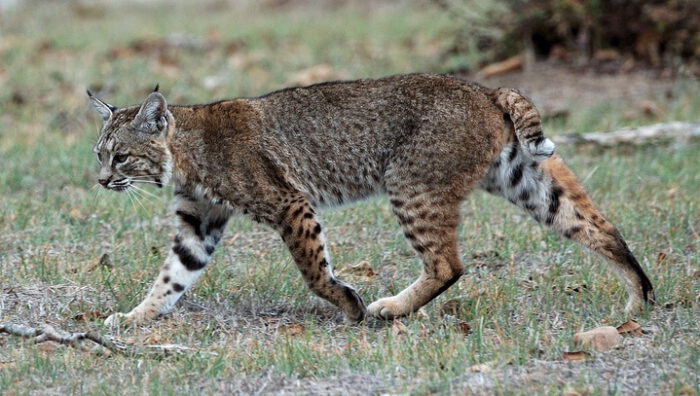
In addition to supporting a myriad of native pollinators, the diverse native plants around the Sky Islands Discovery Center also furnish critical habitat for a broad spectrum of other wildlife. Bobcats, Mountain Lions, Coyotes, Common Gray Foxes, Ringtails, Northern Raccoons, 4 species of Skunks, Collared Peccary, White-Tailed Deer, as well as a plethora of birds, reptiles and amphibians all enjoy the restored landscape.
ETHNOBOTANY LANDSCAPE BY SAFARI CAMP
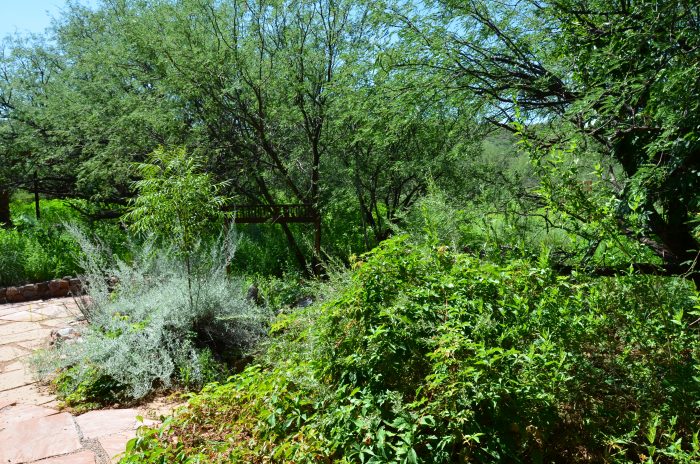
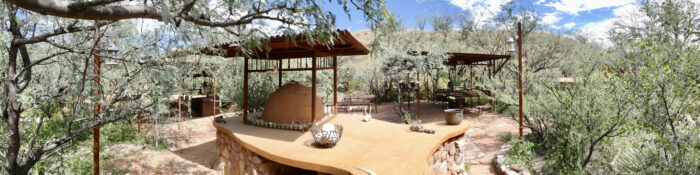
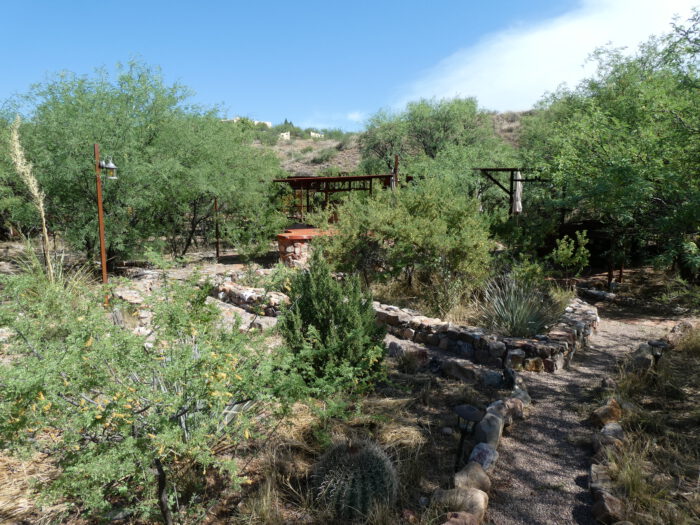
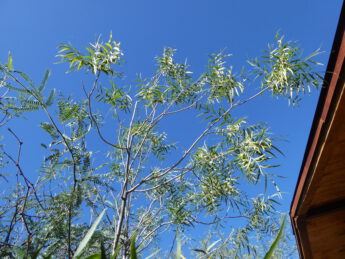
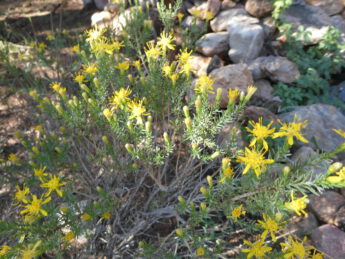
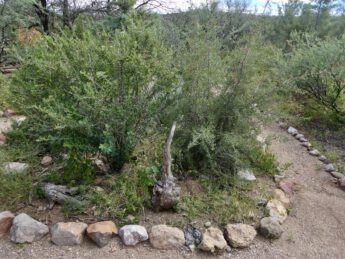
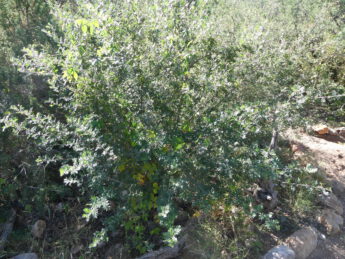
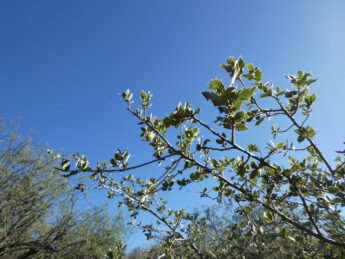
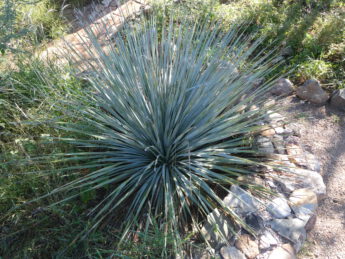
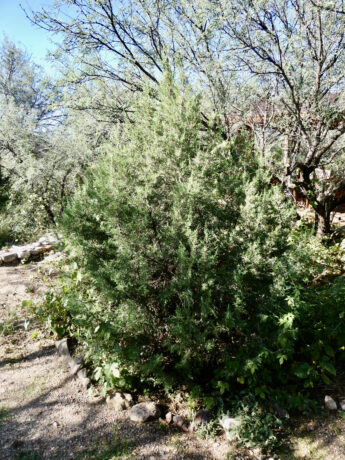
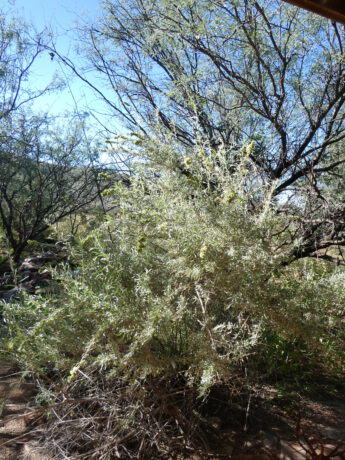
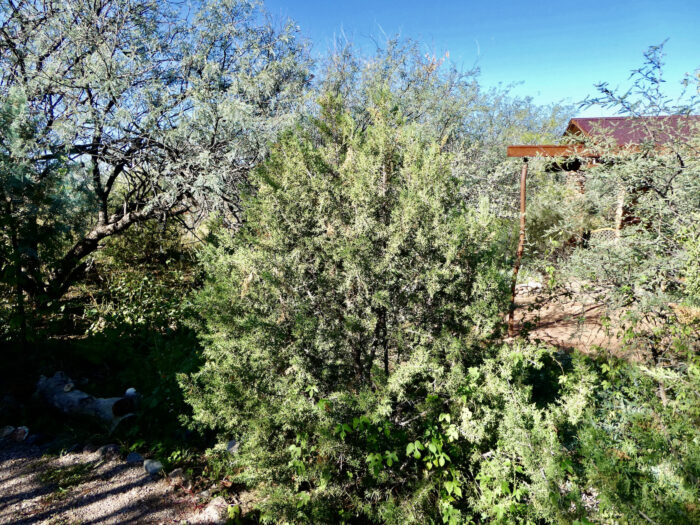
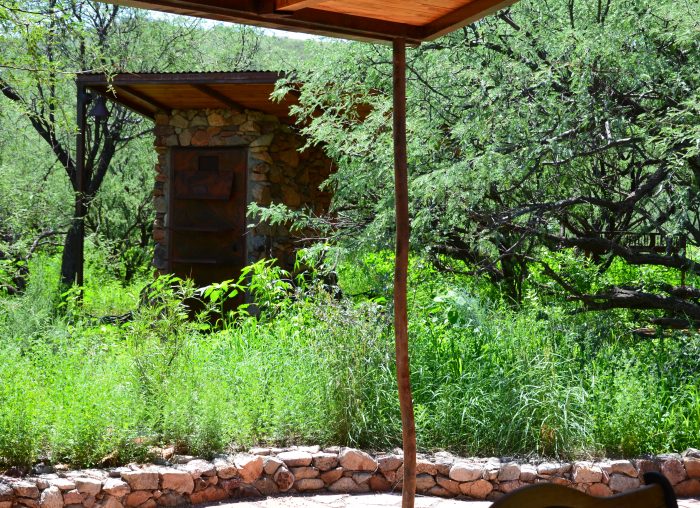
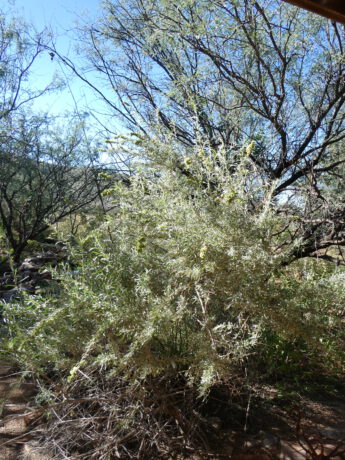
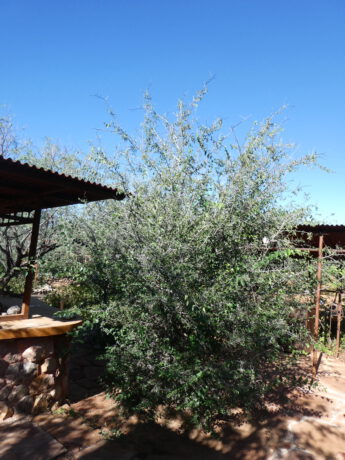
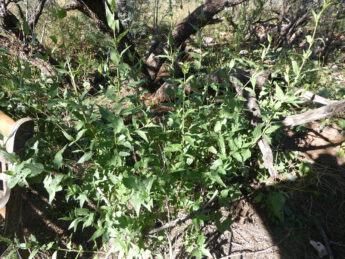
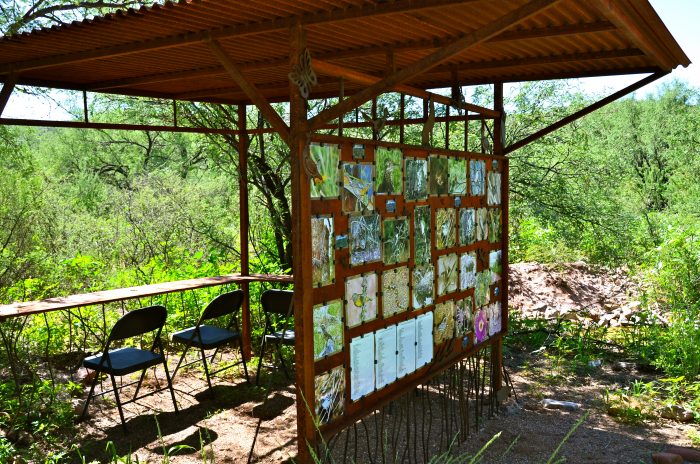
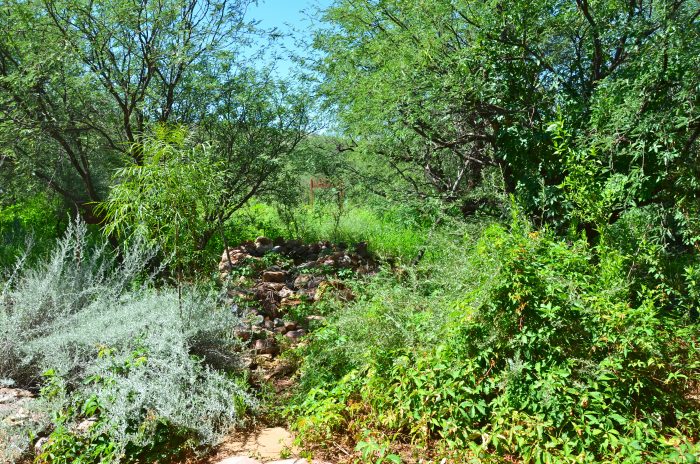
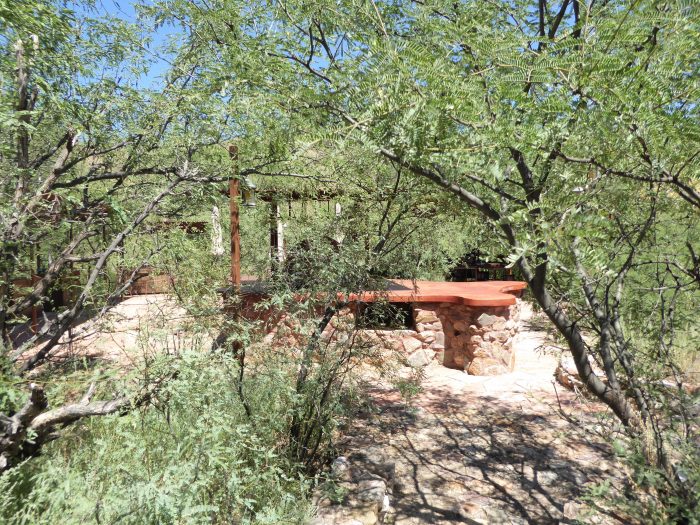
At the Sky Islands Safari Camp, Vincent implemented the same Ecological Restoration Principles as throughout the preserve, transforming a stretch of Mesquite Woodland that was rife with nonnative plants to one utterly devoid of them. The native species Vincent planted have been a magnet for wildlife. All of the species below have human uses in addition to their utility to wildlife.
Trees
- Alligator Juniper
- Arizona Juniper
- Arizona Cypress
- Scrub Oak
- Desert Willow
- Catclaw Acacia
- Velvet Mesquite
- Texas Mulberry
- Netleaf Hackberry
- Western Soapberry
Shrubs
- Desert Sumac
- Oreganillo
- Desert Honeysuckle
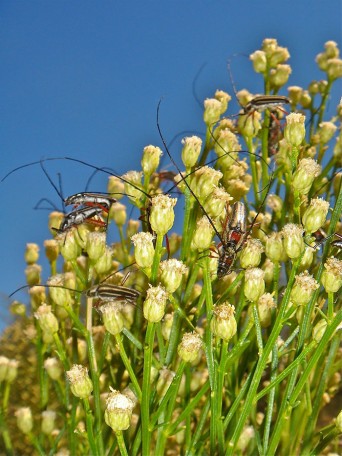
- Goldenbush
- Fourwing Saltbush
- Graythorn
- Gum Bumelia

Succulents
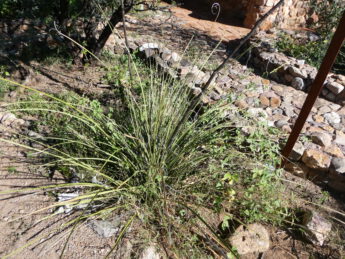
- Beargrass
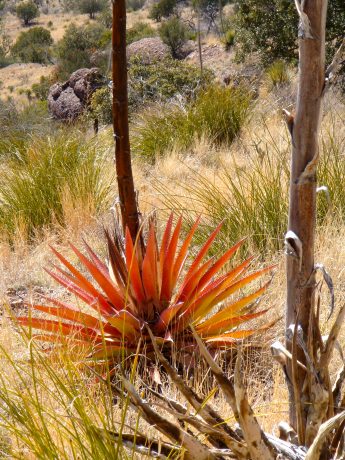
- Sotol
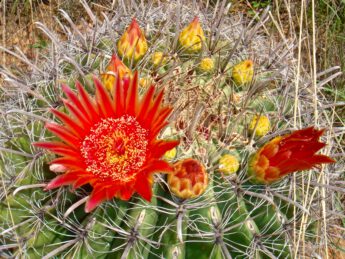
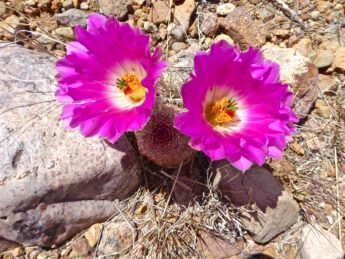
- Fishhook Barrel Cactus
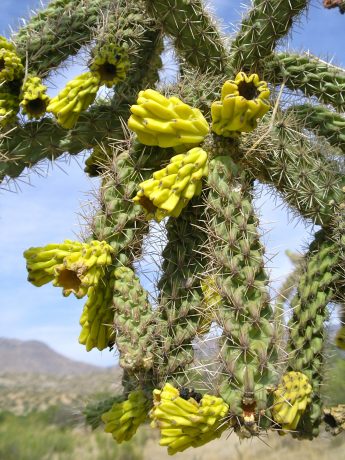
- Cane Cholla
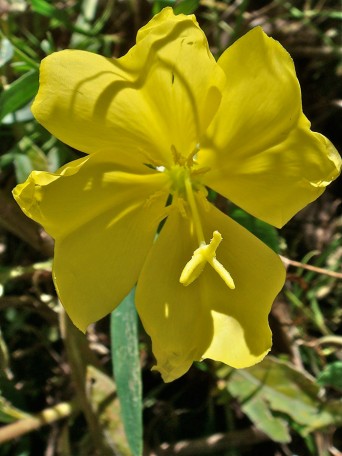
Other Plants
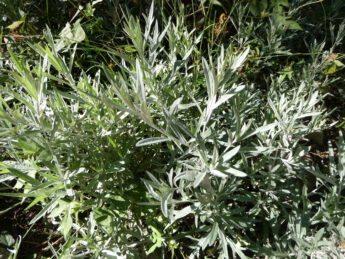
- Mugwort
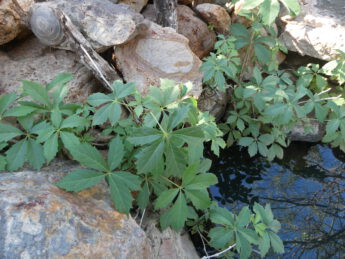
- Canyon Creeper
ETHNOBOTANY LANDSCAPE BY SOUTHWESTERN HOUSE
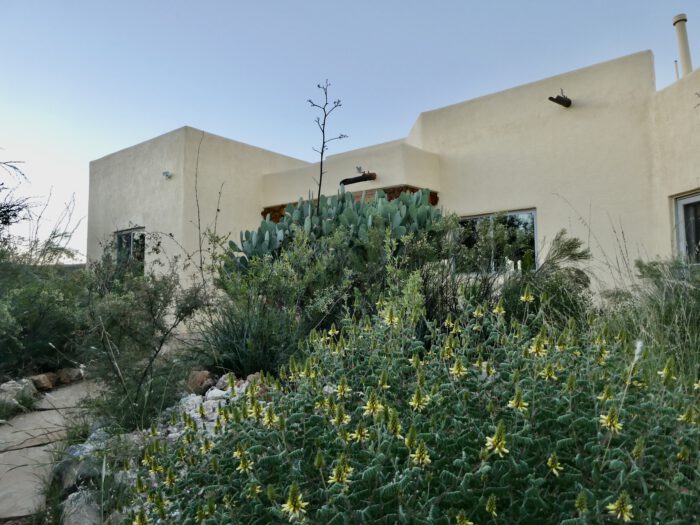
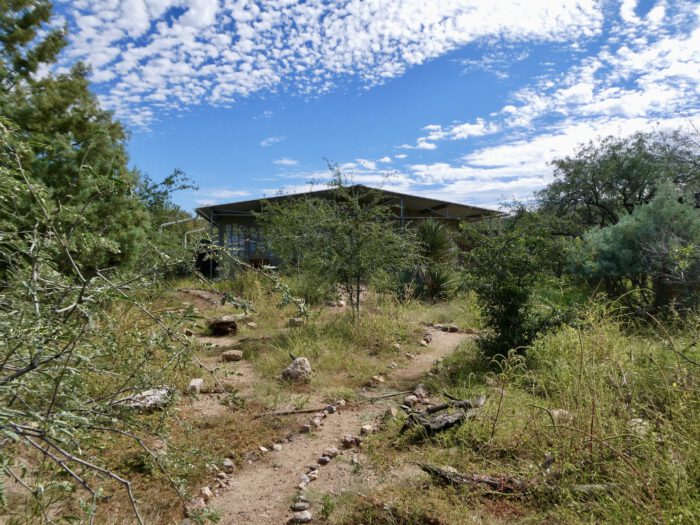
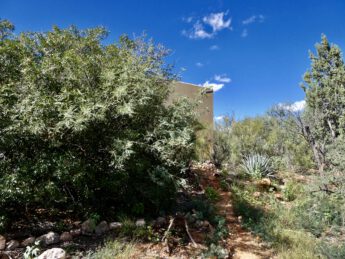
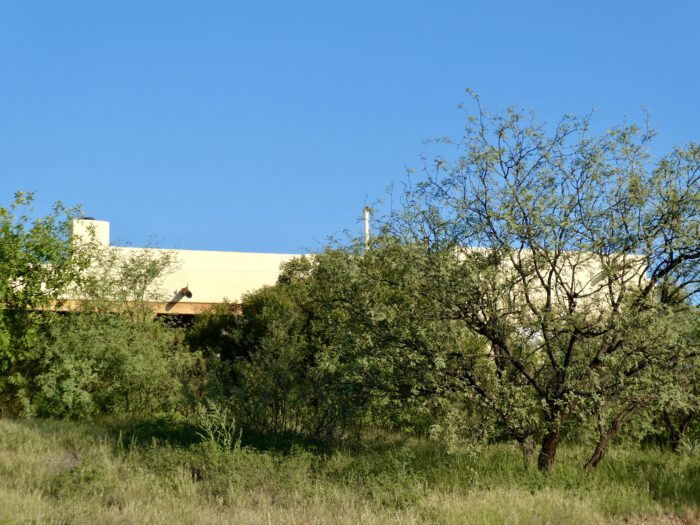
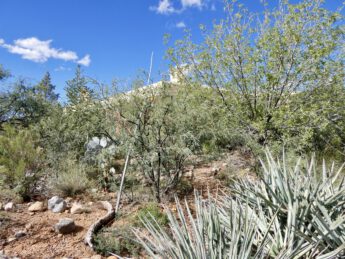
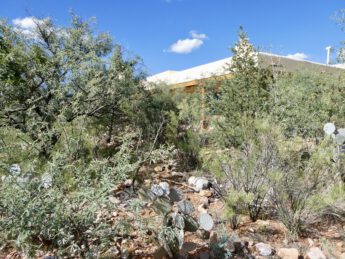
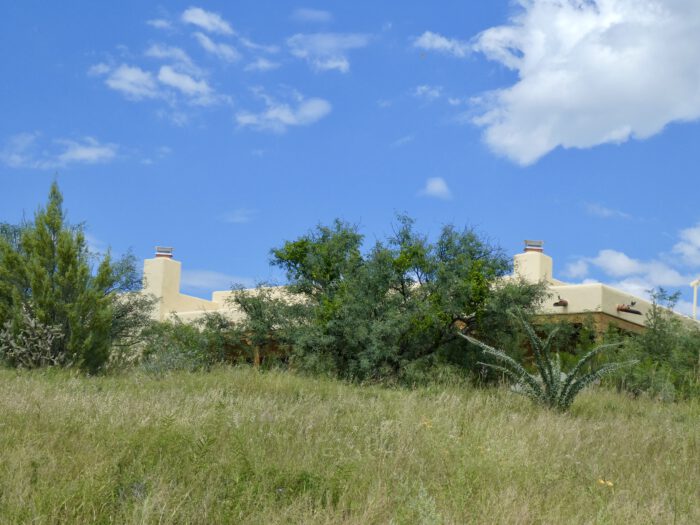
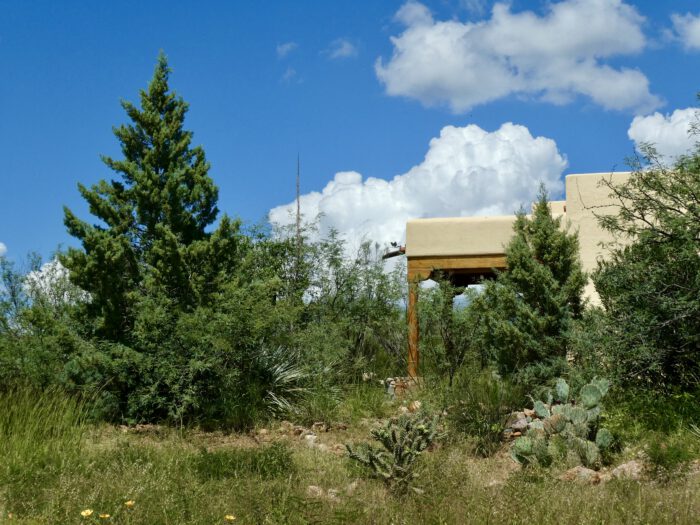
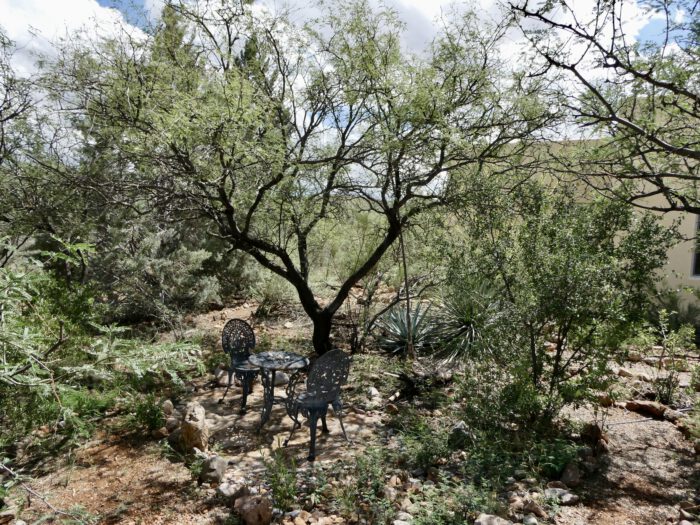
As a professional Ethnobotanist, Vincent created an Edible, Medicinal, and Useful Landscape surrounding the house. Once again, he deliberately chose only the native species that have very important human uses and strategically planted them around the house. Hence, some species provide food, others herbal medicine, while select plants produce parts useful for rope, tools, soap, aromatherapy, and other uses.
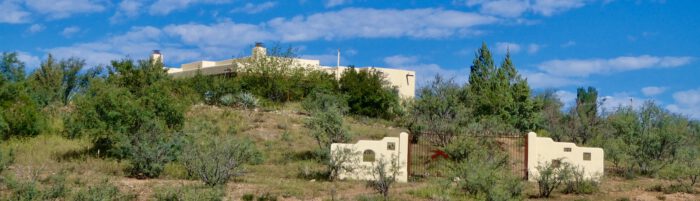
Additionally, all of the species listed below support native pollinators – either as a larval food source, as a source of nectar, or in some other capacity. Thus, countless species of insects, butterflies in particular, as well as dashing Hummingbirds of various species are a common sight around the house – all in response to Vincent’s ecological restoration efforts.
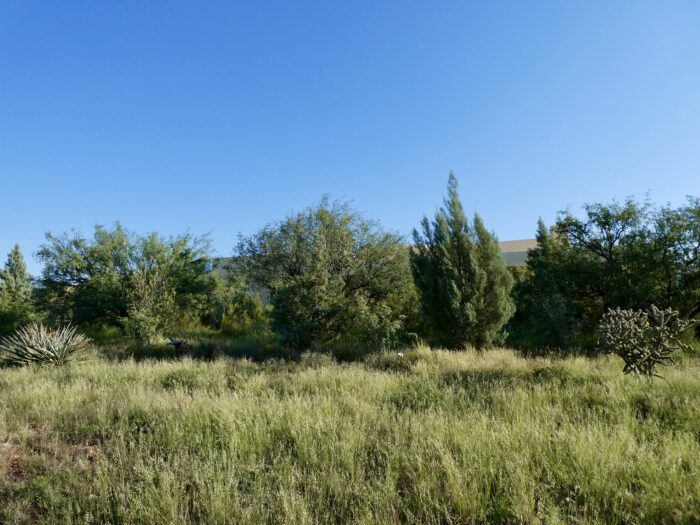
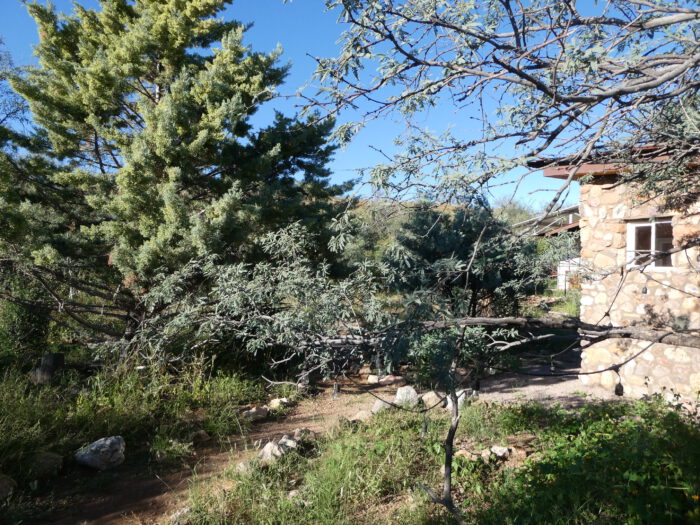
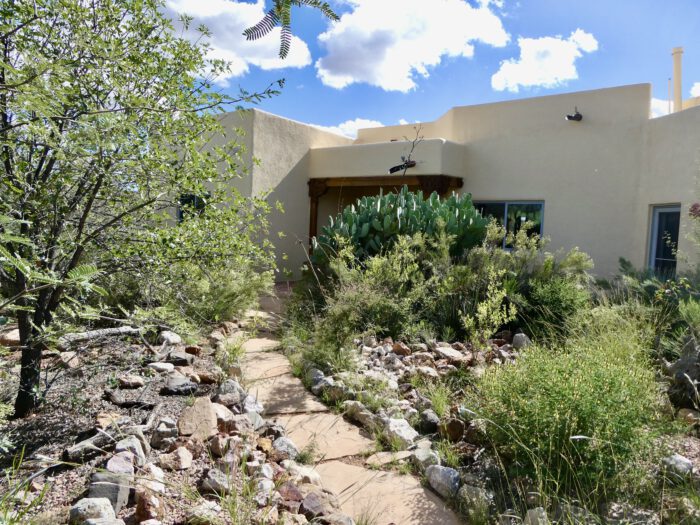
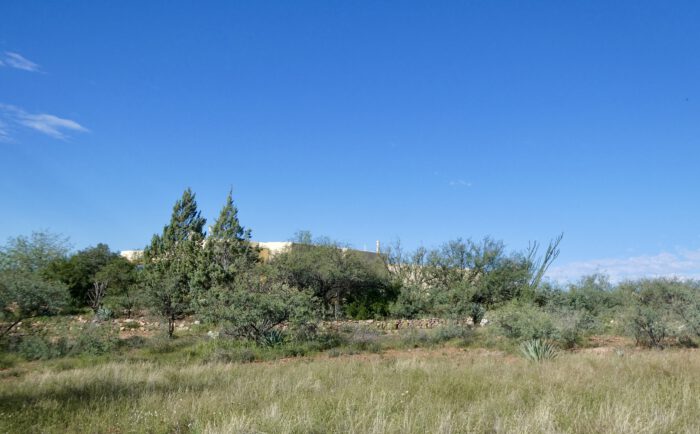
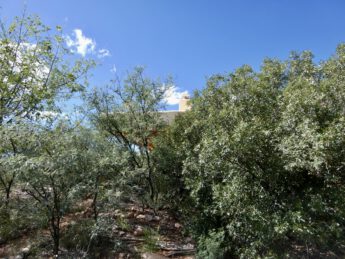
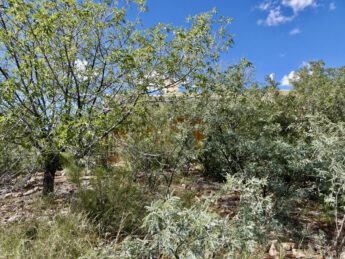
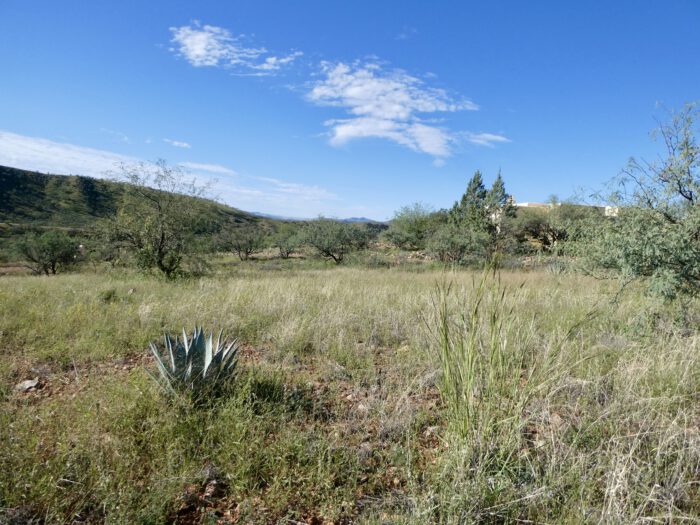
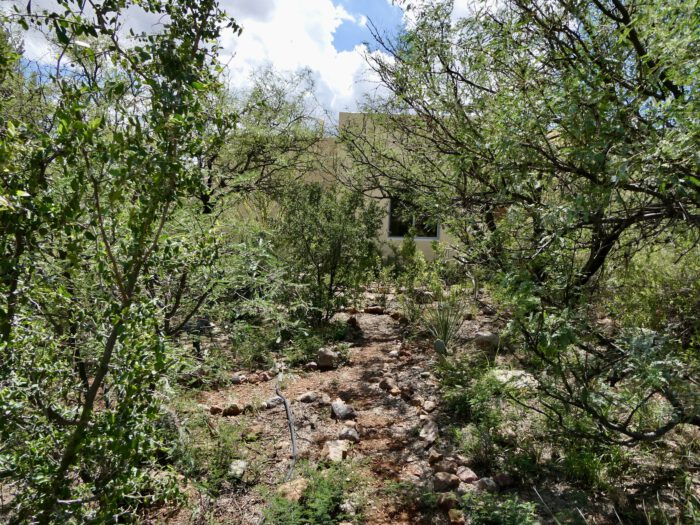
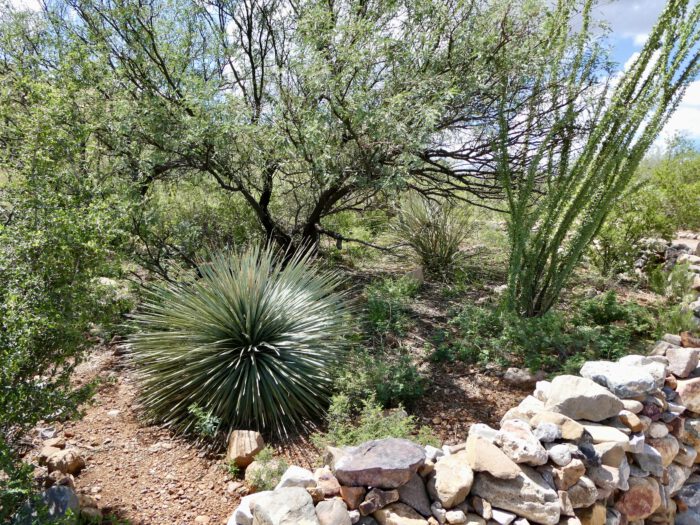
Vincent planted each species with xeriscaping principles in mind. He created swales for each species, heavily applied mulch in the ground and atop it, and created countless windbreaks with both rocks and logs. His final touch was a custom-made soaker hose system that delivers water efficiently, greatly helping to conserve it. The transformation of the landscape and all of its flora and fauna are in spectacular evidence everywhere throughout the preserve and in particular by the Southwestern House.
Trees
- Arizona Cypress
- Arizona Juniper
- Velvet Mesquite
- Whitethorn Acacia
- Foothills Paloverde
- Arizona Rosewood
- Netleaf Hackberry
- Spiny Hackberry
- Mexican Pinyon
- Western Kidneywood
- Velvet Ash
- Evergreen Sumach
- Emory Oak
- Scrub Oak
- Western Soapberry
Shrubs
- Hopbush
- Desert Broom
- Dalea
- Fairy Duster
- Desert Senna
- Desert Honeysuckle
- Wild Cotton
- Greg’s Salvia
- Bricklebush
- Mariola
- Four-wing Saltbush
- Catclaw Mimosa – 2 species
Succulents
- Sotol
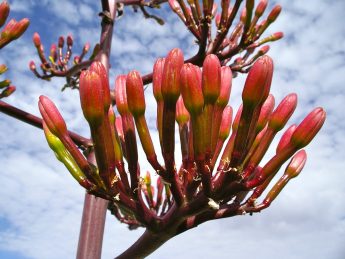
- Hesperaloe
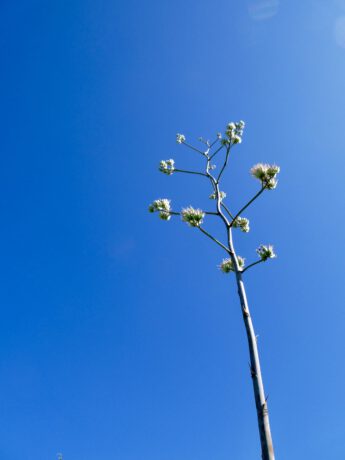
- Palmer Agave
- Banana Yucca
- Engelmann’s Prickly Pear
- Santa Rita Prickly Pear
- Cane Cholla
- Fishhook Barrel Cactus
- Pancake Mammalaria
- Rainbow Cactus
- Arizona Spinystar
- Bolivian Cilantro
- Ocotillo
Vines
- Loco Melon
- Clematis
- Arizona Grape Vine
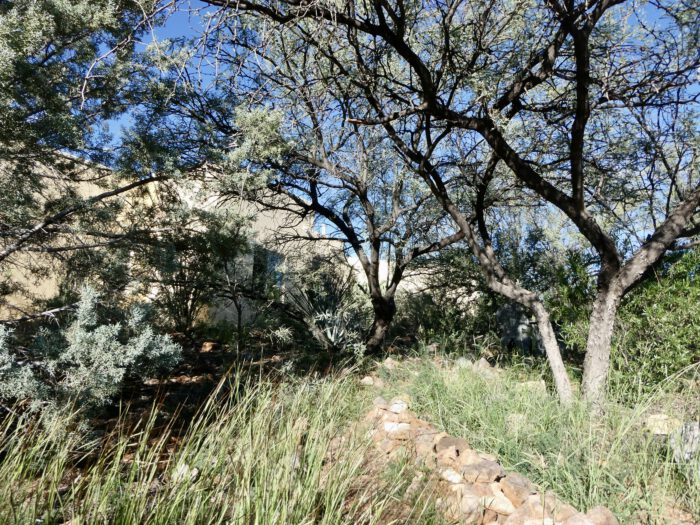
Grasses
- Sideoats Grama
- Plains Bristlegrass
- Bulbous Panic Grass
- Cane Beardgrass
- Tanglehead
- Spidergrass
- Green Sprangletop
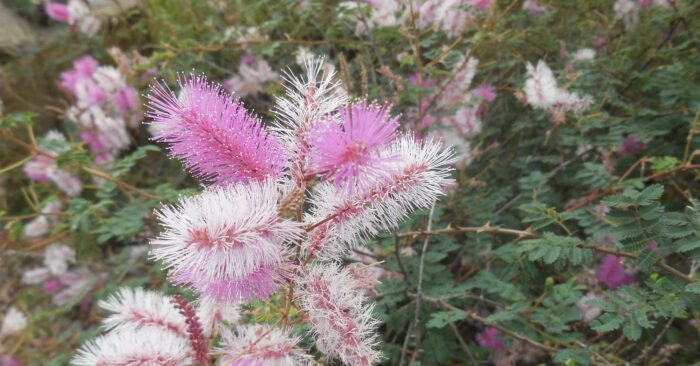
Wildflowers
- Papago Lilly
- Mariposa Lilly
- Tansy Mustard
- Desert Chicory
- Wire Lettuce
- Abutilon
- Summer Poppy
- Trailing Windmills
- Silverleaf Morning Glory
- Orange Flameflower
- Purple Spine Aster
- Silver Puffs
- Saya
- Spreading Fleabane