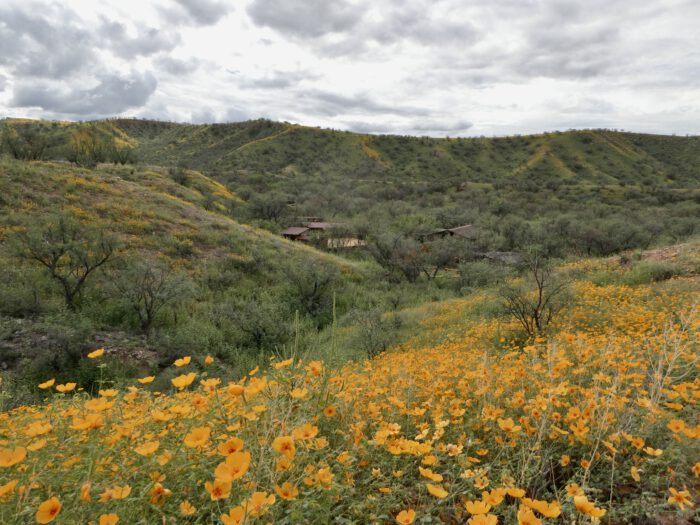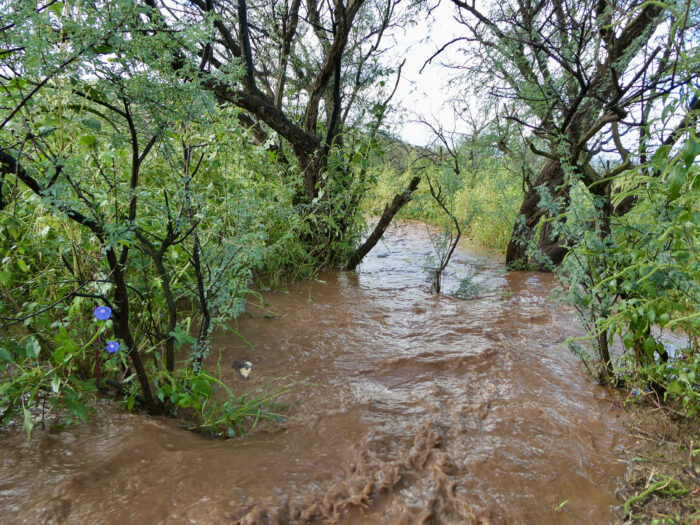
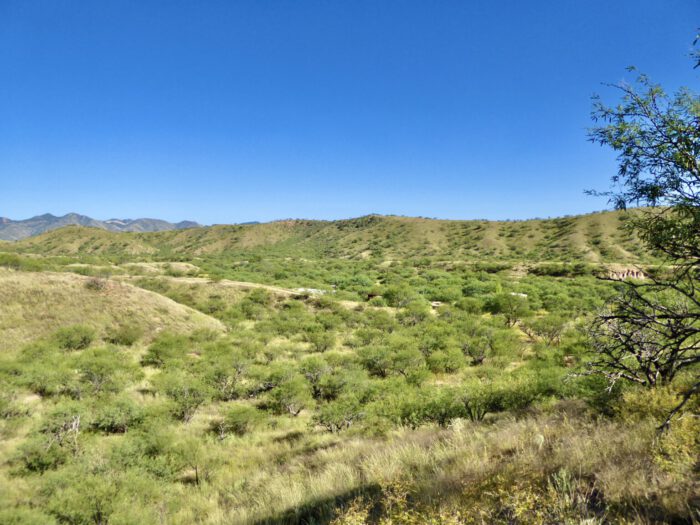
Raven’s Nest Nature Sanctuary serves as a microcosm of monsoonal effects on Sky Islands biodiversity in our region at large. Most parts of the Sky Islands region witnessed an above-average 2026 Monsoon season. This surfeit of rain seemed to roll the red carpet out for wide range of species, flourishing in various local habitats.
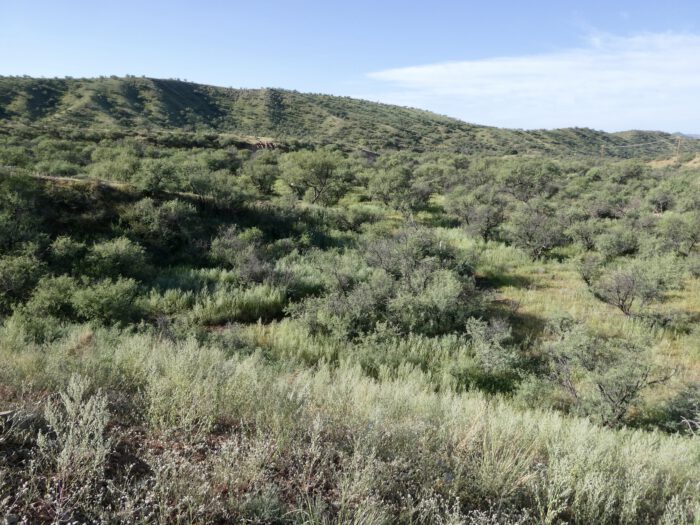
Spectacular Monsoon 2026 at Raven’s Nest Nature Sanctuary!
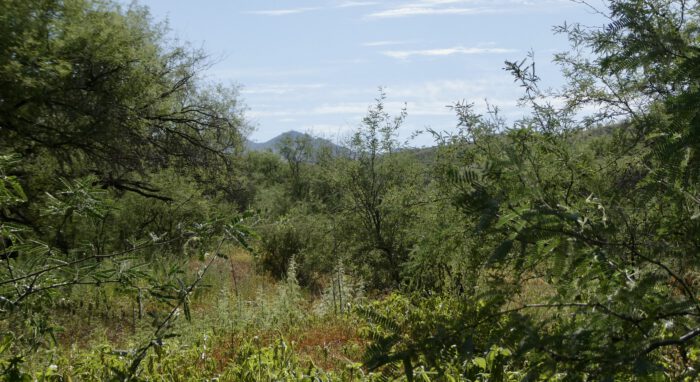
Our 42-acre preserve received over 15 inches of rain. This set plants off and running – key components to our overall species richness, furnishing food, shelter, and nesting sites for various species of wildlife.
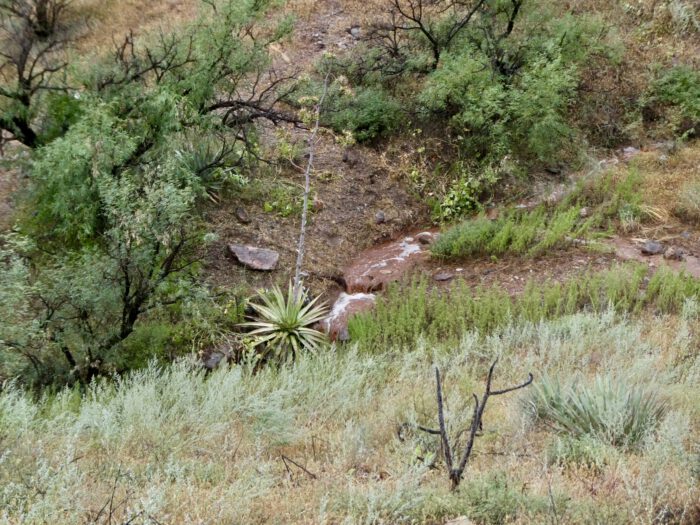
With the deep soaking rains of July the ground sprung to life. Following over 7 inches delivered gently over several days, the bare soil was transformed by a delicate patina of native vegetation. Leading the way were sprouts of the annual Palmer’s amaranth.
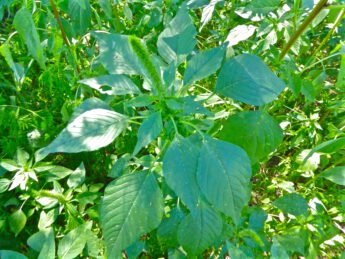
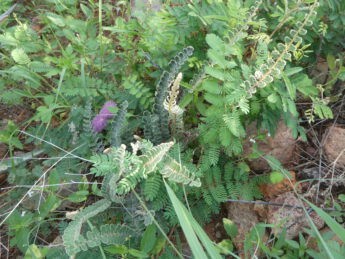
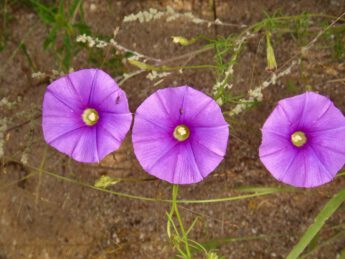
Sunflower weed, Bolivian cilantro, and various morning glories also initiated their life cycle in July, promising nectar to butterflies and other pollinators as well as forage for deer. Given the swift response of many warm-season plants to soil moisture, some species began to flower soon after the rains began.
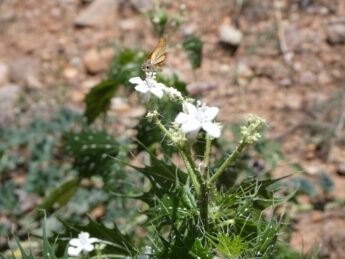
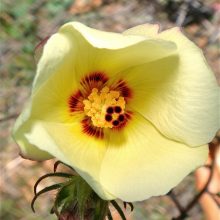
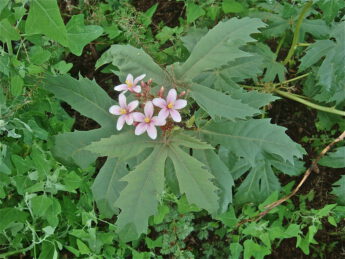
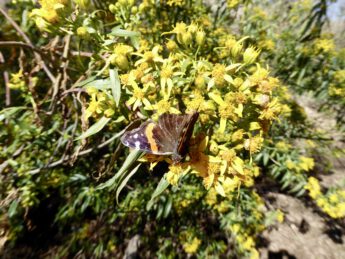 Growing along south-facing canyon slopes at our preserve, is Mala Mujer with showy white flowers heavily visited by many species of butterflies.
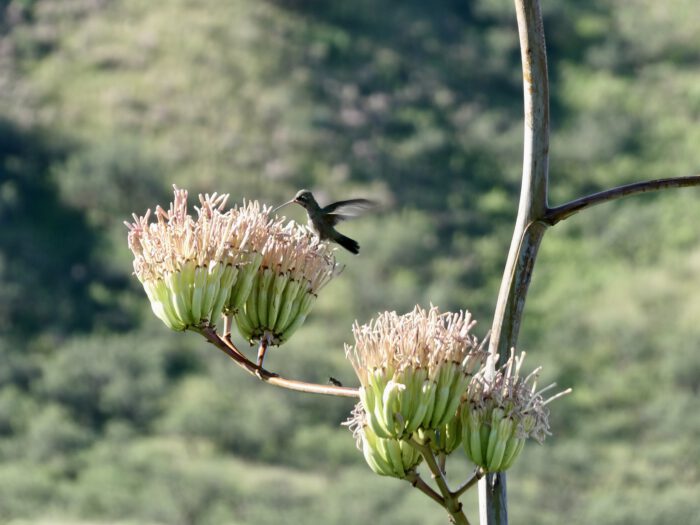
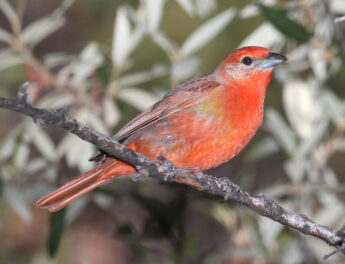
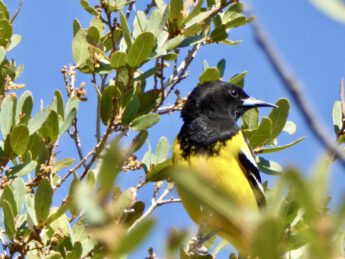
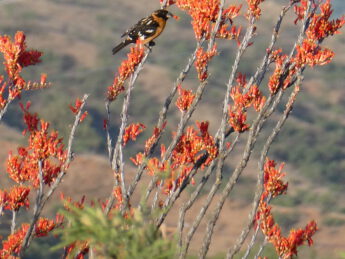
Meanwhile, Palmer agaves truly stole the show, luring in a plethora of birds to their towering flower stalks. Both hooded and Bullock’s orioles, pyrrhuloxias, Lucy’s warblers, various hummingbirds, house finches, and others partook of this monsoon nectar feast. Though spring is rightly touted as a birder’s paradise in the Sky Islands, monsoon birding is also a profoundly enriching experience.
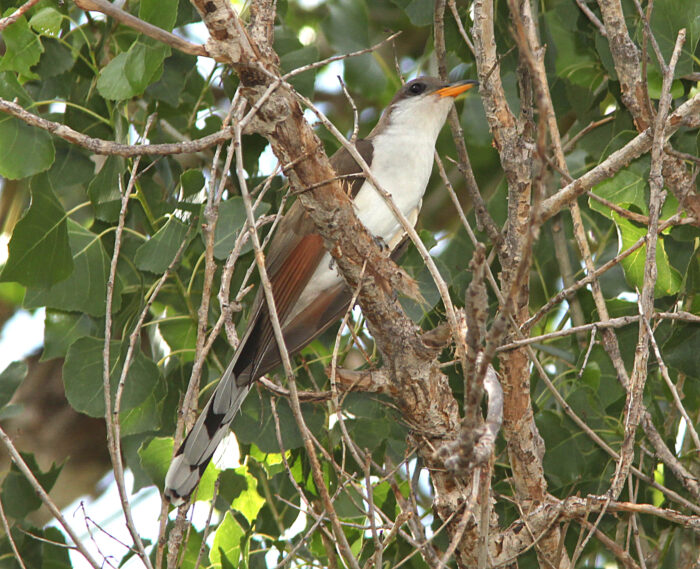
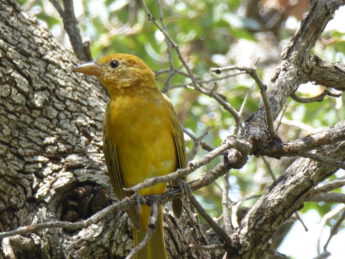
2026 AMAZING MONSOON HIGHLIGHTS
I. GREAT PLAINS NARROW-MOUTHED TOAD
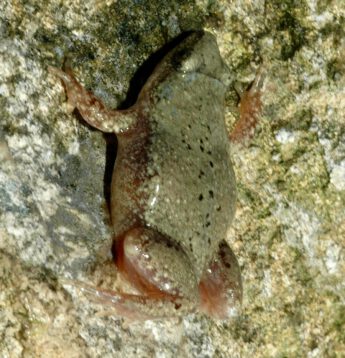
Heavy rains naturally translated into amphibian nirvana in all the different habitats at Raven’s Nest Nature Sanctuary. During a July evening’s downpour, Vincent opened the front door of our house and spotted a tiny form hopping on the flagstone. Vincent had never seen the species anywhere, let alone at the preserve, yet he instantly recognized it from field guides – a Great Plains narrow-mouthed Toad (Gastrophryne olivacea). Its name is quite a bit bigger than the creature itself, which registers at a mere 1.6 inches in total maximum length.
II. ELF BUTTERFLY
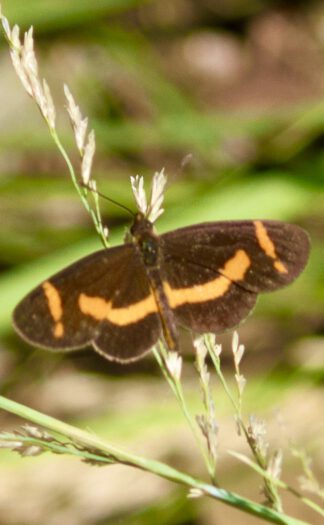
Daytime at Raven’s Nest Nature Sanctuary proved even more productive for Monsoon Rarities. Another diminutive, a stunner of a butterfly graced the preserve for several days. The aptly-named Elf butterfly (Microtia elva) is certainly not our smallest butterfly species, though it is rather tiny and is only a rare stray from the Mexican state of Sonora. Visually speaking, its lack of size is easily compensated for by its bold orange upper-wing markings on a dark brown background. With a wingspan of less than an inch, the Elfs obligingly sat on various perches, slowly fluttering its wings as we admired this intrepid lepidopteran.
III. GILA MONSTER RESIDENT SIGHTING!
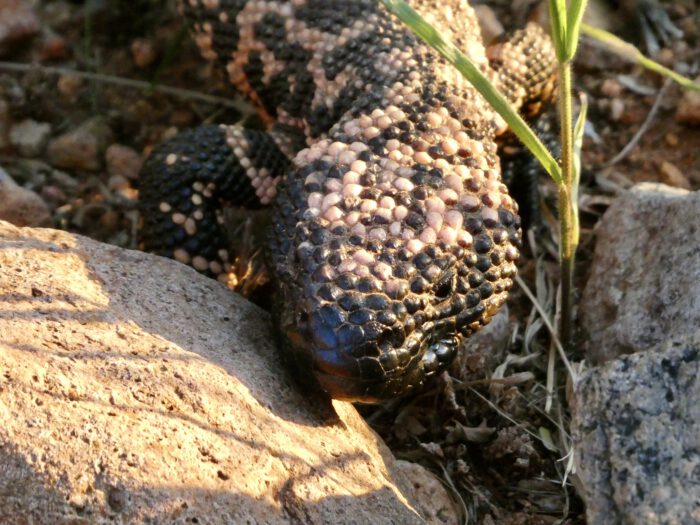
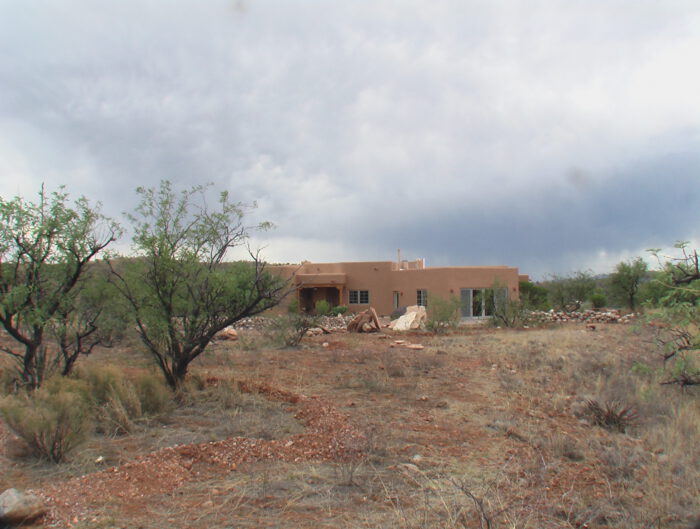
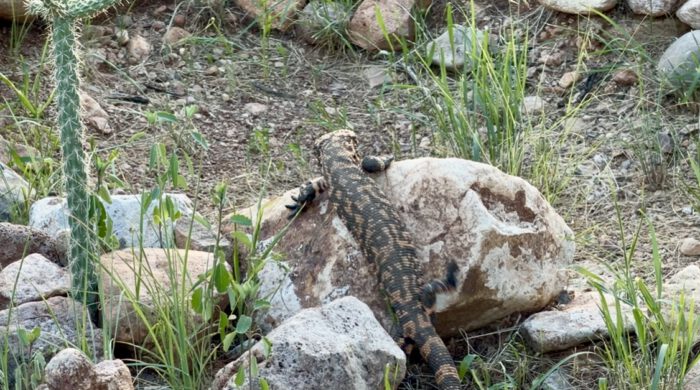
In mid August, just outside our house, we had the amazing sighting of a Gila Monster (Heloderma suspectum)! A juvenile about 12 inches long, confirming local reproduction for the species and the 3rd individual at the preserve. Our young monster ambled away amidst the many rock walls of our native landscaping and habitat restoration project – which replaced in 2008 the former parking lot.
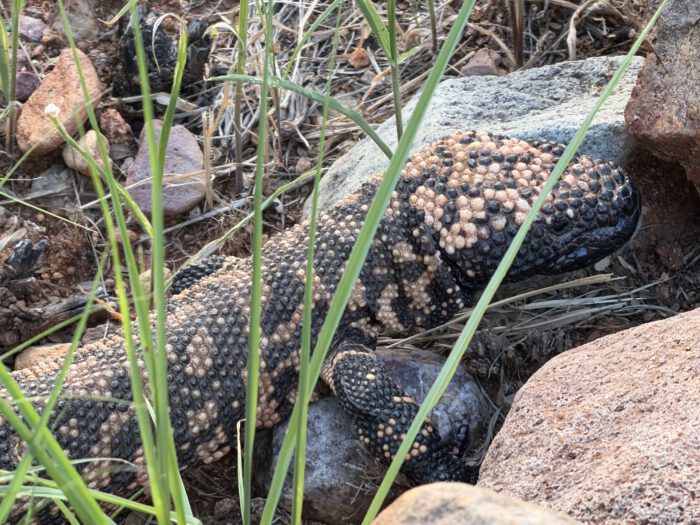
Gila monsters depend on summer monsoon rains for drinking water. While they spend up to 95% of their lives underground – an adaptation to hot and dry conditions – heavy rains and high humidity prompt them to surface to hunt and explore at Raven’s Nest Nature Sanctuary.
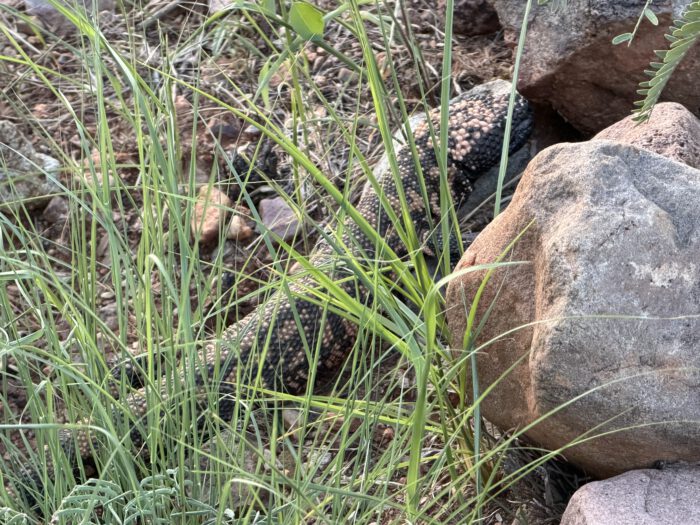
The Gila Monster is one of the rarest to encounter of all the Sonoran Desert reptiles. One of only two venomous lizards in North America, it is the only one found in the United States. (The other venomous species, the closely-related Beaded Lizard, is found from southern Sonora, Mexico, to Guatemala.) In the Southwest, Gila Monsters sightings are extremely rare. At Raven’s Nest Nature Sanctuary we have been fortunate to host 3 different residents. They live in burrows which are essential for their survival.
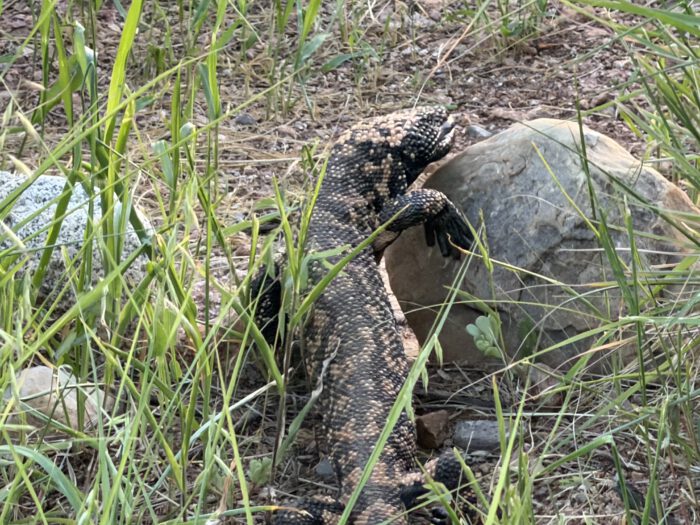
As the largest lizard in the United States, the Gila Monster can grow to about 22 inches long and can weigh over a pound. Its upper surface is covered with bead-like scales. It has a long, rounded body, a big head and a round tail. Short, stout legs possess long toes with sharp claws used in digging and climbing. The snout is solid black, and the body has a banded color pattern of black with pink, orange, salmon.
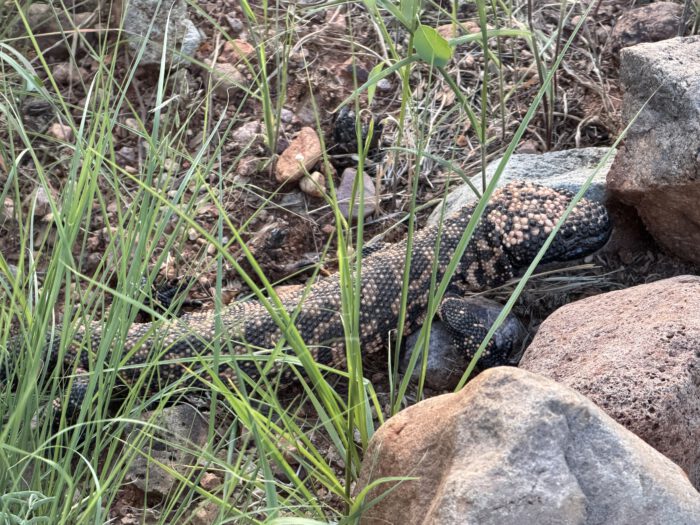
Gila Monsters are carnivores. They use their tongues to pick up faint scents and can hunt for prey and water any time of day. They eat newborn or young rabbits, young packrats, and other rodents still on the nest, as well as eggs, nestling birds, lizards, and occasionally small snakes. During such meals, the lizard may eat up to 35% of its own body weight and over 50% in the case of young Gila Monsters, storing the food as fat in its tail and lower abdomen.
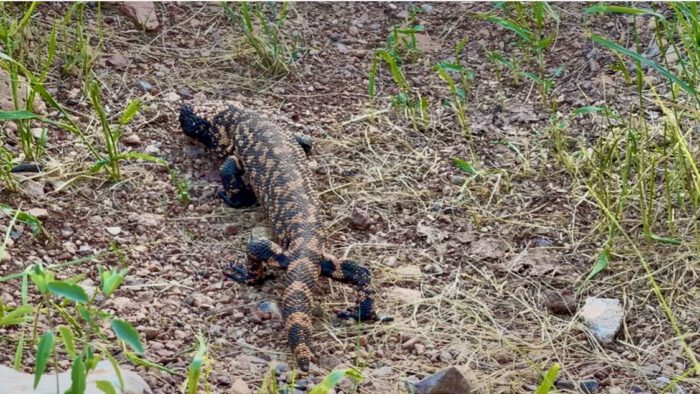
Gila monsters usually lay 4-5 eggs in underground burrows, in mid-late June just prior to the start of the summer monsoon season. They are the only known North American reptile whose eggs overwinter to hatch the following year. The hatchlings bite their way out of their soft-sided eggs in early winter, but are known to remain in place underground, nourished by their egg yolk, until the following spring. New hatchlings average about 6 1/2 inches long and about 1.2 ounces in weight. Gila Monsters take about five years to reach adulthood and may live over 30 years in the wild.
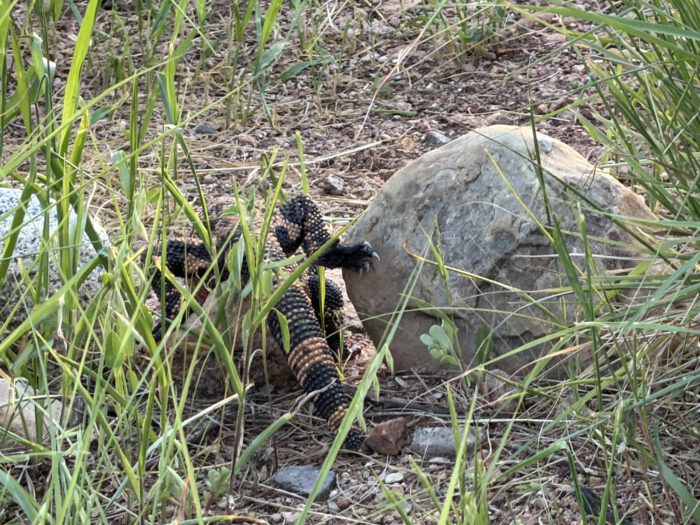
Fortunately, Gila Monsters are protected by state law in each of the states where they occur: Arizona, California, Nevada, Utah, New Mexico, and Mexico. Arizona was the first state to give them legal protection, and the species was the first venomous reptile offered protection in the United States.
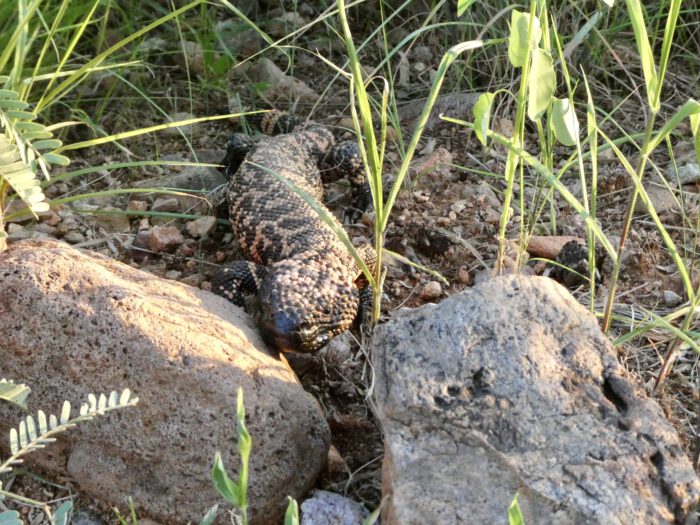
Once again, very fortunate and privileged at Raven’s Nest Nature Sanctuary to have had the opportunity to admire – at a distance – and take all these zoomed-in photos that showcase the ornate detail and beauty of the only venomous lizard in the U.S. This breathtaking experience marked Vincent’s 11th Gila monster sighting, which is about 11 more than most AZ residents, as North America’s largest lizard species is so difficult to detect. It’s no wonder since they are active above ground only a few weeks per year!
IV. RARE WILD PLANT DISCOVERY
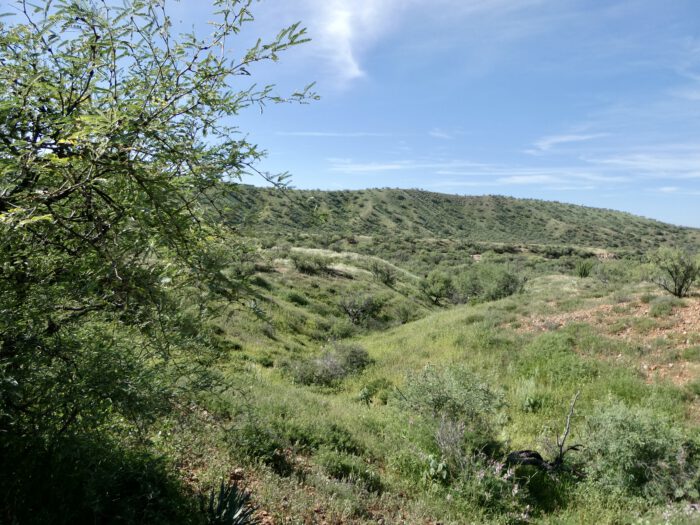
In mid-July 2026, Vincent discovered a hyper-rare plant at Raven’s Nest Nature Sanctuary. One of the most elusive of all native plant species in Arizona. It is so vanishingly rare in the U.S. that it is only known from a handful of localities nearby our preserve. Botanists are actually still identifying the plant and thus far only have the generic latin name, not the specific one yet!
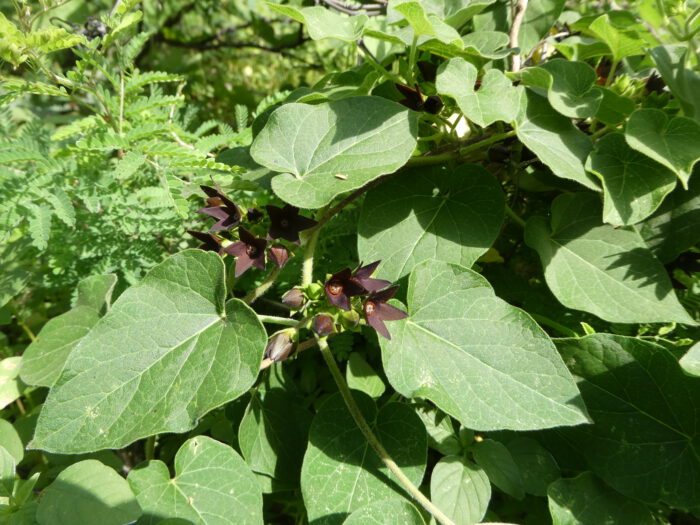
While exploring a small canyon at Raven’s Nest – one Vincent had passed through countless times before – a vine growing up a small velvet mesquite tree caught his eye. It proved to be in the dogbane family, a type of vining milkweed and one I had never seen before. Taking to the books, Vincent finally uncovered that this was a species that has only a handful of localities in Arizona – all in Santa Cruz County and most nearby our preserve! It was a feather in Vincent’s cap as an enthusiastic ethnobotanist. It is so rare that botanists are still working out the scientific name! For now it is simply known as Polystemma, the genus, or Vulture’s Star as a common name. Its fuzzy, opposite leaves beautifully framed the rather odd flowers. Deep maroon, the blooms may attract carrion-loving insects as pollinators – given the unusual hue and odd odor of the blooms mimicking rotting flesh.
Spectacular Monsoon 2025 at Raven’s Nest Nature Sanctuary!
Though technically outside of the official June 15 start of the Monsoon in the Sky Islands region, a soaking rain of 1.45” on June 1 set the table for a summer’s profusion of life in 2025! Thanks to the early deluge – the first time the southern part of Arizona had rain on June 1 since 1914, an incredible dry span of 111 years – the biodiversity at Raven’s Nest flourished.
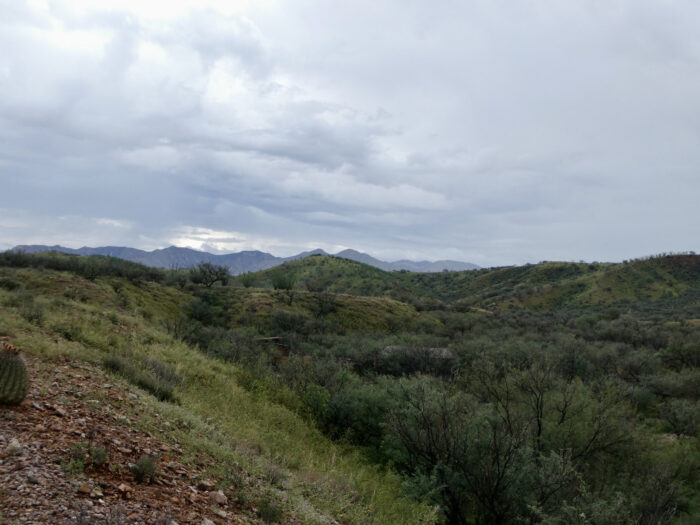
The normally sullen landscape of June – our driest month on average – sprang to into action. In particular plants with tubers came to the fore after the deep soaking.
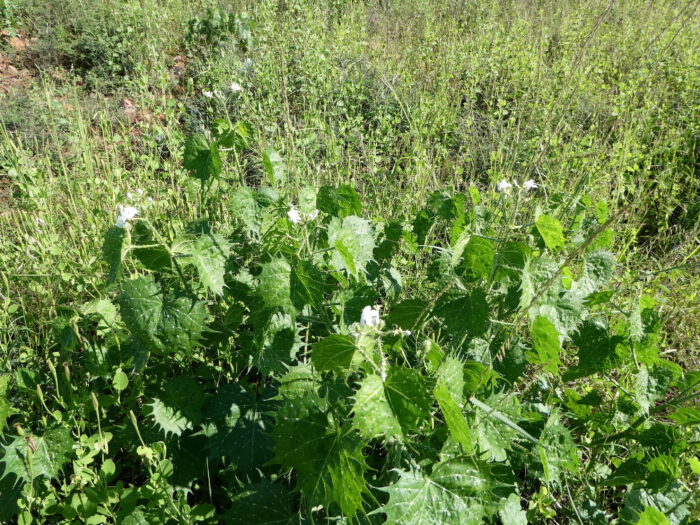
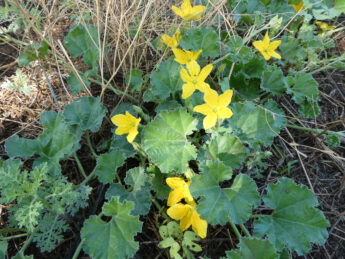
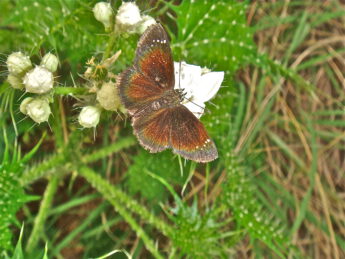
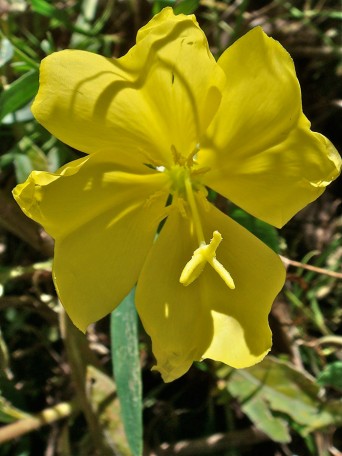
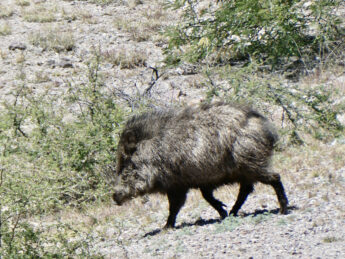
Loco Melon sprawled across the ground with its distinctive broad leaves, accentuated by sweetly fragrant yellow flowers. Mala Mujer formed robust, bushy clumps topped by white flowers amidst its armada of stinging hairs. They had clearly recovered nicely from the winter diggings of their tubers by ravenous Collared Peccaries.
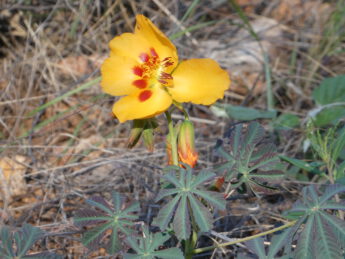
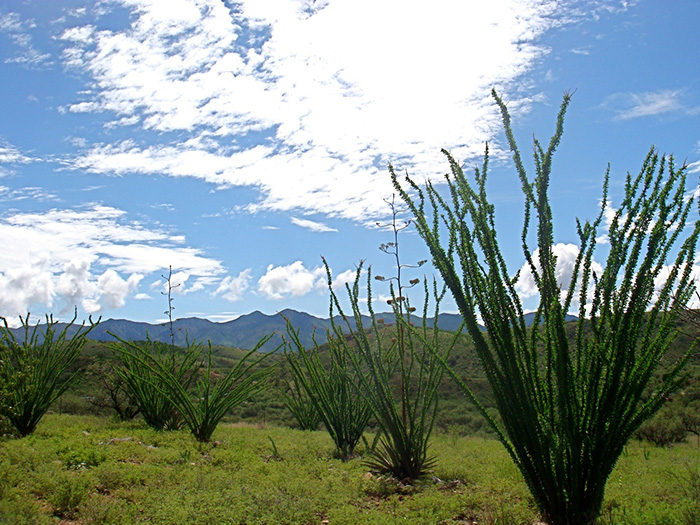
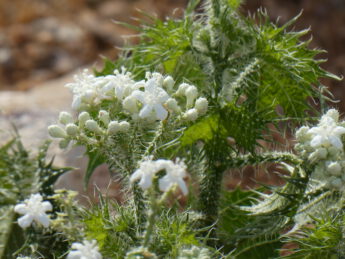 Even rather reticent Saya flowers had a June breakout. Accordingly, our Ocotillo forest suddenly turned verdant, leafing out in spectacular fashion. Even annual Summer Poppies or Summer Caltrops got off to an early start.
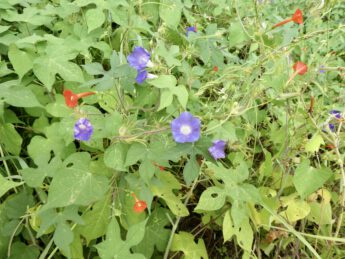
The cooling effect of the June 1 rain seemed to shut down the monsoon for a while until early July saw a few active days with light rain. Then, on July 14 we had another downpour of 1.14” The timing could not have been more auspicious, allowing seedlings germinated in June to not only survive but also put on significant growth. It was now clear that any sort of decent rainfall for the remainder of Monsoon season, which officially stops at the end of September, would spawn a dense and varied botanical verdancy at Raven’s Nest. Tall Palmer Amaranth plants and Sunflower Weed clearly were in for a banner year, as were a number of Morning Glory species.
Meanwhile, on the reptilian front, lizards were thriving. Monsoon 2026 & 2025 saw the most Sonoran Spotted Whiptails we had ever witnessed at the sanctuary. They were joined by good numbers of Ornate Tree Lizards, Clark’s Spiny Lizards, Elegant Earless Lizards and Zebra-tailed Lizards.
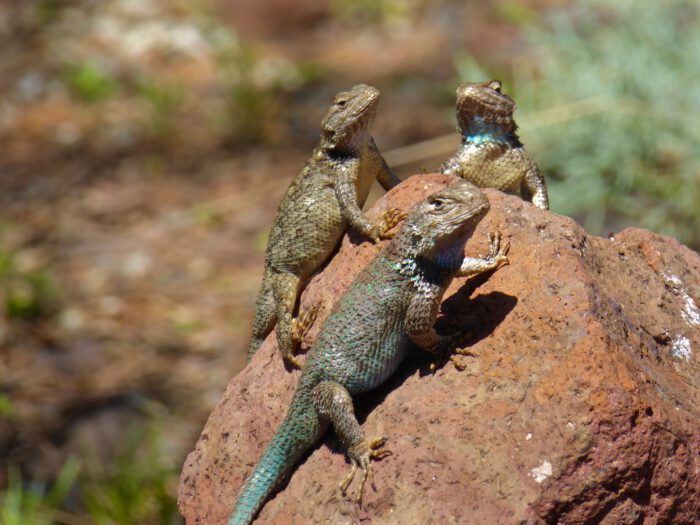
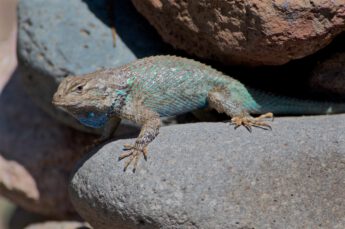
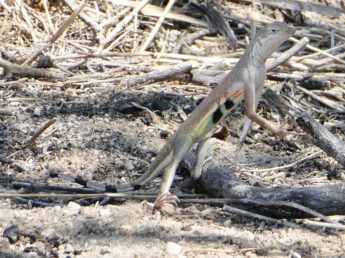

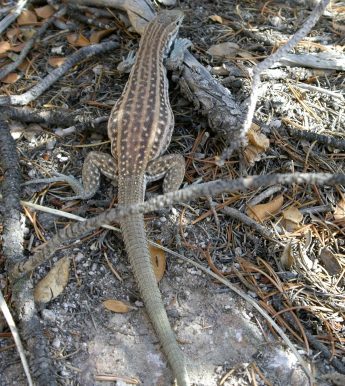
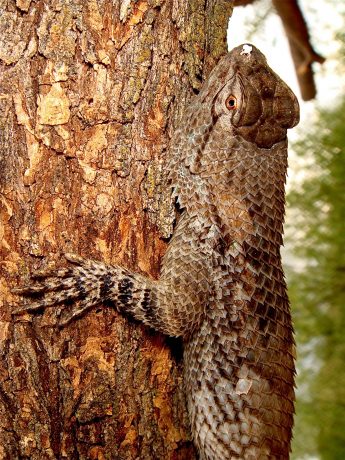
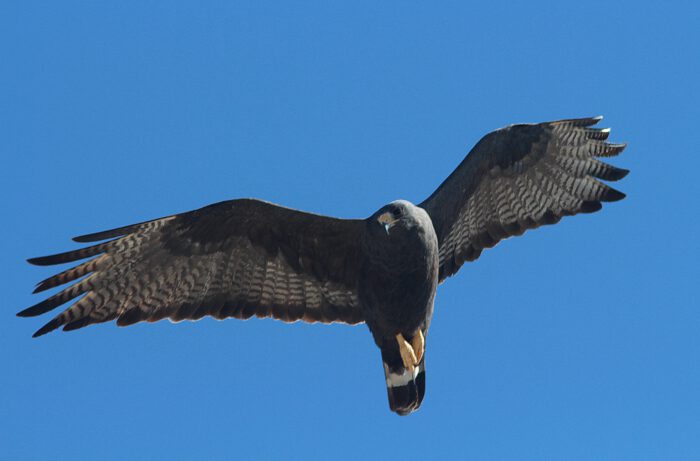
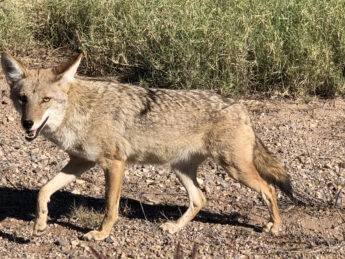
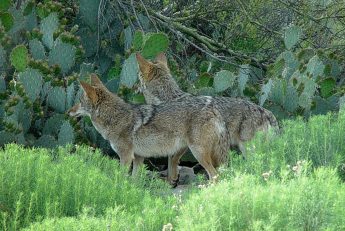
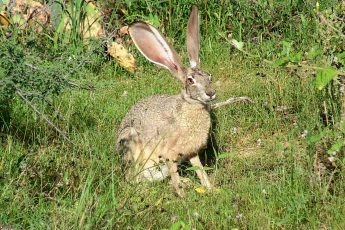
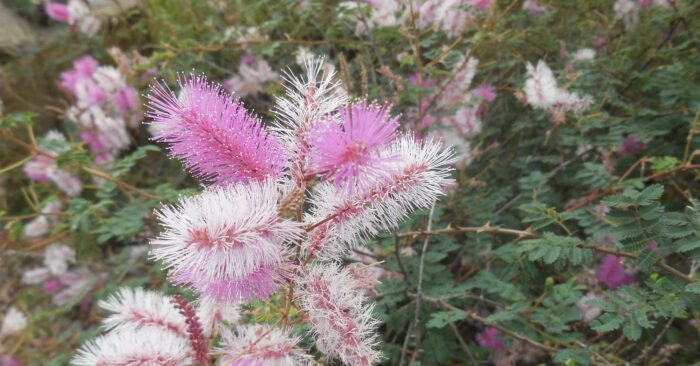
No doubt many of these saurians wound up in the talons and beaks of our resident Gray Hawk pair, as once again they raised a brood in a nearby arroyo. The rains also led to a good crop of Velvet Mesquite pods – a seminal food for a broad spectrum of wildlife – as well as Catclaw Mimosa pods. Collared Peccary, White-tailed Deer, Mule Deer, various rodents, Antelope Jackrabbits, Desert Cottontail, Coyotes, Common Gray Fox, and many invertebrates are among the Sky Islands wildlife that partake of Mesquite pods.
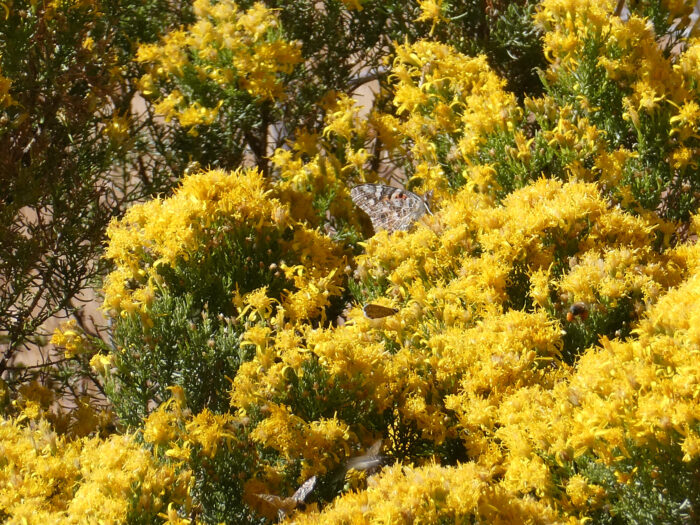
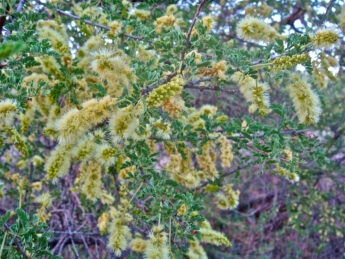
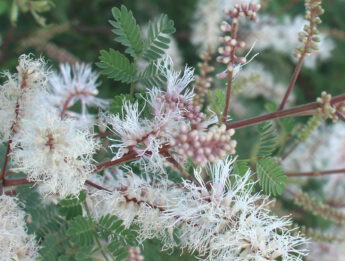
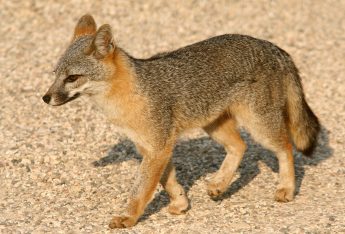
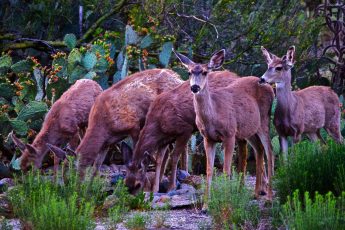
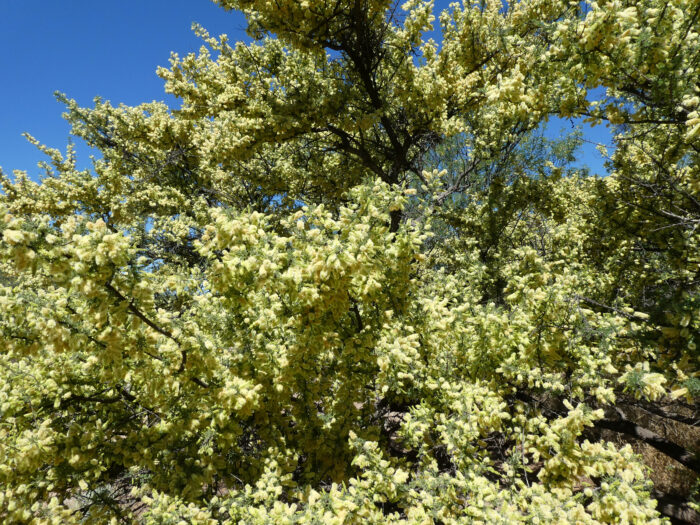
Early August hosted a few light monsoon rains, then another deep one of 1.54” on the 15th. From then on the rest of August through the end of September was a banner period for rain. Clearly, the 2025 monsoon season had come to spectacular fruition.
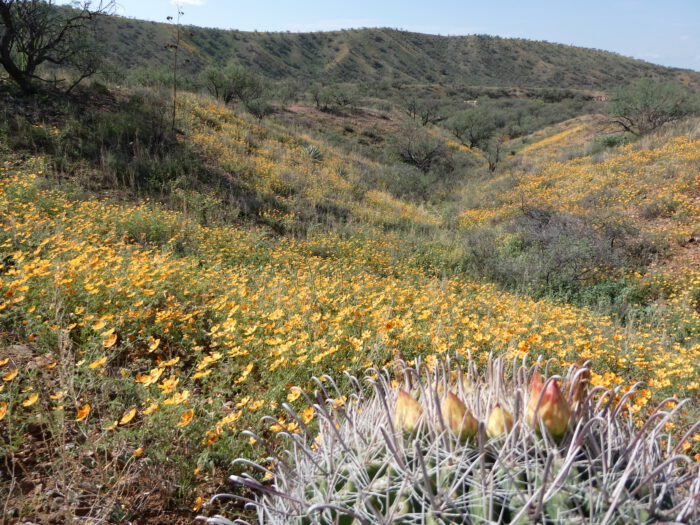
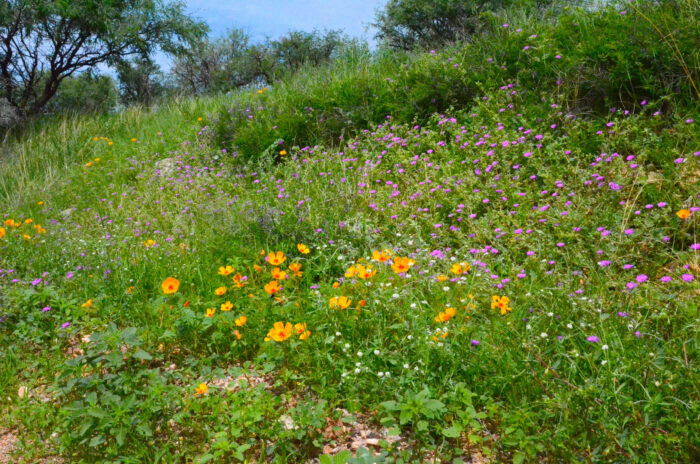
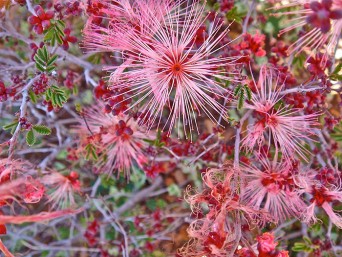
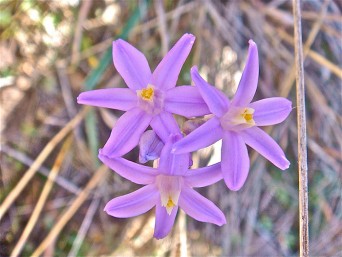
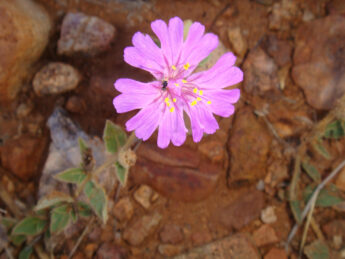
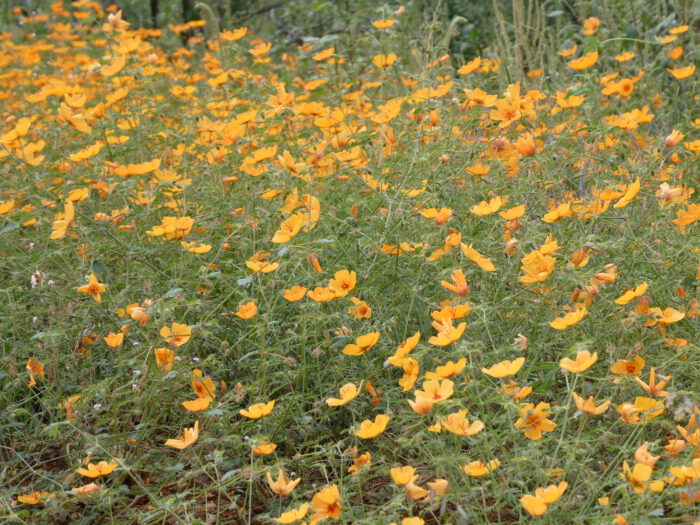
For much of the summer the land had an orange hue, largely thanks to dense carpets of Summer Poppies, but also Orange Flame Flowers and Saya blossoms. Trailing Windmills lent their magenta flowers to the mix, while shockingly white Rock Trumpets cast a pleasant aroma across the preserve. Robust annual Devil’s Claws commanded attention with their giant leaves, smelling like an old couch. At the height of monsoon flowering, we counted over 35 species in bloom – not including the native grasses!
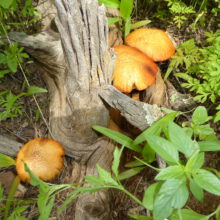
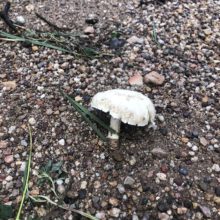
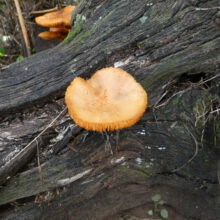
Not to be outdone, fungi came on the scene en masse starting in August, though they truly hit their stride in September. Puffballs, Stalked Puffballs, Earthstars, Inky Caps, tree-dwelling Polypores, and others sprang to life.
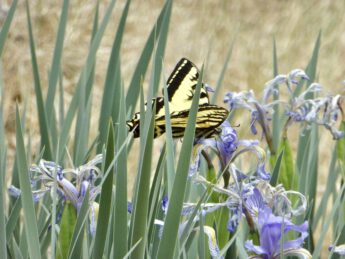
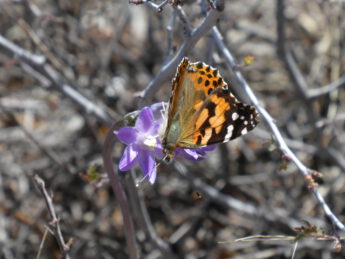
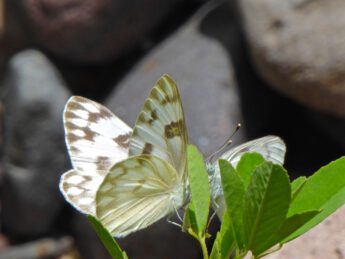
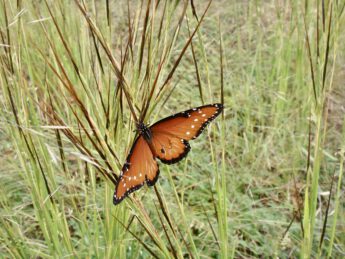
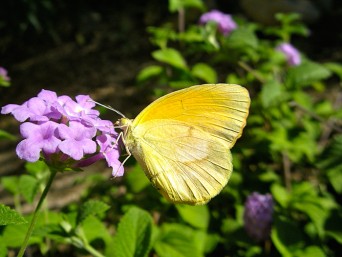
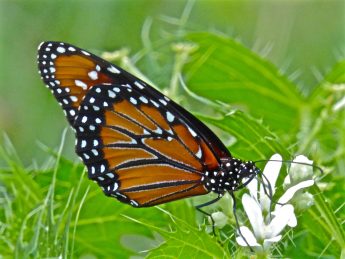
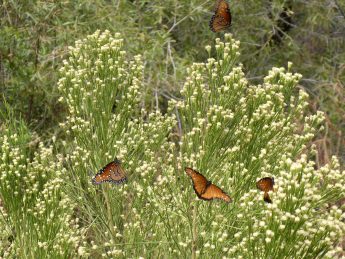
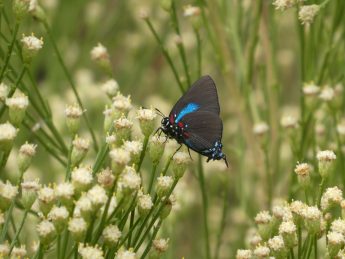

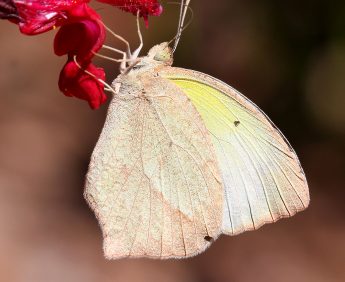
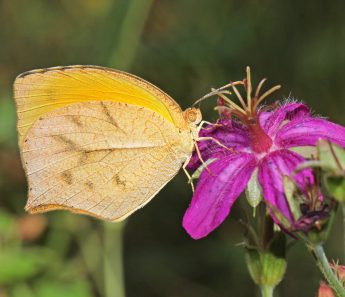
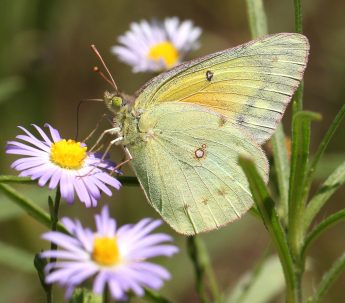
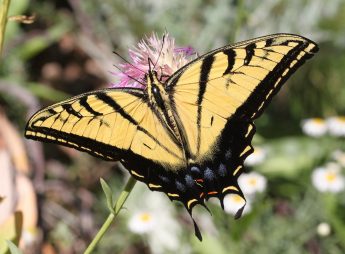

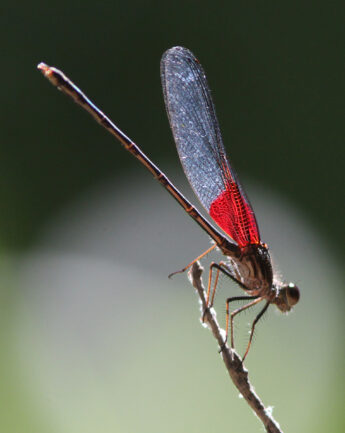
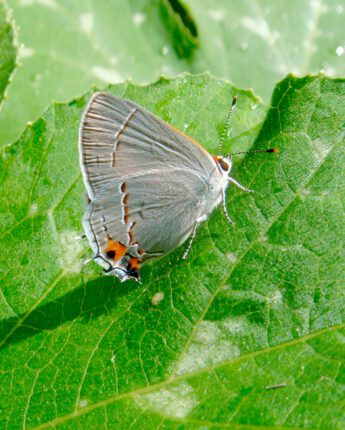
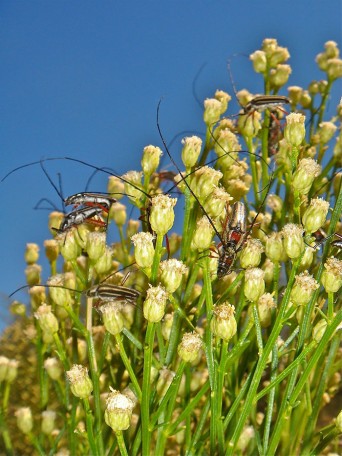
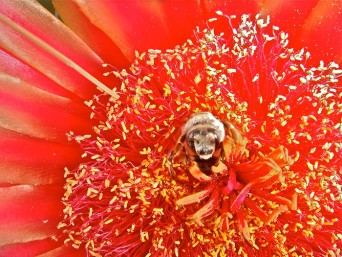
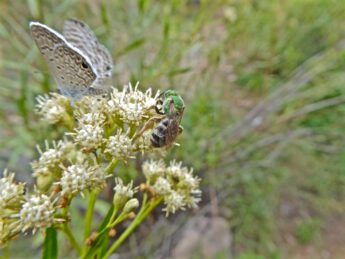
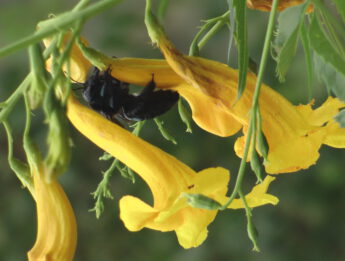
Many invertebrates – most visibly, butterflies – responded to the surfeit of rain at Raven’s Nest. Late monsoon season witnessed good numbers of Queens, Pipevine Swallowtails, Acacia Skippers, Bordered Patches, Tiny Checkerspots, Dainty Sulphurs, Cloudless Sulphurs, American Snouts and many others at the preserve. Given the profusion of wildflowers, they had ample nectar supplies, helping to pollinate the blossoms during their feeding visits. Carpenter Bees and other native hymenopterans added their own pollination services during the monsoon.
 1
1
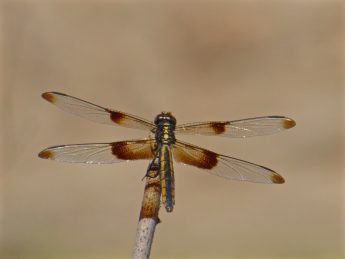
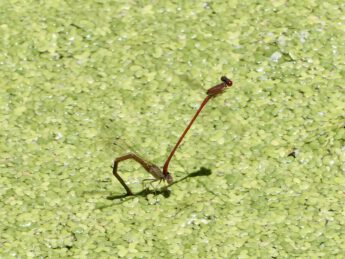
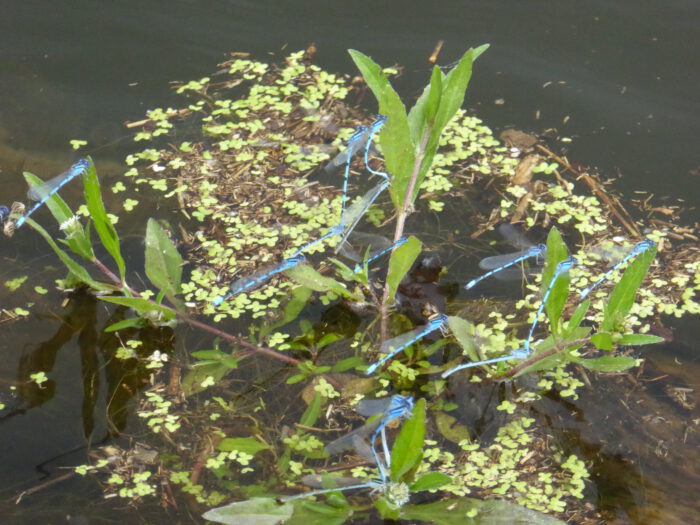
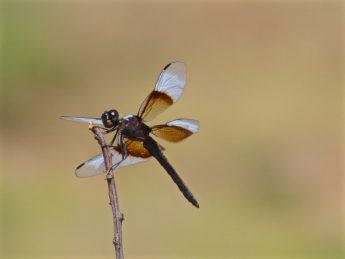
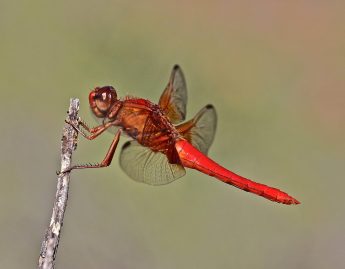
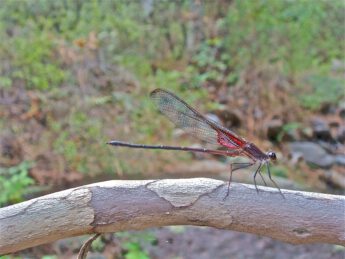
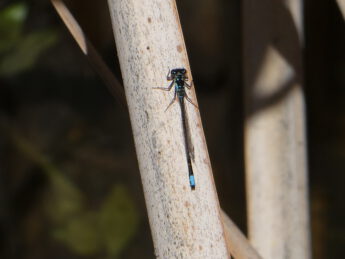
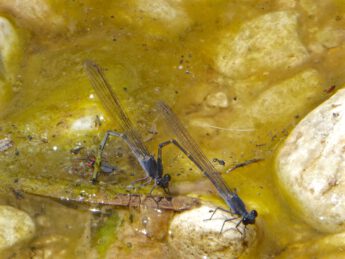
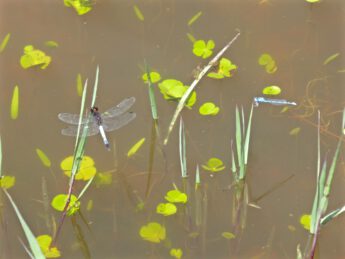
Meanwhile, several species of Dragonfly and Damselfly patrolled our various wildlife ponds, where Diving Beetles, Snails, and other aquatic invertebrates plied the water in search of sustenance. We also enjoyed numerous sightings of Army Ants, filing in swift attack columns while looking to pillage other ant species of their larvae and eggs.

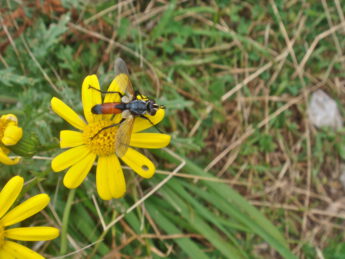
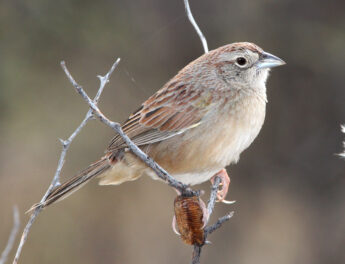
The boon of invertebrates proved seminal for breeding birds. Several thunderous storms enticed Botteri’s Sparrows to start singing, as evolution has hardwired an innate knowledge in them that rains lead to insects, which translates into nesting success.
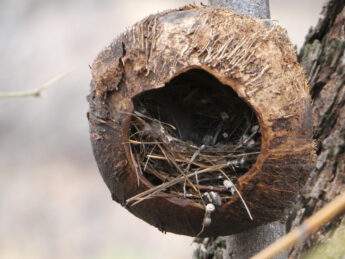
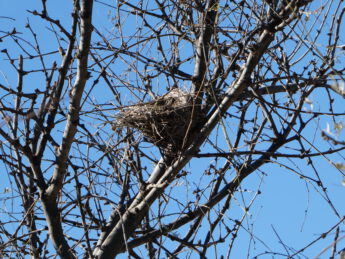
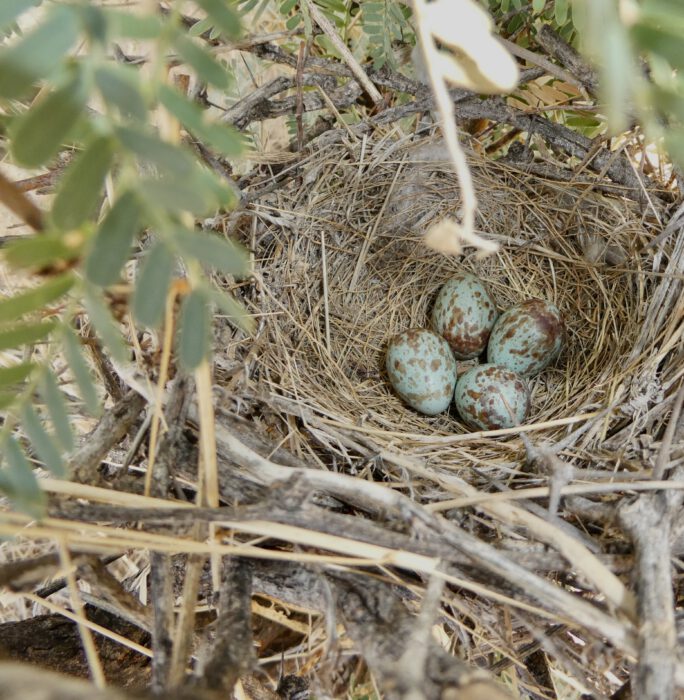
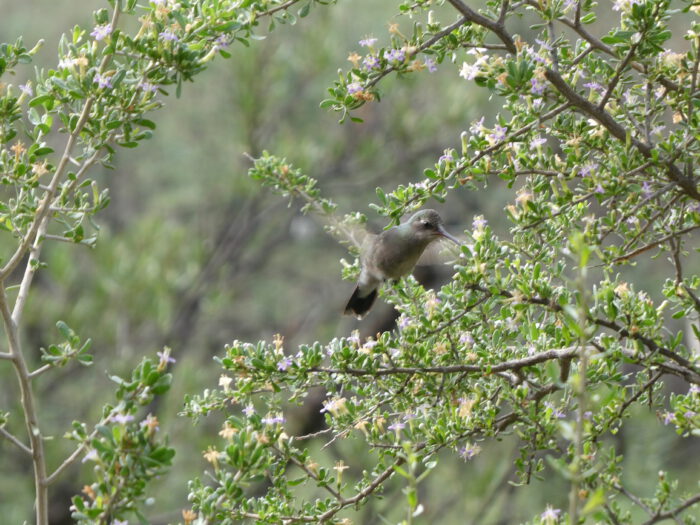
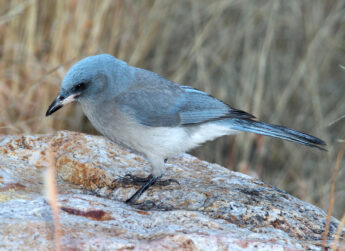
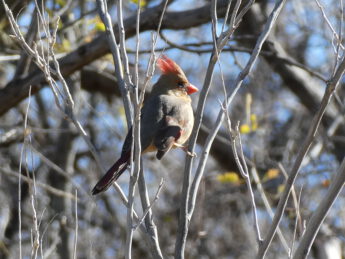
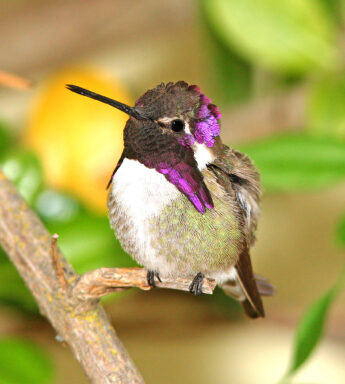
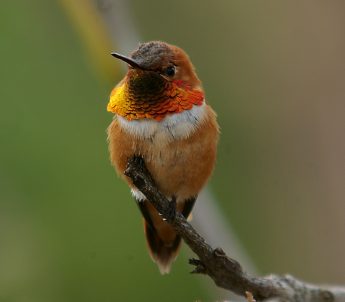
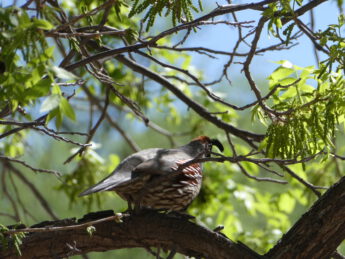
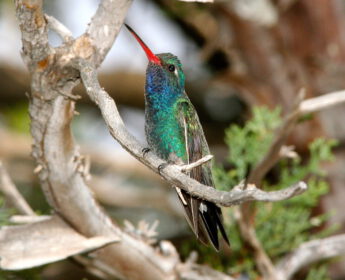
Gambel’s Quail pairs suddenly appeared with precocious chicks in tow. A family of Northern Cardinals particularly favored the wooded oasis around our house. A pair of audacious Canyon Towhees shuffled their way across the damp ground in search of food. Broad-billed and Black-chinned Hummingbirds honed in on key nectar plants, including Yellow Trumpet and Wolfberry shrubs. Their tiny nests adorned various trees and shrubs at Raven’s Nest. Perhaps the most arresting bird of the summer was a lone Woodhouse’s Scrub Jay lingering near our wildlife ponds – rather far from its normal oak-dominated haunts.

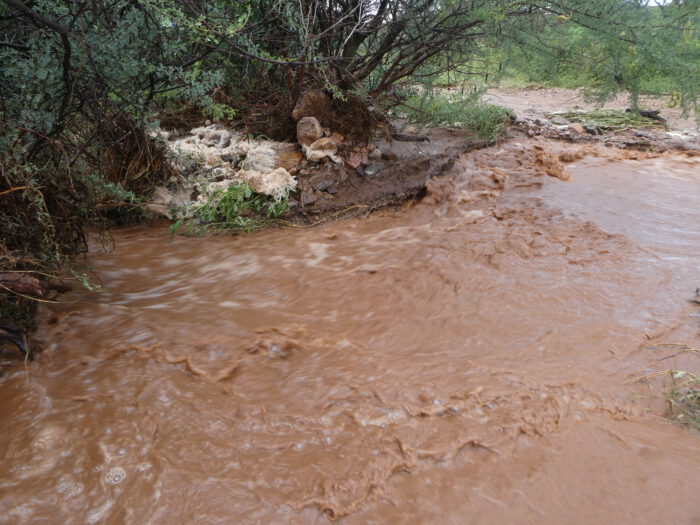
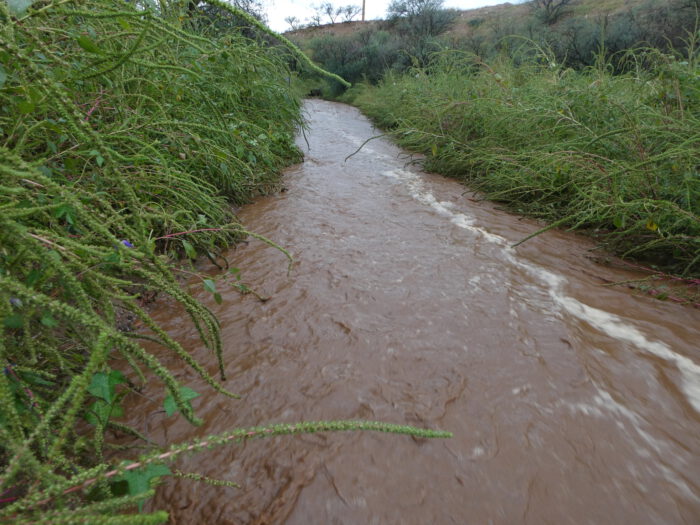
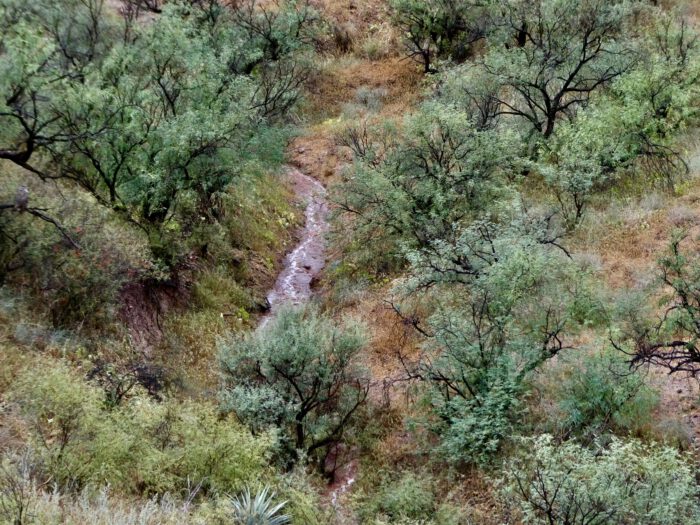
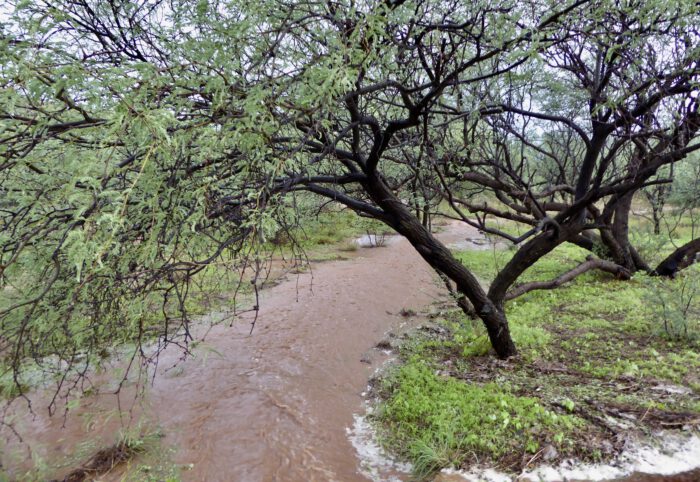
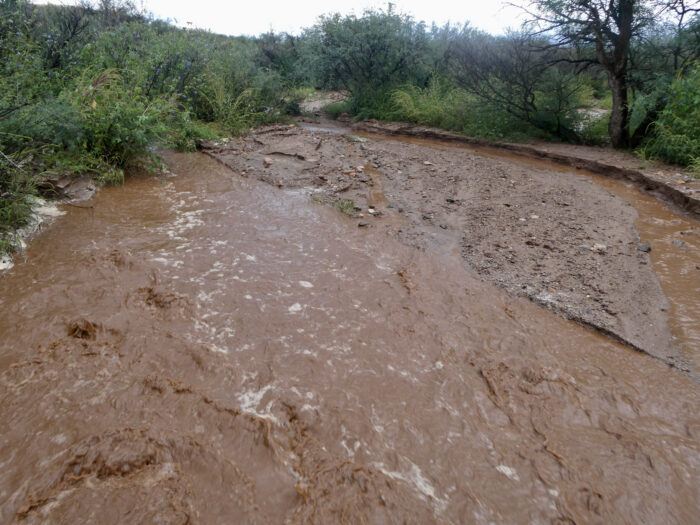
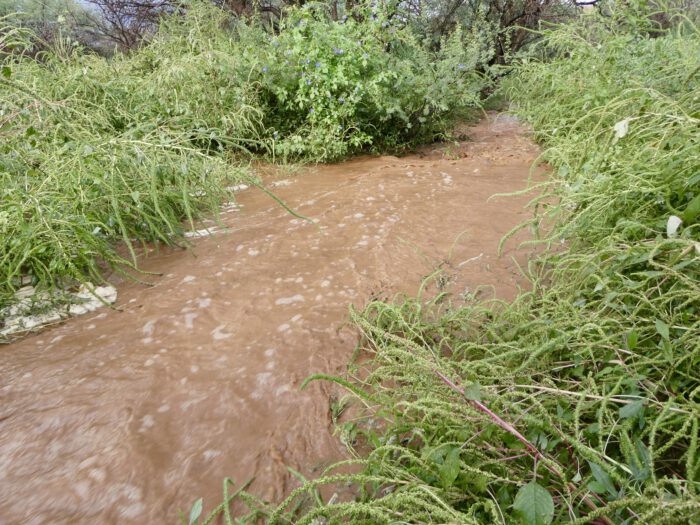
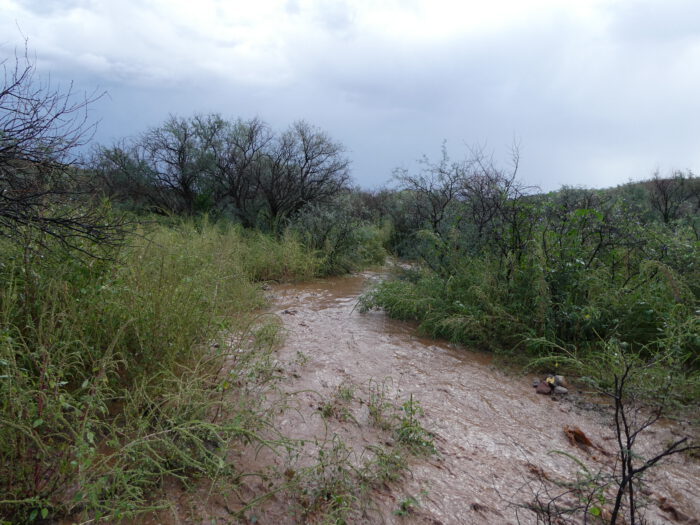
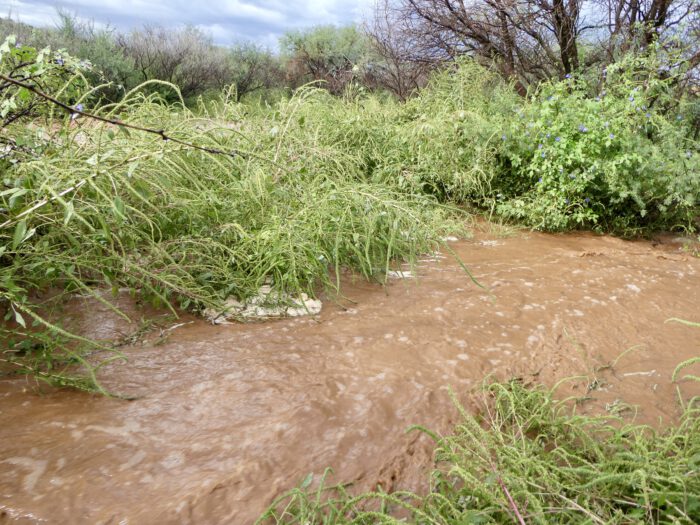
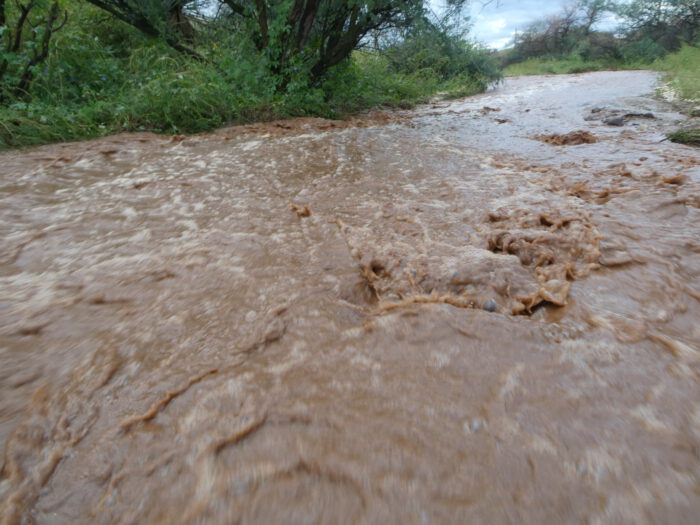
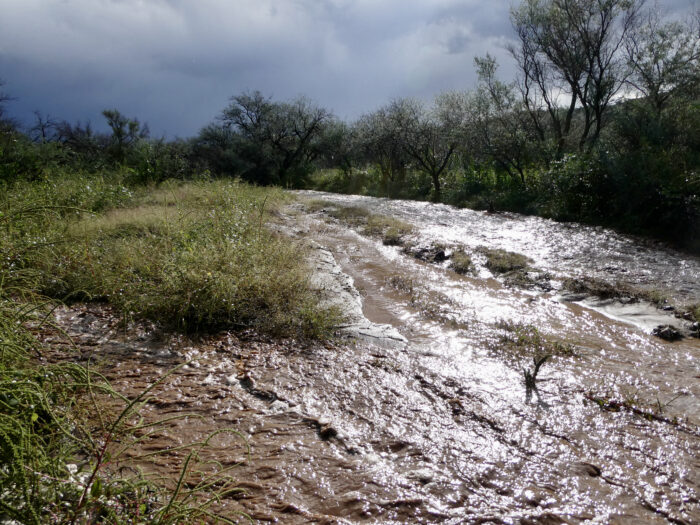
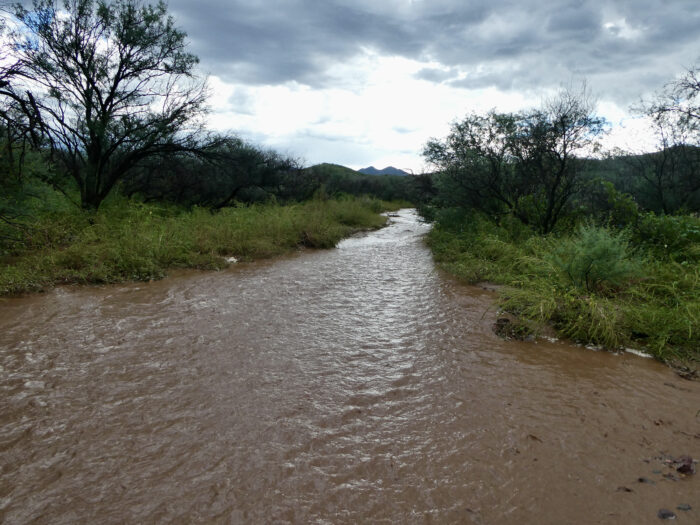
Circling back to the larger rain events of the 2025 Monsoon, most of them led to vigorous flows in our various arroyos at Raven’s Nest. Flowing water frequently lent its hypnotic sound to the landscape as we rushed out to see our “instant streams”. Every new flow accordingly altered the arroyo landscape in both subtle and profound ways. New rocks, sand, and plant debris were imported by the tonnage, while other such organic material exited the preserve, beginning its hypothetical voyage to the Sea of Cortez.

New plants sprung up in the aftermath of the streams, while others disappeared in the blink of an eye. Animals too are transported by Monsoon flows, so we were delighted to find a thriving population of native Longfin Dace in Dragon Pond – washed there from Gray Hawk pond upstream!
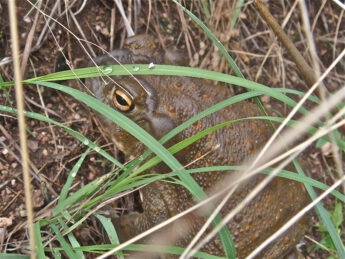
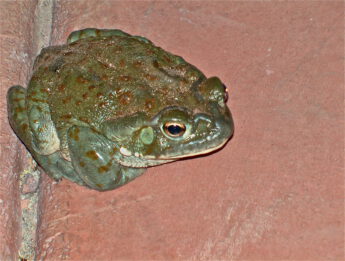
The often wet summer conditions induced Sonoran Desert Toads and other local Anurans into fits of vocal lust, males singing their mating choruses on damp nights. Egg masses magically appeared in our ponds the following mornings.
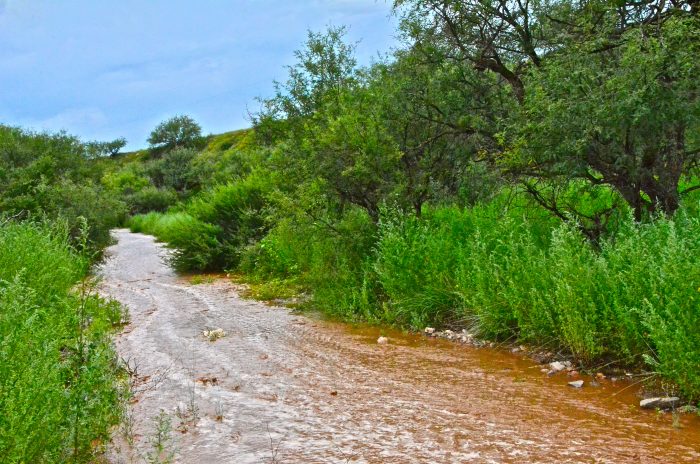
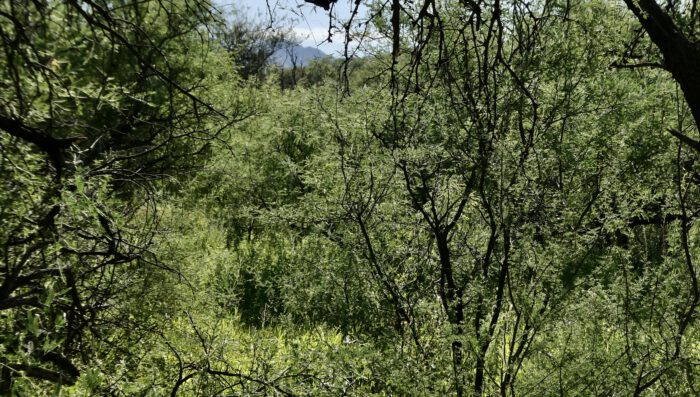
At the height of our rain-induced stream flow, much of the Mesquite Woodland in the lower portions of Raven’s Nest saw us at least ankle deep in water. We were easily reminded that this is why we are fortunate to host such an extensive woodland. Years of thoughtful watershed management had paid off, allowing the water to spread out in the landscape, watering countless Velvet Mesquite, Catclaw Acacia, Graythorn, Netleaf Hackberry, and Arizona Juniper trees in the process.
Clearly, Monsoon 2026 and 2025 delivered its promise of biodiversity, leading to a profusion of life that made Raven’s Nest Nature Sanctuary feel as if we were living in our own national park.