CONSERVATION PRACTICES AT RAVEN’S NEST
Xeriscaping

At our home within Raven’s Nest Nature Sanctuary our ongoing Xeriscaping efforts since March 2008 have been aimed at environmental sustainability, helping to help support our Sky Islands biodiversity via:
- Conserving Water
- Designing Wildlife Habitat
- Harvesting Rainwater
- Creating Natural Wildlife Food Sources
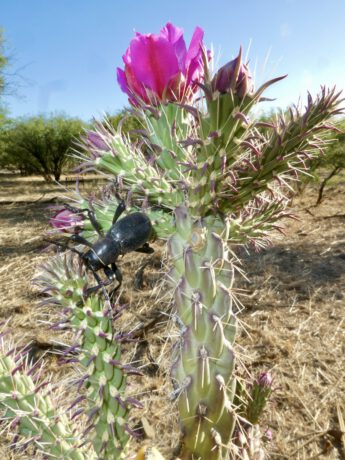
- Promoting Native Pollinators
 We select drought-resistant plants native to the Sky Islands region that are: attractive, long-blooming, and which lure in a variety of native pollinators.


After selecting appropriate species from a conservation-minded local nursery – or taking cuttings from existing xeriscaping – we plant in multiple vertical layers, attempting to mimic nearby natural habitats. The layered habitats we have created include: ground covers such as wildflowers, vines, sub-shrubs, taller shrubs and small trees, and larger trees. This structural complexity furnishes wildlife with food, thermal cover, and nesting or breeding areas. Further, the xeriscaped landscapes that we have created at Raven’s Nest Nature Sanctuary require relatively minimal water beyond what our natural climate provides.
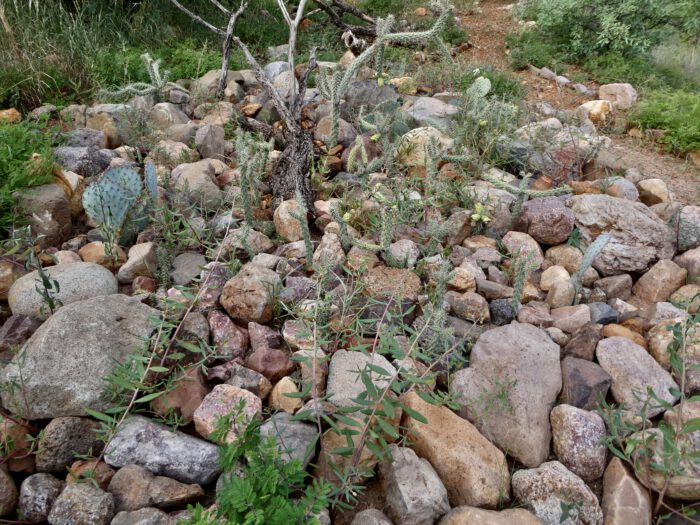
 Placing each species in the ground with meticulous care with the hope for a better future, we always top-dress the soil with 4 to 6 inches of organic mulch and build a small rock retaining wall to minimize evaporation, keeping the soil healthy and productive.
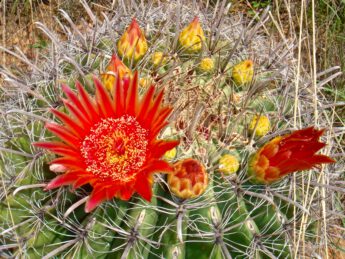
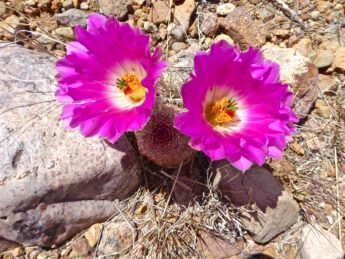
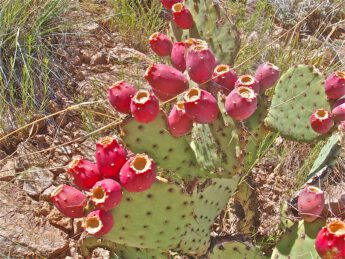
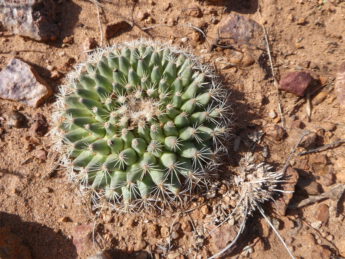
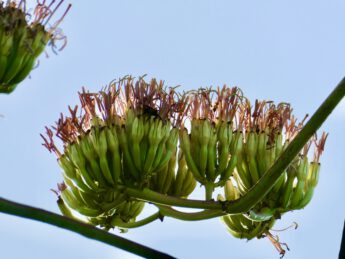
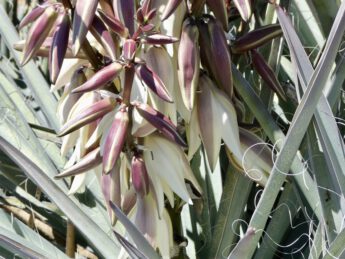
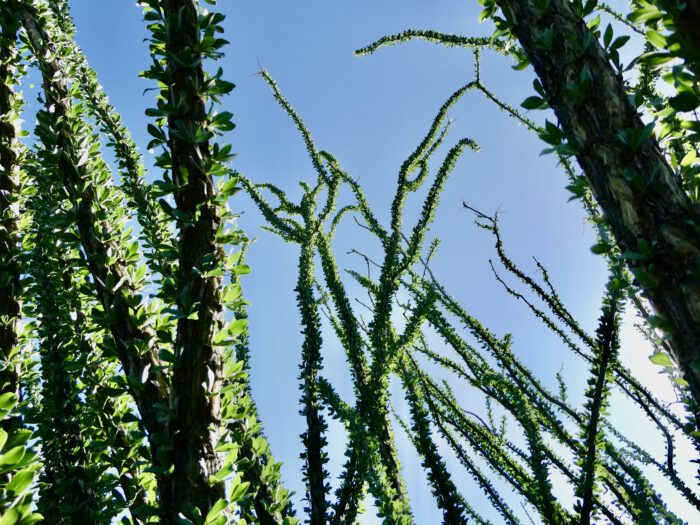
The long-term care required is minimal as each native species is well-adapted and very resistant to the vagaries of our local climate. Many of our xeriscape plants are now reproducing and spreading on their own – a sure sign of success!


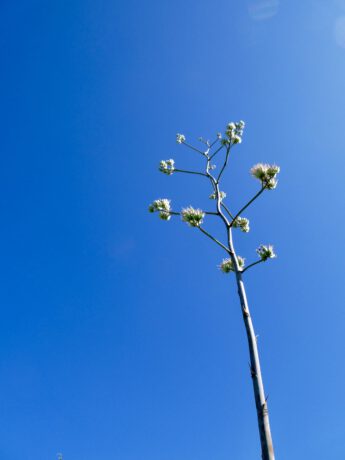
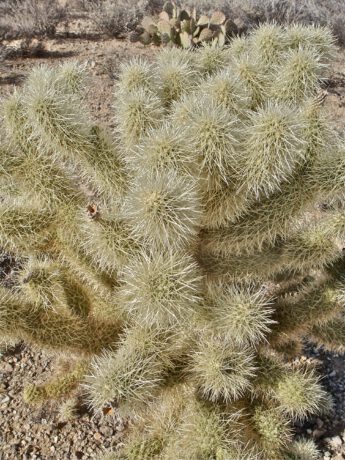
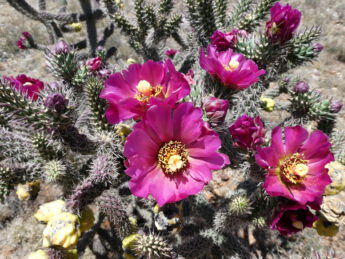
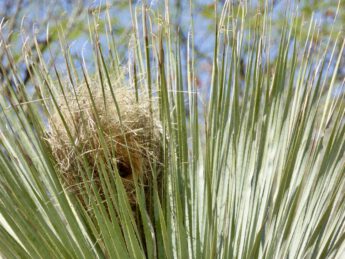
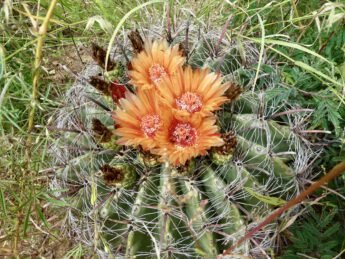
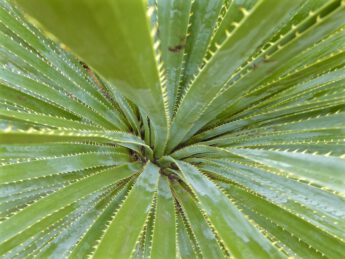
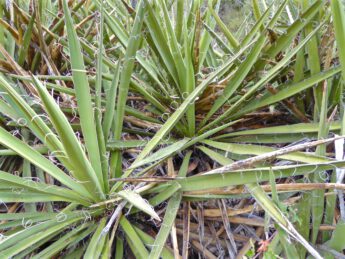
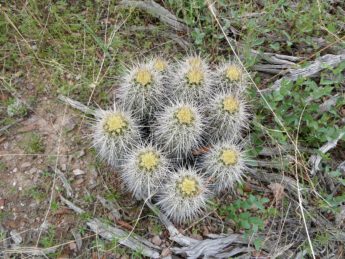
Following the tenants of xeriscaping, we’ve created two “Water Use Zones” where we group plants with similar water needs together around our Sky Islands Discover Center and our Southwestern home.

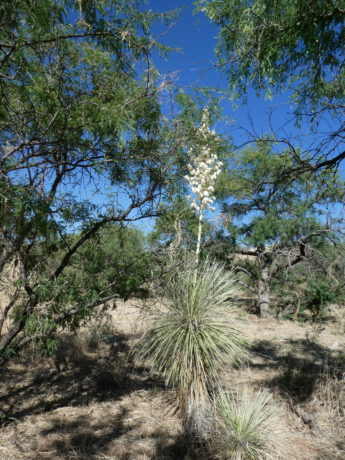
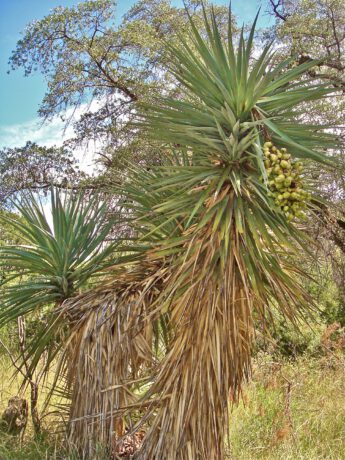
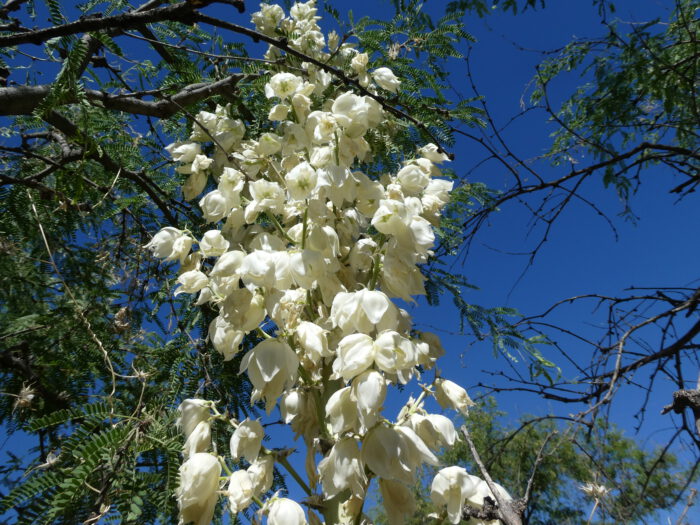
PRIMARY ZONE : The native species of trees, shrubs, and vines that we’ve planted around our Sky Islands Discovery Center and our Southwestern House require only minimal supplemental water during times of drought.


Some provide us with wild edible fruits, medicines, or other usable parts. All of them collectively create diverse and resilient wildlife habitats that benefit a myriad of species. The totality of plant fruit, pollen, nectar, and other resources support a great diversity of wildlife at Raven’s Nest Nature Sanctuary. Finally, in addition to providing beauty, our xeriscaping helps ameliorate weather extremes to the buildings they surround through their shading and wind-reduction effects.


SECONDARY ZONE : Here we have planted native, low-water use species of trees, shrubs, vines, wildflowers, and succulents.
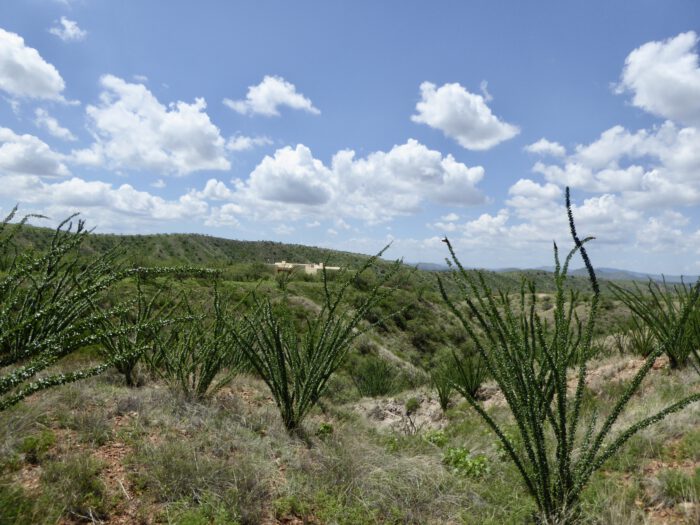
By planting native species in these 2 zones we are fostering a multi-faceted wildlife habitat that contributes to the unique biodiversity of the Sky Islands and benefits a wide range of species including – mammals, birds, reptiles, amphibians, butterflies, moths, bees and other invertebrates. Through our ongoing Sky Islands ecological restoration efforts we hope to inspire you to contribute to the management, health, recovery, and preservation of your own local ecosystems – wherever you may live. Everyone can emulate our Conservation Practices , which can be applied well beyond the Southwest and adapted to your local area!