
UNIQUE ECOLOGICAL & CONSERVATION EXPERIENCE!
Vincent Pinto has been a passionate and dedicated Conservationist since the mid 1980’s – committed to Environmental Education and Earth Stewardship in the ecologically rich Sky Islands region of southeast Arizona. Via his Ravens-Way Wild Journeys LLC Vincent’s hands-on and action-oriented Mission to help preserve the area’s unique biodiversity began in 1993 at Raven’s Mountain Nature Sanctuary.
Since March 18, 2008 Vincent and his wife, Claudia, have focused on preserving the unique Sky Islands biodiversity at their 42-acre Raven’s Nest Nature Sanctuary. In homage to the land’s strategic location their unwavering goal has been its Ecological Restoration , protection and preservation for generations to come.
Their efforts have greatly benefitted the preserve’s varied habitats, while helping to conserve water in one of the world’s most vital biodiversity hotspots. Vincent’s knowledge – born from decades of hands-on field experience as a wildlife biologist, ethnobotanist and naturalist – is reflected in every direct action taken at Raven’s Nest Nature Sanctuary.
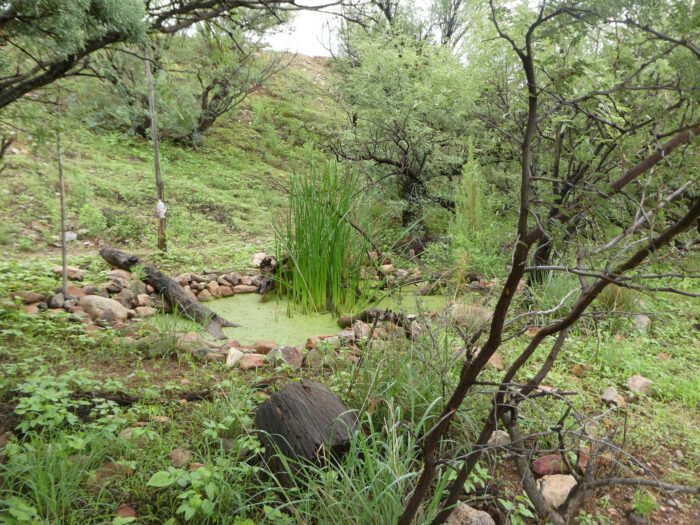
While anyone can put a sign up and proclaim a “nature sanctuary”, since 2008, Vincent and Claudia have committed to protecting world-class Sky Islands biodiversity, safeguarding a critical wildlife corridor, and serving as a haven for hundreds of rare migratory birds at their Raven’s Nest Nature Sanctuary. Over the years the transformation of the land at Raven’s Nest via consistent earth stewardship has been profound, giving true meaning to the term.
OUR COMMITMENT TO PROTECTING SKY ISLANDS BIODIVERSITY

Given the continued diminishment of biodiversity across the planet, Raven’s Nest Nature Sanctuary serves several key purposes within the world-class Sky Islands Ecosystem:
I. Ecological Restoration
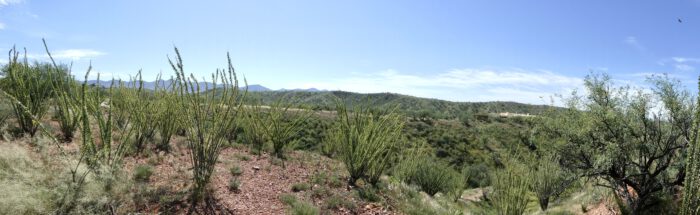
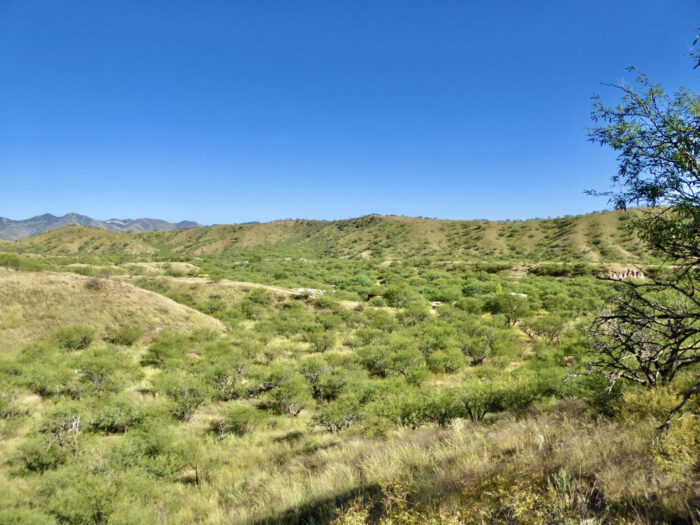
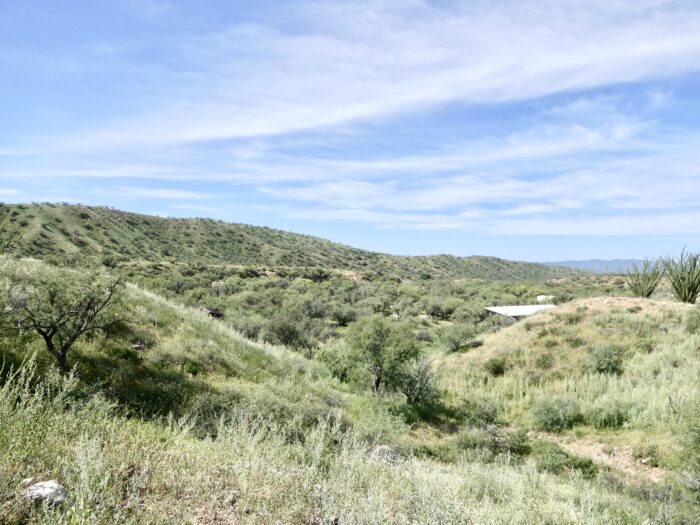
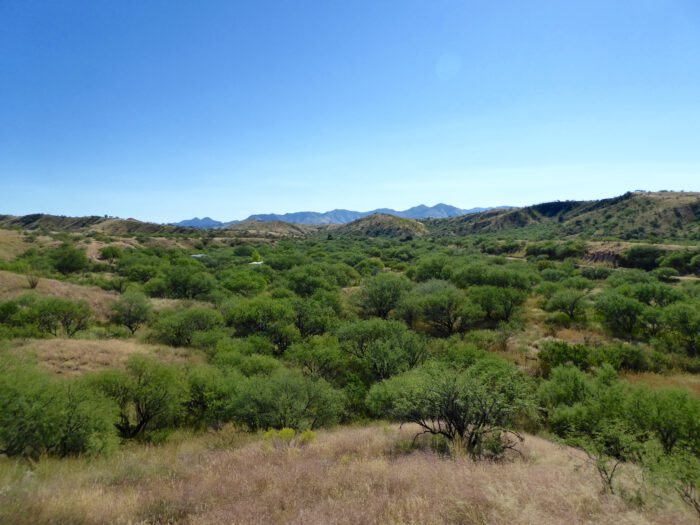
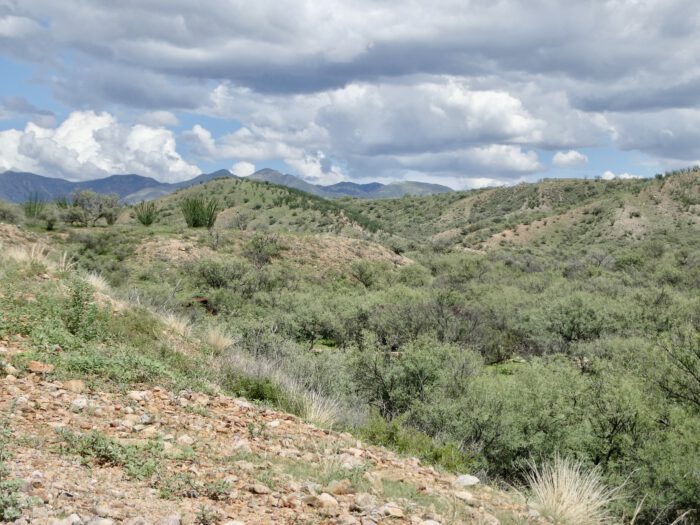
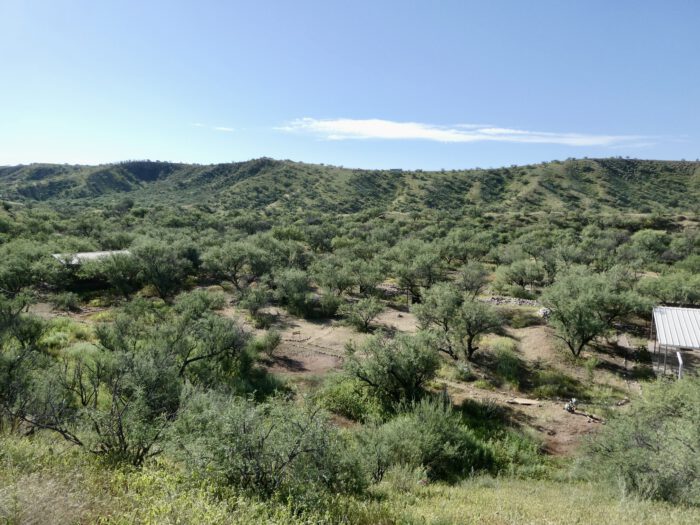
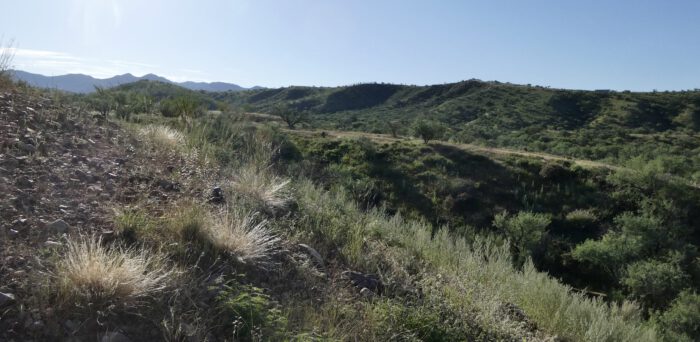
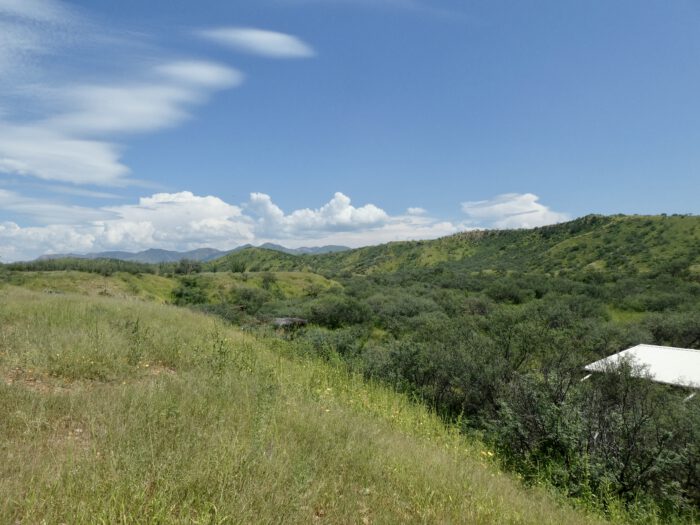
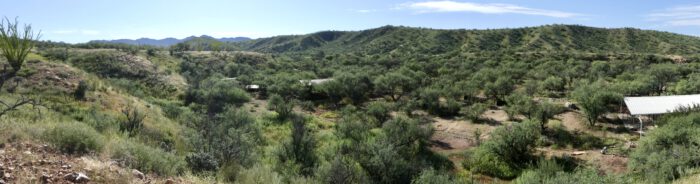
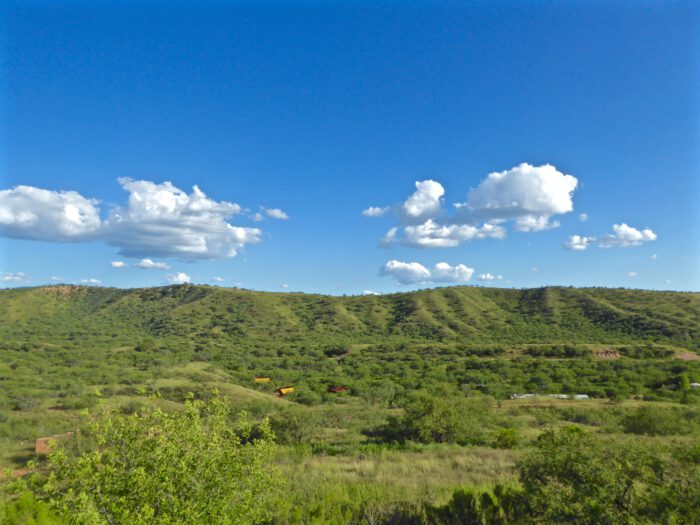
The ecological restoration at the preserve has allowed it to serve as an important puzzle piece in the larger continuum of protected natural areas in the central Sky Islands region of southeast Arizona. Tucked into scenic rolling hills, Raven’s Nest is a stepping stone between the Patagonia Mountains to the south and the Santa Rita Mountains to the north.
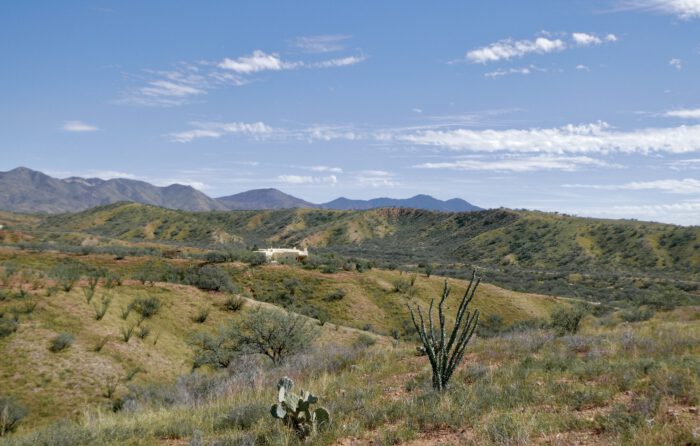
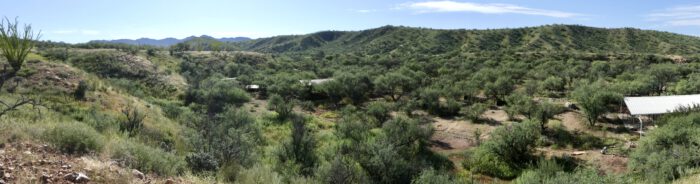

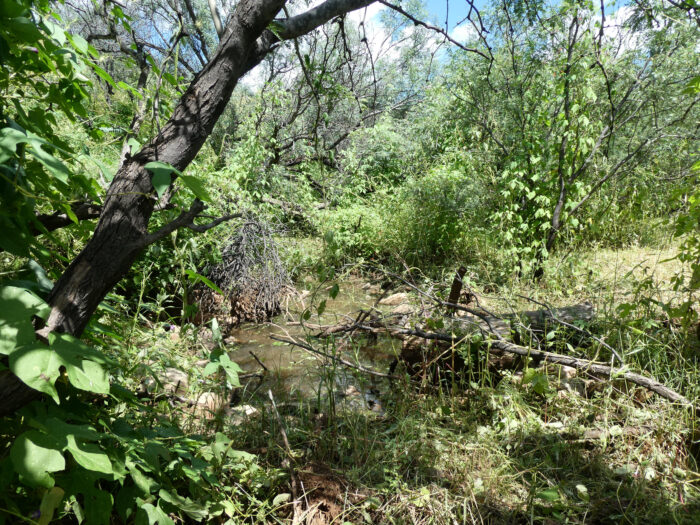
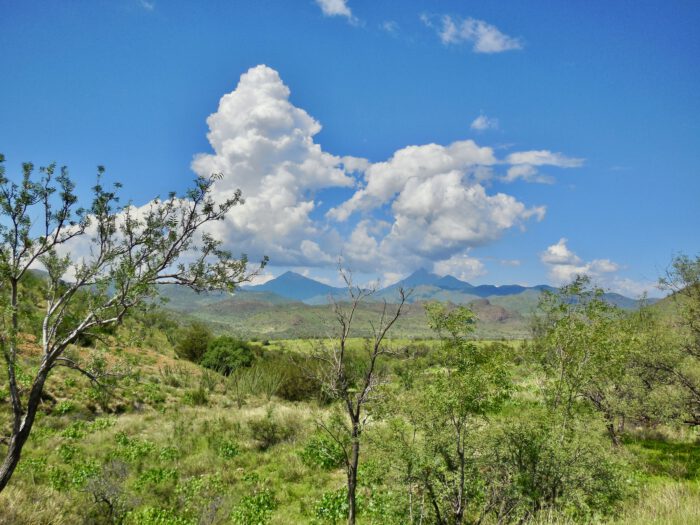
Further, the nearly 10,000 acres of protected land in Sonoita Creek State Natural Area are a very short walk from Raven’s Nest Nature Sanctuary. The critical juxtaposition of this key wild area to our private preserve enhances the ecological benefits by protecting world-class Sky Islands biodiversity, safeguarding a critical riparian wildlife corridor, and serving as a haven for hundreds of rare migratory birds, allowing a myriad of species to travel, inhabit, reproduce, feed, drink and flourish through this extensive and pristine wildlife corridor.
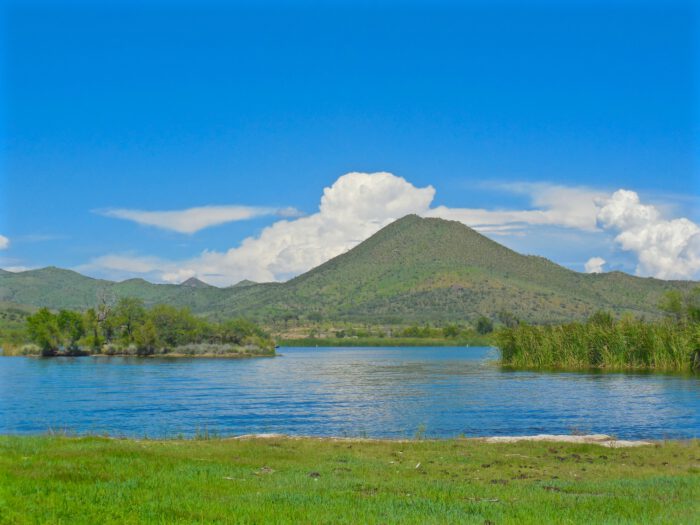
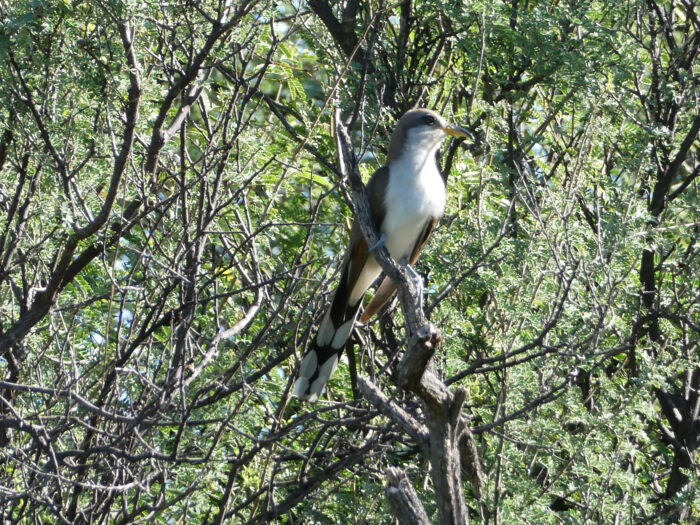
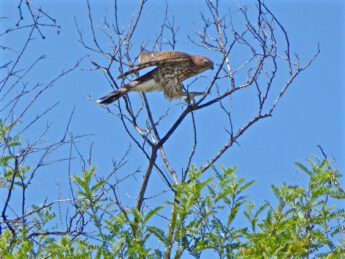
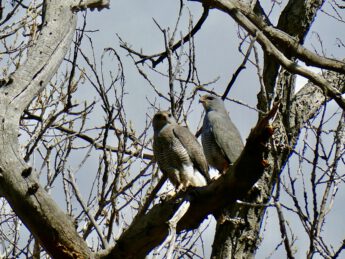
In addition, the short walk to the 2,668 acre Patagonia Lake State Park both enhances and highlights the transformative power of private land stewardship reflected in Raven’s Nest Nature Sanctuary in the fragile Sky Islands ecosystem. Positioned within a globally recognized Important Bird Area (IBA), as an extension of the Patagonia-Sonoita Creek Preserve. It provides essential nesting and foraging grounds for critical bird species, including Gray Hawks, Elegant Trogons, and Yellow-billed Cuckoos.
II. A Sky Islands Biodiversity Hotspot!
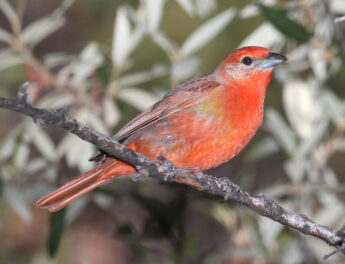
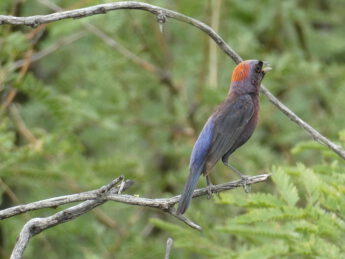
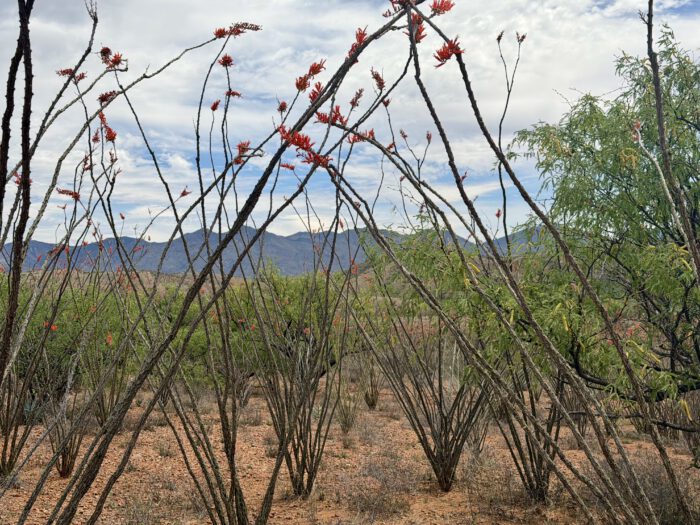 Raven’s Nest Nature Sanctuary is its own biodiversity hotspot within the larger one of the Sky Islands region. The proof of this at Raven’s Nest has been the preserve’s highly varied species list over the years. A diverse lineup of wildlife has enjoyed the sanctuary, including: Mountain Lion, Elegant Trogon, Gray Hawk, Sonoran Desert Toad, Gopher Snake, Ornate Box Turtle, Golden Eagle, Elf (a locally rare butterfly), Gila Monster, Common Gray Fox, Ringtail, Varied Bunting, Yellow-billed Cuckoo and many more.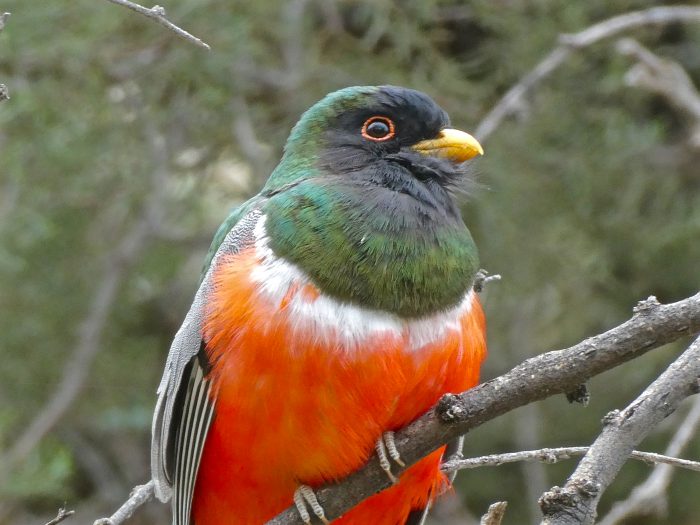
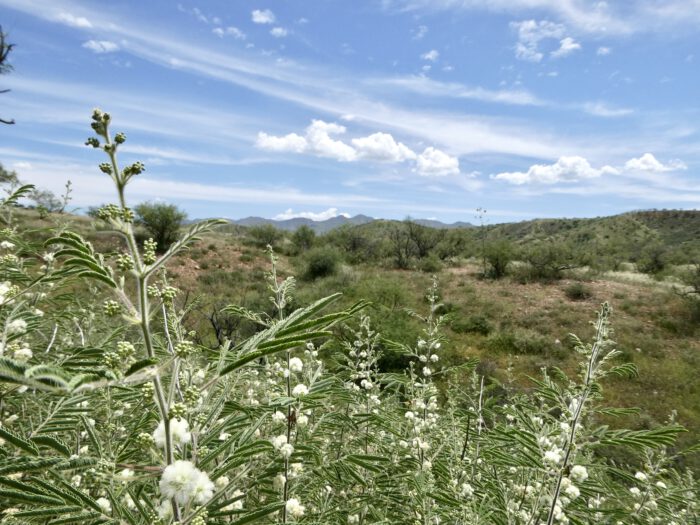

Biodiversity by the Numbers
The species totals for various taxa at the preserve bear testament to the healthy and diverse habitats as well as the numerous habitat restoration initiatives, successful ecological restoration and ongoing conservation initiatives at Raven’s Nest Nature Sanctuary.
Biodiversity highlights at the preserve include:
215 native Plant Species
54 Butterfly Species
7 Amphibian Species
25 Reptile Species, including:
1 Turtle Species
11 Lizard Species
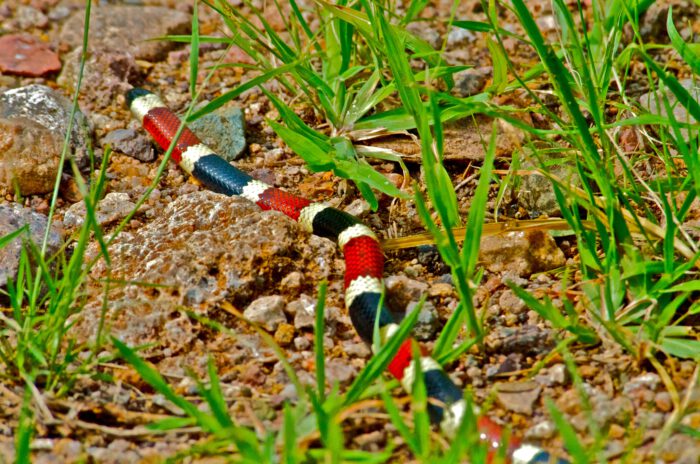
13 Snake Species
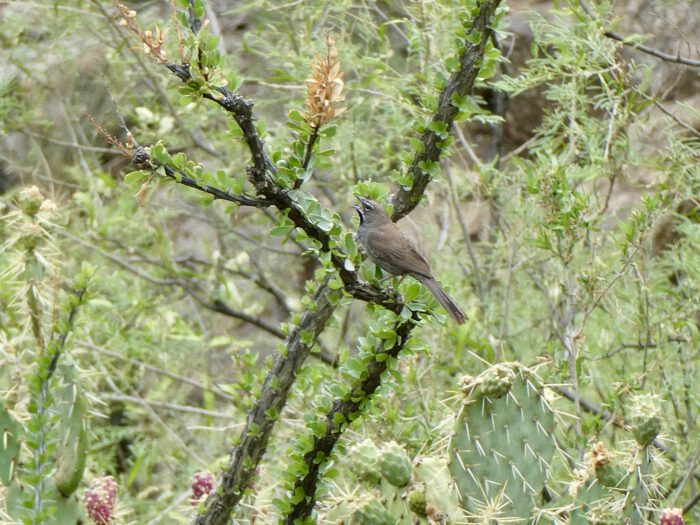
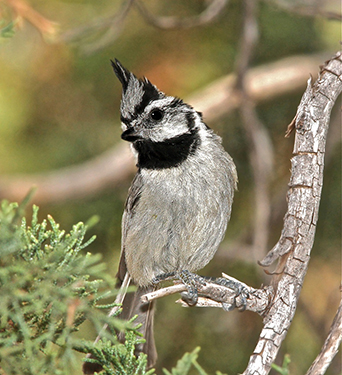
171 Bird Species
37 Mammal Species
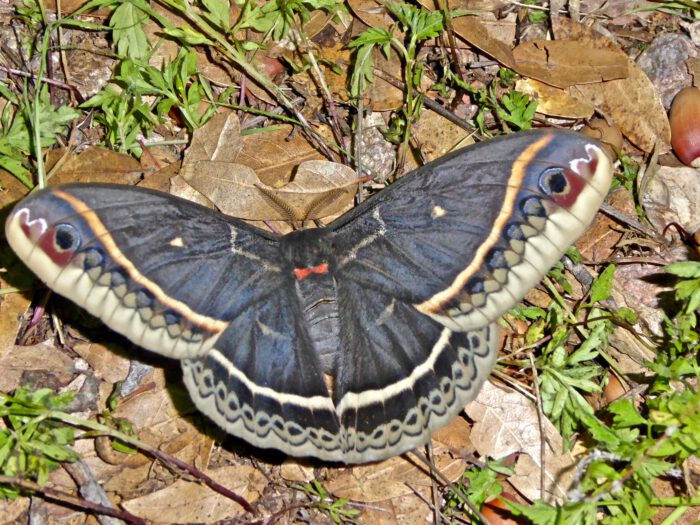
These numbers certainly represent an underestimate in each category, given the secretive nature of many species, such as nocturnal mammals and various snake species, as well as the highly ephemeral nature of many plants and butterflies. New species are added each year at the preserve, particularly among the birds, butterflies, and plants. Nevertheless, the current species counts represent elite levels of biodiversity for 42-acre Raven’s Nest Nature Sanctuary.
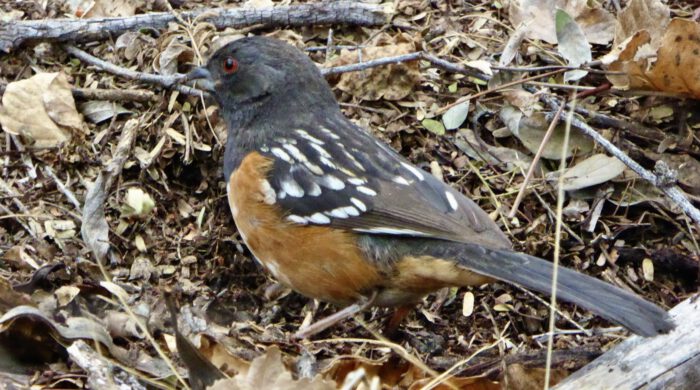
For perspective, the bird list at nearby 2,668-acre Patagonia Lake State Park stands at 362 species. Thus, the 171 bird species recorded at Raven’s Nest Nature Sanctuary. on an area 1.5% of the geographic size of the state park represent about 47% of the Lake’s list, which was compiled over many decades by 10’s of thousands of observers.
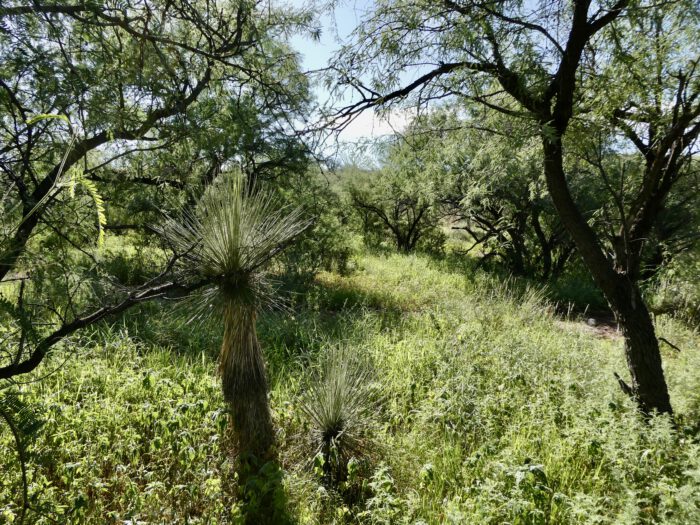
Overall, the assemblage of native species at Raven’s Nest Nature Sanctuary are more akin to those found in Mexico than the rest of the U.S. This lends a true tropical flavor to the preserve’s biodiversity.
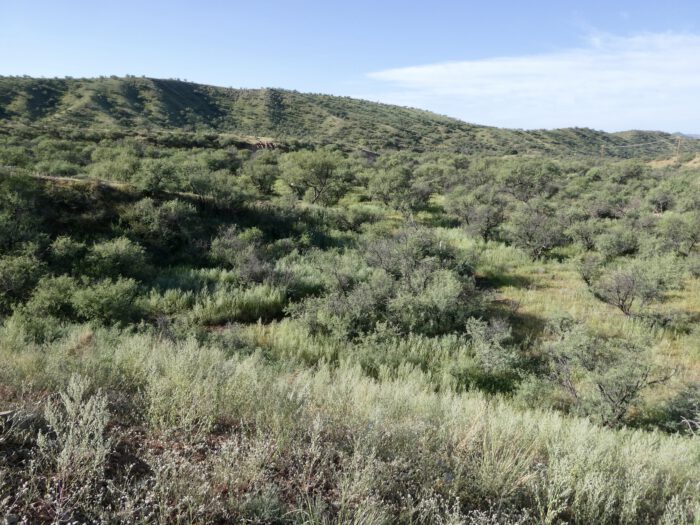
Diverse Habitats
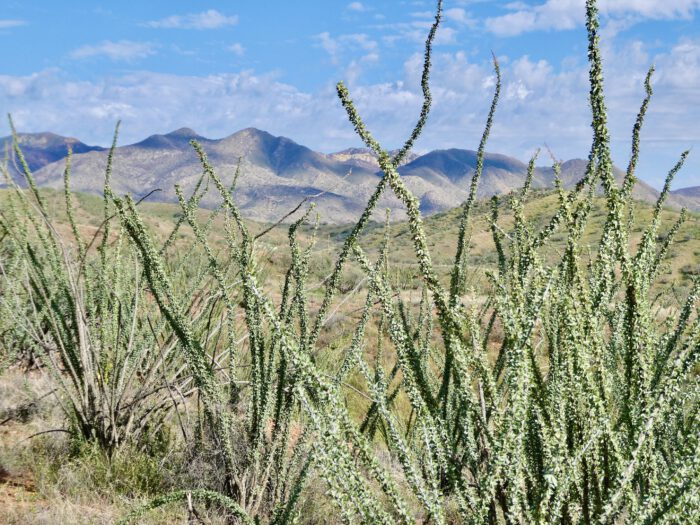
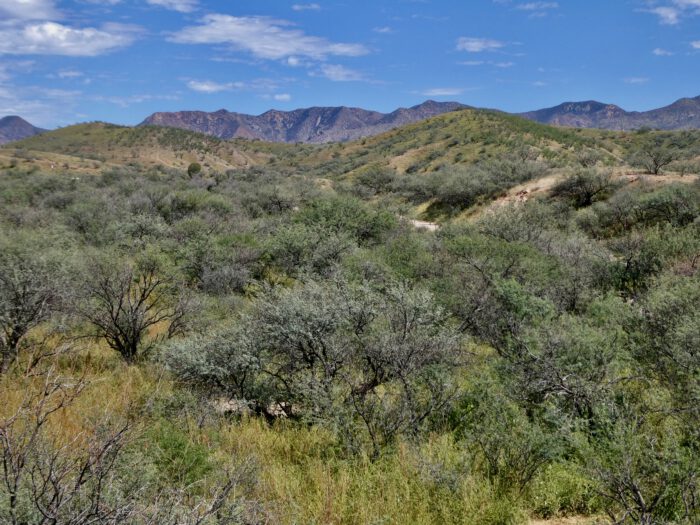
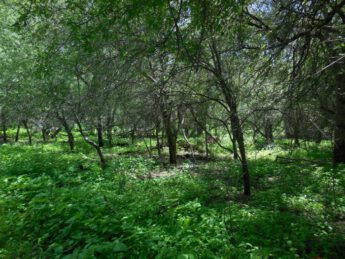
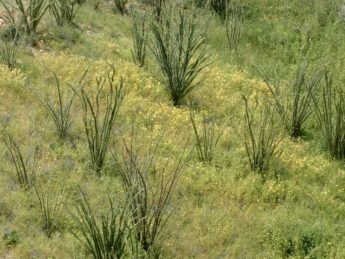
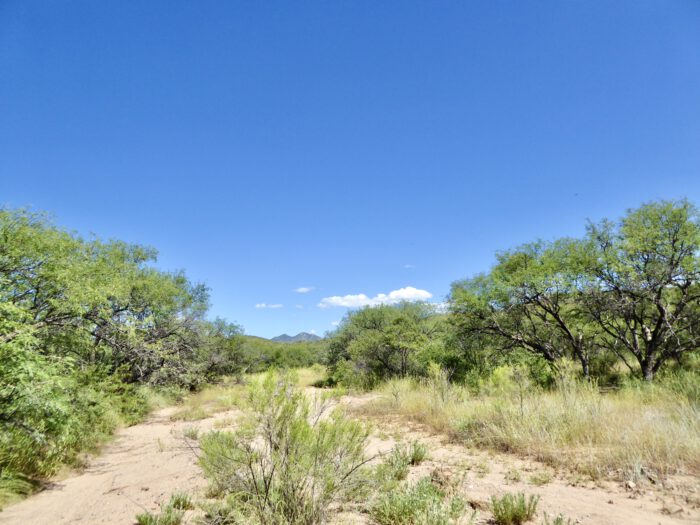
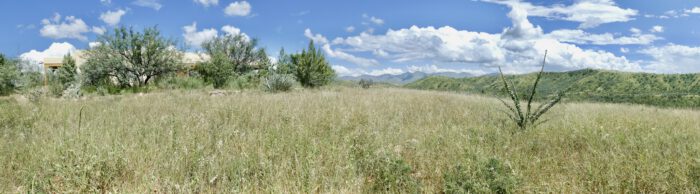
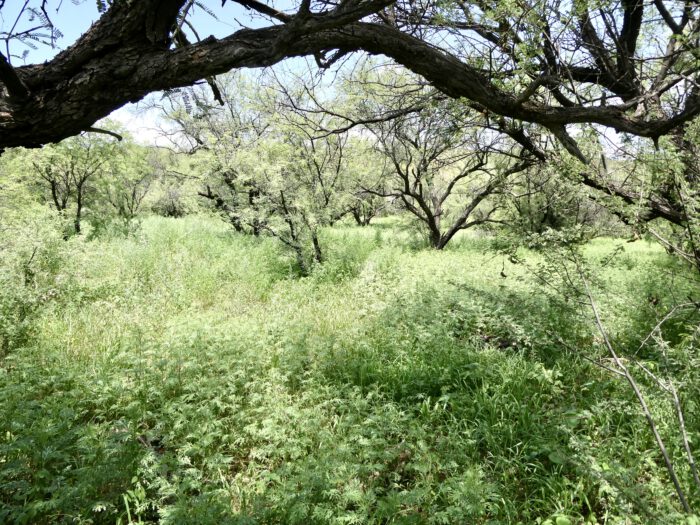
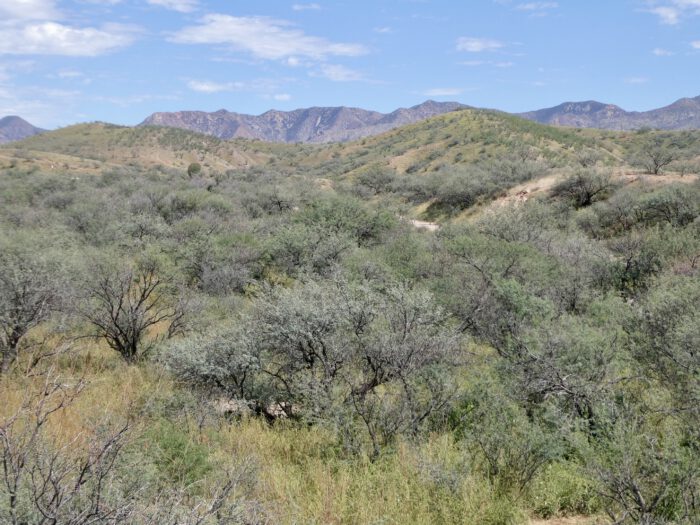
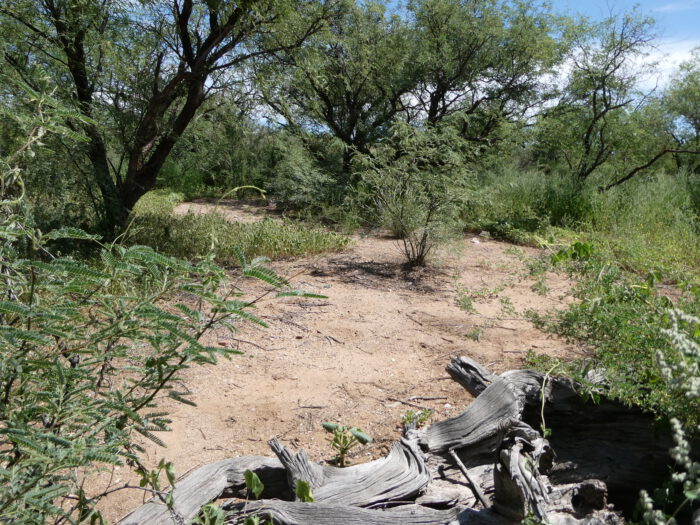
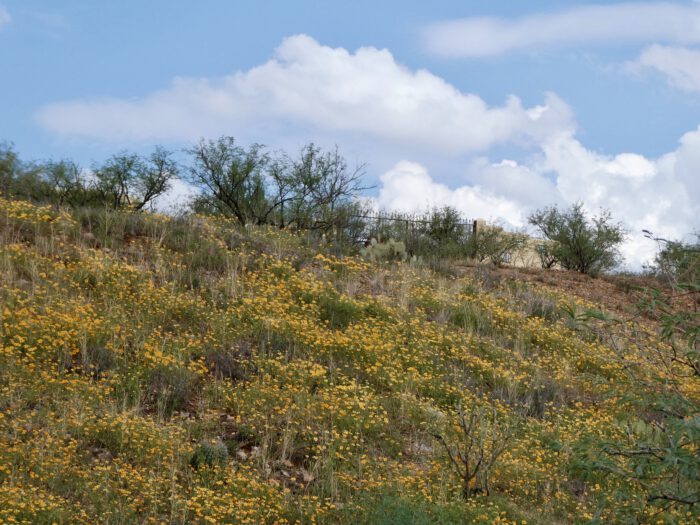
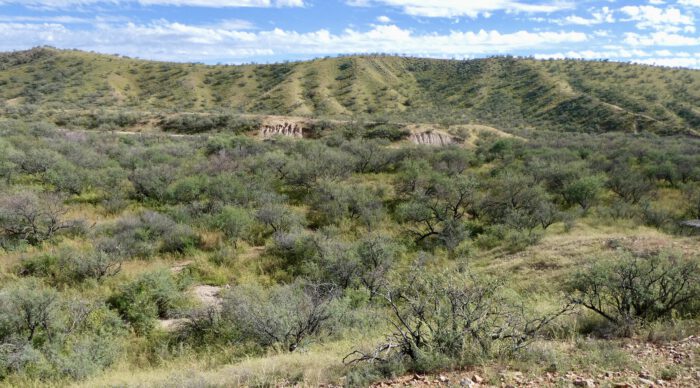
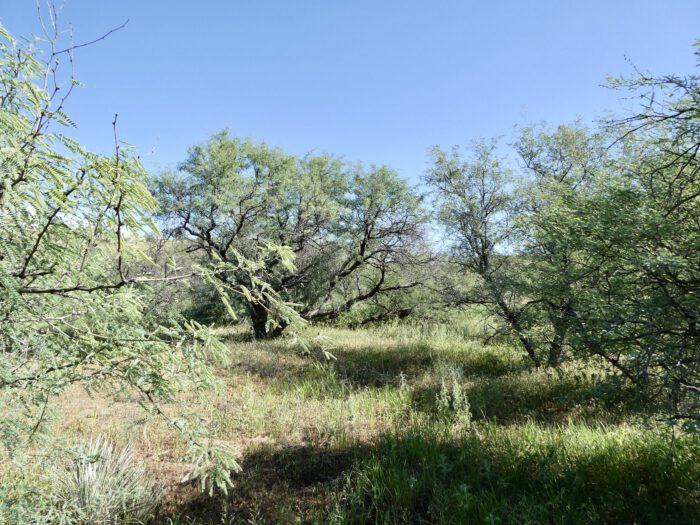
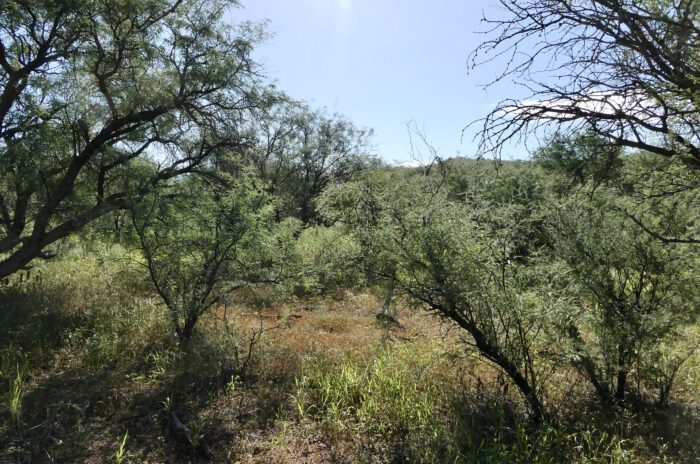
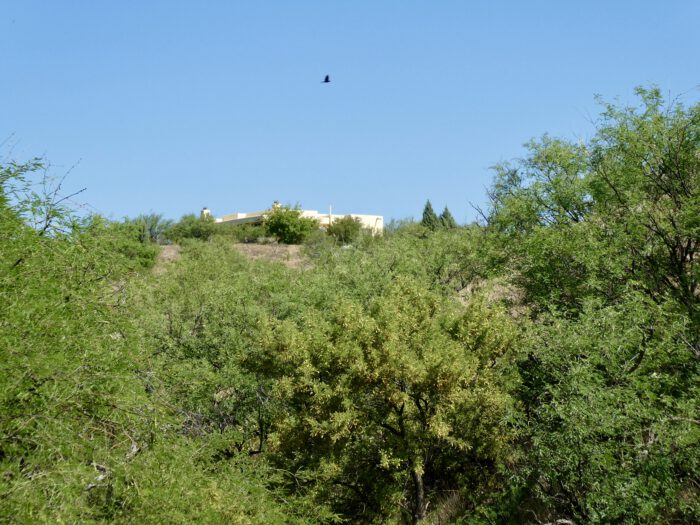
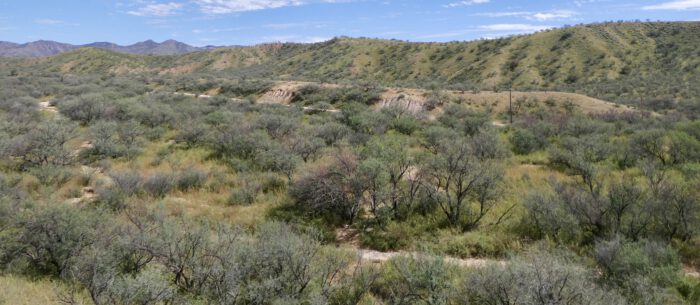
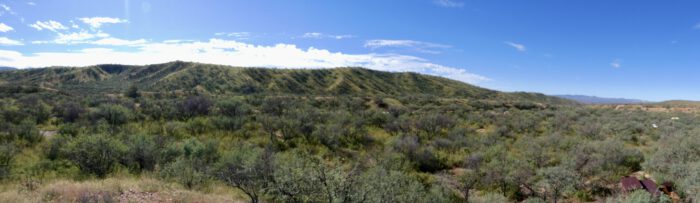
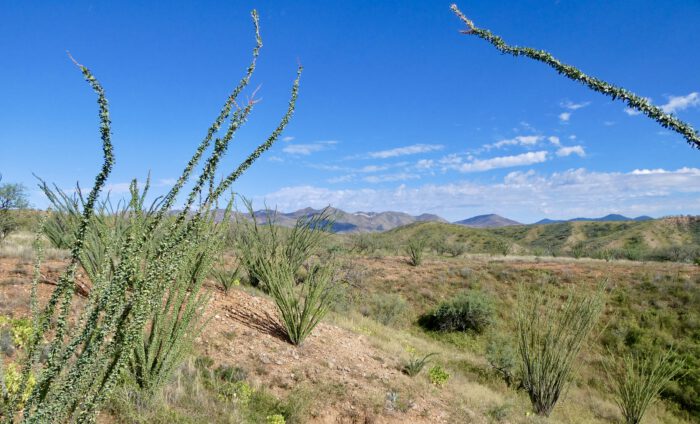
Raven’s Nest Nature Sanctuary supports a rich mix of distinct micro-habitats:
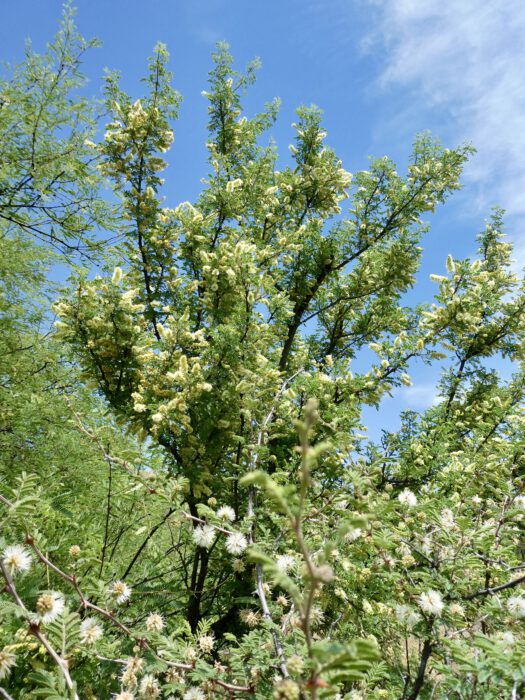
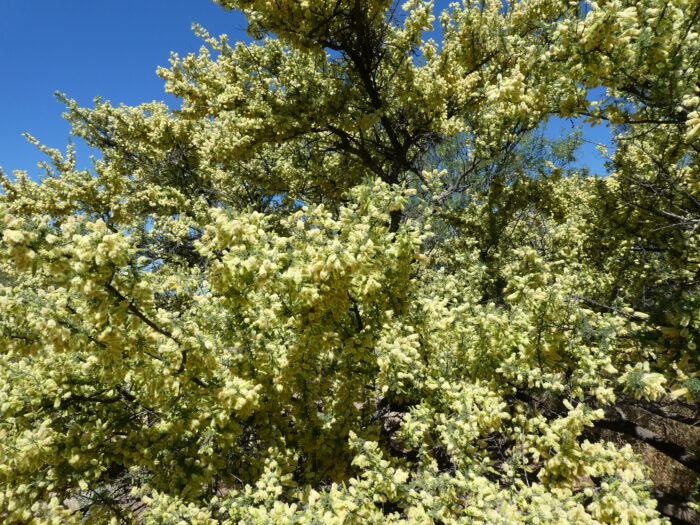
Velvet Mesquite – Catclaw Acacia Woodland
Dwarf Woodland
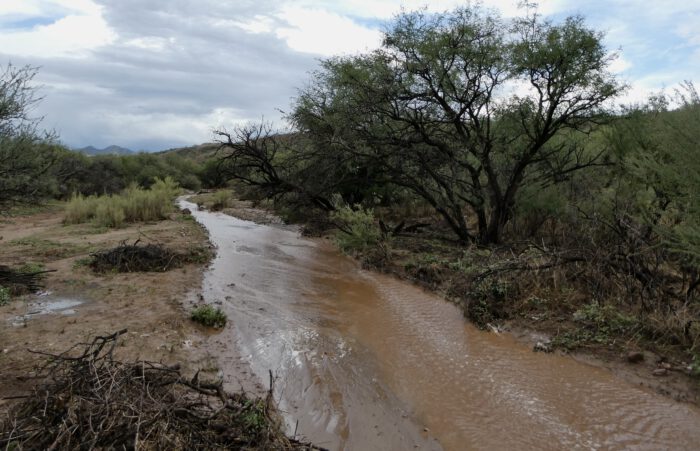
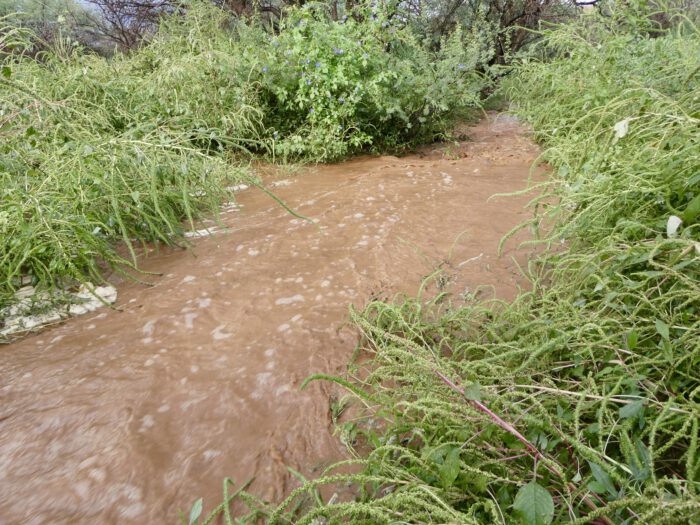
Arroyos
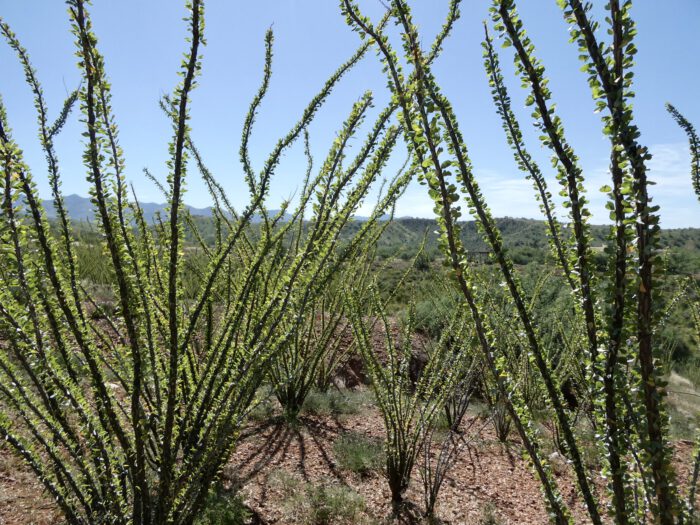
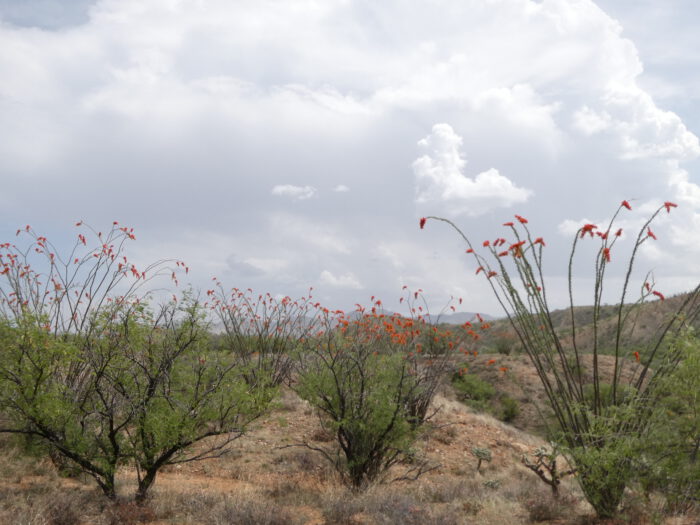
Ocotillo Woodland
Grassland
Canyon Thornscrub
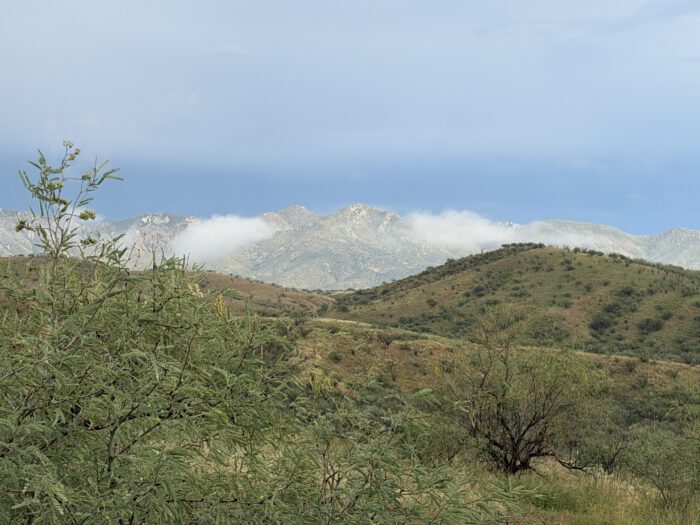
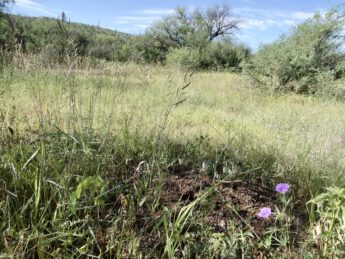
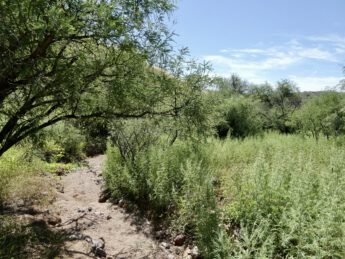
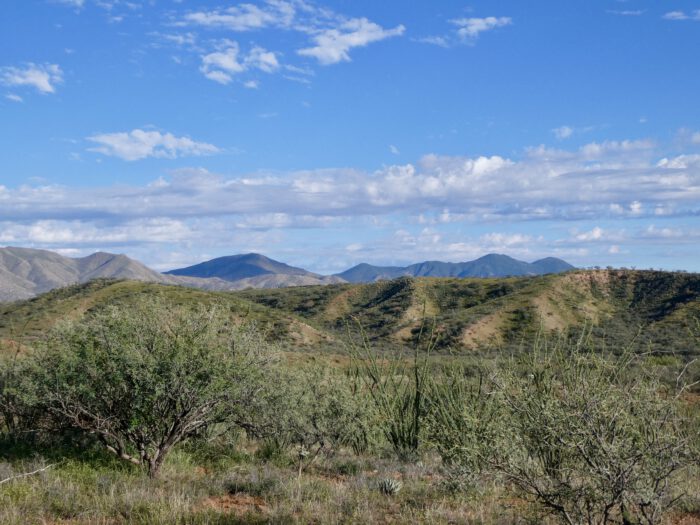
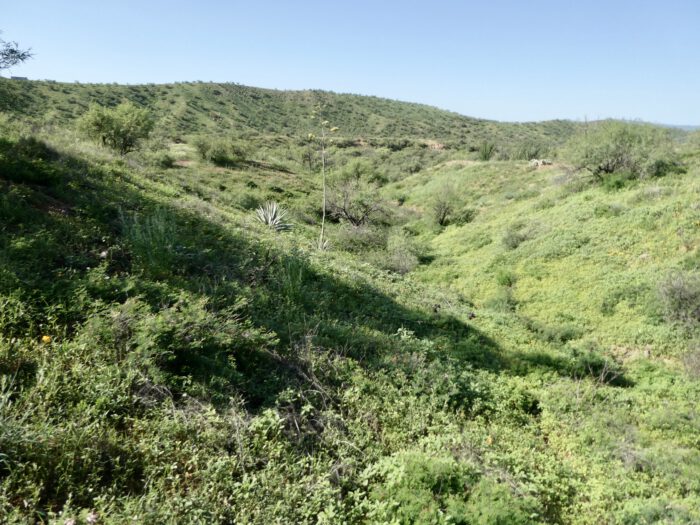
These diverse habitats at Raven’s Nest Nature Sanctuary are the scaffolding of a healthy ecosystem providing the varied niches required to sustain a wide array of life. Therefore, while native plants provide the baseline energy, habitat diversity ensures that the entire system can survive changes, disease, and environmental stress.
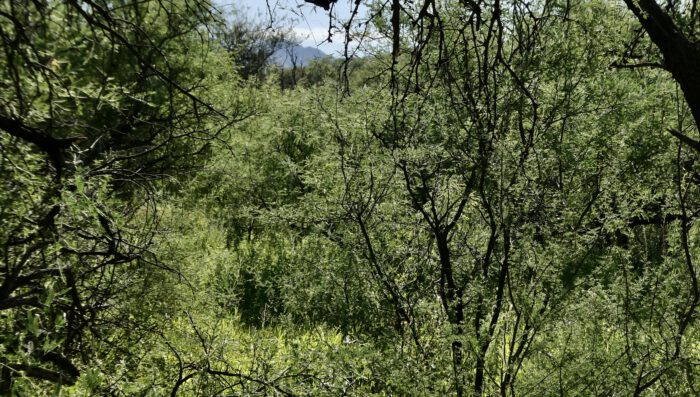
The healthy habitats at our 42-acre preserve form a resilient and self-sustaining ecosystem that contains many different species performing similar roles, like multiple types of pollinators or decomposers.
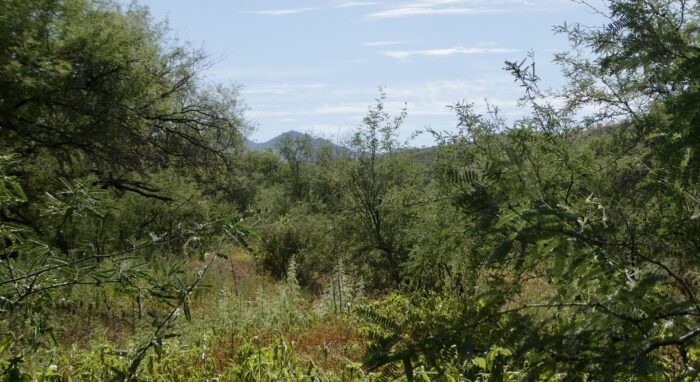
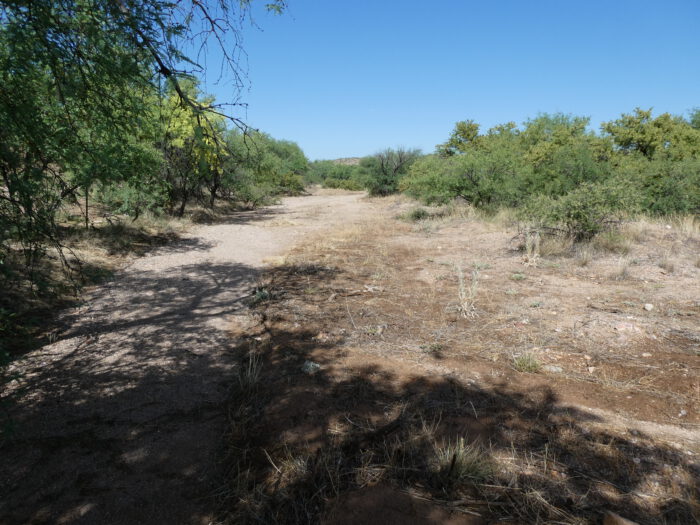
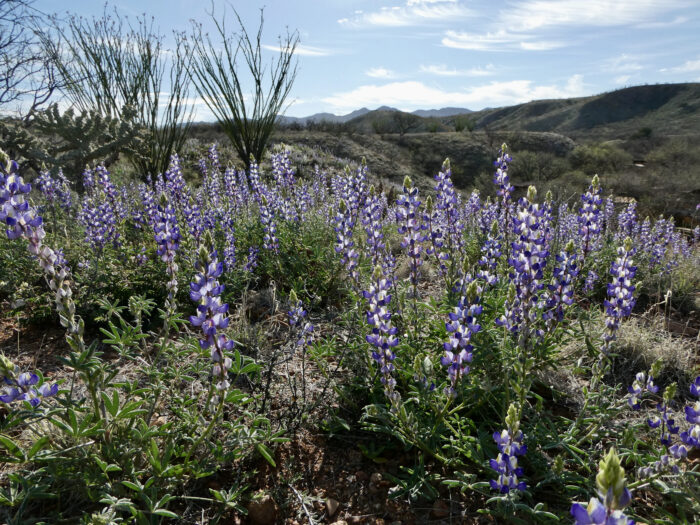
In addition, the diverse seasons and varied topography leads to a landscape with varied microclimates—such as sunny open arroyos and grasslands and shaded woodlands allowing diverse species to migrate locally and thrive.

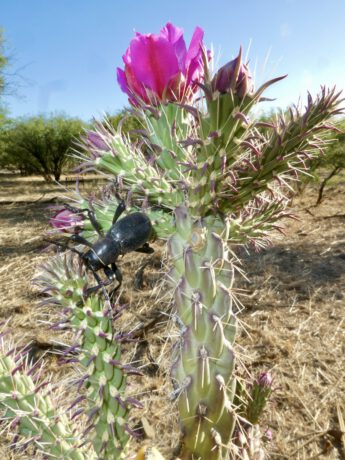
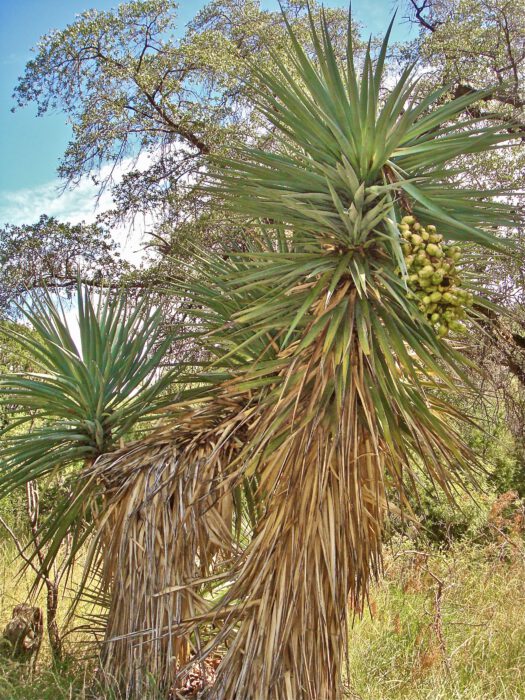
Native Plants
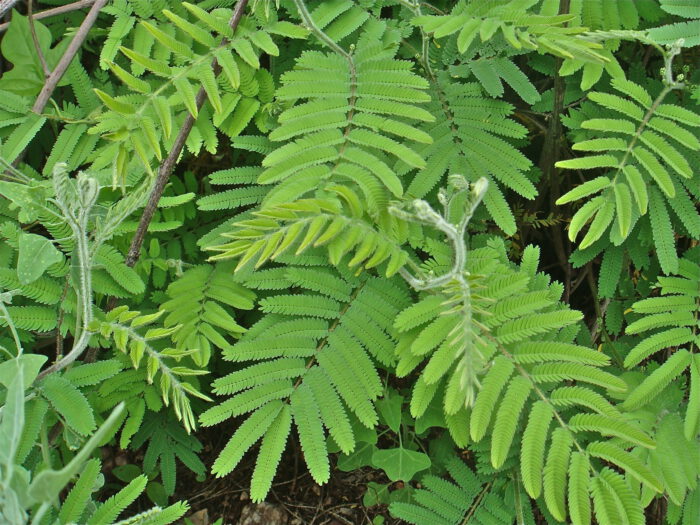
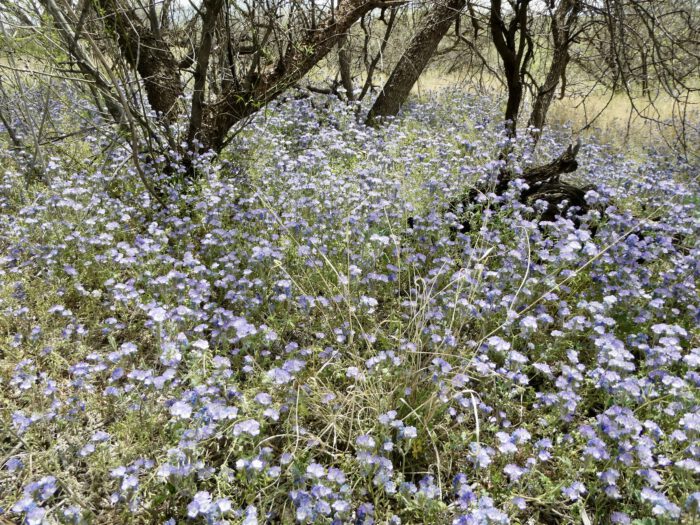
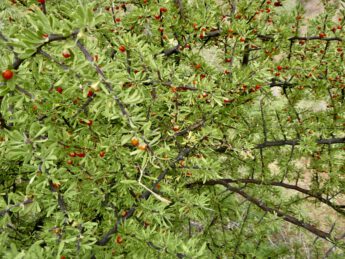
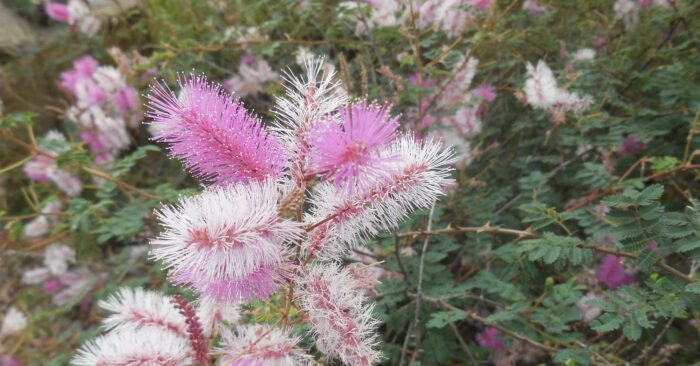
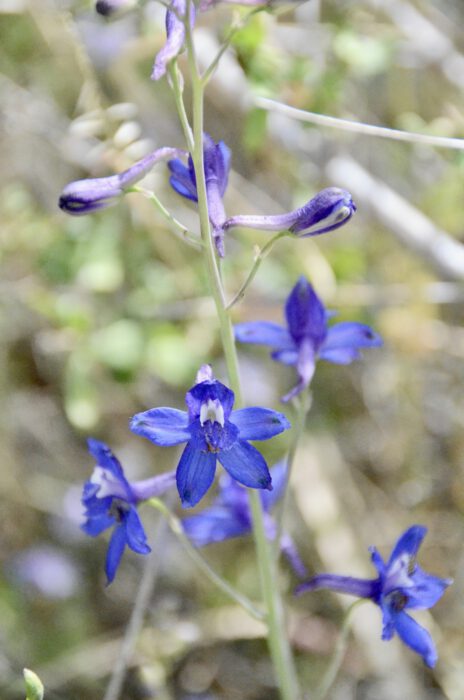
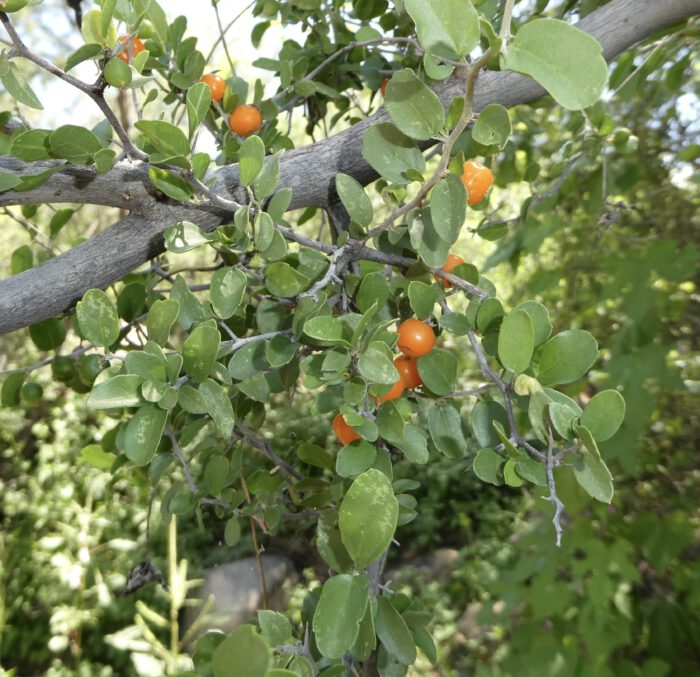
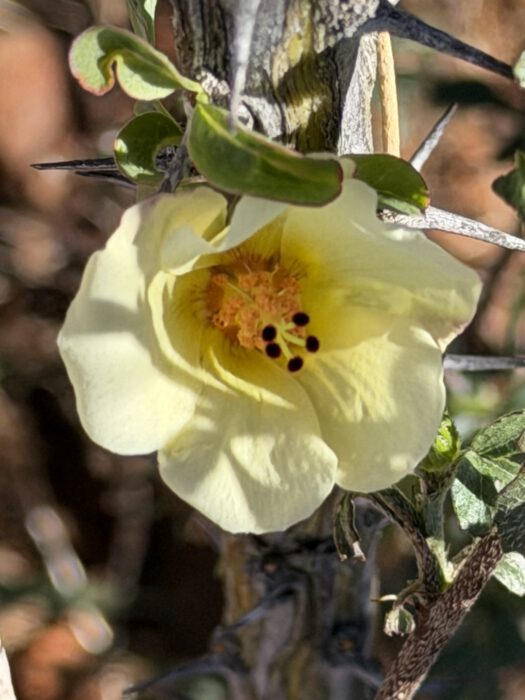
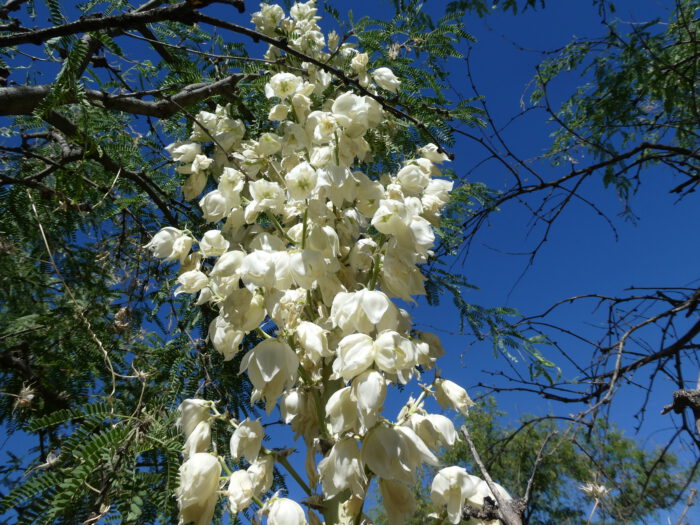
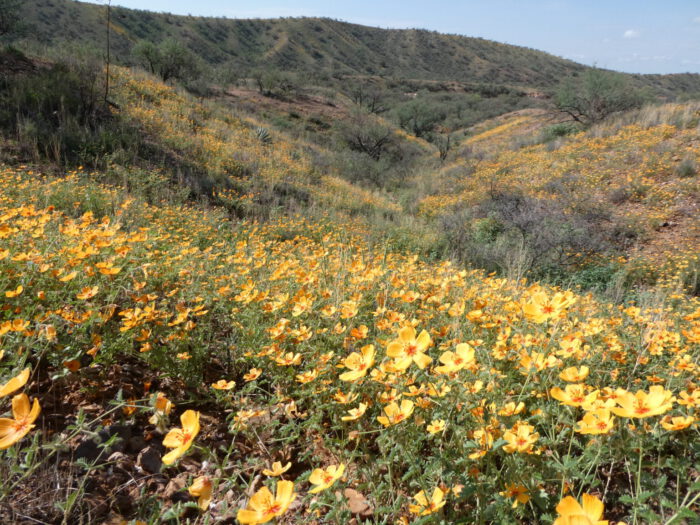
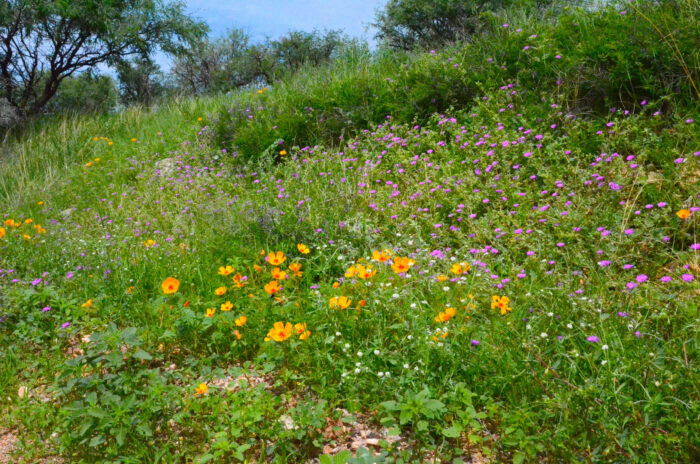
The very foundation for biodiversity and a healthy ecosystem at Raven’s Nest Nature Sanctuary is formed by its hundreds of native plant species because they have co-evolved over thousands of years with local wildlife, soils, and climate conditions, creating a vital and balanced web of life.
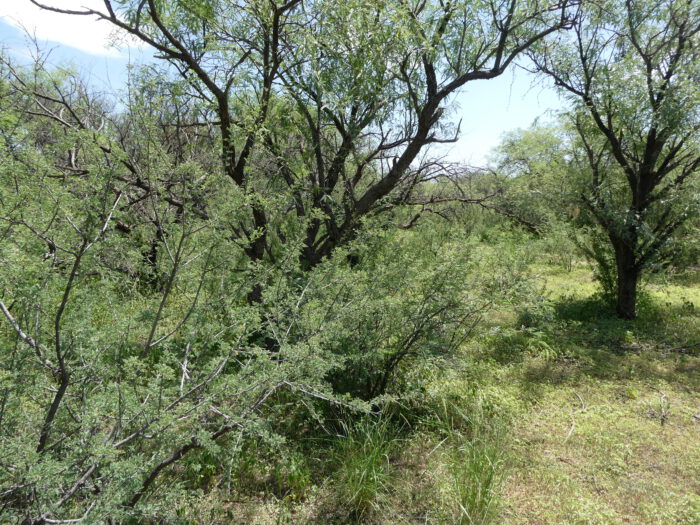
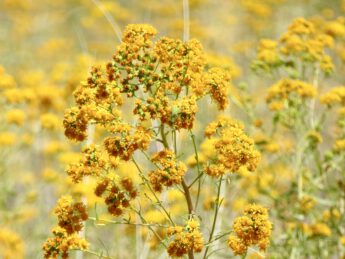
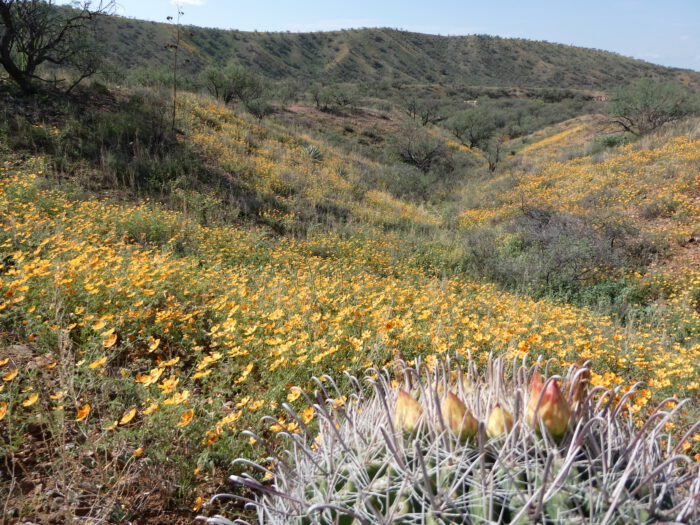
These native species represent distinct, yet overlapping plant communities that support the rest of the biodiversity at Raven’s Nest. Trees, shrubs, subshrubs, vines, forbs or herbaceaous plants, and grasses vary in both their distribution and density at the preserve, creating structural diversity within habitats vital to various species of wildlife.
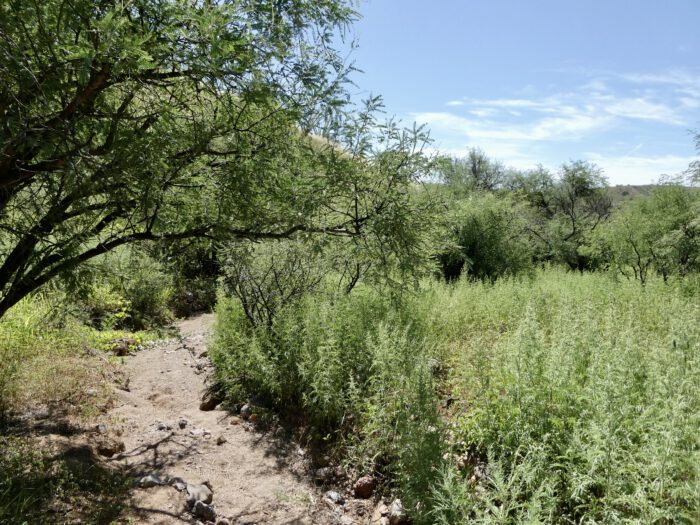
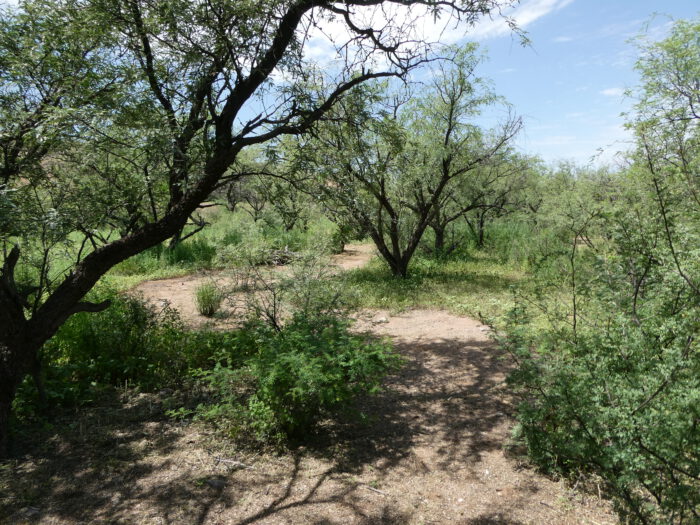
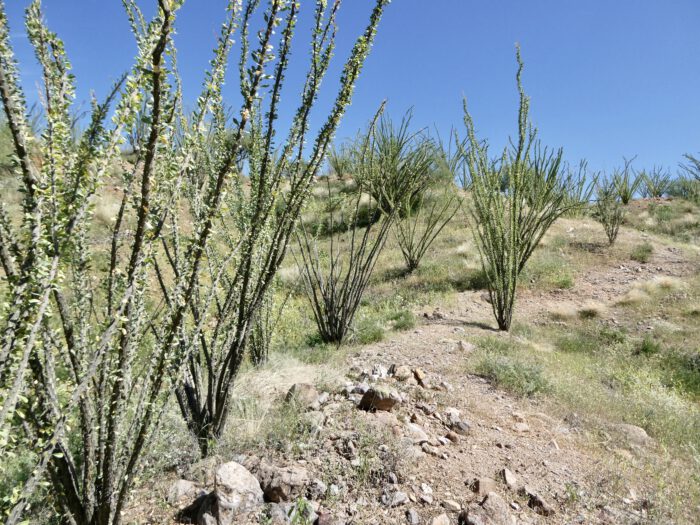
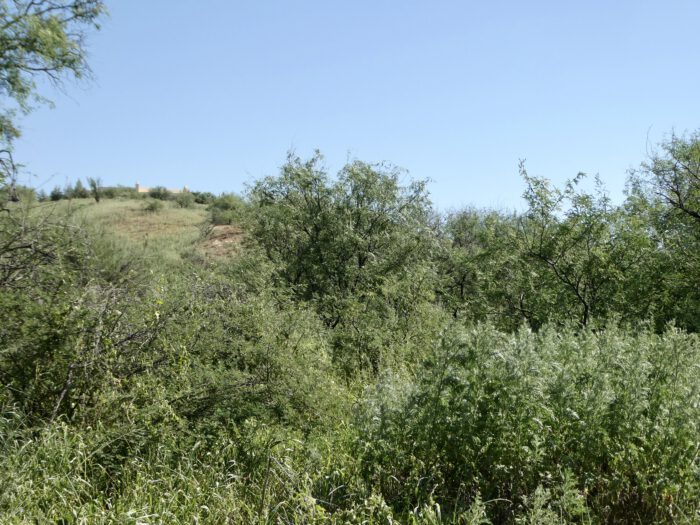
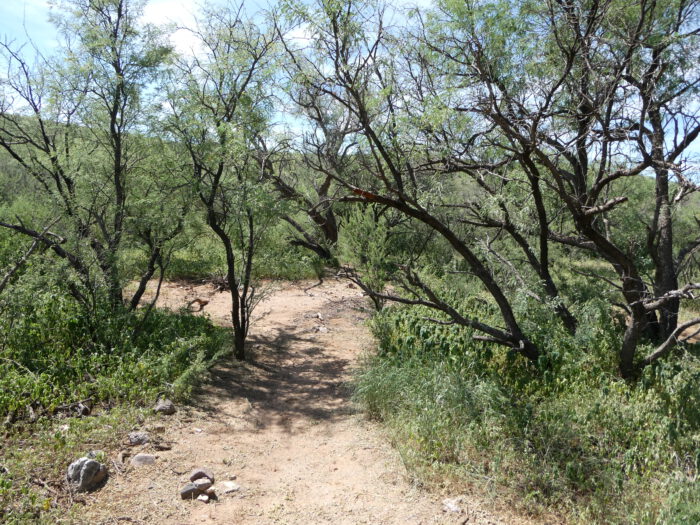
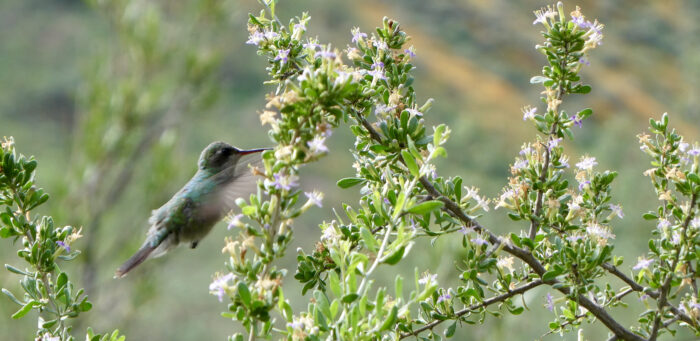
Many native plants serve as larval food sources for butterflies, moths, or other invertebrates. Some are mainstay foods of various birds or mammals. All function as critical thermal, escape, and breeding cover for a myriad of wildlife species.
Butterflies
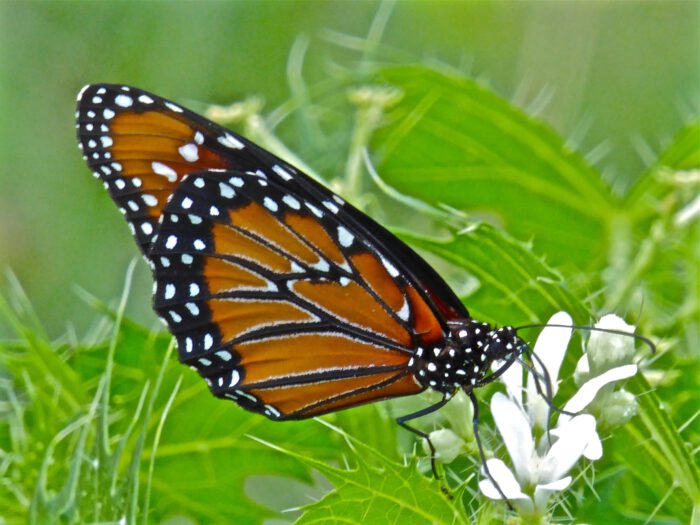
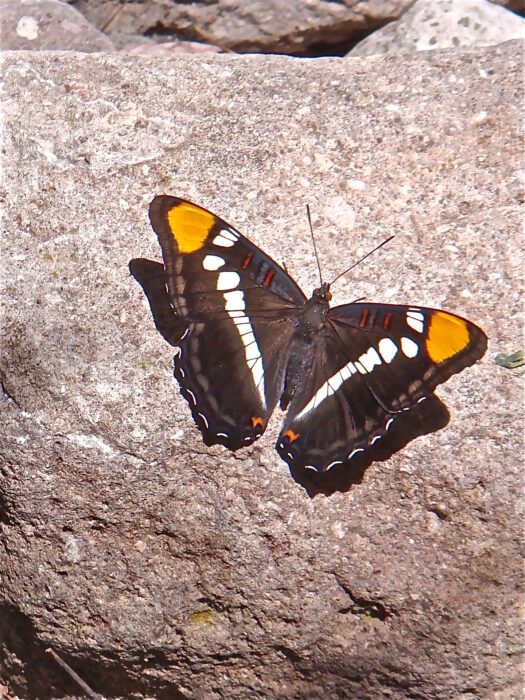
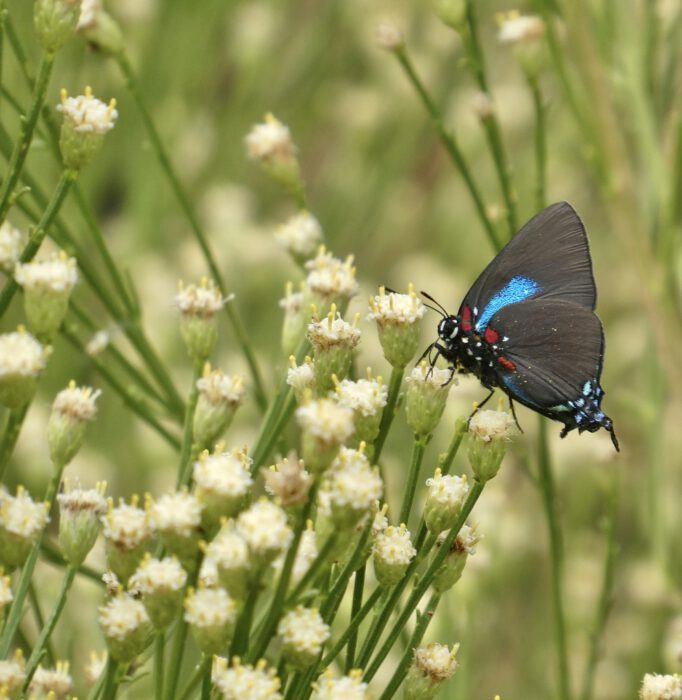
Arizona is among the most diverse states in the U.S. for butterflies. While Texas tops the list, given its huge size, Arizona comes in second with approximately 335 species. Thus, the Grand Canyon state is home to nearly 45% of all the butterfly species in the country!
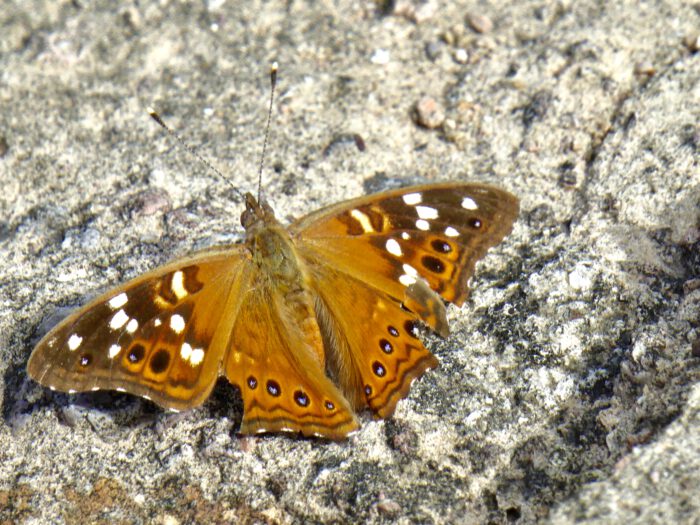
Crucial to butterfly diversity are their larval food sources, which range across many different plant familes, as well as nectar sources. Given the high plant diversity at Raven’s Nest Nature Sanctuary, butterflies are able to truly thrive here.
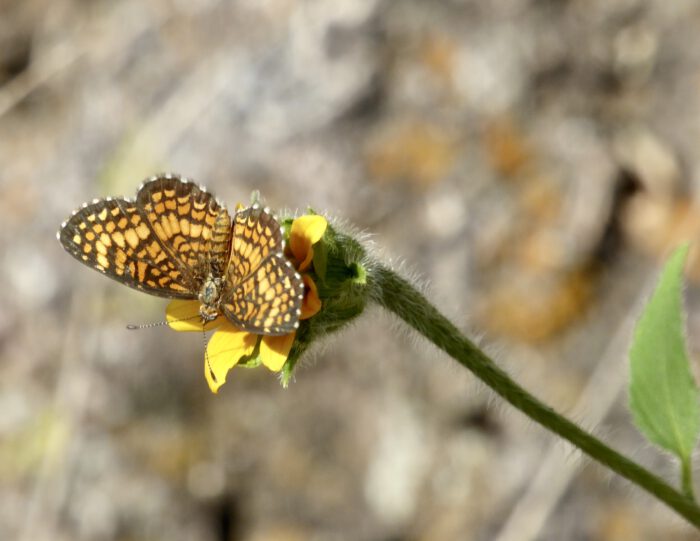
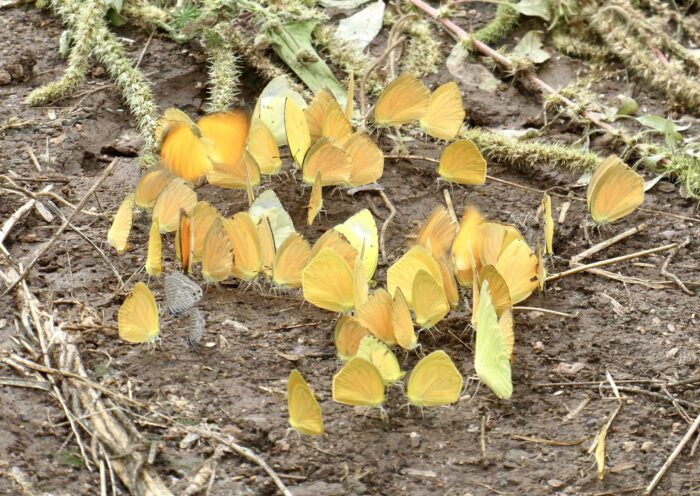
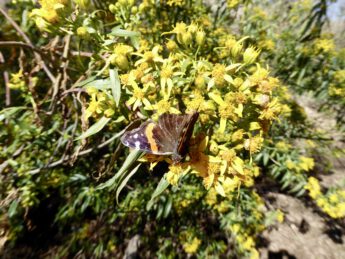
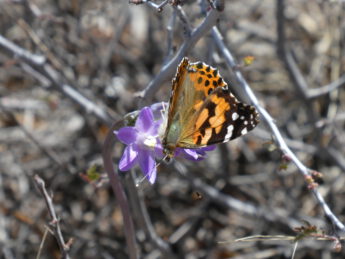
Butterflies begin to appear as early as February, with peaks in late winter/spring as well as monsoon season. During the summer there are occasional large influxes of colorful butterflies from Mexico, including species such as Cloudless Sulphur.
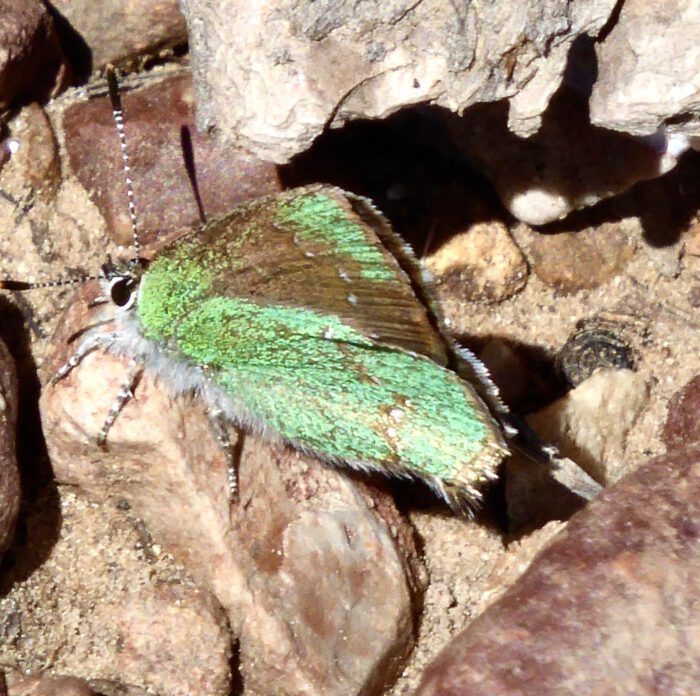
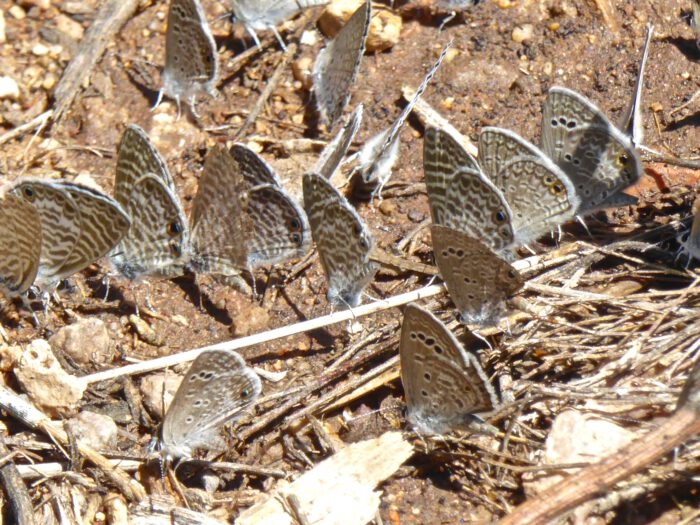
Also vital to many species, especially the males, are salts and other micro-nutrients. They locate these variously at sap weeps, damp ground, and even at rotting fruit, animal dung, and carcasses. Thus, many butterfly species utilize the edges of the many wildlife ponds at the preserve as they look to imbibe both water and salts. After rains, knots of butterflies can be seen at “puddle parties” where they gain the same vital resources from damp soil.
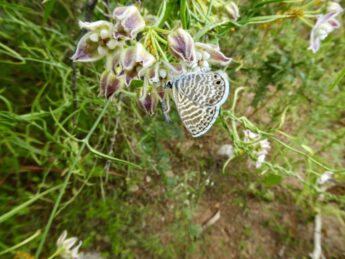
Rare strays, such as the diminutive Elf, sometimes make cameo appearances at the preserve.
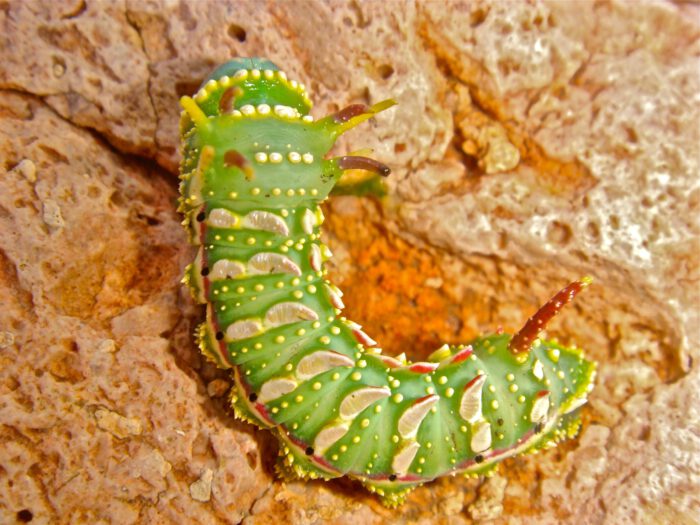 The caterpillars of both butterflies and moths serve as seminal food resources for a myriad of wildlife – other invertebrates, reptiles, mammals, and especially birds.
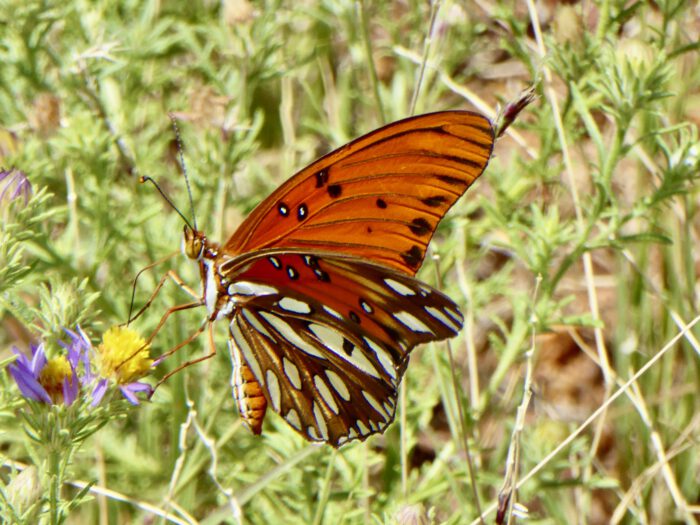
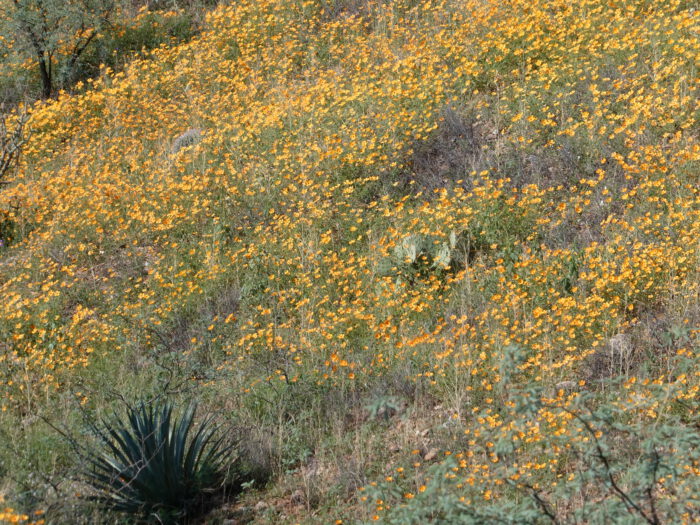
Observing diverse butterfly species at colorful native wildflowers is truly a memorable experience at Raven’s Nest Nature Sanctuary.
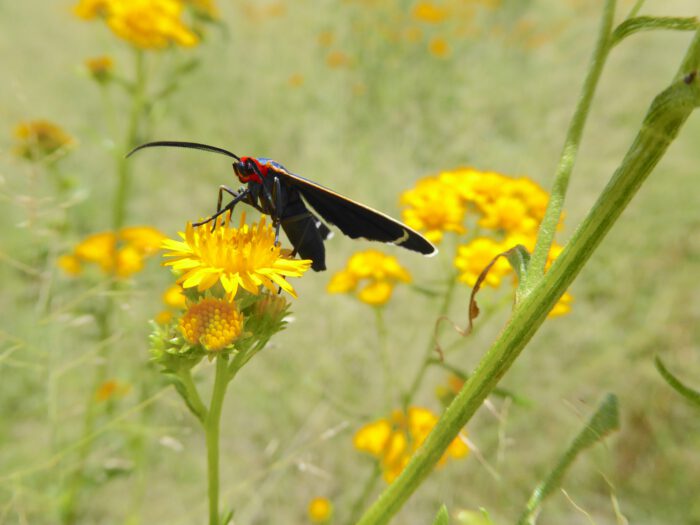
Moth diversity is even higher than that of butterflies at Raven’s Nest.
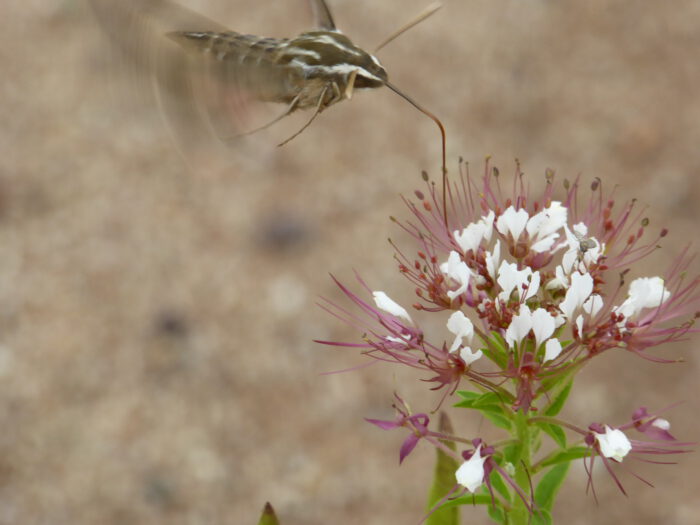
Other Invertebrates
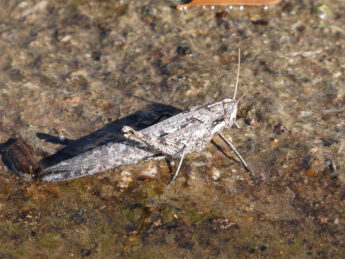
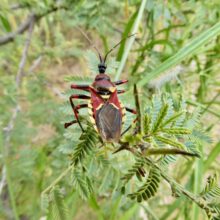
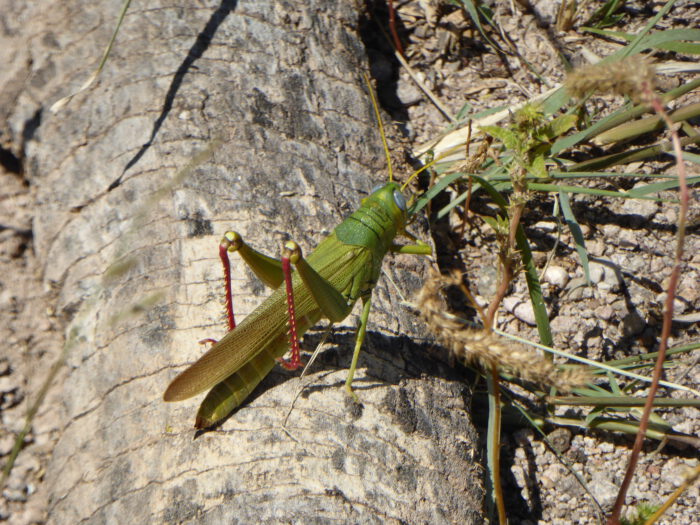
In addition to butterflies a plethora of other insect and non-insect invertebrates have been documented at Raven’s Nest Nature Sanctuary.
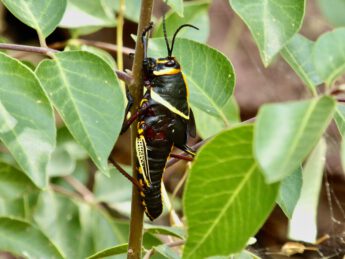
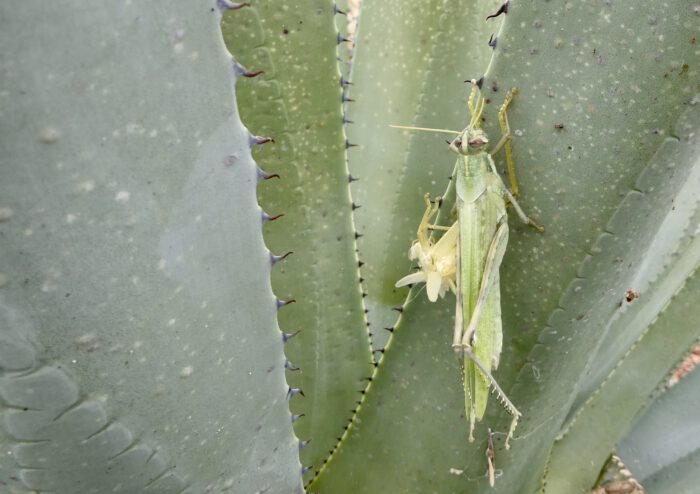
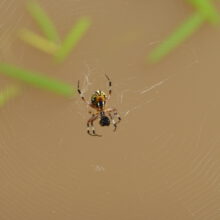
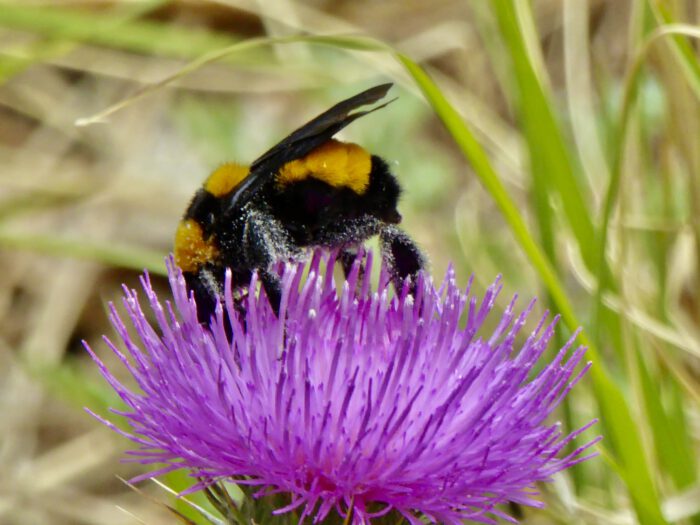
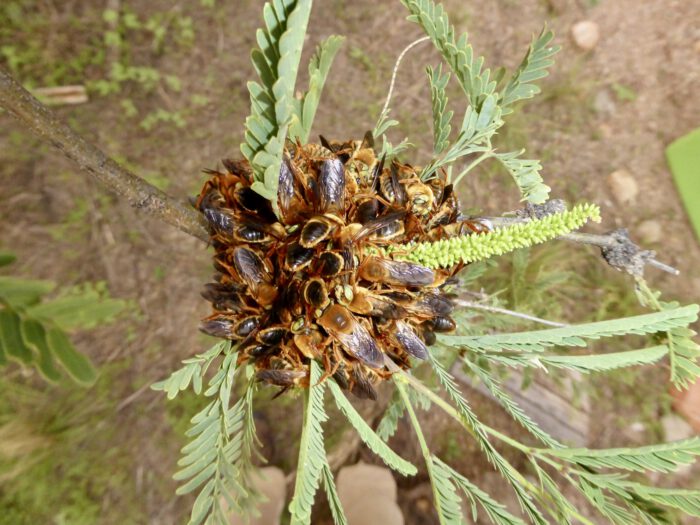
The Sky Islands region likely hosts the most native bee species on Earth.
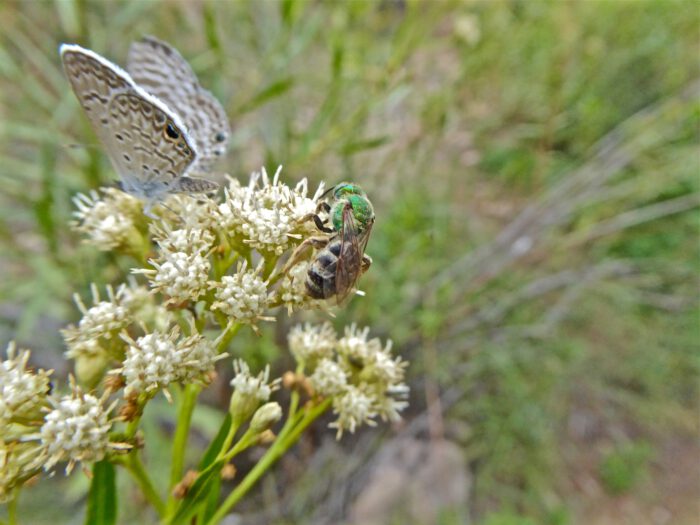
Species both large and small are in full evidence during the warmer months at Raven’s Nest. They heavily forage at certain wildflower species.
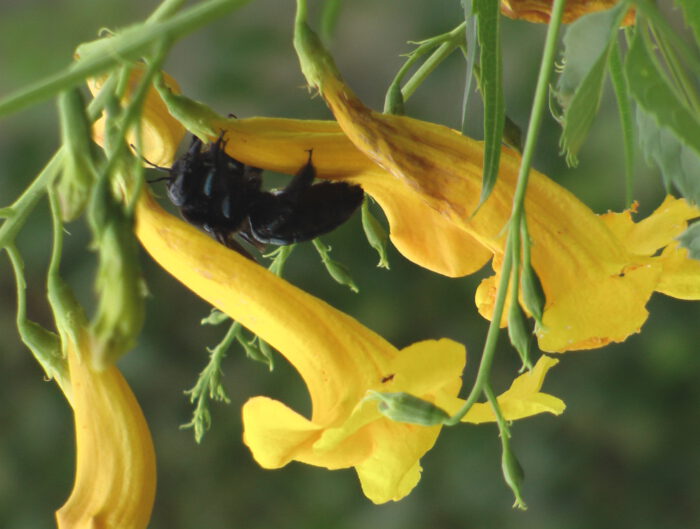
Some species nest in tiny tree holes, some in the ground, while huge, but harmless Carpenter Bees live up to their billing by chewing holes in Stool and Palmer Agave flowering stalks, where they subsequently raise their young.
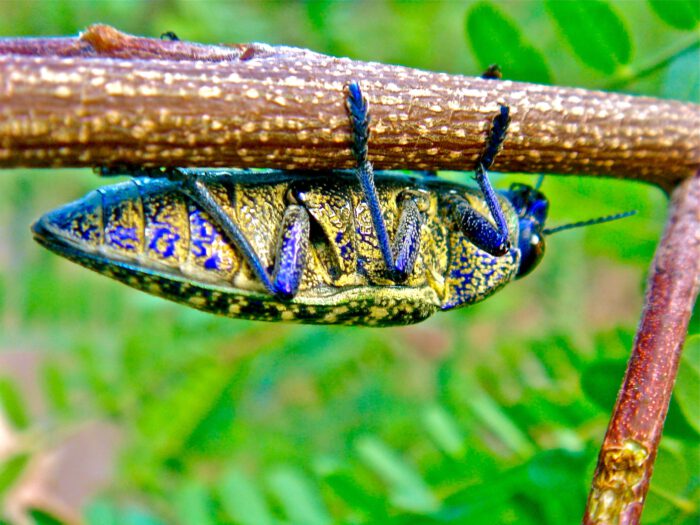
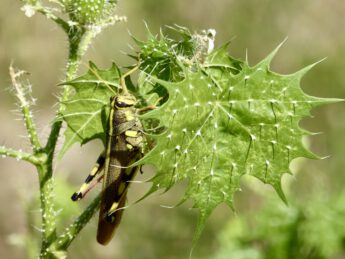
Beetle diversity is likewise high in the Sky Islands, with many flashy as well as more cryptic species recorded at Raven’s nest over the years.
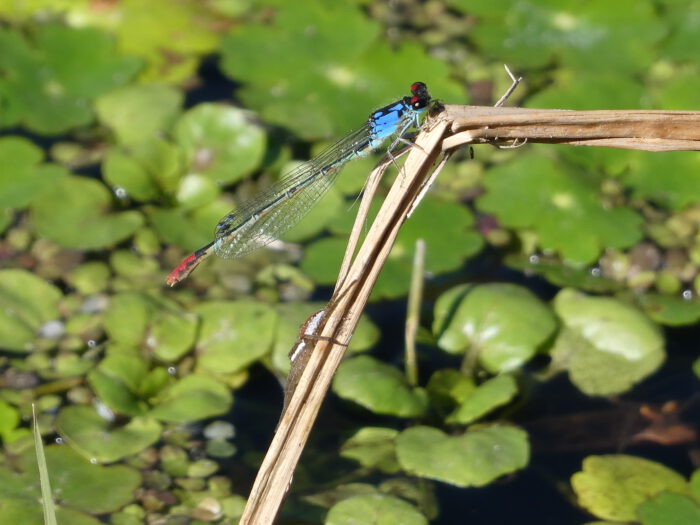
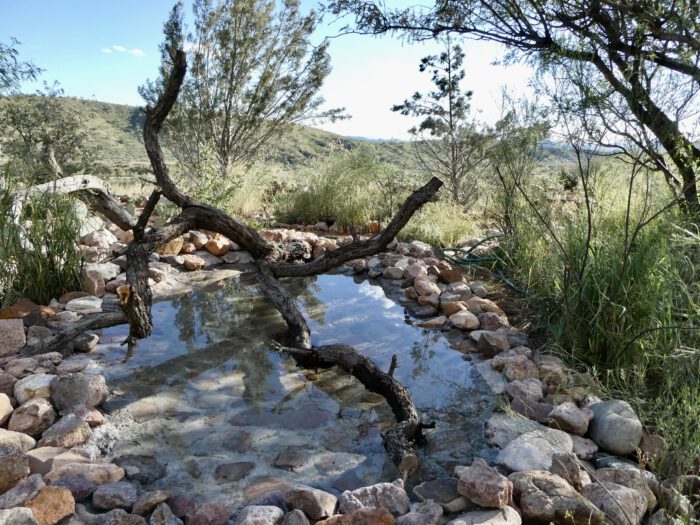
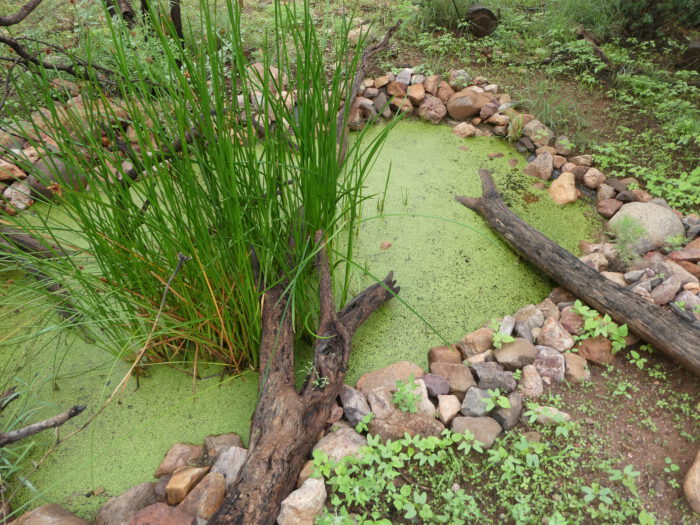
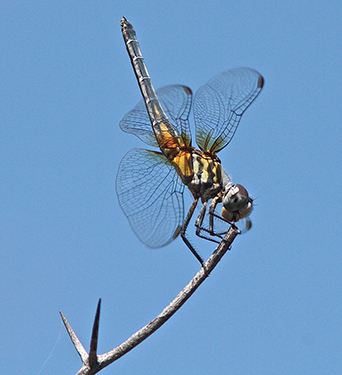
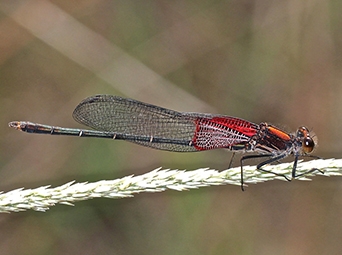
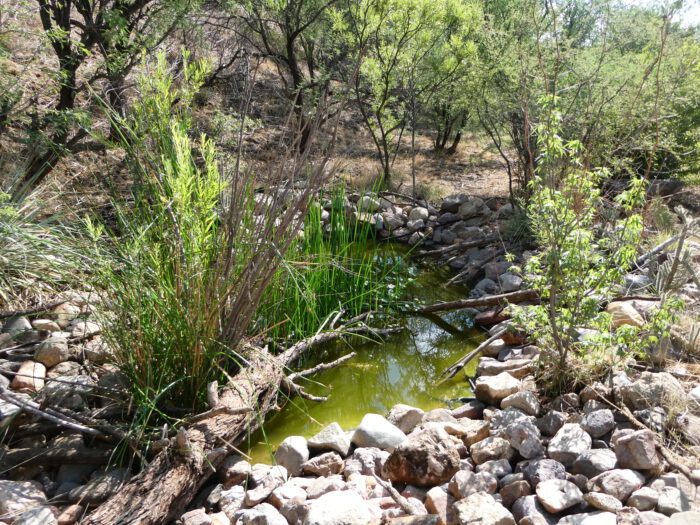 The numerous wildlife ponds at the preserve serve as a huge draw for aquatic invertebrates, including damselflies and dragonflies. They can be seen hunting, courting, breeding, and laying eggs near the water.
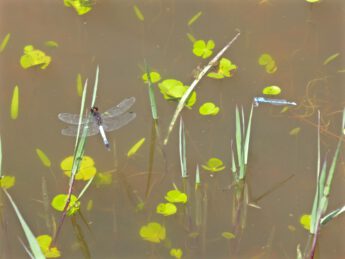
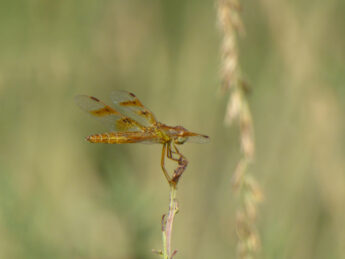
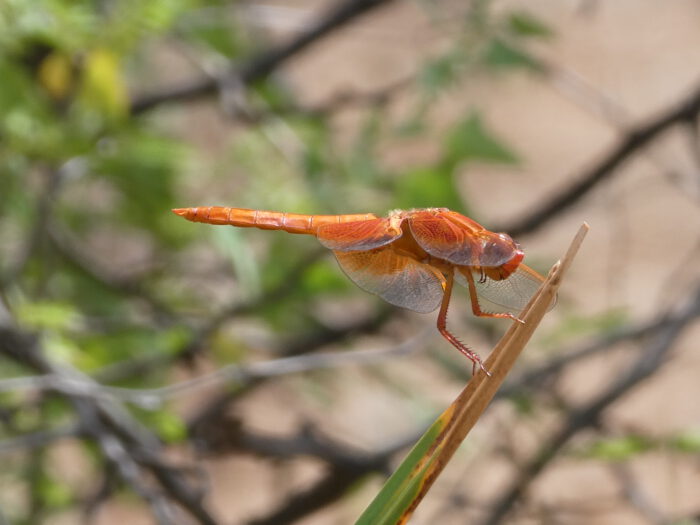
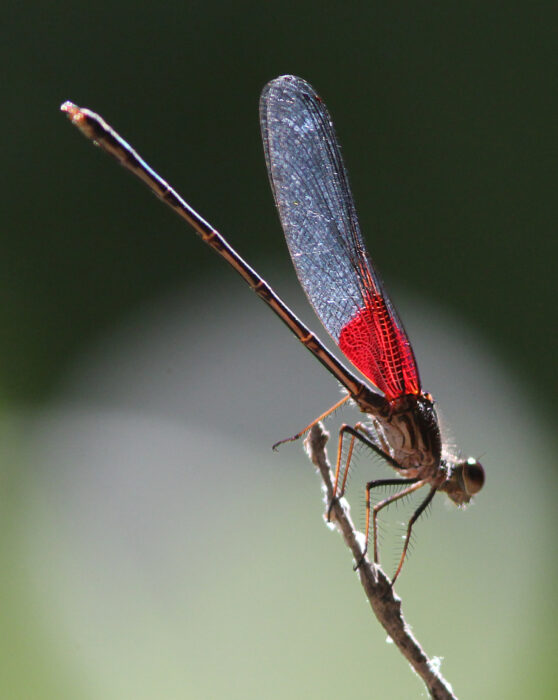
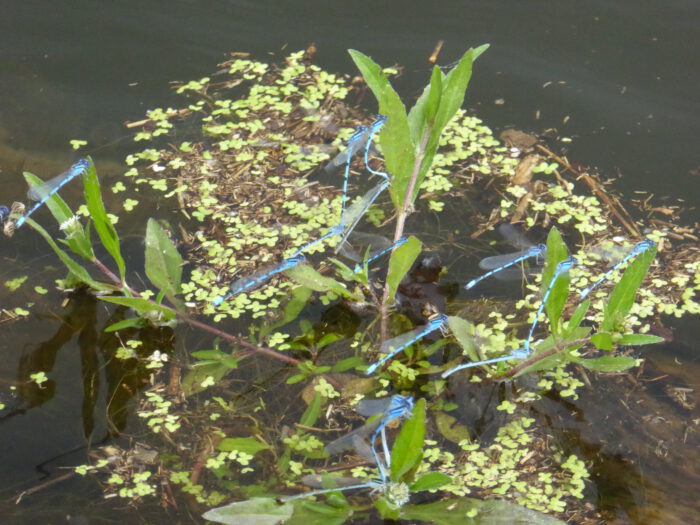
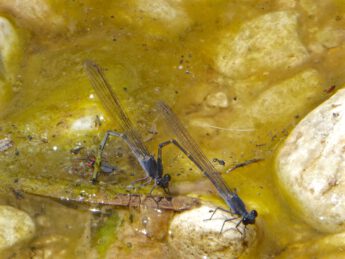
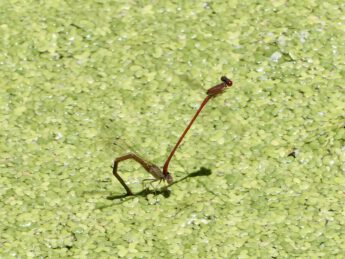
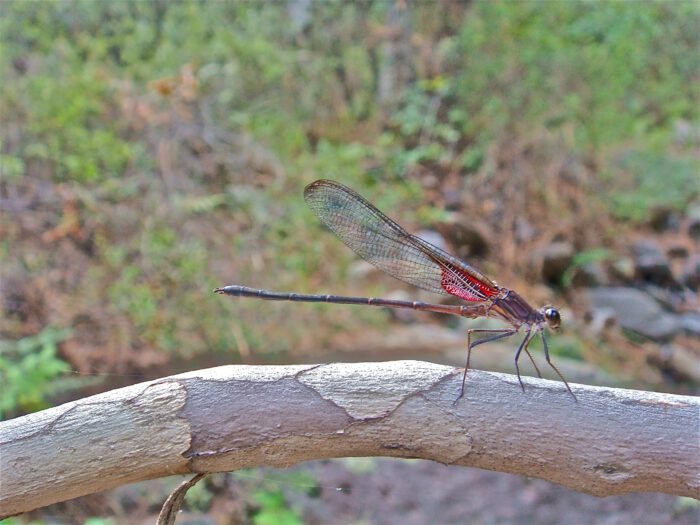
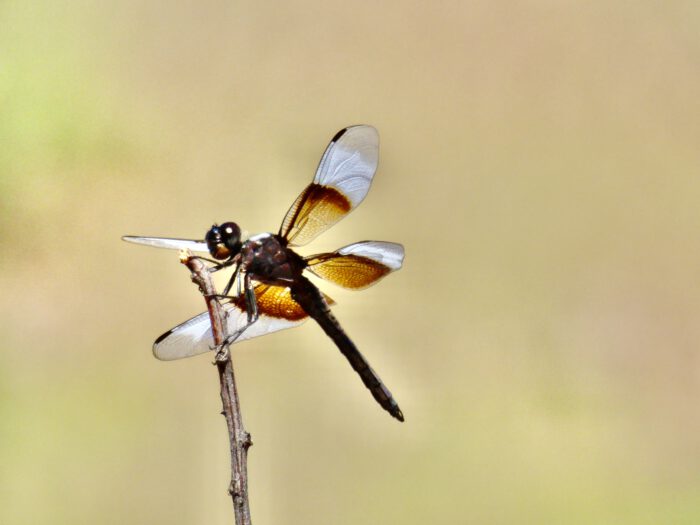
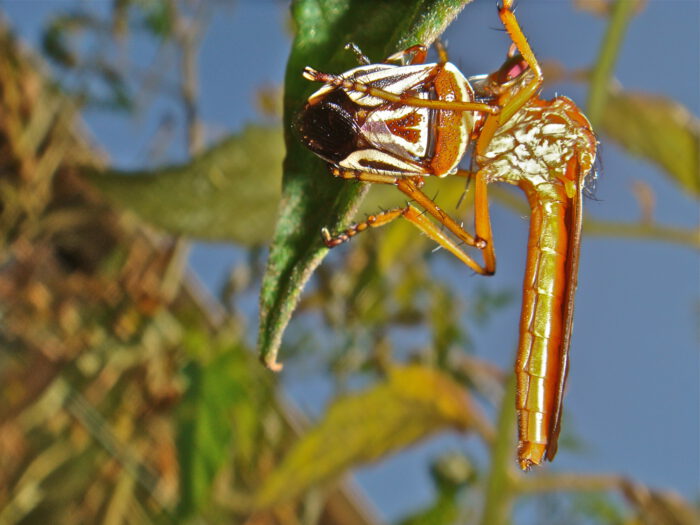
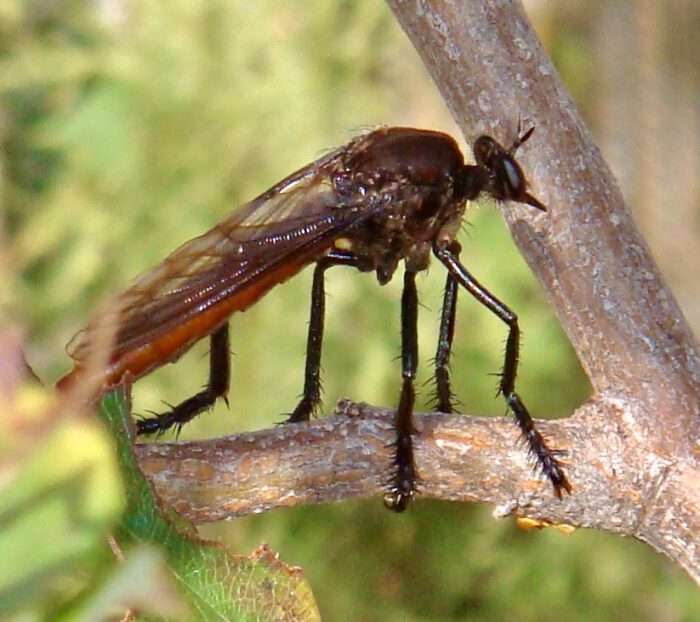
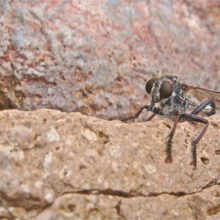
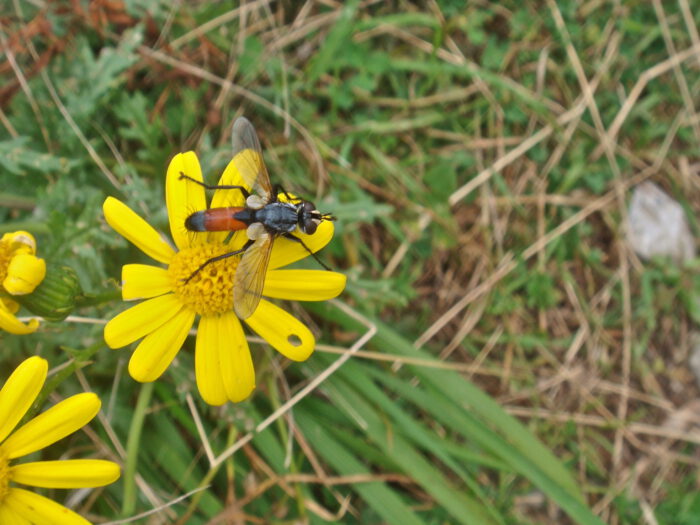
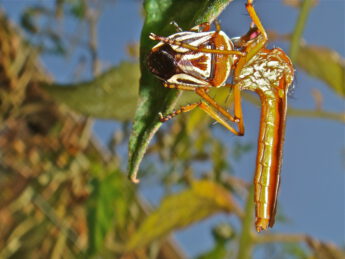
Predatory Robberflies take center stage when they are around. They break our stereotypical view of flies as pests, actually serving as predators on other insects – even large wasps in some cases!
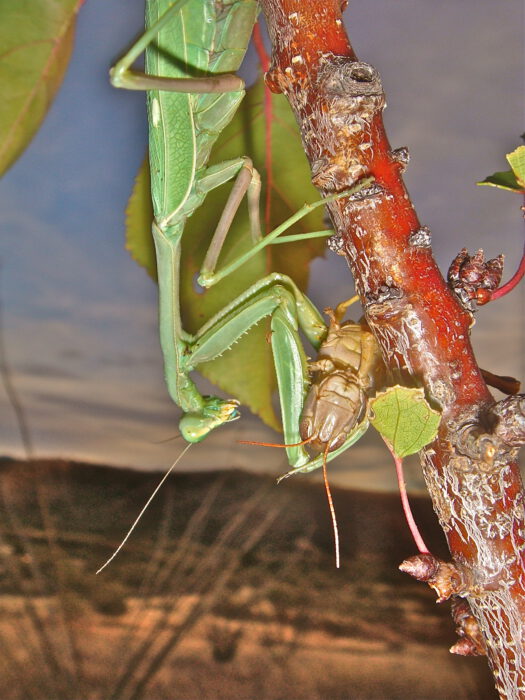
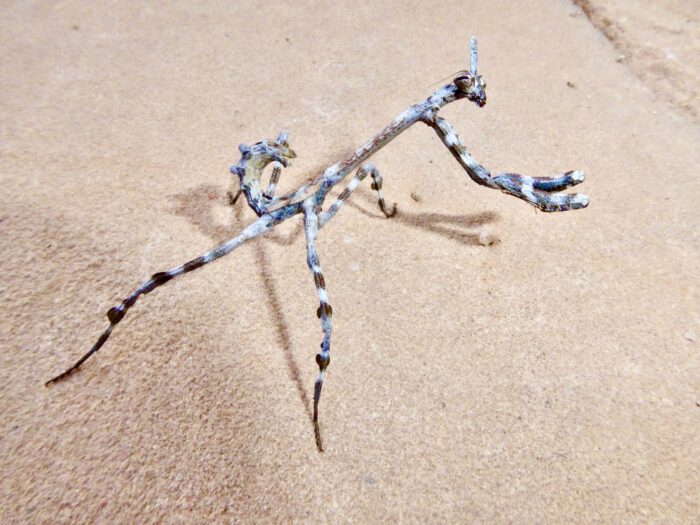
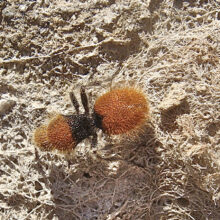
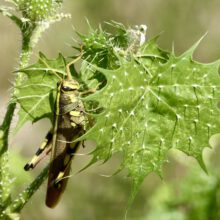
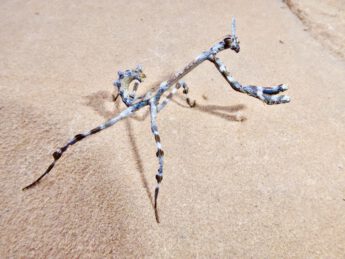
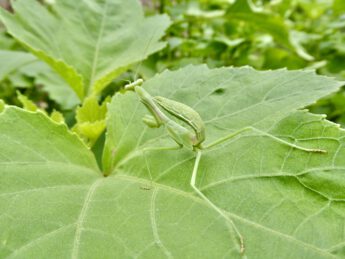
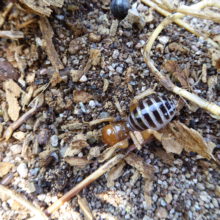
Other invertebrate species seen at the preserve include mantids, true bugs, ants, wasps, and antlions.
Amphibians
Despite its general arid nature, the Sky Island region supports a respectable diversity of amphibians. Within the confines of Raven’s Nest Nature Sanctuary the 7 species are all Anurans or frogs and toads.
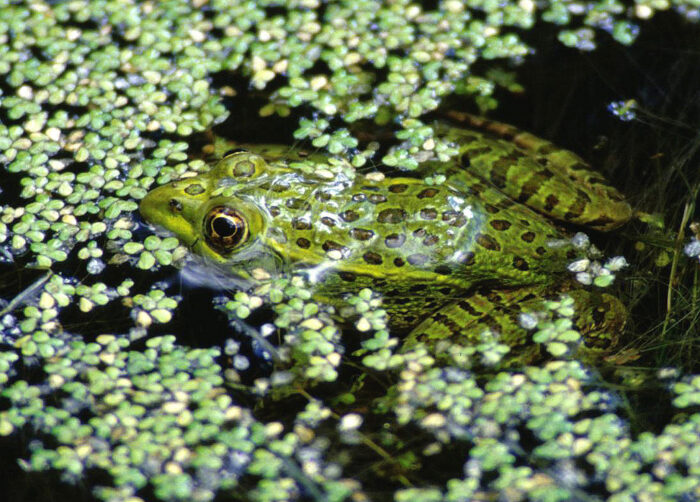
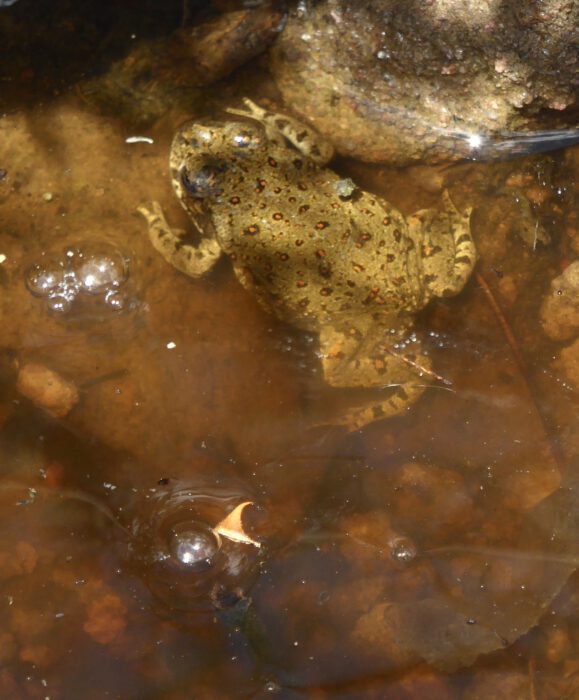
Some make rare appearances, such as endangered Chiricahua Leopard Frogs, as well as highly nocturnal and tiny Great Plains Narrow-mouthed Toads. Other species are yearly breeders at the preserve, including enormous Sonoran Desert Toads, furtive Couch’s and Mexican Spadefoot Toads, and colorful Red-spotted Toads.
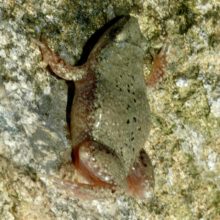
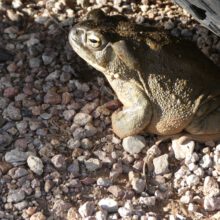
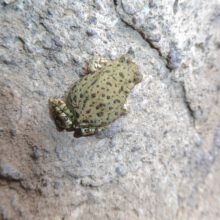
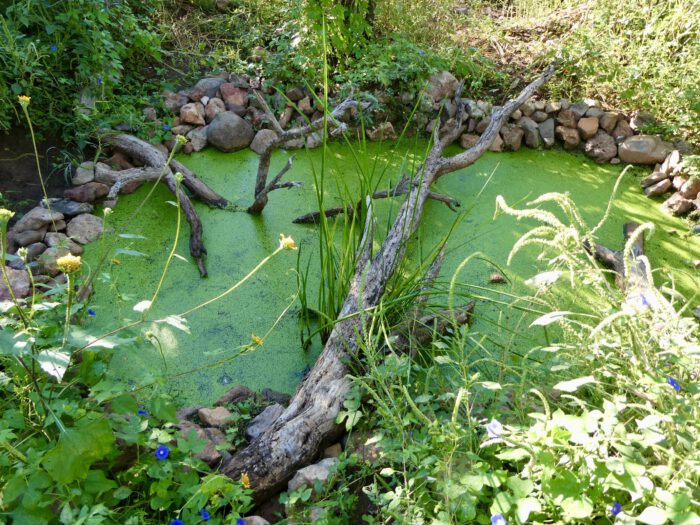
A post-storm breeding chorus of these species during the monsoon is an unforgettable experience. It is then that adults flock to the wildlife ponds at Raven’s Nest to seek mates and lay their eggs. Post-breeding, hundreds of tadpoles animate the ponds.
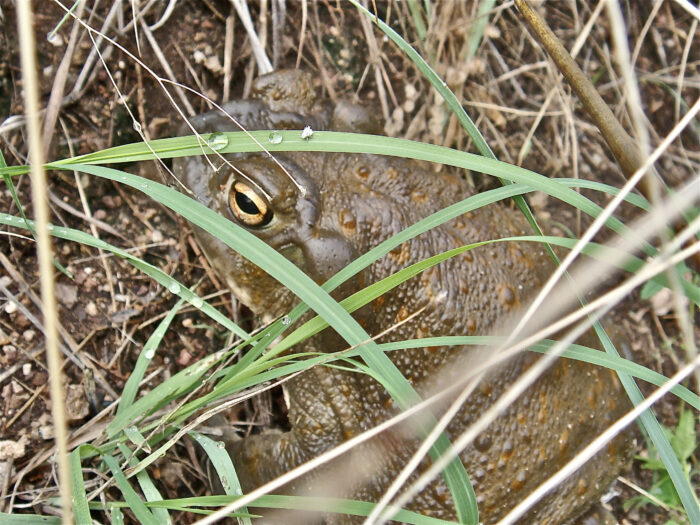
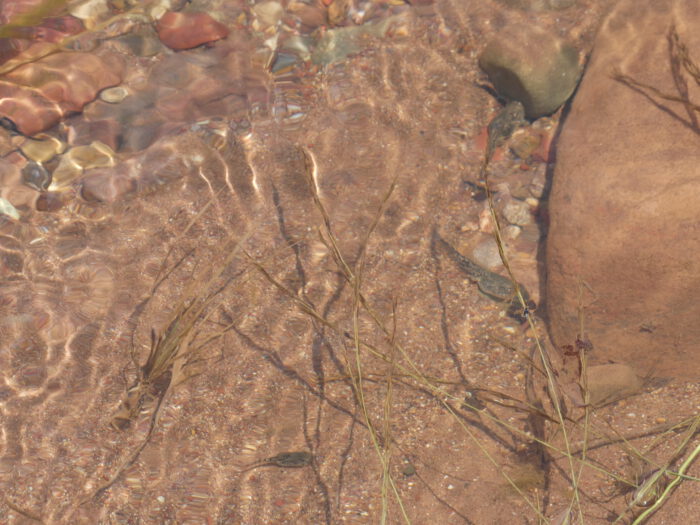
Huge Sonoran Desert Toads are the second-largest anurans in the entire U.S., after Bullfrogs, and are often the heaviest. These lumbering toads seem like easy prey for a host of nocturnal predators, yet the highly potent toxins that they exude from their paratoid glands normally protect them. In turn, they consume a wide variety of prey, including vertebrates such small snakes and mice.
Reptiles
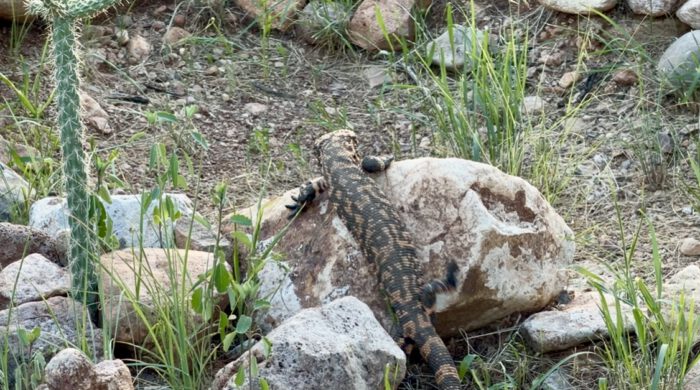
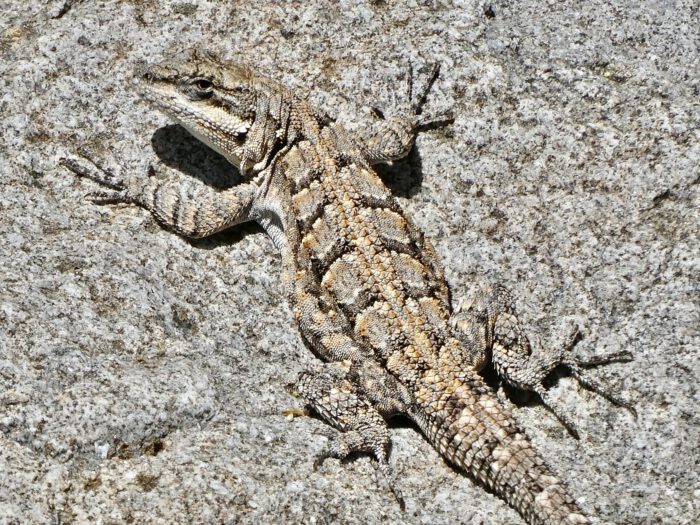
Given that the Sky Islands region harbors the greatest reptile diversity of any comparable area in the U.S., it comes as no surprise that many species have been recorded at Raven’s Nest Nature Sanctuary.
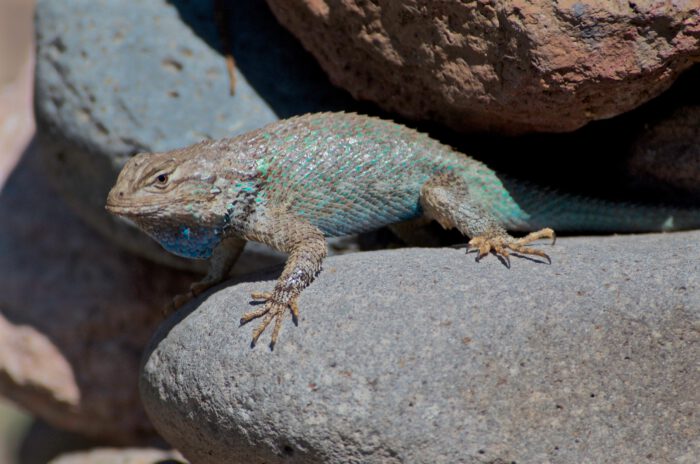
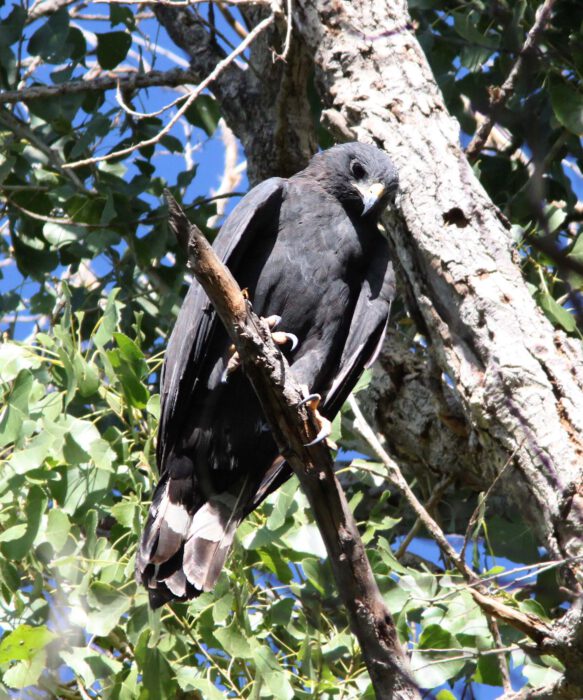
During warmer months and even on balmier winter days Ornate Tree Lizards and Clark’s Spiny Lizards can both be spotted in trees. These highly arboreal species are important dietary items for our pair of breeding Gray Hawks.
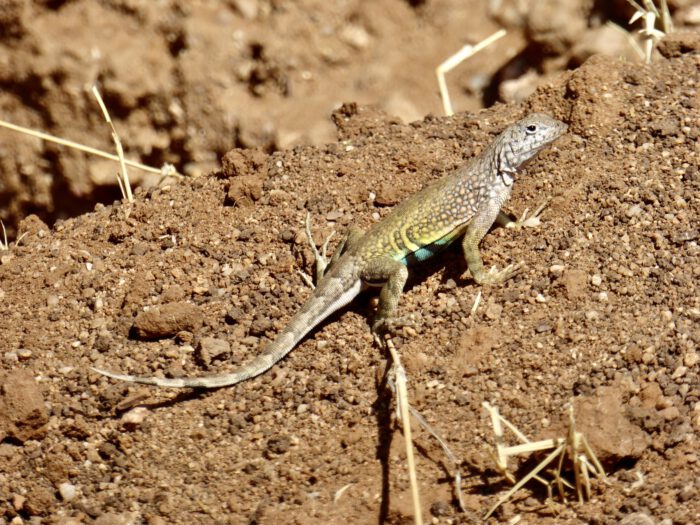
At ground level parthenogenic or all-female Sonoran Spotted Whiptails jerkily move about in search of invertebrates, while trying to evade rapacious Greater Roadrunners, the Gray Hawks, as well as snakes.
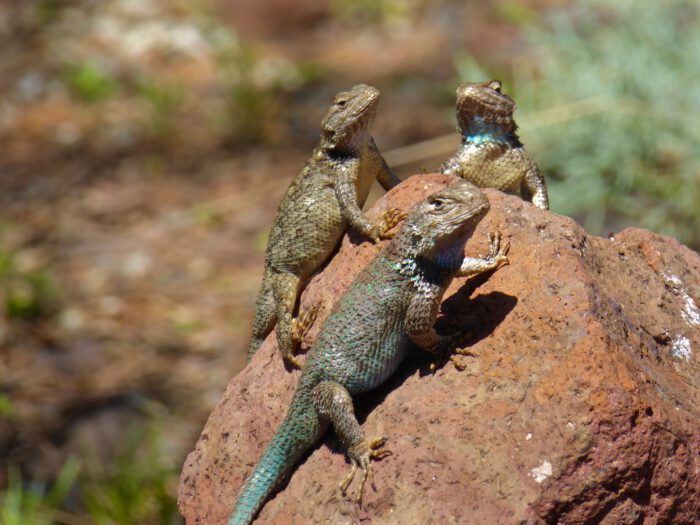
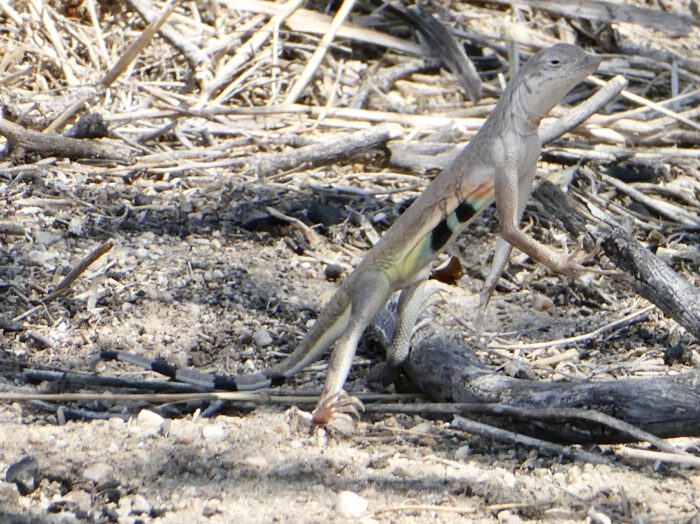
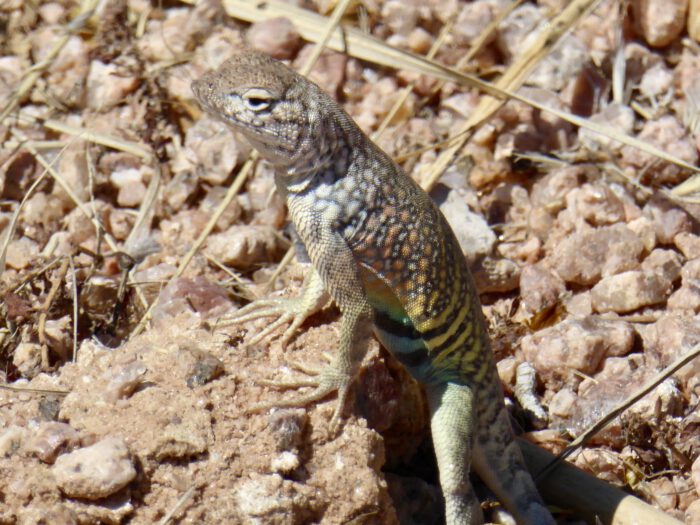
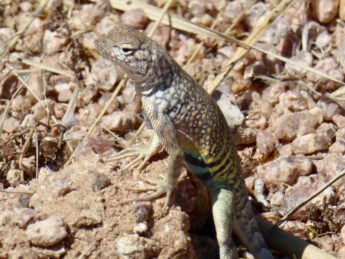
Slower Elegant Earless Lizards often perch on warm rocks where they sunbath and also establish territories. In the expansive sands of arroyos Greater Earless and Zebra-tailed Lizards easily blend into their backgrounds – until they feel compelled to run with lightning-swift speed away from perceived threats.
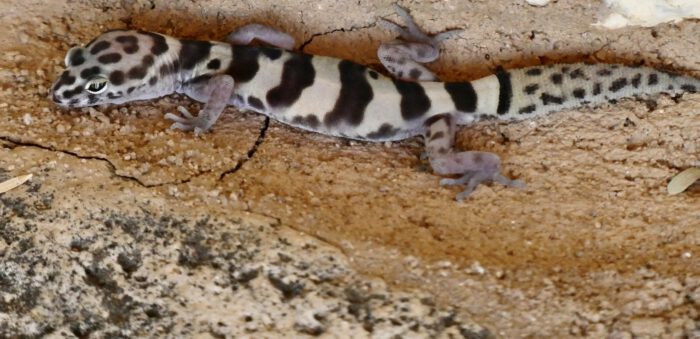
Harder to detect are nocturnal Western Banded Geckos – one of the few North American reptiles capable of producing true vocalizations. They are able to squeek when threatened, which may serve to startle a would-be-predator long enough to avoid being eaten. Also furtive and thus more difficult to find are large Great Plains Skinks and snake-like Madrean Alligator Lizards. Both prefer dense ground cover and so are rarely seen.
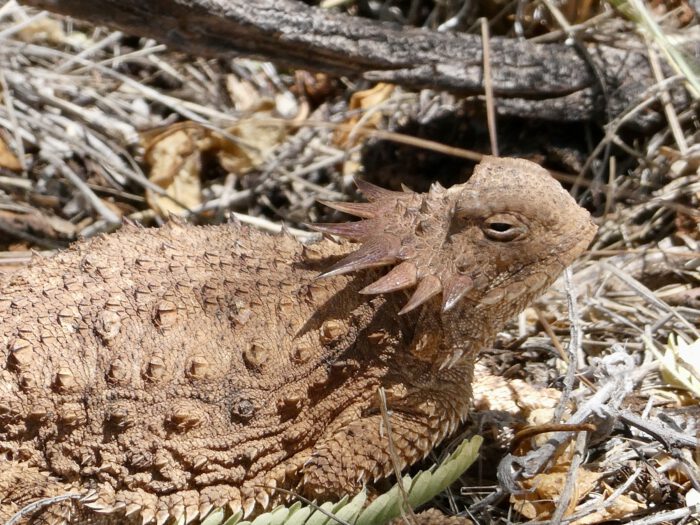
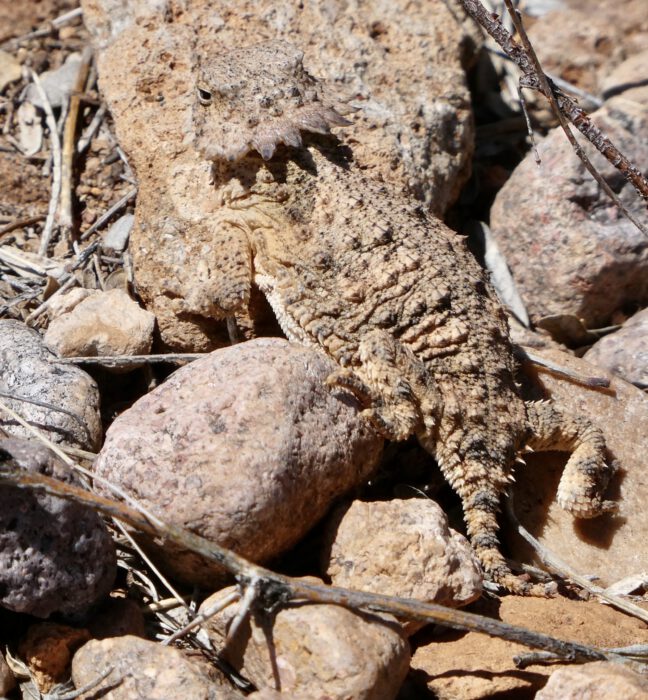
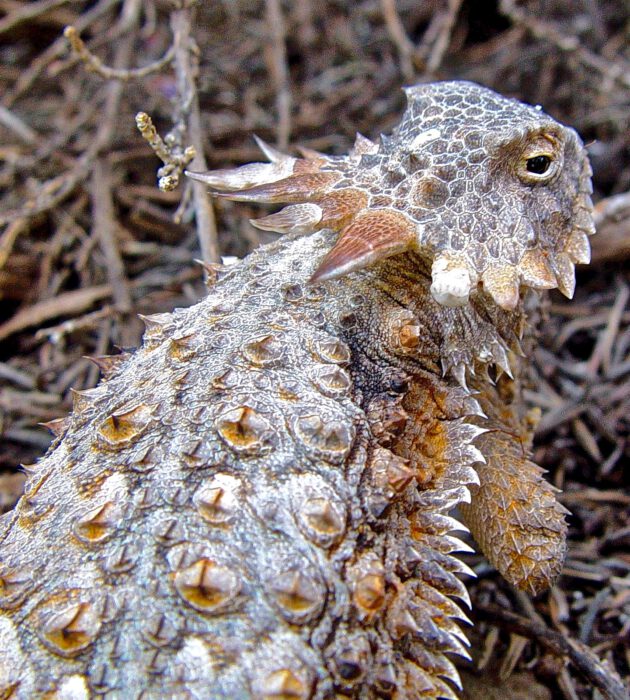
Among the most camouflaged and behaviorally unique reptiles at Raven’s Nest is the Regal Horned Lizard. This crptic species easily blends into the background on bare soil or leaf litter and possesses the ability to subtly change color. Not being detected, then, is their best defense against such predators as Gopher Snakes, Gray Hawks, and Greater Roadrunners. If about to assaulted by a mammals, this species conjures one of the most spectacular defenses in all of the animal kingdom – it accurately shoots toxic blood out of its eyes for a distance of several feet! This is apparently effective in repeling attacks by wild canids, such a foxes.
Surely the most spectacular reptile at Raven’s Nest is the venomous Gila Monster. This is the largest lizard species in the U.S. and among the most secretive.
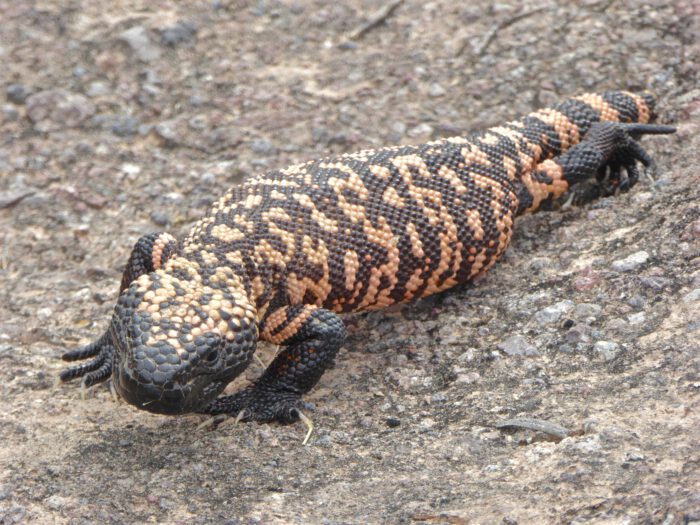
Both adults and juveniles of a number of Gila Monsters have been spotted at the preserve, usually in monsoon season. Given that individuals of the species are normally active only a few weeks above ground, the sightings at Raven’s Nest represent treasured experiences.
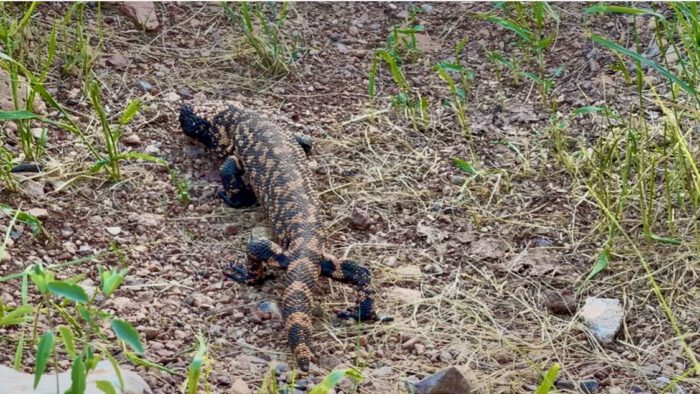
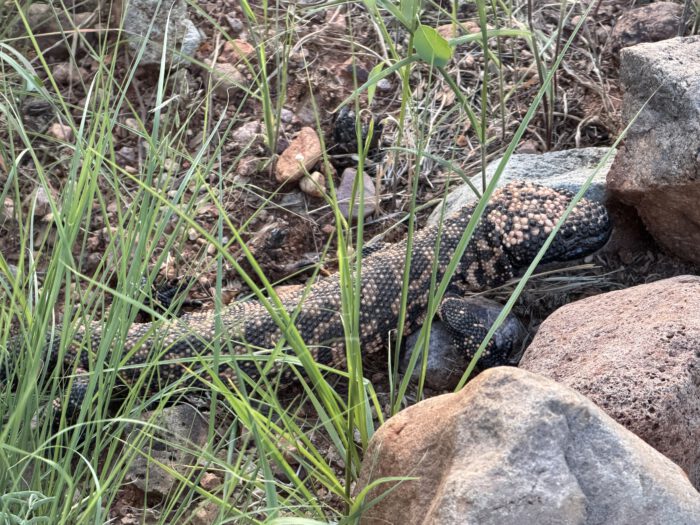
At Raven’s Nest Nature Sanctuary we are very fortunate to confirm 3 different individuals inhabiting and thriving within 3 very different territories at the preserve.
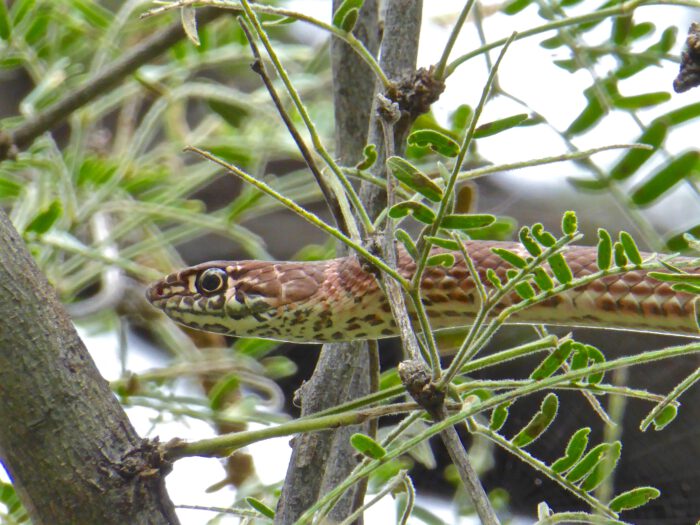
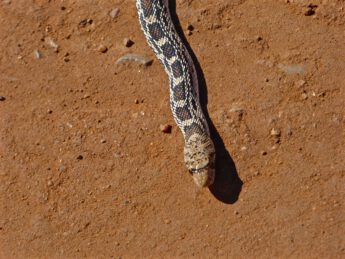
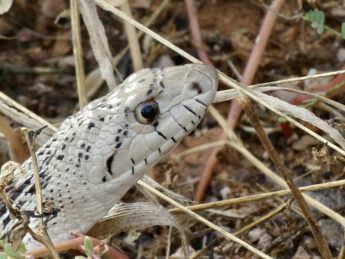
Snakes are less often spotted than lizards, though some diurnal species – such as the harmless, nonvenomous Coachwhip and Gopher Snake – are regularly seen.
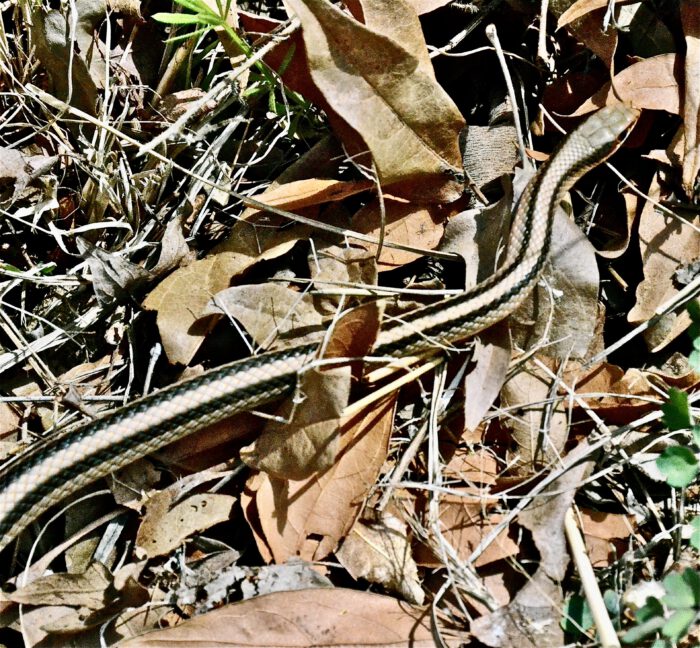
Many snake species are nocturnal and therefore not usually evident. Both Western Diamondback and Black-tailed Rattlesnakes occur at the preserve, but are rarely encountered.
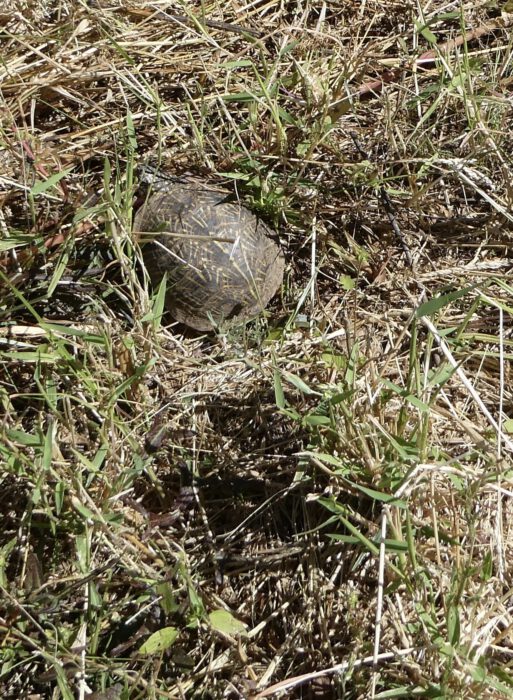
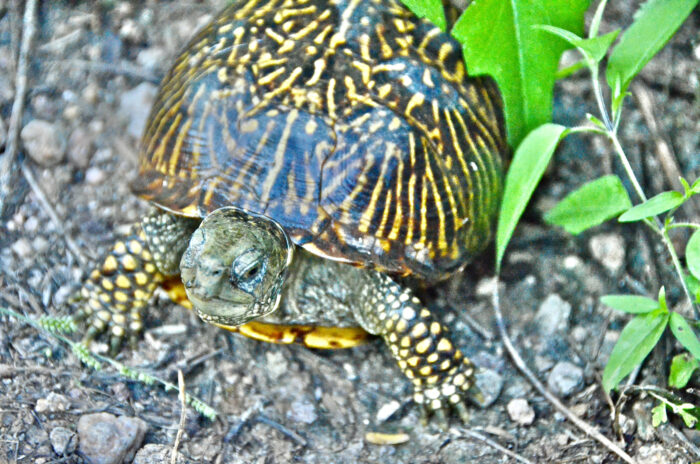
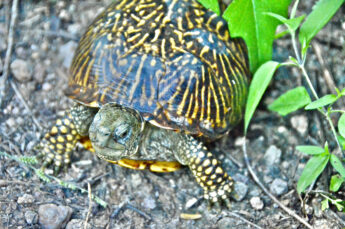
The most improbable reptile at at Raven’s Nest is the Ornate Box Turtle. Only a few have been detected at the preserve over the years, given their reclusive nature and the fact that they are normally only active for 8 – 10 weeks during monsoon season. They eat both plant and animal foods, opportunistically catching mostly invertebrates but also small lizards and mammals and even consuming carrion.
Birds
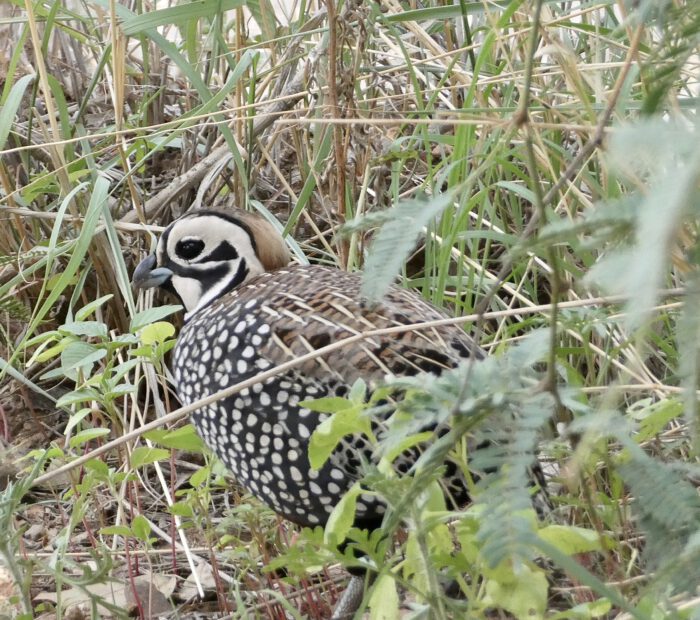
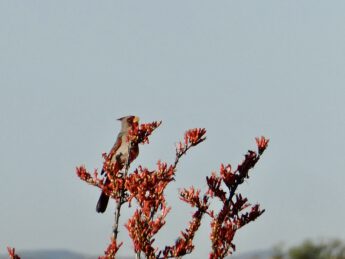
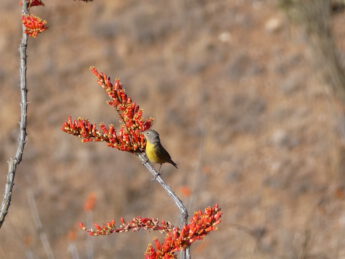
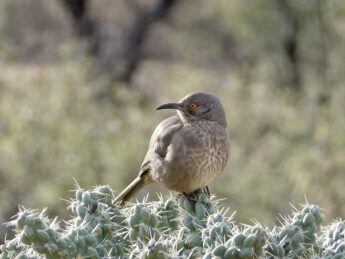
Among its many biodiversity superlatives, perhaps the Sky Islands of Arizona are best know as a U.S. and global birding hotspot. With over 550 species recorded in the area, it is a veritable blitzkrieg of birds. A high diversity of raptors, flycatchers, sparrows, owls, nightjars, buntings and their relatives, orioles, tanagers, make for world-class birding.
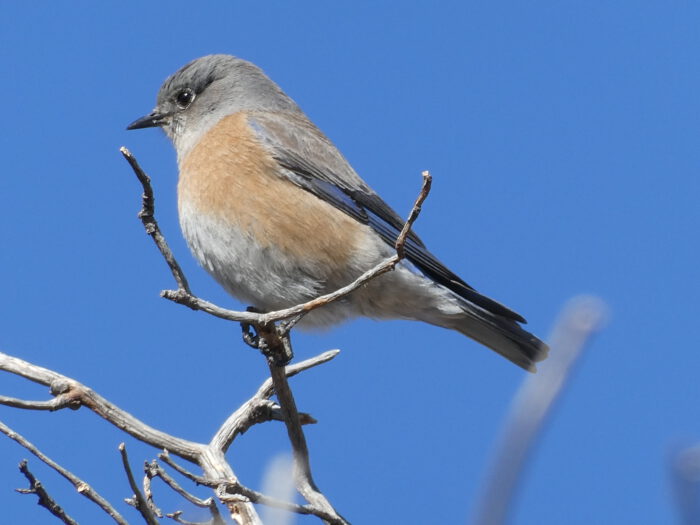
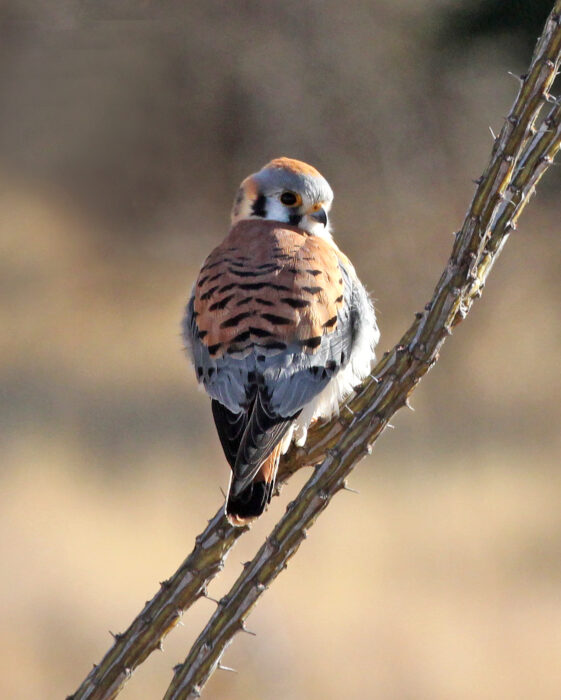
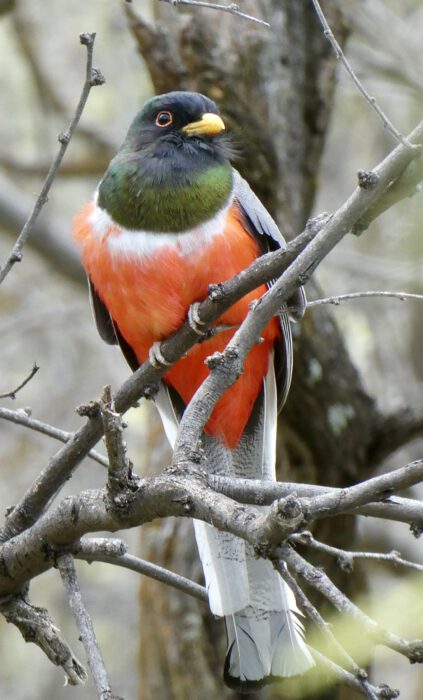
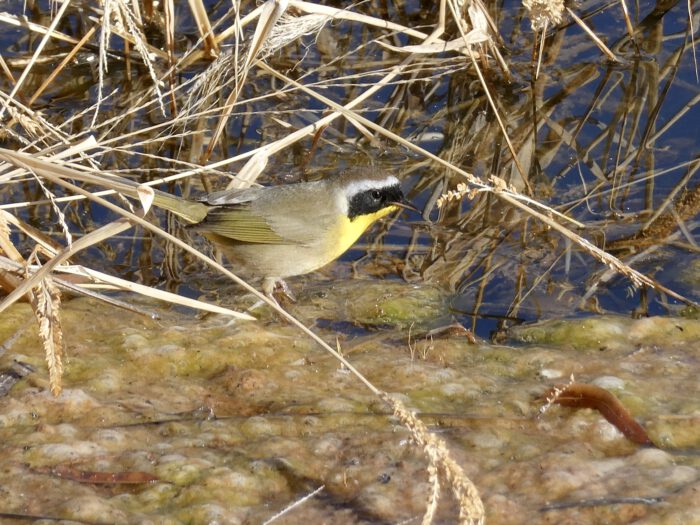
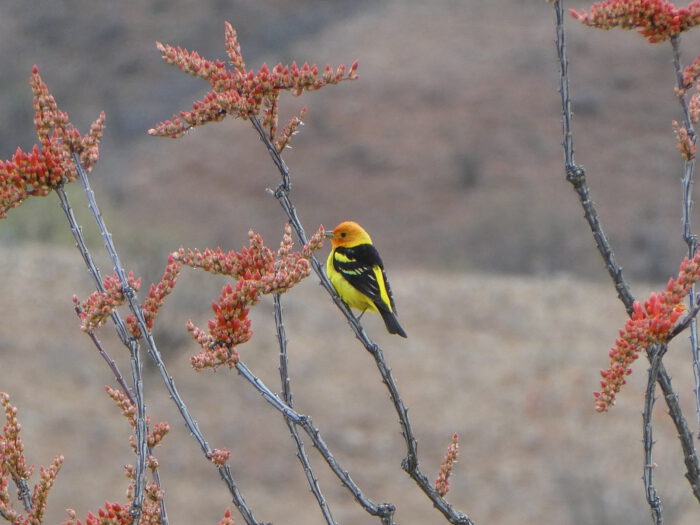
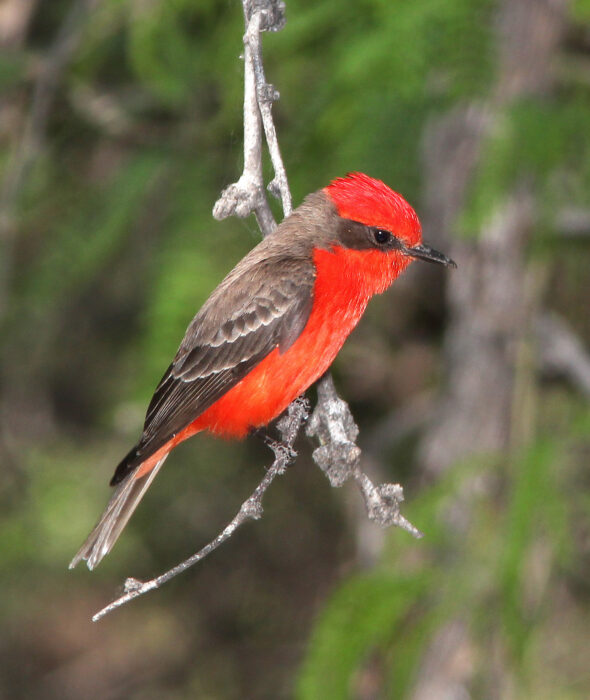
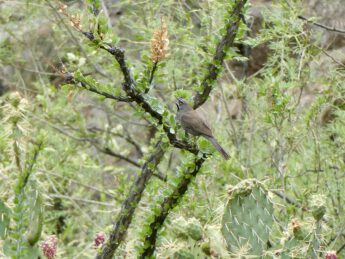
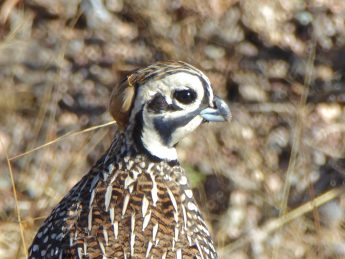
As of 2026, 171 bird species have been recorded at Raven’s Nest Nature Sanctuary. This includes breeding birds, wintering ones, as well as migrants and rarities. In addition to Mexican Specialty staples – bird species more typical of Mexico than the U.S. – such as Varied Bunting, Montezuma Quail, Rufous-winged Sparrow, and Gray Hawk – local rarities sometimes show up. These have included a spectacular male Elegant Trogon in winter, as well as Thick-billed Kingbirds in summer.
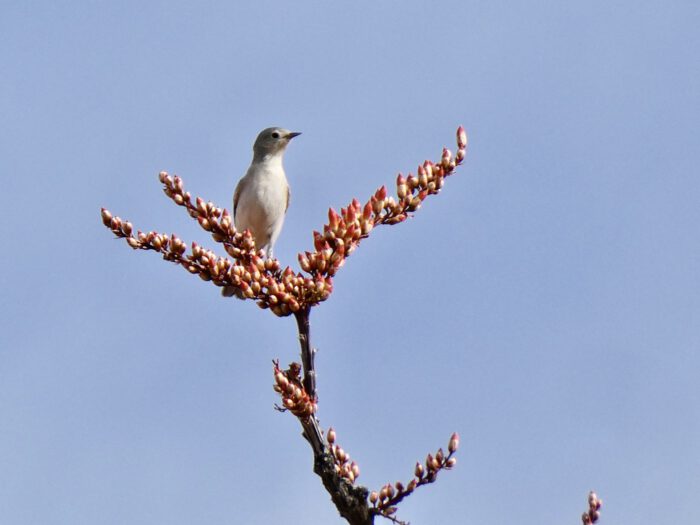
Each season hosts its own avian diversity at Raven’s Nest. Winter sees large flocks of sparrows, as well groups of Lesser and Lawrence’s Goldfinches feast upon native wildflower seeds, as do flocks of Mourning Doves. Spring migration hosts peaks in tanager, oriole, warbler, and vireo numbers. Monsoon season is the epicenter of bird bredding activity at the preserve, though some species also raise young in spring. Finally, autumn migration witnesses another spike in many bird groups as they head south to warmer climes.

Mammals
As with reptiles, mammals are once again most diverse in the U.S. within the Sky Islands region. Of the approximately 108 species recorded in the area, 37 species have been documented at Raven’s Nest. Again, this is certainly an underestimate of the true mammal total at the preserve. Many species are nocturnal and secretive, making documentation a real challenge. Further, many small rodent species are very similar in appearance, rendering safe identification quite difficult.
Among the most evident mammals at the preserve are deer and Collared Peccaries. Javelinas (collared peccaries) thrive at Raven’s Nest Nature Sanctuary utilizing it for critical foraging and seasonal shelter. Since 2008, our sanctuary has served as a vital hub within a much broader, interconnected regional ecosystem.
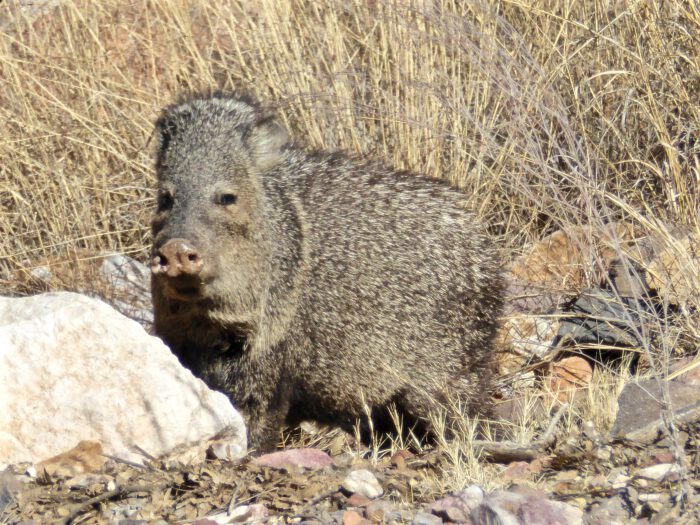
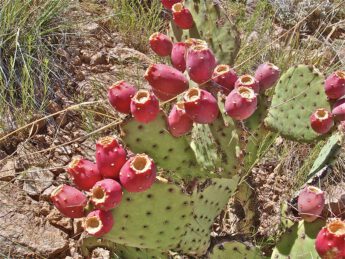
Javelinas are primary herbivores that act as vital ecosystem engineers. Using their sensitive pink noses and sharp, javelin-like canine teeth, they dig for underground roots and bulbs. This behavior churns and aerates the desert soil, aiding seed germination. Their favorite food is the prickly pear cactus because it stores so much moisture, along with agave, roots, and mesquite beans.
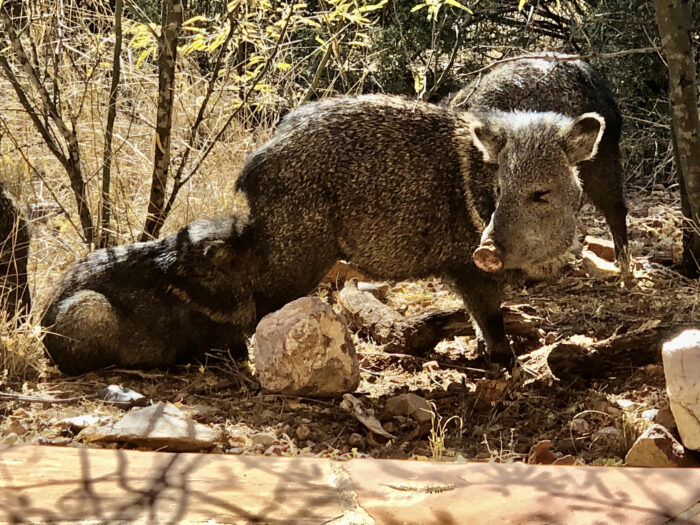
Collared Peccaries or Javelina also breed at Raven’s Nest with herds of up to 12 or so roaming the landscape in search of mostly plant food. While primarily herbivorous, they will occasionally eat lizards, dead birds, and small rodents if the opportunity arises, helping clean up organic matter on the sanctuary floor.
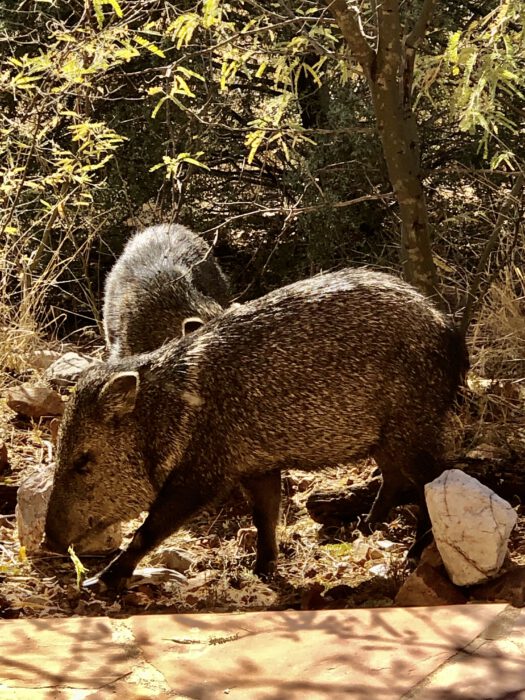
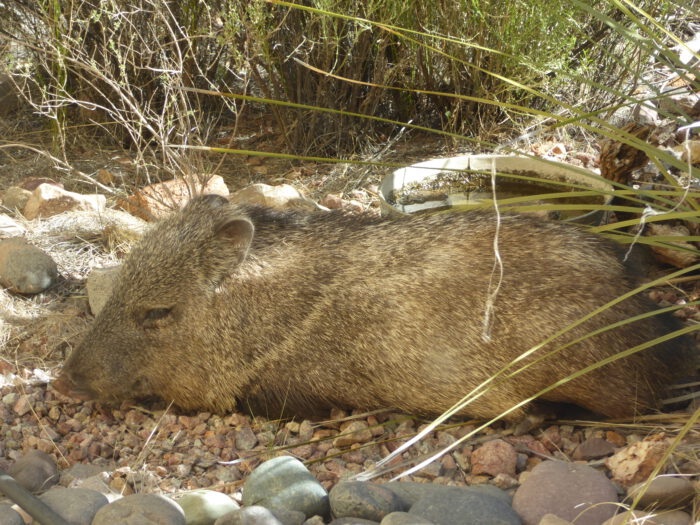
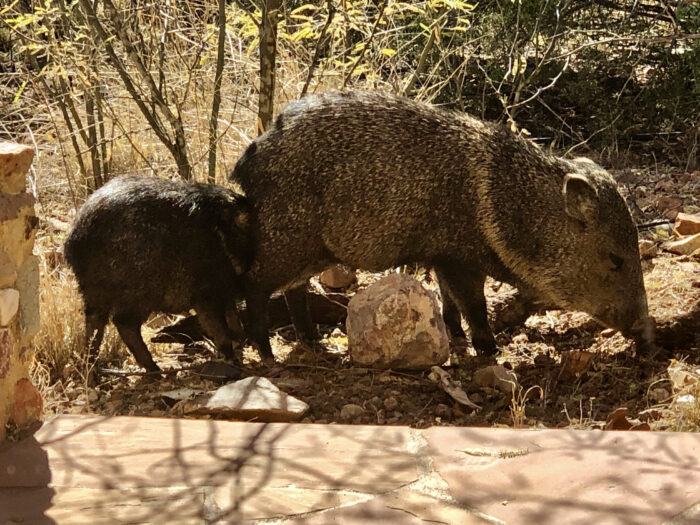
When females nurse their young just outside of the Southwestern House, time seems suspended during these magical moments. Javelinas are intensely social and live in family groups called squadrons or herds, usually averaging 6 to 12 individuals.
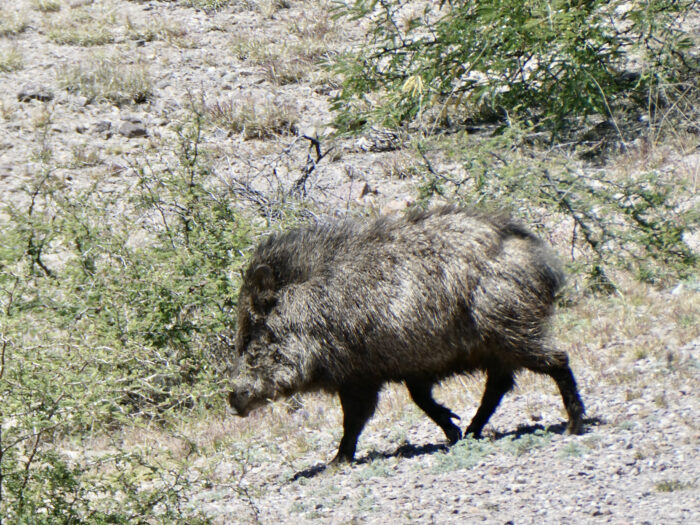 Javalinas have notoriously poor eyesight, therefore, they identify their family members using a powerful scent gland located on their lower back/rump. They rub against each other head-to-rump to create a uniform “group perfume.
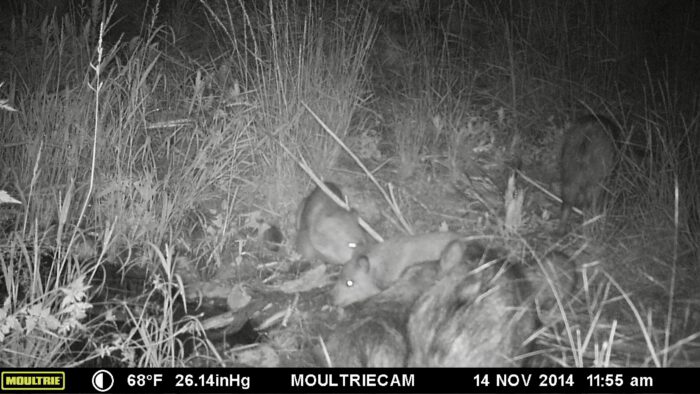
Raven’s Nest Nature Sanctuary features multiple territorial markers. Javelinas aggressively mark their boundaries by rubbing their musk glands onto rocks, shrubs, and tree stumps.
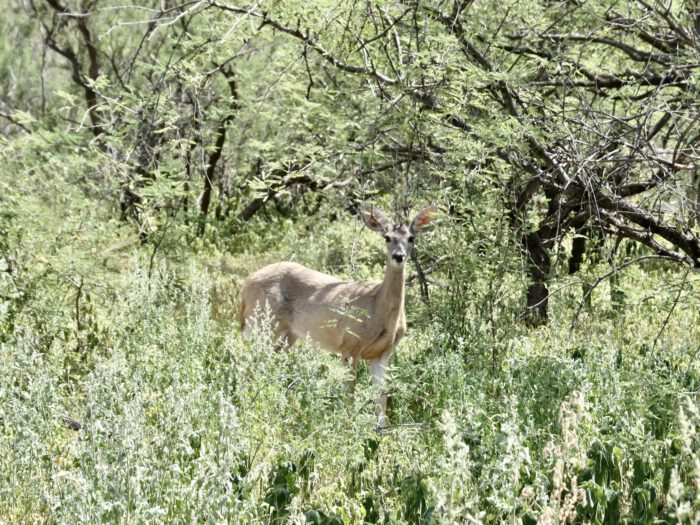
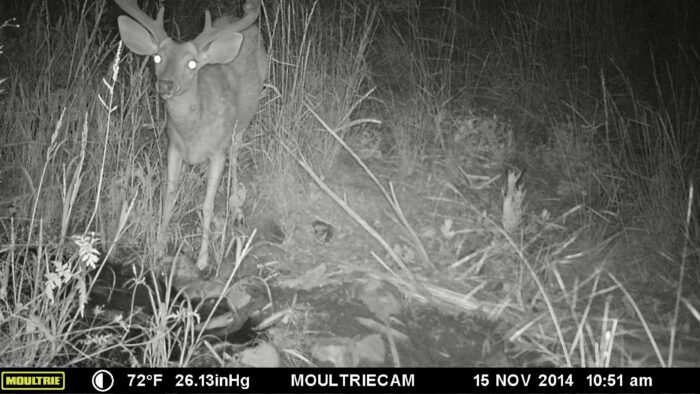
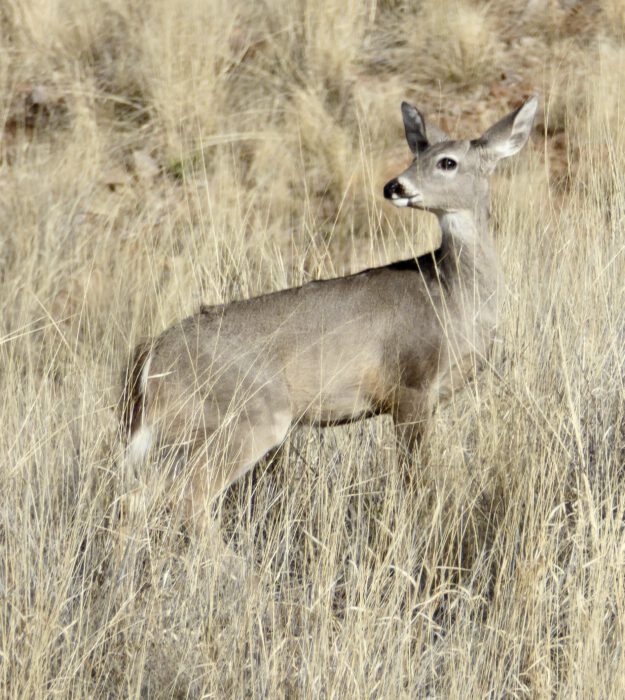
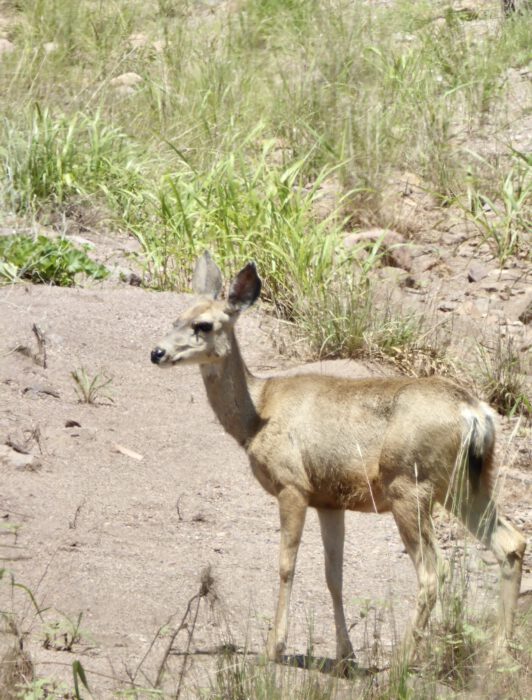
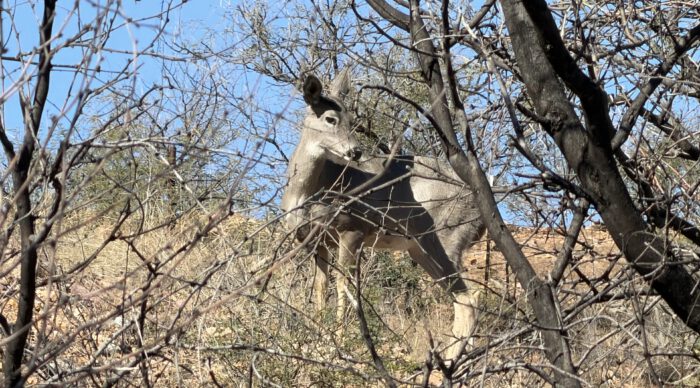
Both Whitetailed Deer and Mule Deer use habitats at Raven’s Nest though “mulies” normally only pass through. In contrast whitetails breed here, dropping fawns during monsoon season.
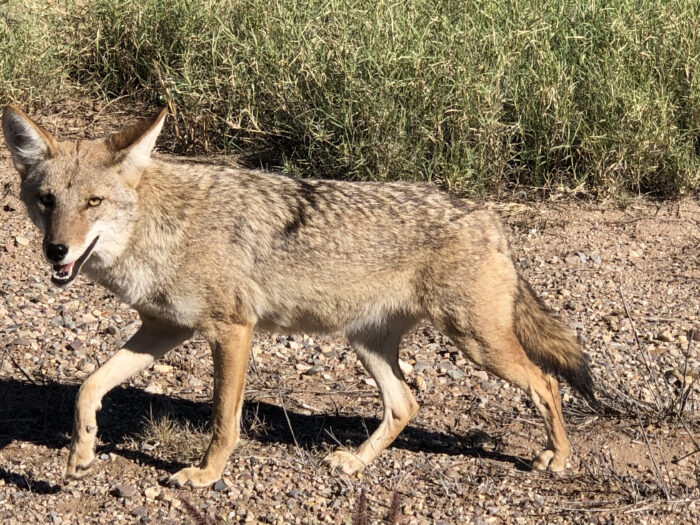
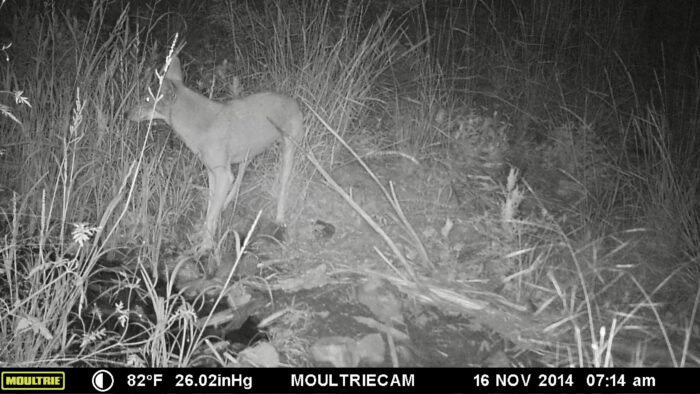
Having both Common Gray Foxes (Urocyon cinereoargenteus) and Kit Foxes (Vulpes macrotis) at Raven’s Nest Nature Sanctuary is a major ecological win.
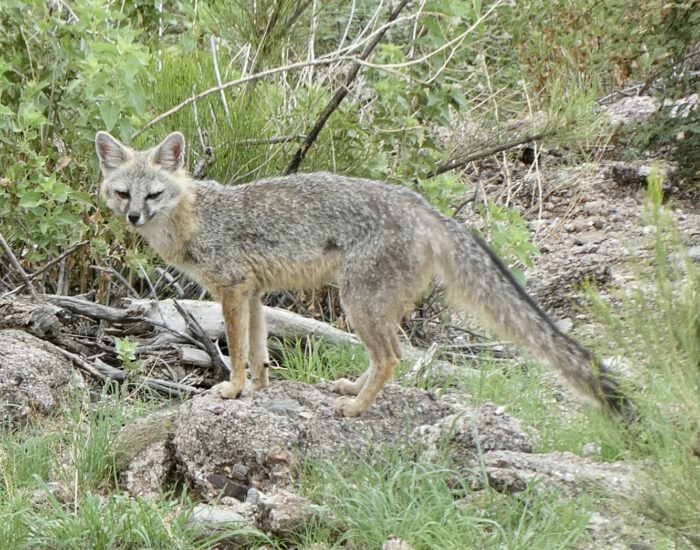
It clearly indicates high habitat diversity, strong ecosystem health, and robust biodiversity. While they are less often seen, their scat bears testament to their presence at our preserve.
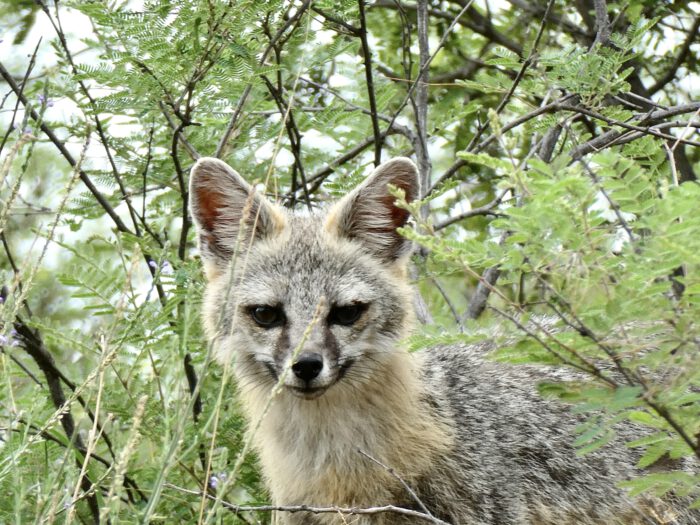
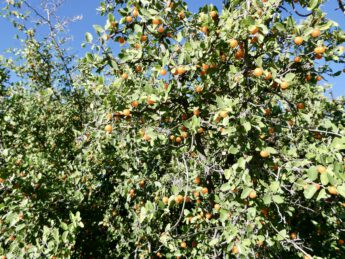
Gray foxes are notable fruit-eaters compared to other canids. As they consume native fruits and berries, they deposit seeds across Raven’s Nest Nature Sanctuary via their scat. This natural seed dispersal assists in plant reproduction and helps maintain the botanical health of our sanctuary.
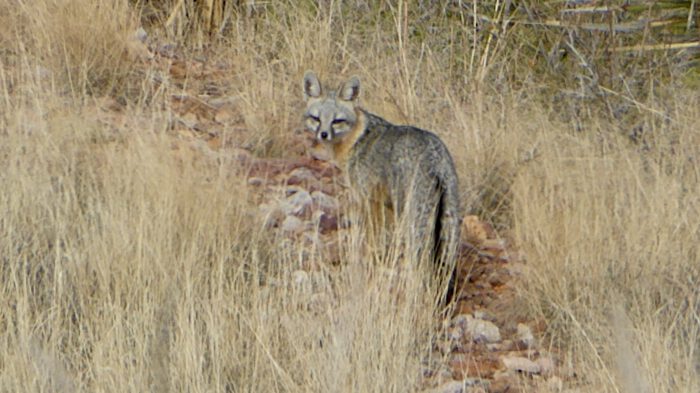
Foxes are highly sensitive to environmental degradation, fragmentation, and toxins. The fact that both species are actively using Raven’s Nest Nature Sanctuary proves that the land is free from heavy chemical pollution, offers adequate cover, and supports a thriving, multi-tiered prey base.
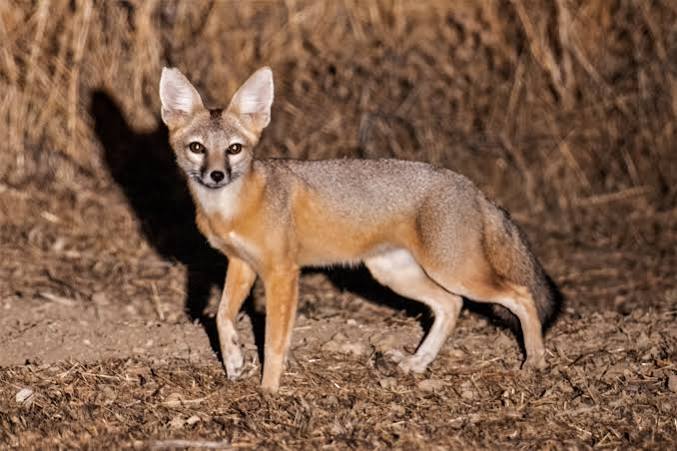
Kit Foxes (Vulpes macrotis) is North America’s smallest fox species, weighing only 3 to 6 pounds with oversized ears. They are elusive nocturnal/crepuscular omnivores that live in underground dens at Raven’s Nest Nature Sanctuary.
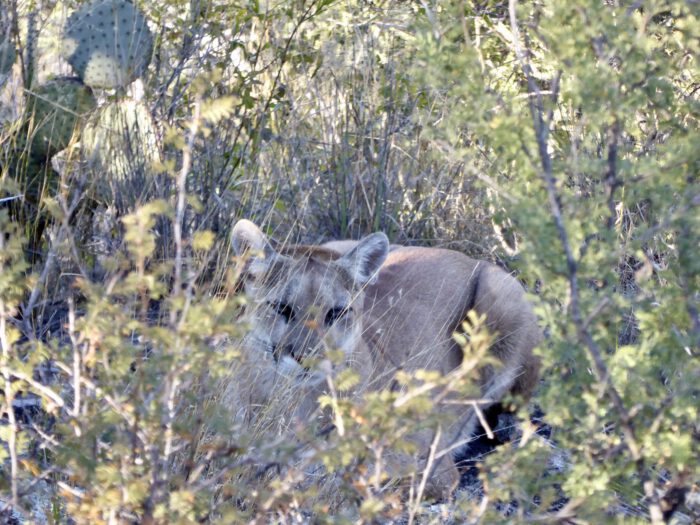
Among the most spectacular mammals at Raven’s Nest are Mountain Lions. They visit each year from the nearby 10,000 wild acres of Sonoita Creek State Natural Area, coming to hunt, drink at wildlife ponds, and even lead their young around at the preserve. Several deer carcasses – one a Mule Deer doe in summer and the other a Whitetailed Deer buck in winter – attest to the prowess of the world’s largest small cat.
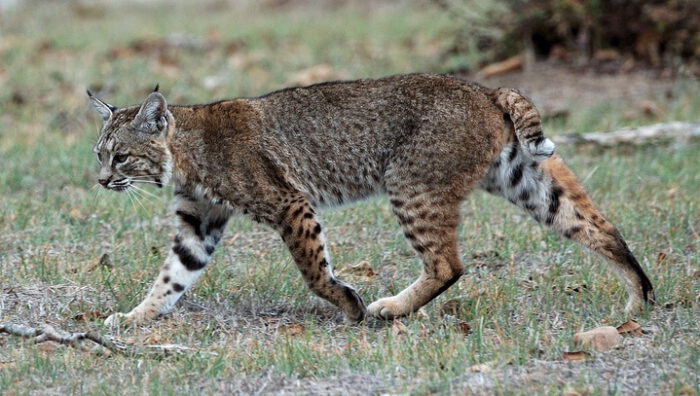
Decidedly smaller are resident Bobcats at the preserve. Along with Mountain Lions, Bobcats are normally detected by their diagnostic scat.
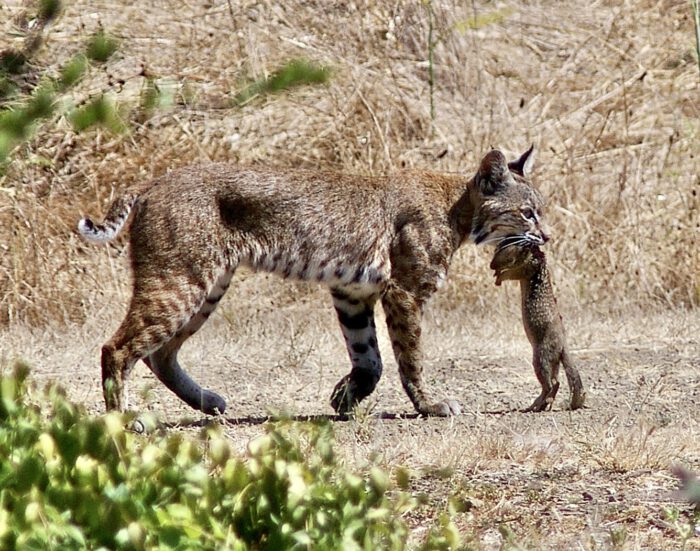
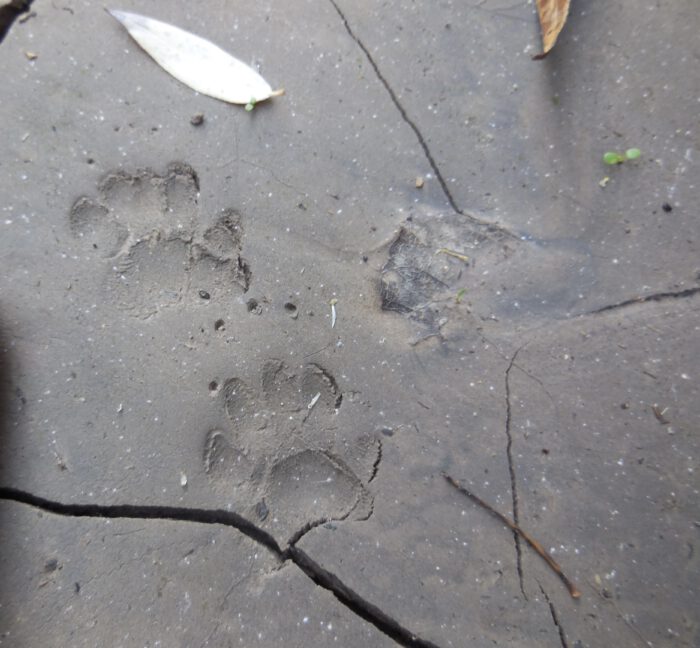
Other carnivores at the preserve include highly nocturnal Ringtails and Northern Raccoons, four species of Skunk – Spotted, Striped, White-backed Hog-nosed, and Hooded, and American Badgers. Most of these species are also detected via scat and/or diagnostic tracks. Highly social and largely diurnal White-nose Coatis have been seen very close to Raven’s Nest.
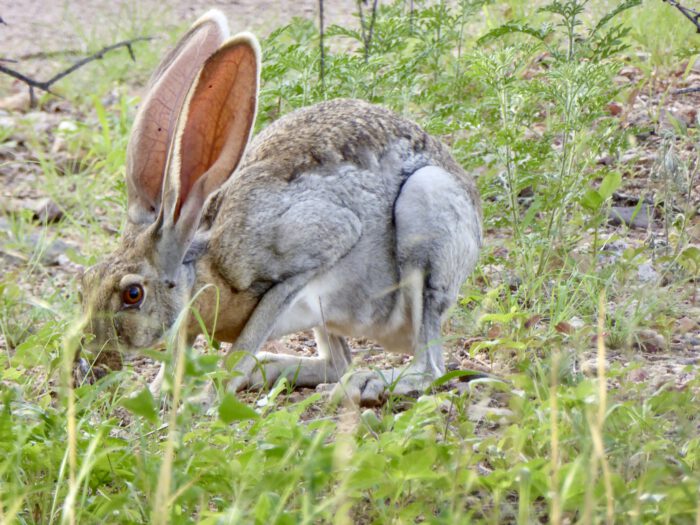
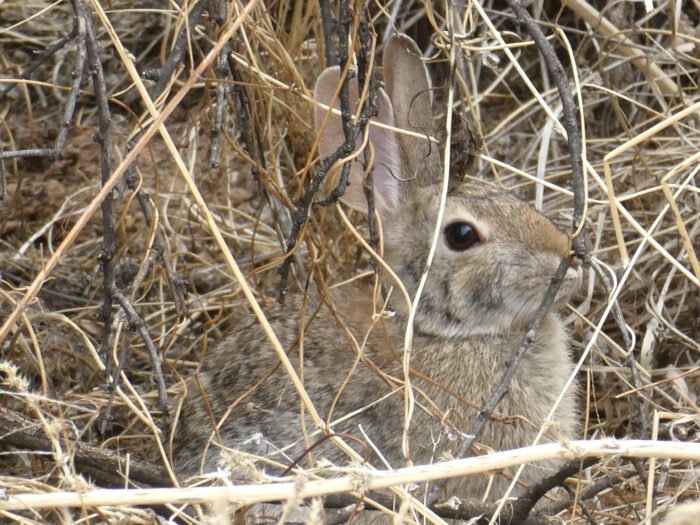
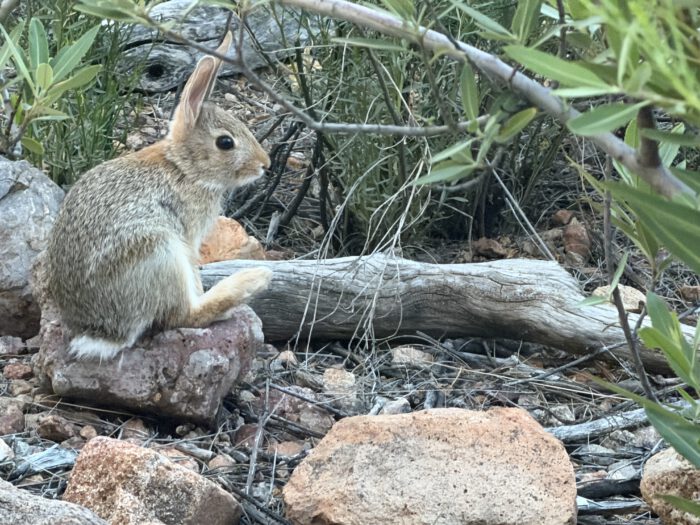
Two species of lagomorphs also live at Raven’s Nest. Huge Antelope Jackrabbits are harder to spot, given their alacrity at hiding in dense vegetation. More often, Desert Cottontails are seen, including with young around the house. Both serve as key prey items for reptilian, mammalian, and avian predators alike.
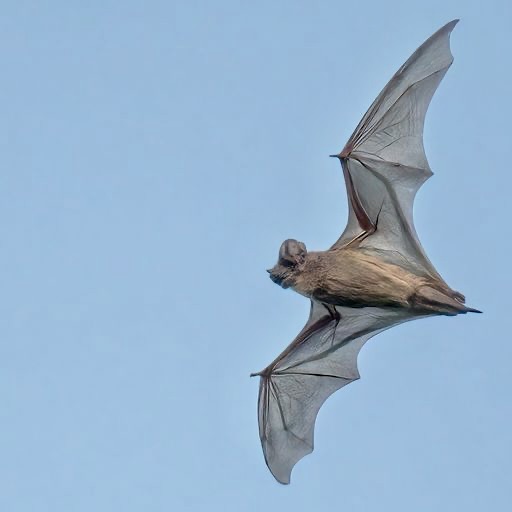
Bats, including nectar-feeding Lesser Long-nosed Bats and various insectivorous species spike in both diversity during the abundance of monsoon season.
On rare occasions Virginia Opposums show up, likely traveling through the area.
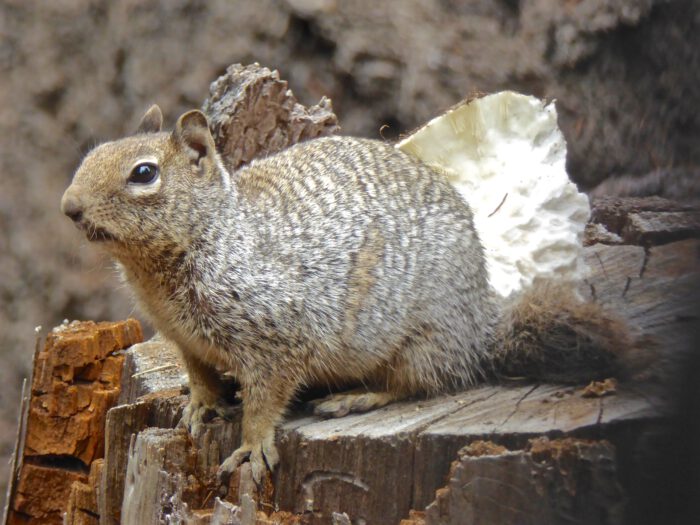
Many species of rodents, such as Merriam’s Kangaroo Rat are often most evident by their mounds and burrow openings to their underground lairs. On rare occasion chunky Rock Squirrels show up at the preserve only to mysteriously vanish once again.
III. INSPIRATIONAL TEMPLATE
In addition to serving as a key puzzle piece and a biodiversity hotspot in its own right, Raven’s Nest also acts as a template for other local landowners, demonstrating to them the many conservation opportunities and tools they have at their disposal. The preserve’s rainwater harvesting features highlight the need to safeguard our water supplies both for native species and future generations.
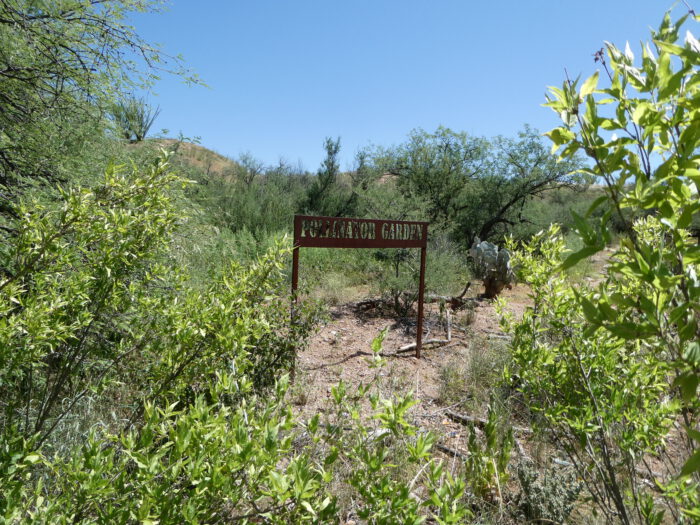
The native landscaping at Raven’s Nest sheds light upon the need for the ecological restoration of various habitats in the Sky Islands region.
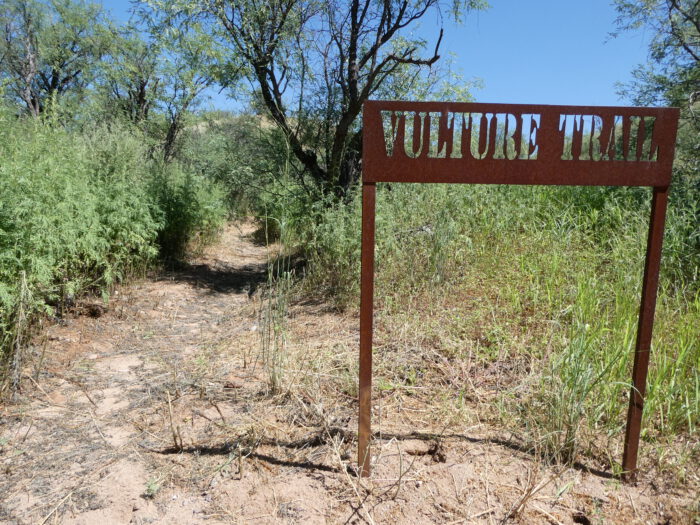
Our 6 miles Nature Trails invite guests to explore the land, getting to know its ecology and the renowned Sky Islands Biodiversity firsthand.
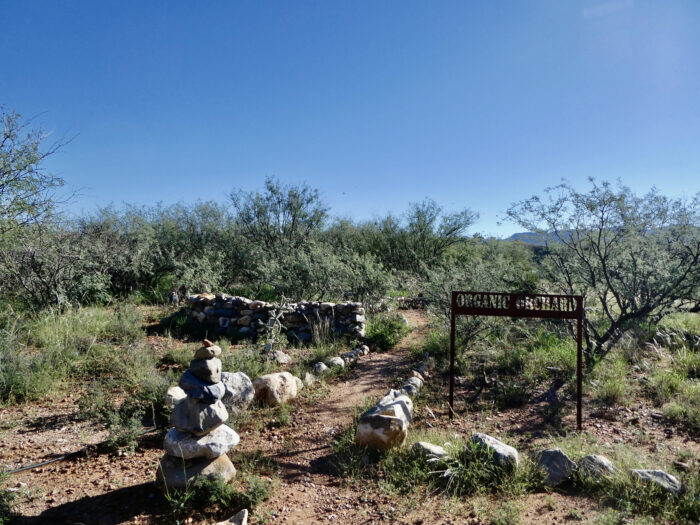

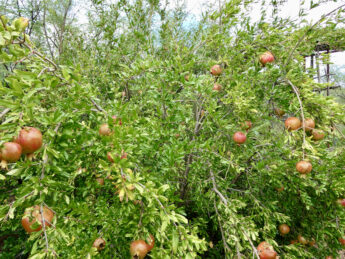
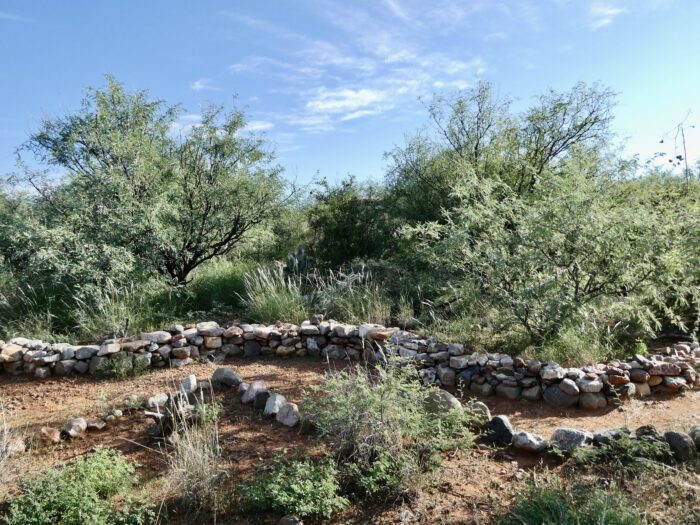
The preserve’s small Organic Orchard and Organic Gardens inspires guests to sustainably grow some of their own food in harmony with the land.
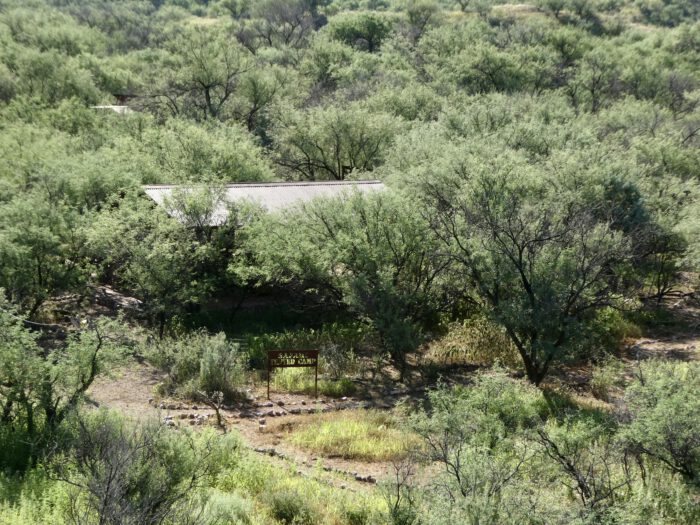
Meanwhile, the Sky Islands Safari Camp beckons guests to slow down and enjoy the beauty of the land, casting aside the ongoing demands of life while putting nature first.
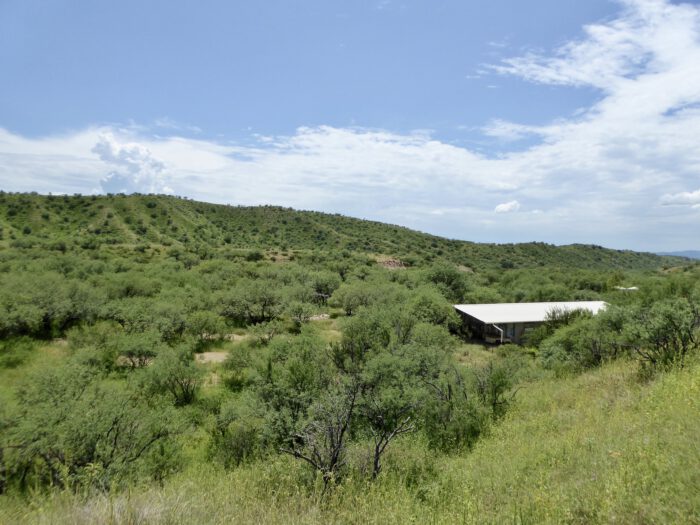 Finally, the Sky Islands Discovery Center is a reminder to all of the need to continue to educate ourselves about the crucial role that biodiversity plays in a healthy planet.
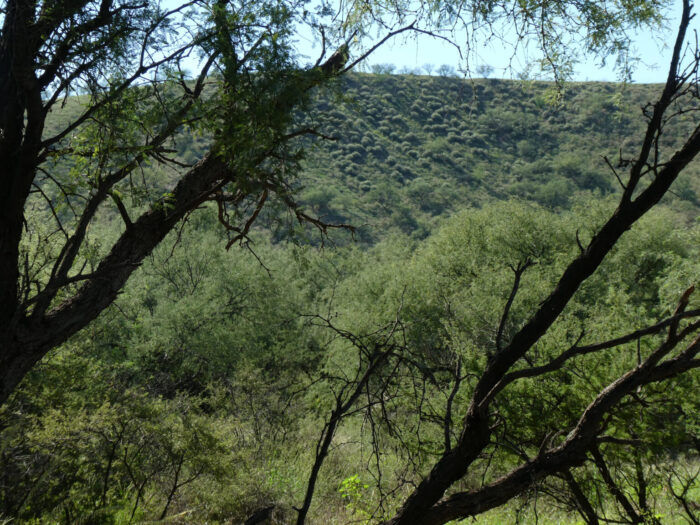
Thus, anyone who visits Raven’s Nest Nature Sanctuary bears witness to the countless hands-on ecological restoration efforts that have gone into transforming the land back to its natural state since 2008.
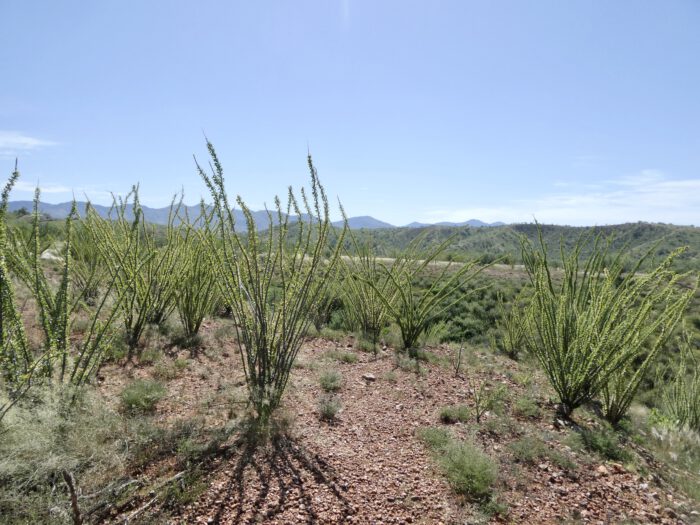
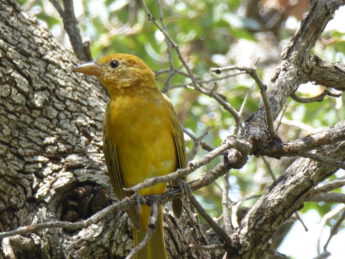
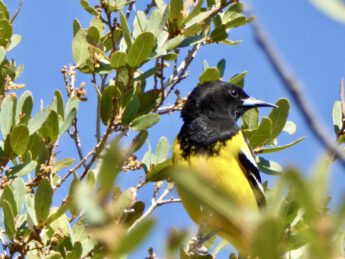
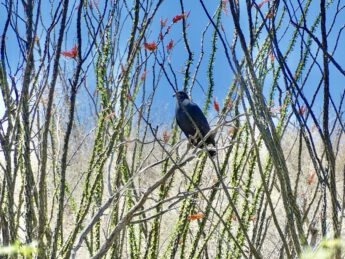
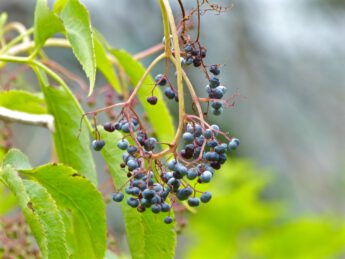
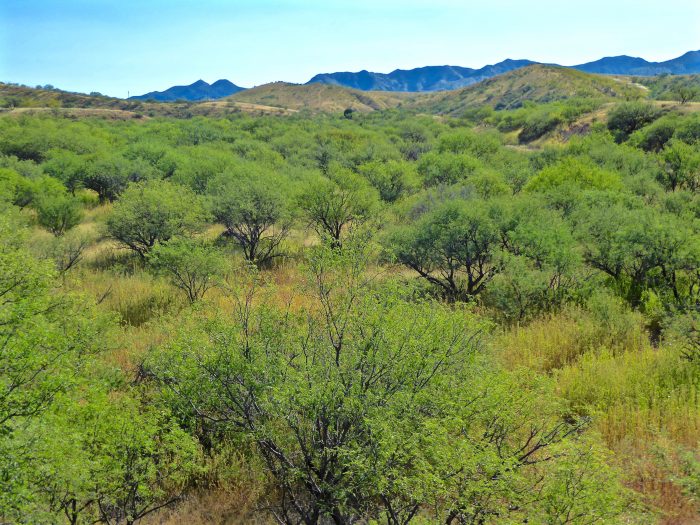
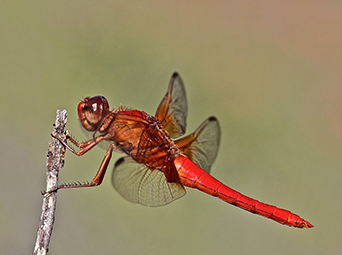

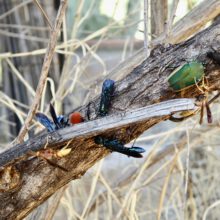

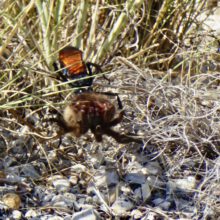
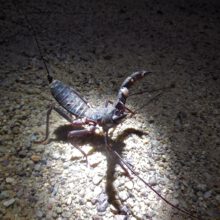
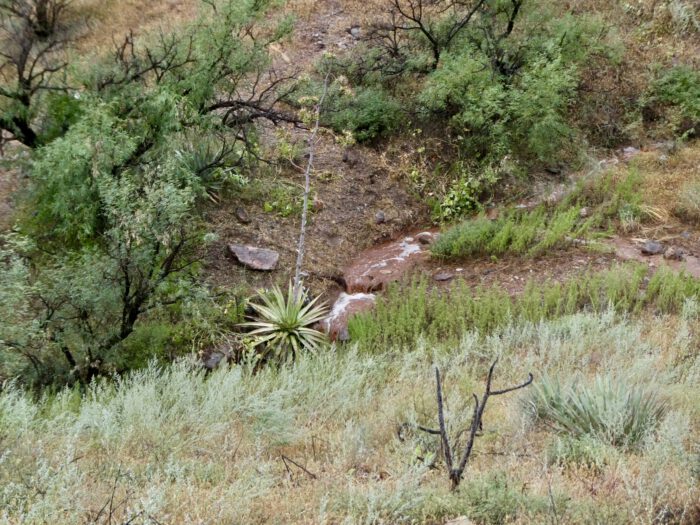 Evident throughout the 42 acres are the Earth Stewardship initiatives that Vincent and Claudia have implemented acting in harmony with nature. Every action has been aimed at enhancing the land to benefit the species that inhabit and visit beautiful and secluded Raven’s Nest Nature Sanctuary.
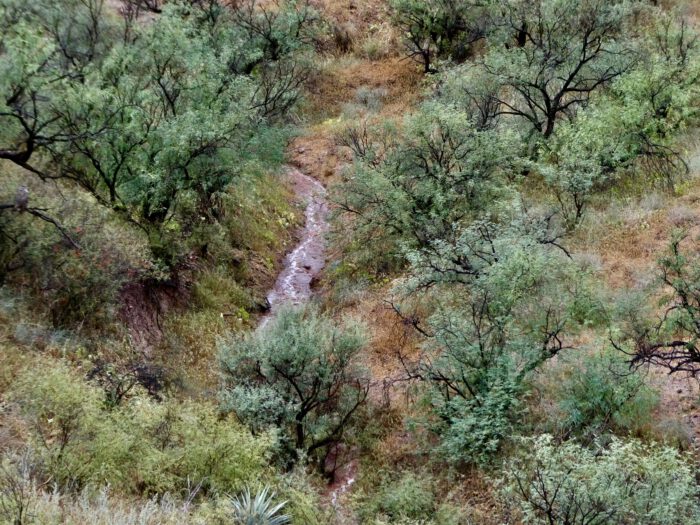
RAINWATER HARVESTING SYSTEM
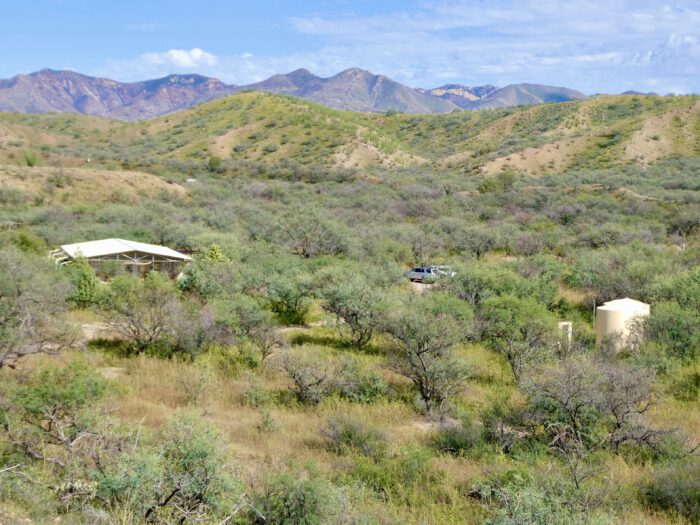
From day one, the ecological strategy at Raven’s Nest Nature Sanctuary had multiple key facets. A crucial priority upon arrival on March 18, 2008 was to install a large-capacity Rainwater Harvesting System on the lower part of the preserve.
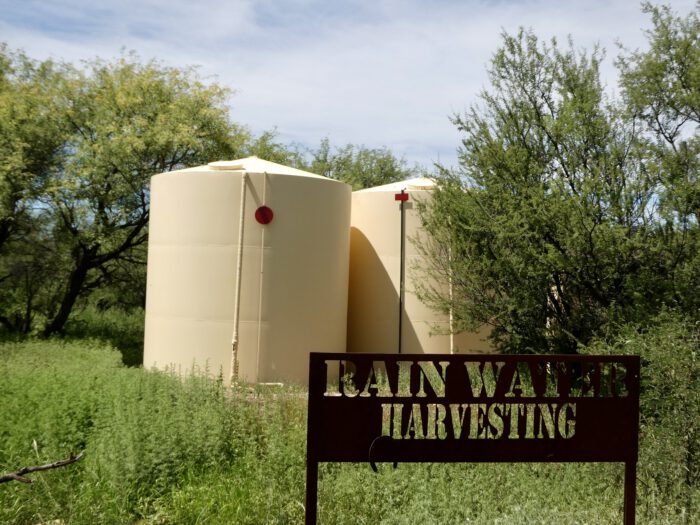

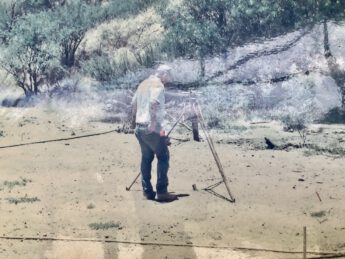
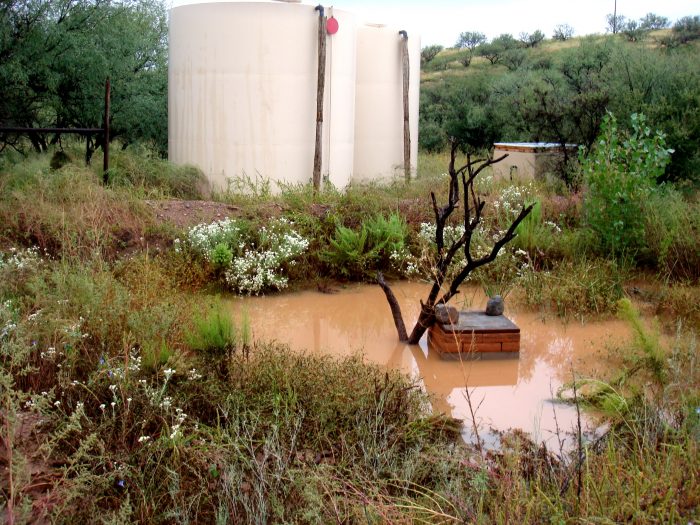
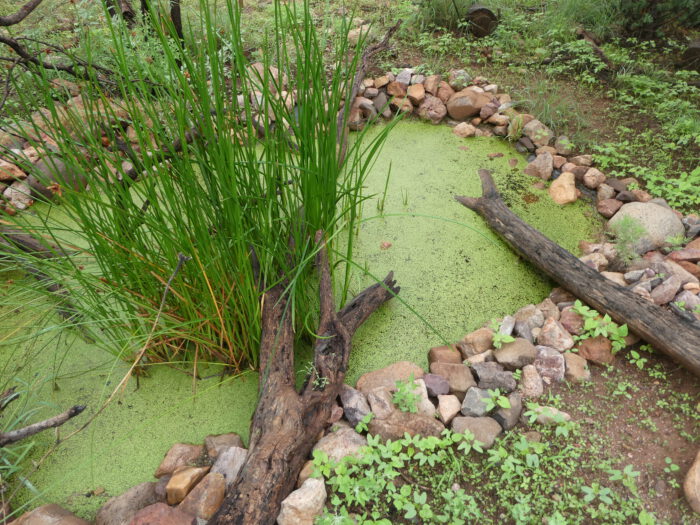
Determined to collect the first rain, and knowing that there were only 3 months before the start of the Monsoon season, the hard work began in earnest. The main objective was to harvest water from the 2,000-square-foot metal roof atop the Sky Islands Discovery Center, piping it underground all the way to “Dragon Pond” which was created for the system. From the pond rainwater is then pumped into the cisterns to be stored and used.
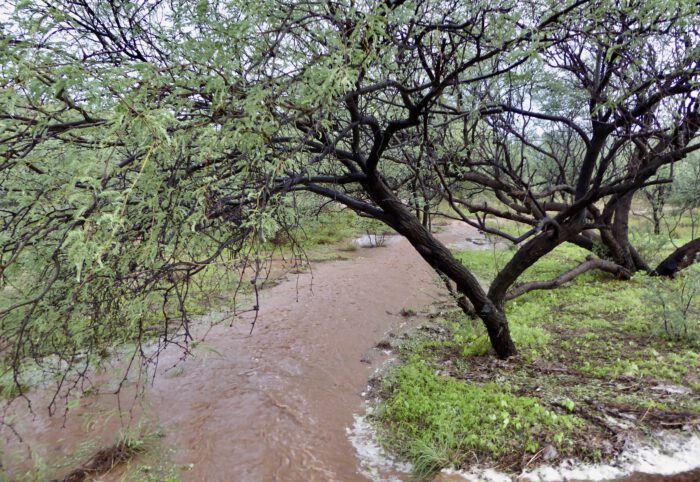
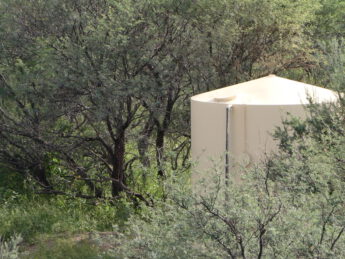
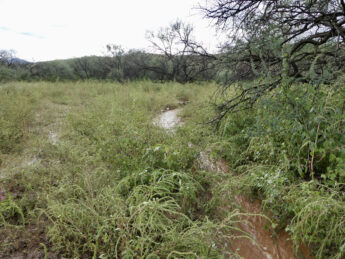
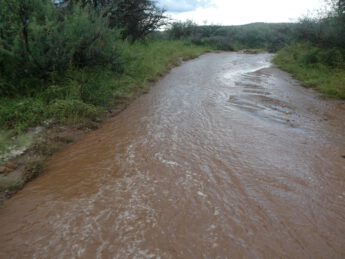
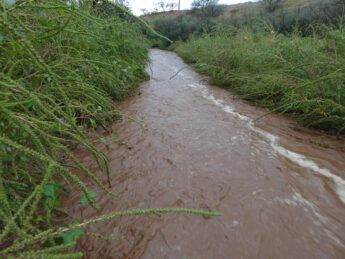
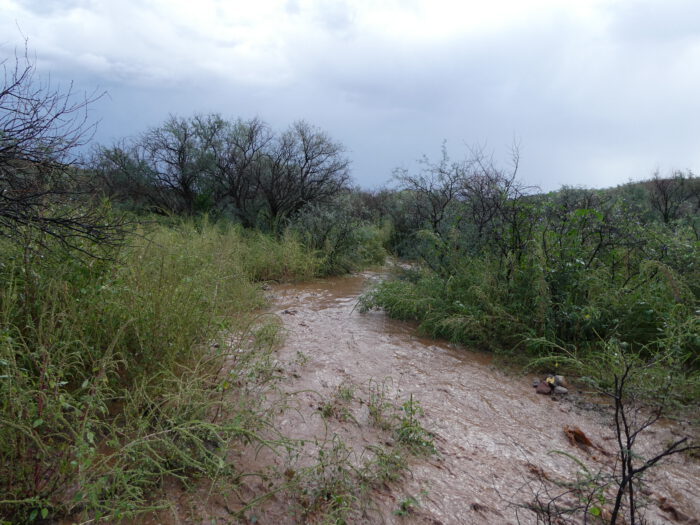
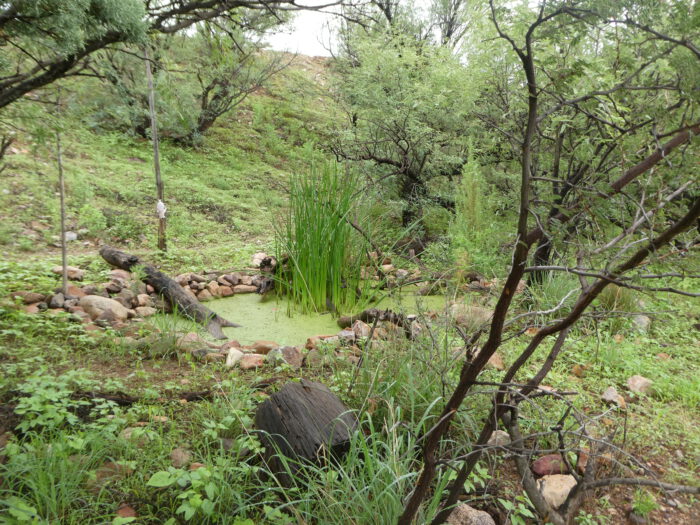
The hard work and substantial investment has paid great dividends. The water stored in the two 10,000-gallon metal cisterns is cycled back to native landscaping and various Wildlife Ponds, helping to support biodiversity.
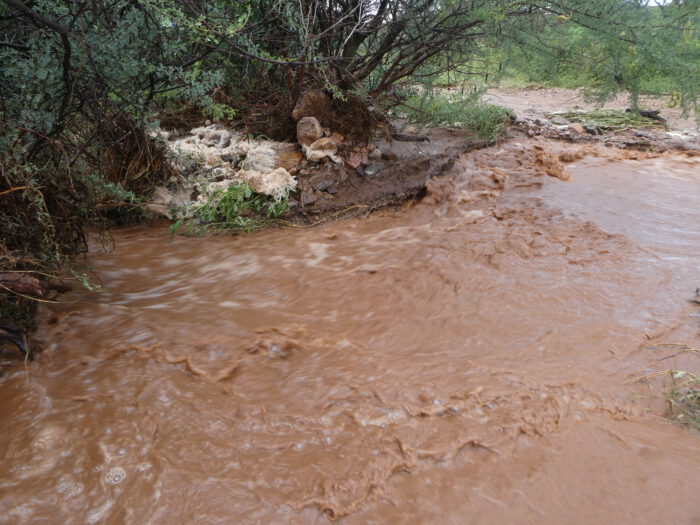
Given the distinct seasons at Raven’s Nest as well as the eclectic nature of precipitation over the years, plant diversity greatly varies from year to year. This lends yet another, “wild-card” aspect to biodiversity at the preserve and in the Sky Islands region at large and validates the imperative need for all of us to harvest rainwater either via an active system or passively via berms and swalles to allow the rain water to “plant itself” on the ground or to fill vital wildlife ponds.
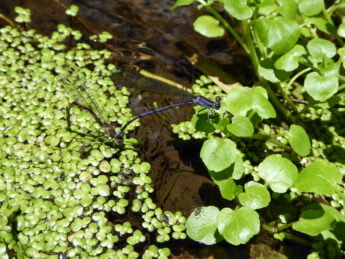
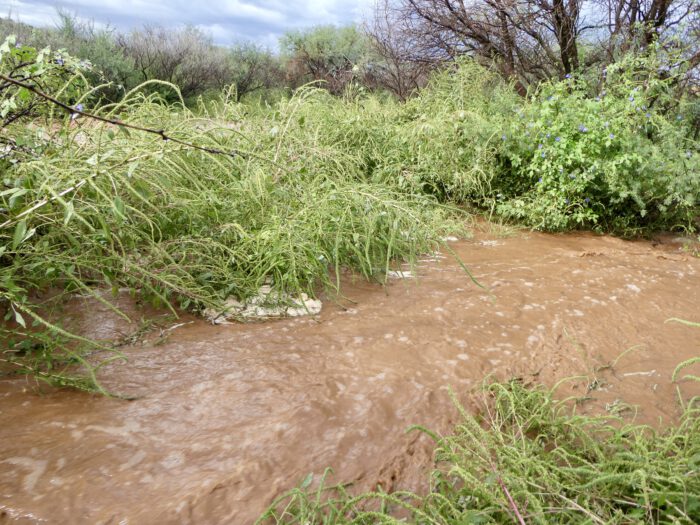
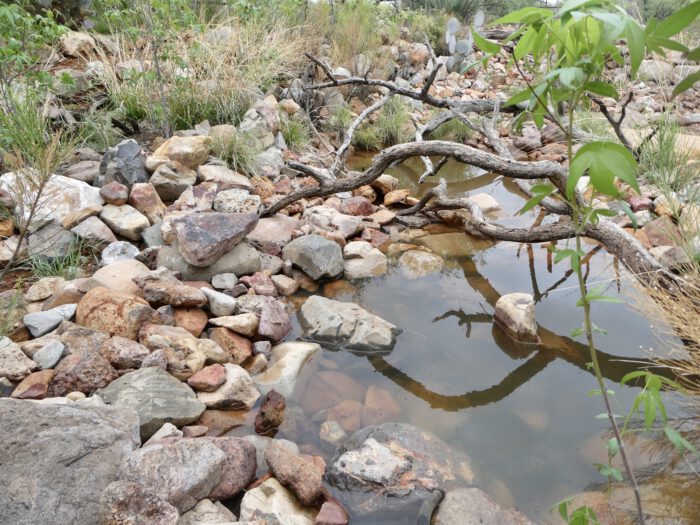
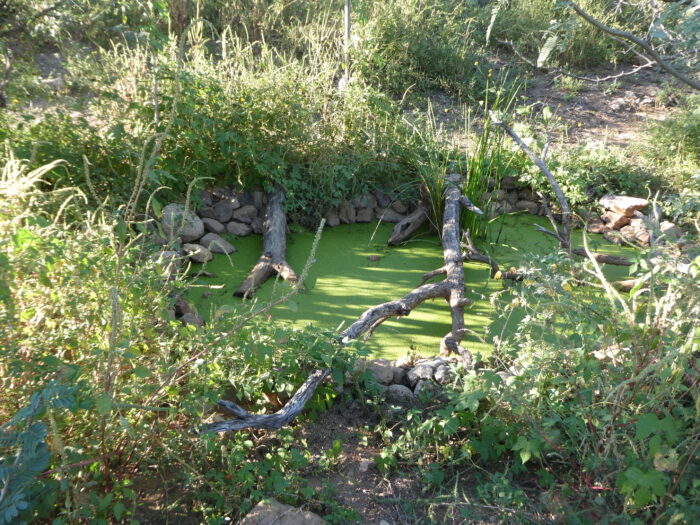
 Various native aquatic species, such as damselflies and dragonflies, abound in the Wildlife Ponds – part of a thriving underwater ecosystem in miniature. Sonoran Desert Toads as well as Mexican and Couch’s Spadefoots breed in the ponds, adding their amorous choruses during monsoon season. A plethora of other native wildlife species visit both the ponds and the native landscaping for their survival needs – all courtesy of the Rainwater Harvesting System.




RAVENS-WAY WILD JOURNEYS HAS BEEN FEATURED IN:
- Patagonia Regional Times – August/September 2019 Read Article
- Nogales International – September 1, 2017 Read Article
- Green Valley News – September 18, 2017 Read Article
- The Vermillion Flycatcher – Tucson Audubon Society Read Article