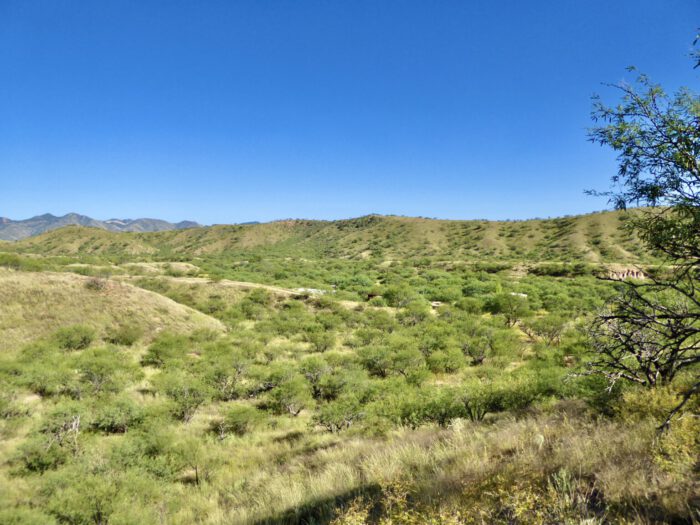
The Sky Islands region of southeast Arizona supports nearly 2,000 native plant species. A broad spectrum of habitats – ranging from Sonoran Desert up to Spruce-Fir forest – allow a myriad of trees, shrubs, vines, succulents, epiphytes, and ferns to flourish in this unique area of the U.S.
Since 2008, Vincent has documented 215 native wild plant species at 42-acre Raven’s Nest Nature Sanctuary – representing over 10% of the total for Arizona’s Sky Island region.
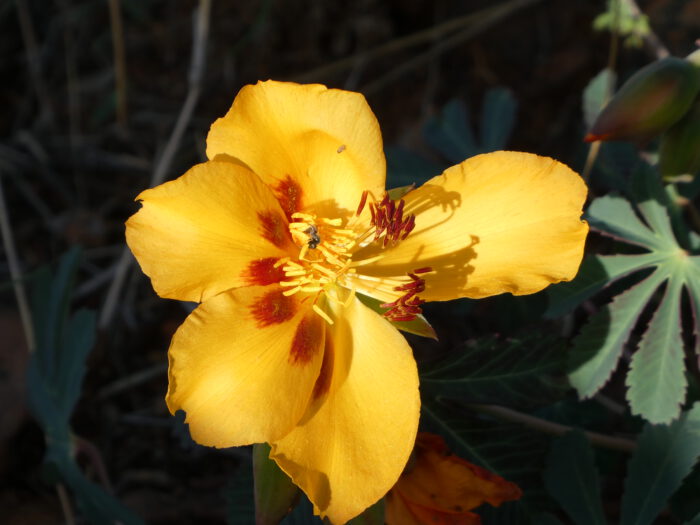
Spectacular Desert Hibiscus
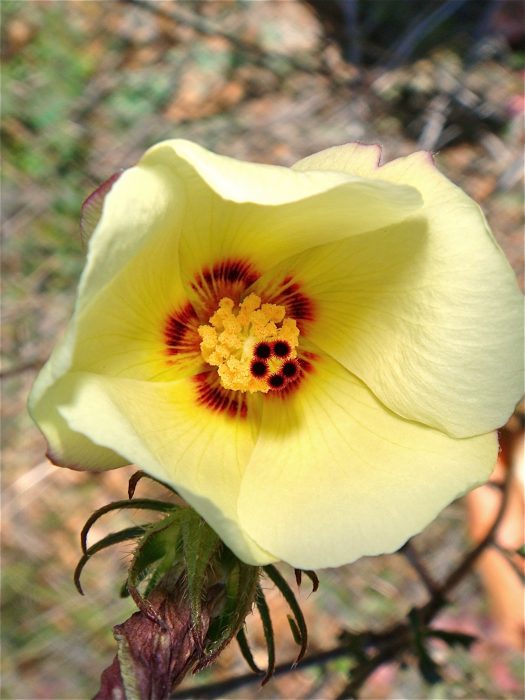
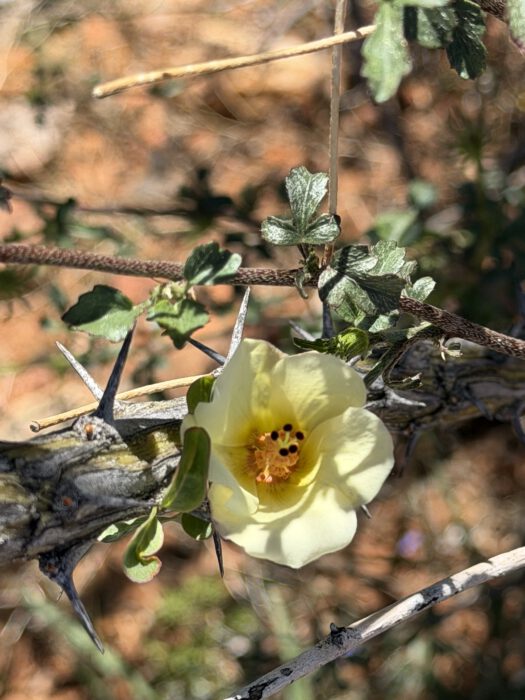
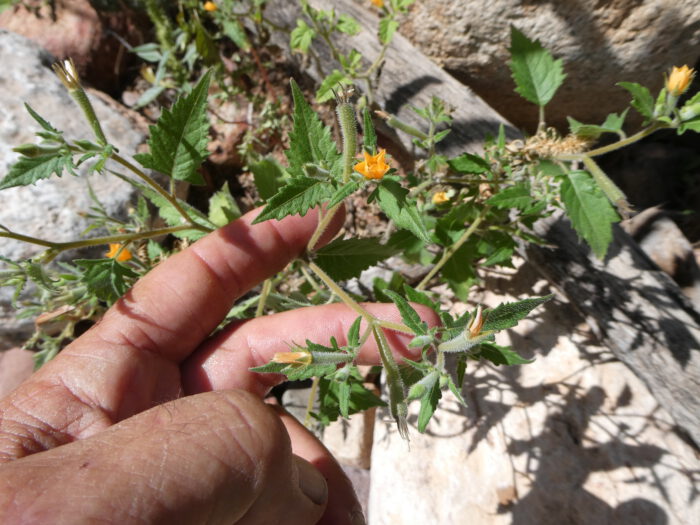
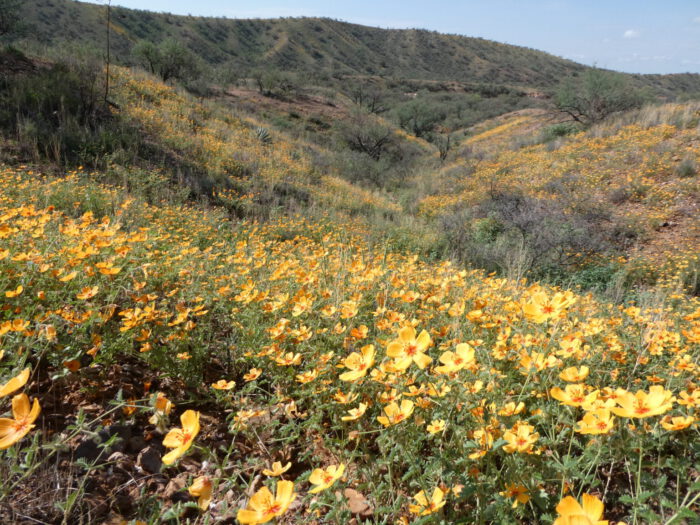
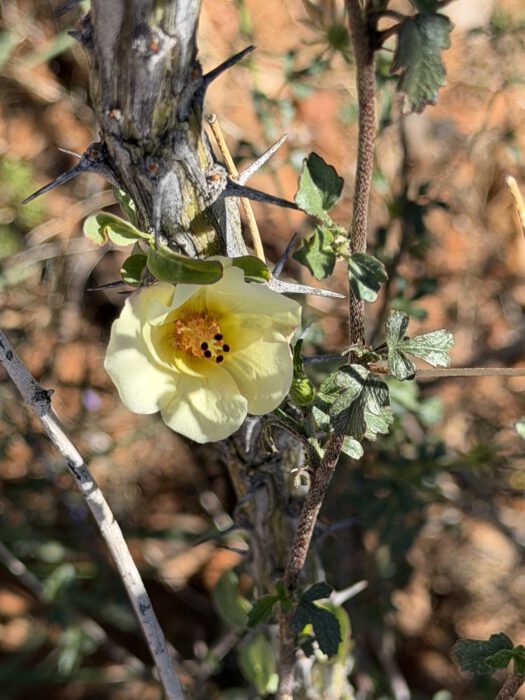
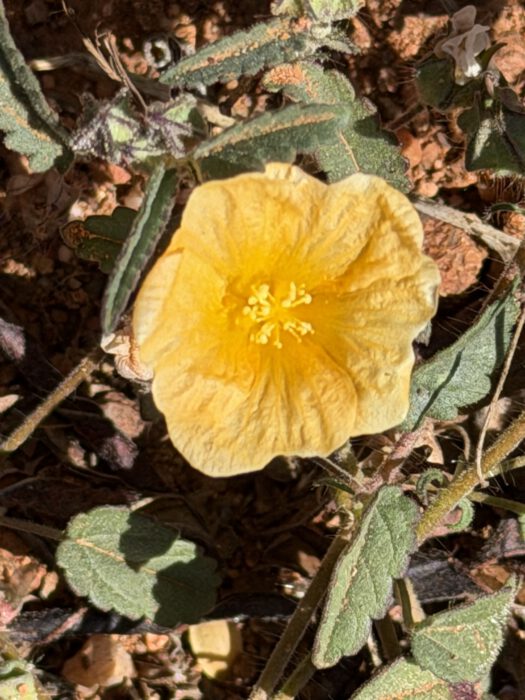
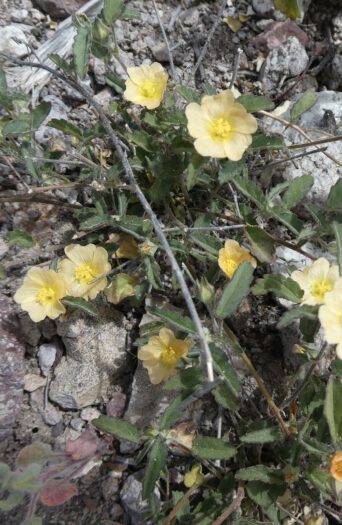
Of all the native wildflower species growing at Raven’s Nest Nature Sanctuary one of the most majestic is Desert Hibiscus. This drought-tolerant sub-shrub in the mallow family looks like a few scraggly twigs poking up from the ground for most of the year with a few reduced leaves stuck on seemingly as an afterthought. During both spring and monsoon season, however, this otherwise under-the-radar plant sets forth spectacular flowers – among the largest and showiest at the preserve.
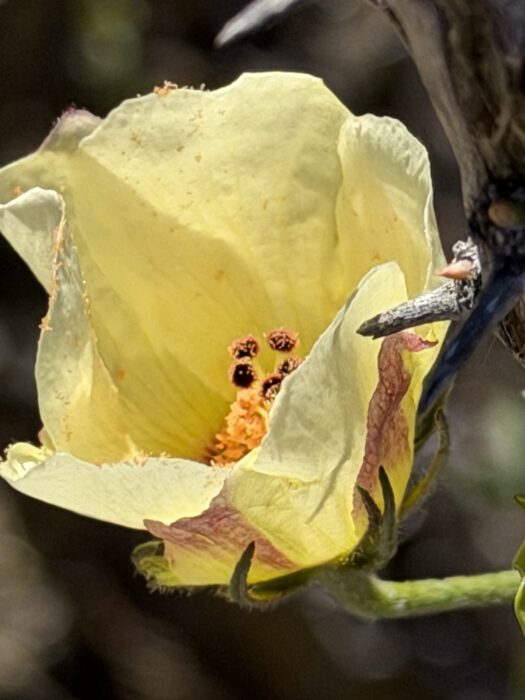
Preferring rocky slopes in and near the Ocotillo forest at Raven’s Nest, Desert Hibiscus has 2-inch wide, eye-popping flowers that draw the attention of select pollinators. Native bees – including specialized Mallow Bees in the genus Diadasia, butterflies, moths, and even hummingbirds patronize the flowers, helping to pollinate them.
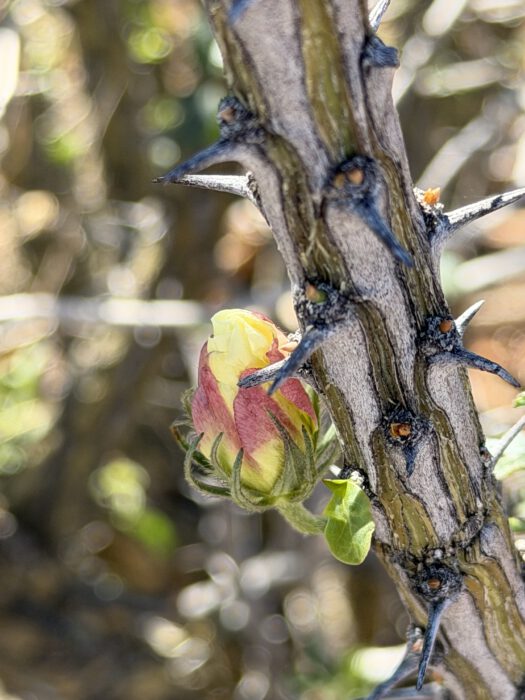
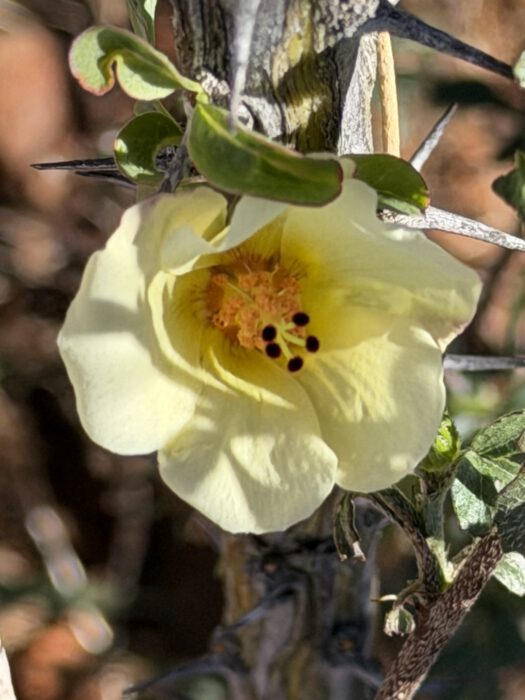
Meanwhile White-tailed Deer seek to browse the shrubs, which may serve to explain why they are so difficult to find outside of flowering season. An unseen Desert Hibiscus is an unbrowsed one! Further, many Desert Hibiscus plants grow in the protective embrace of spiny Ocotillos or other protective “nurse plants’ – an arrangement that highly reduces herbivory.
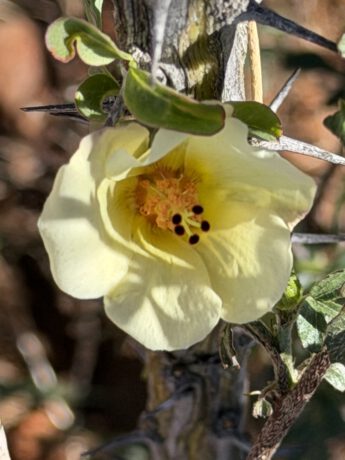
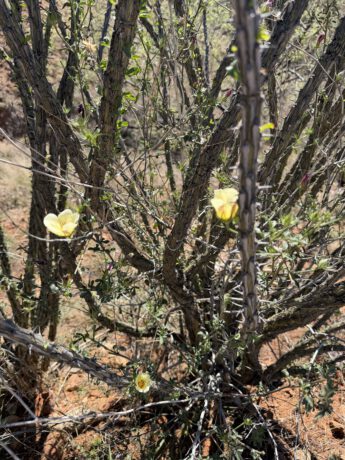
As an Ethnobotanist, Vincent has successfully employed related species in the Genus Hibiscus for fire-by-friction sets, edible flowers, and rope-making.
4 Flowering Seasons at Raven’s Nest
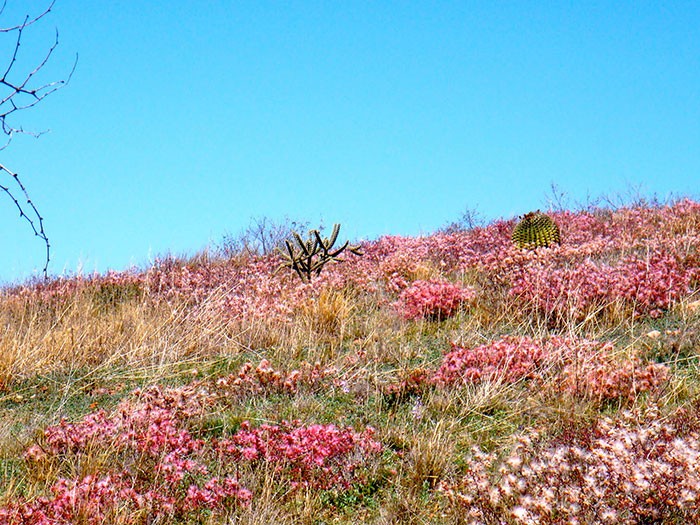
Although a good handful of species will flower any time of year that conditions are wet and warm enough, most wildflowers generally bloom during one of our four flowering seasons – Winter/Spring, Pre-monsoon, Monsoon, and Autumn. December is the lone month that normally lacks wildflowers, making each year at Raven’s Nest an ongoing pageant of botanical diversity.
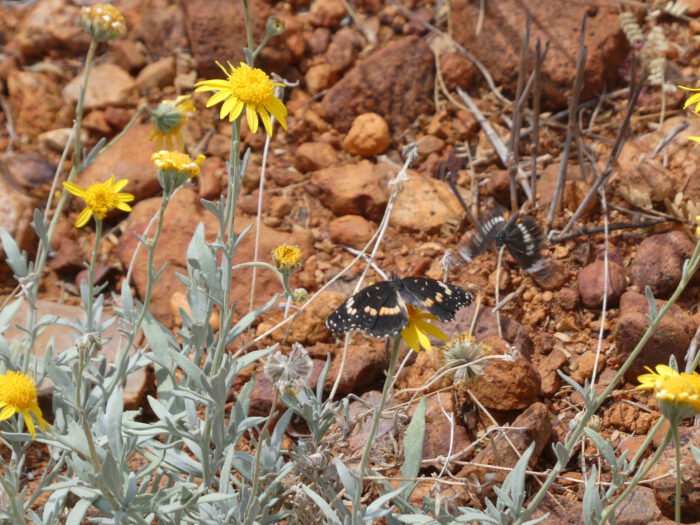
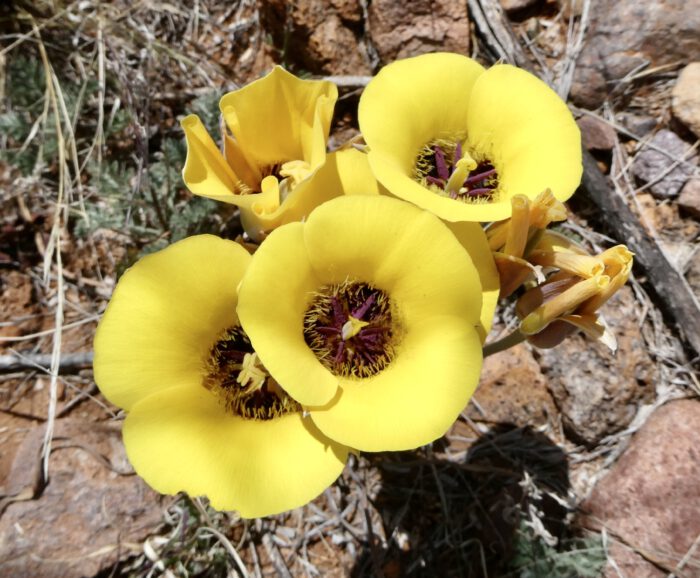
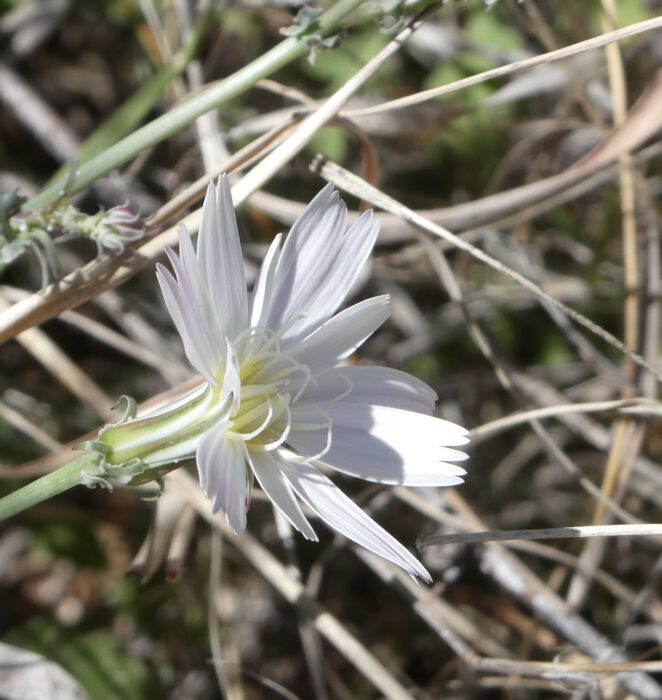
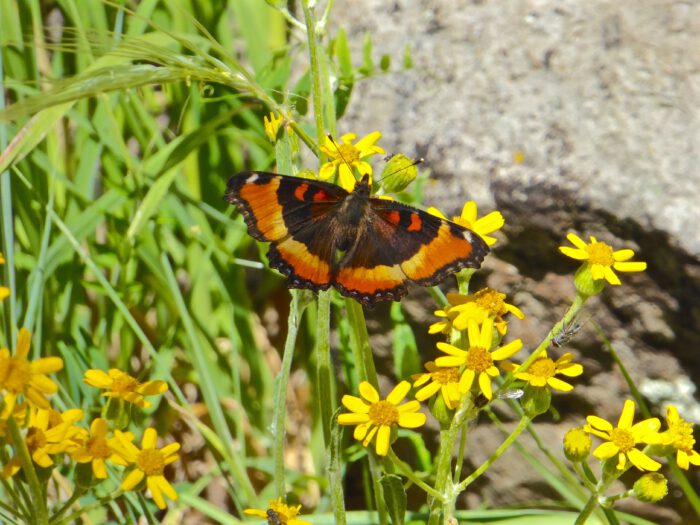
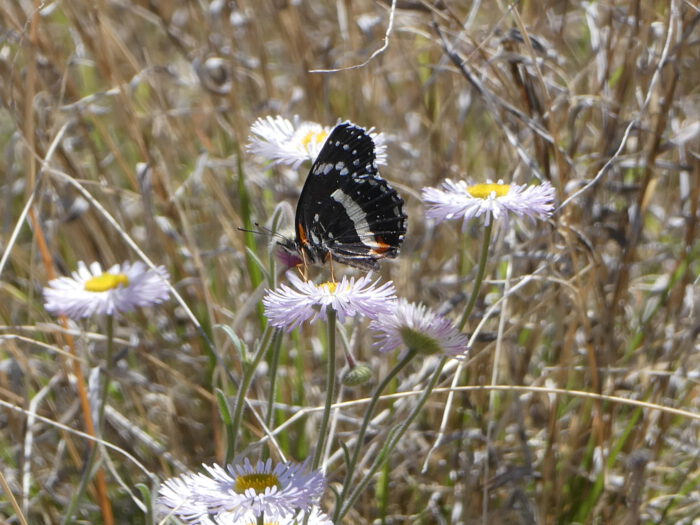
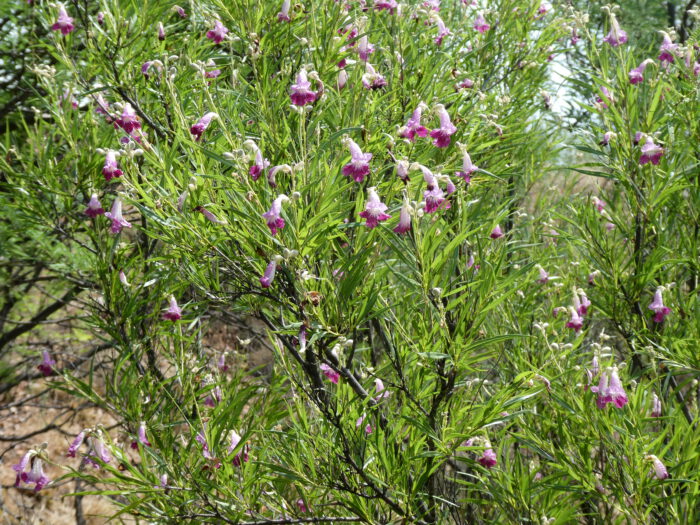
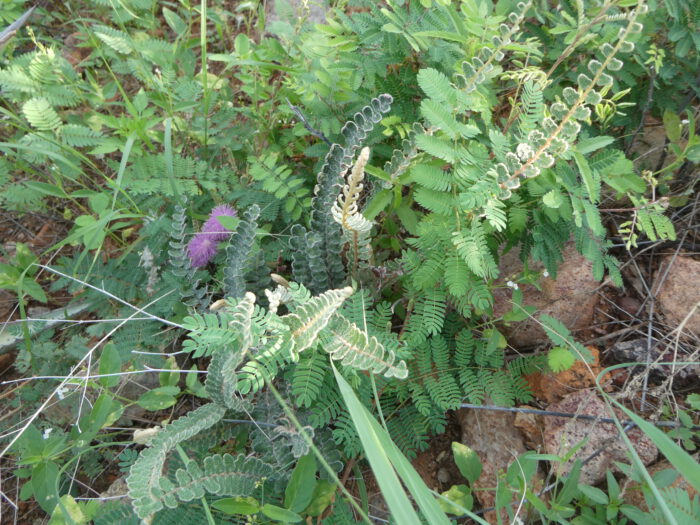
Although one species of fern has been found at the preserve, the vast majority of plants are wildflowers. Some are extravagantly showy, such as the gorgeous Hibiscus, while others – including dozens of native grass species – are less ostentatious. All provide visual and often olfactory delights throughout the seasons, while furnishing pollinators, herbivores, insectivores, and granivores with key resources.
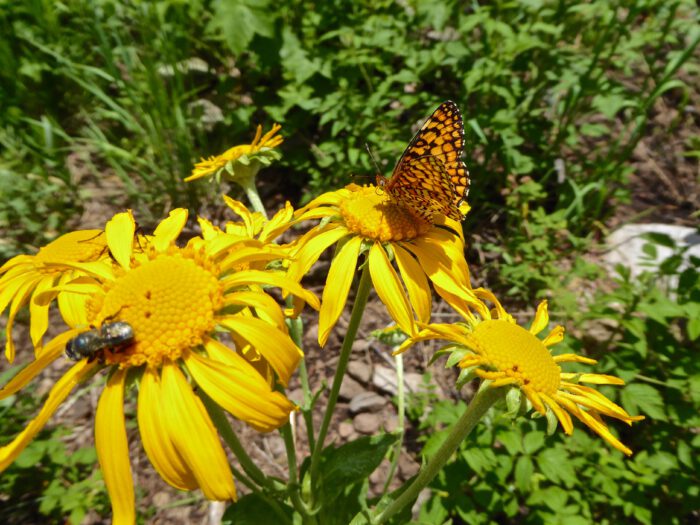
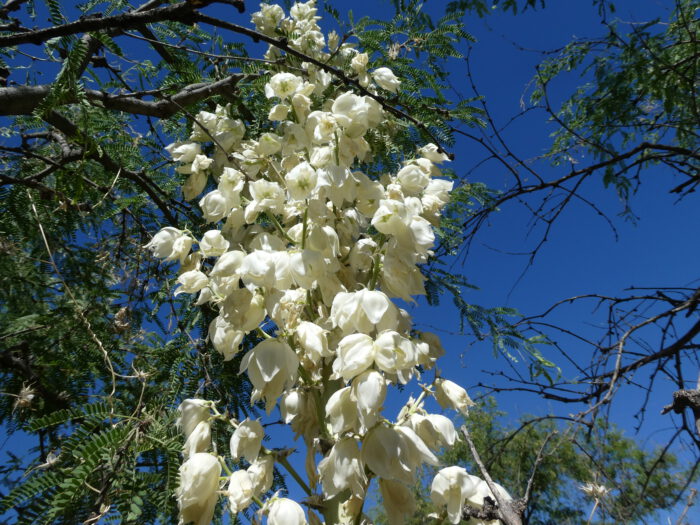

WINTER / SPRING WILDFLOWERS AT RAVEN’S NEST
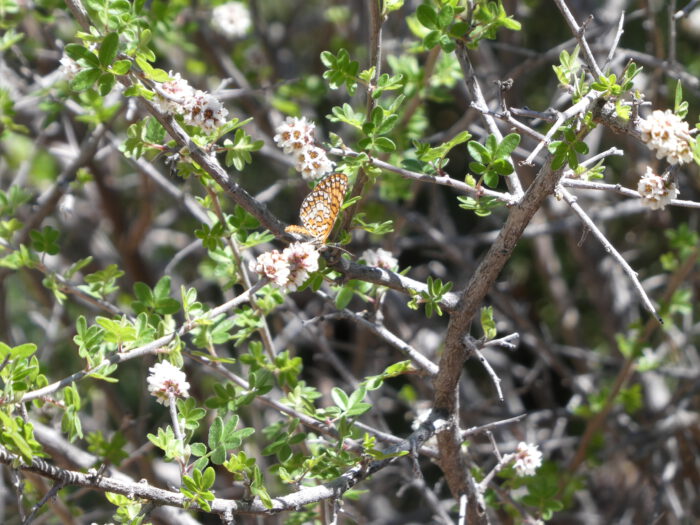
Starting as early as the end of January and running as late as mid-May, Raven’s Nest Nature Sanctuary hosts many species of showy wildflowers. Both the sheer volume and species diversity vary tremendously from year to year, adding another fascinating component to the preserve’s biodiversity.
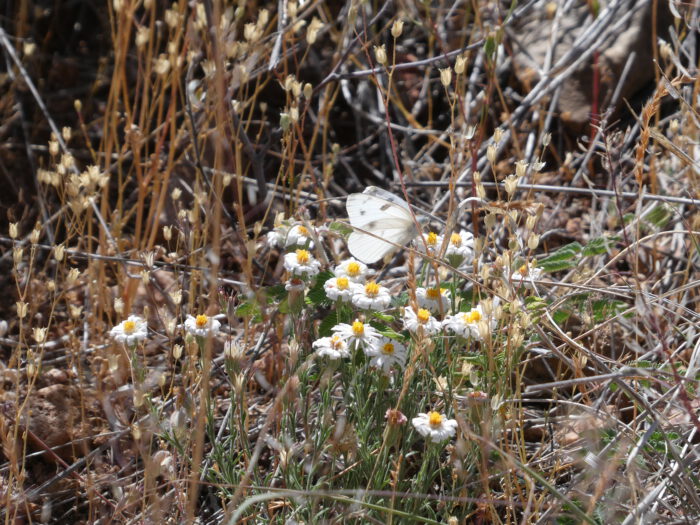
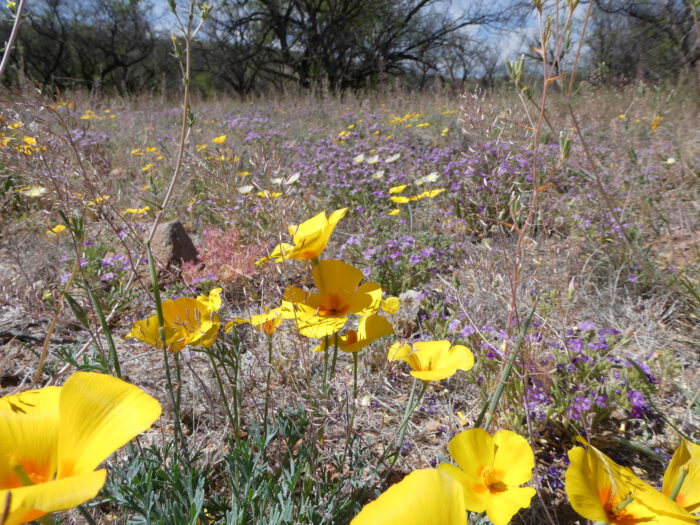
Autumn and early winter rains seem to largely account for these annual discrepancies in winter/spring wildflower season. When they come along, generally every few years, banner winter/spring wildflower years are truly a spectacle to behold.
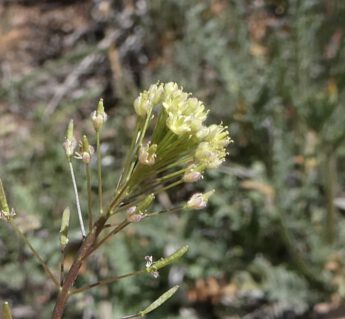
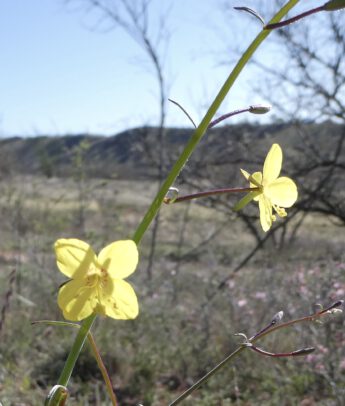
Western Tansy Mustard emerges early in the season, often covering large areas of the preserve with its delicate yellow blooms. This edible plant with a wasabi-like kick to its above-ground parts is the vanguard of showier wildflowers yet to come.
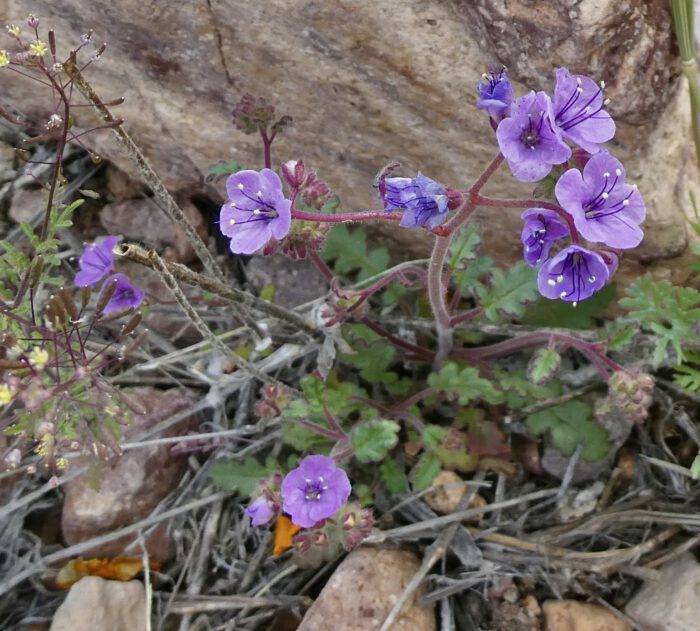
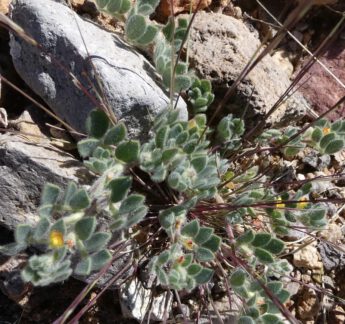
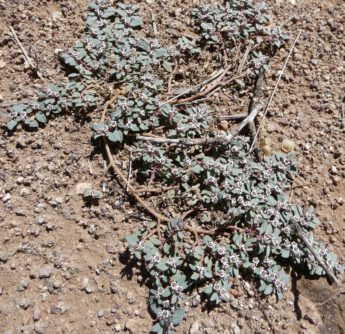
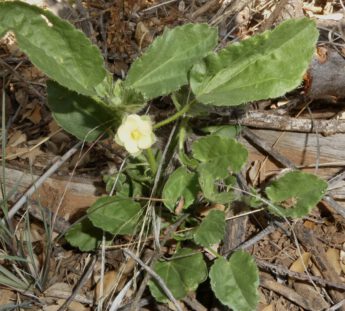
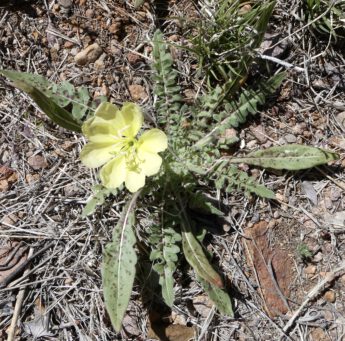
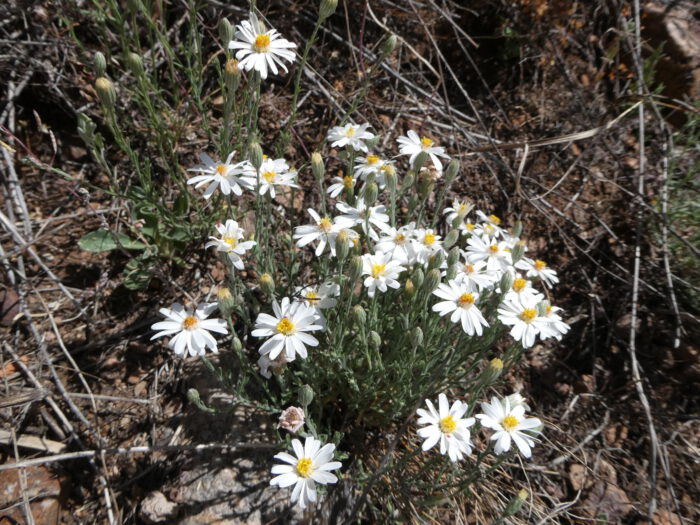
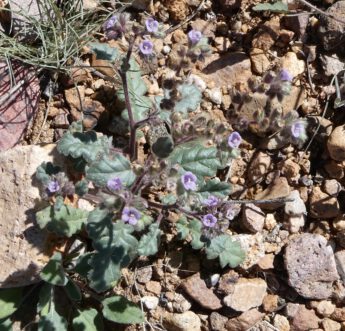
Although a few wildflower species, including California Poppy, at the preserve are widespread across habitats many are very patchy in their distribution. For any wildflower enthusiast this equates to an eclectic tapestry of colors, forms, textures, and aromas that both fascinate and delight.
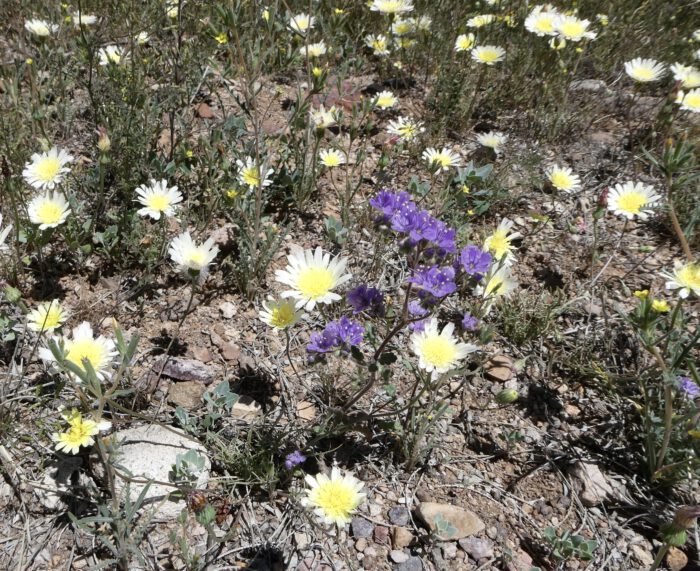
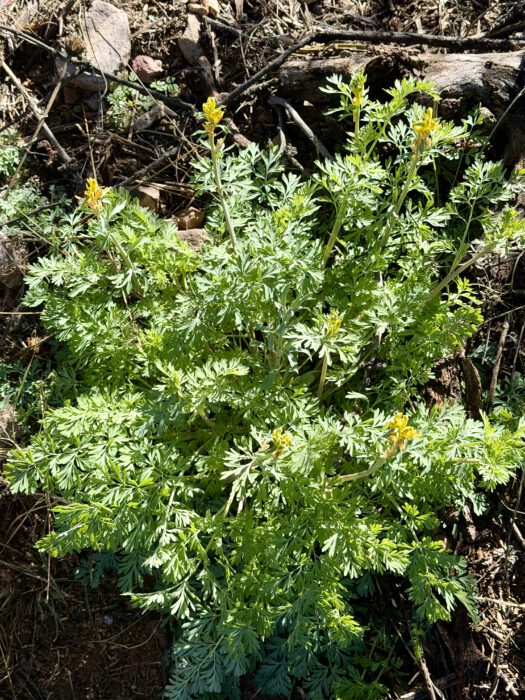
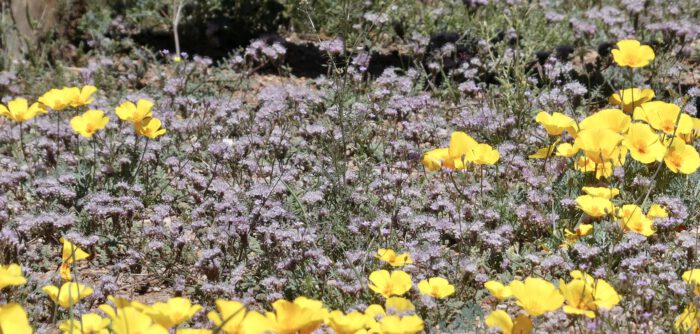
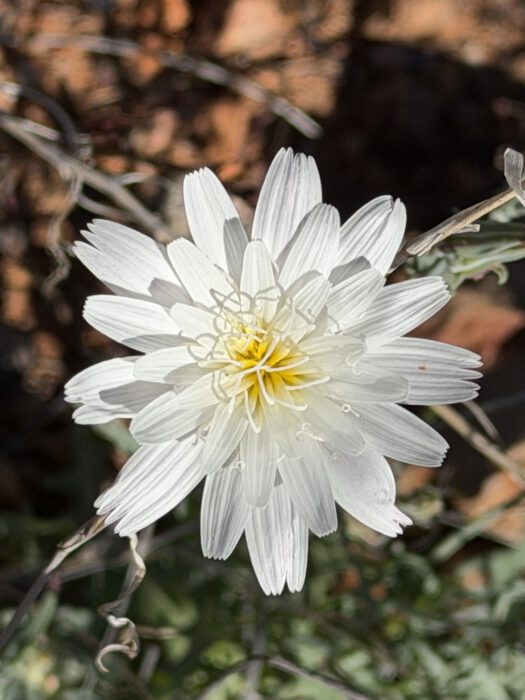
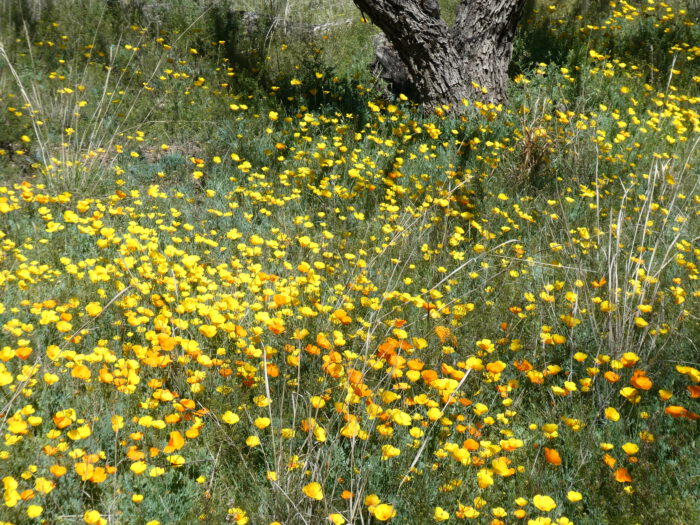
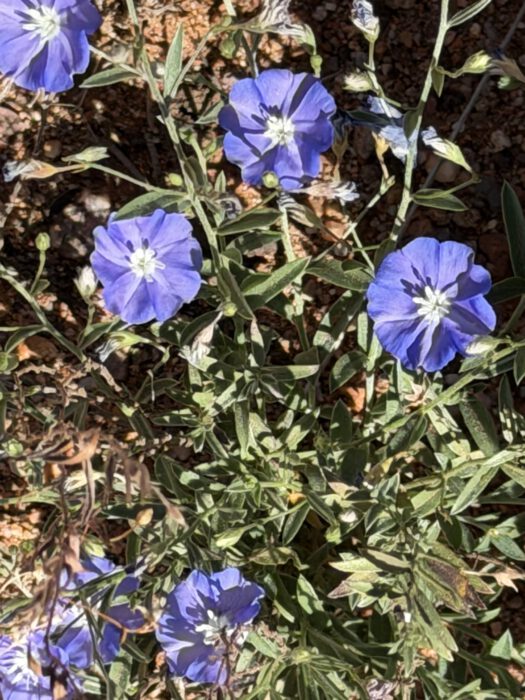
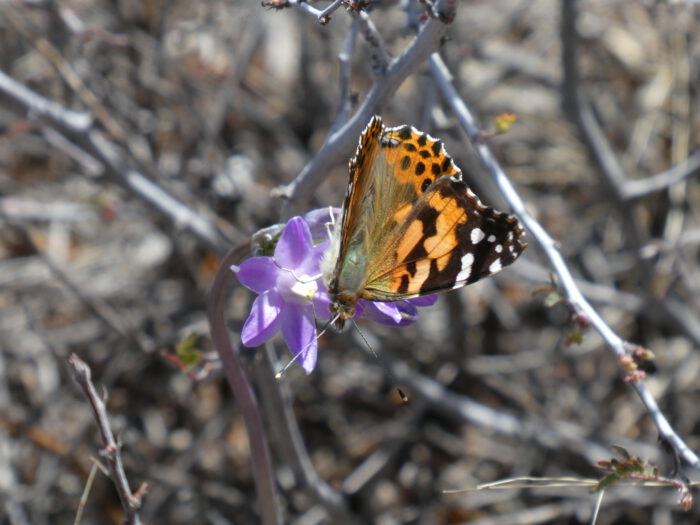
As the winter/spring wildflower season progresses, a parade of colorful species partly overlap in their blooming times, rendering each month a unique expression of native plant biodiversity. Some species have longer blooming periods, including the yearly staple of California poppy. This species mostly bears bright yellow petals, though a rarer white variant also occurs at Raven’s Nest.
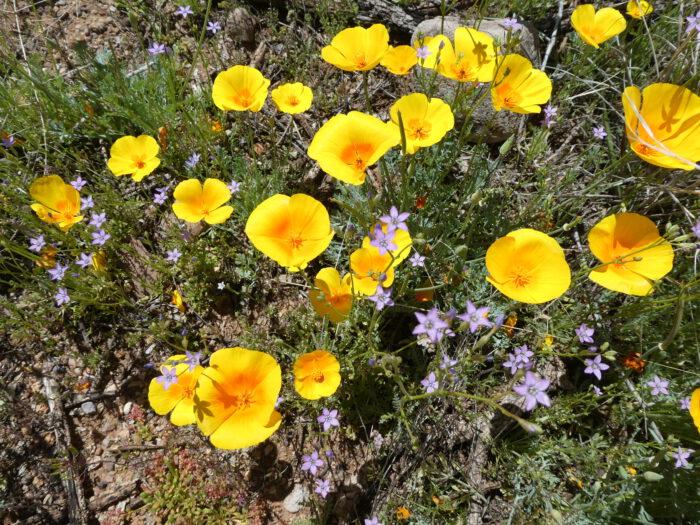
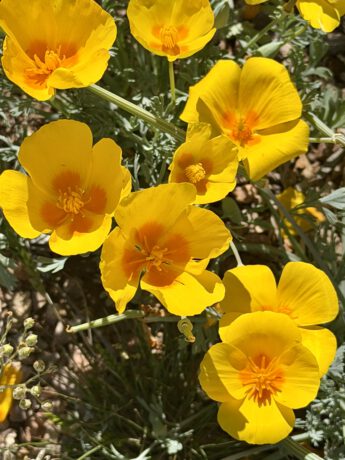
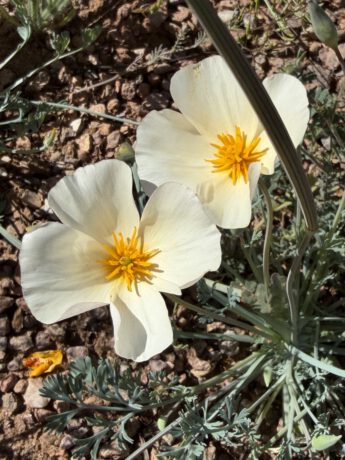
Research shows that the seeds of this species and those of many other wildflowers – particularly winter/spring annuals – have evolved to lay dormant in the soil, awaiting suitable rains to emerge and complete their life cycle.
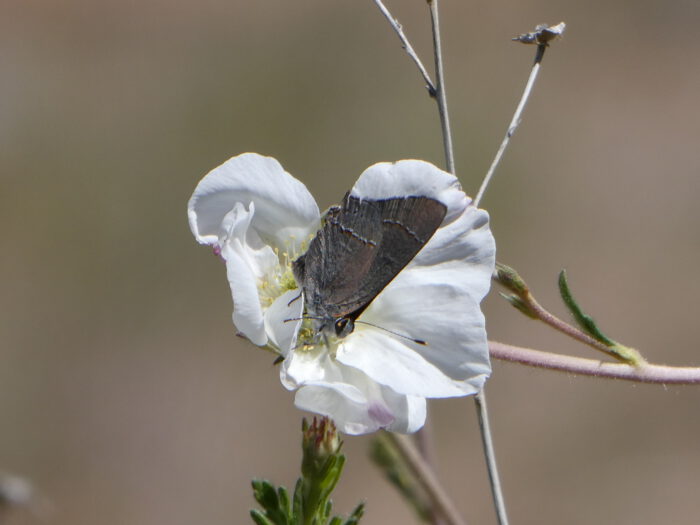
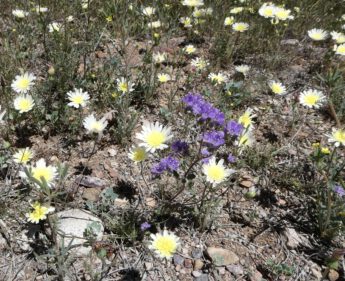
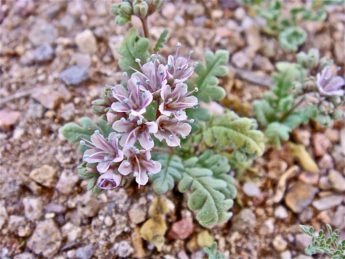
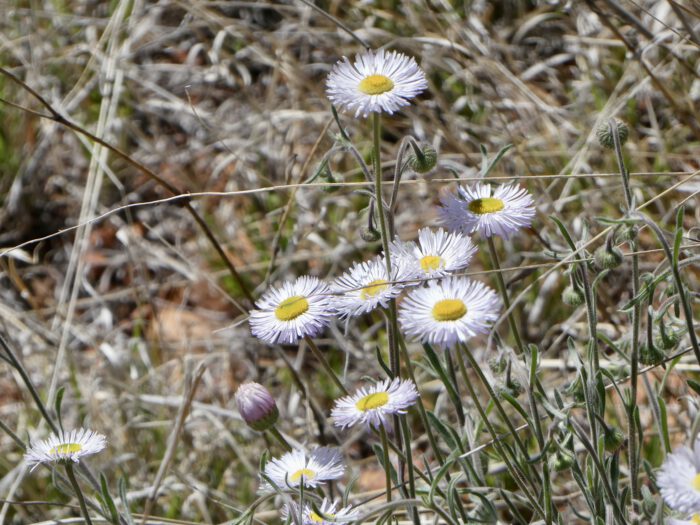
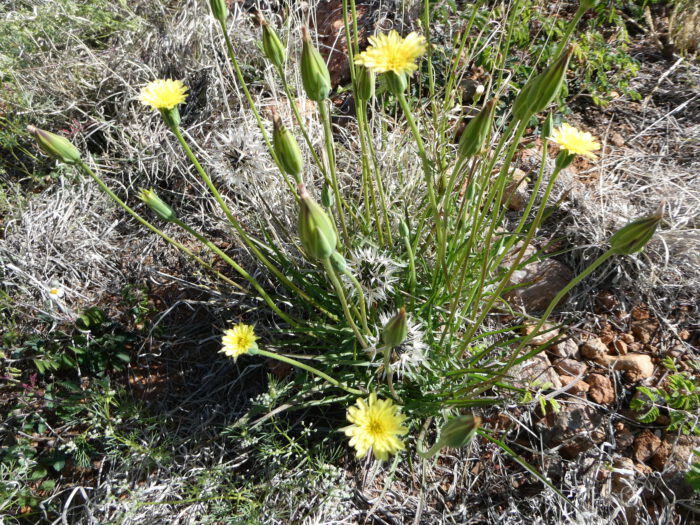
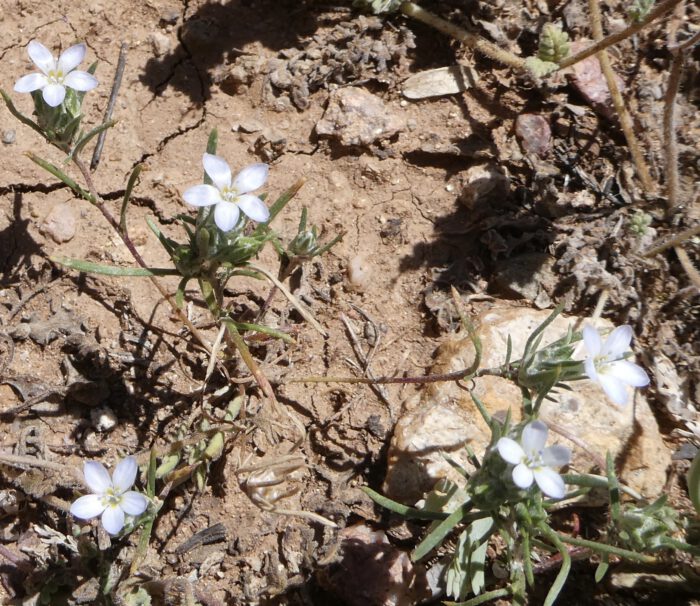
Each wildflower species has its owned, specifically evolved pollination system. Some can self-pollinate, while other rely mainly or entirely upon the wind, thus foregoing the need for animal assistance. Most flowering species at the preserve, however, do rely on various invertebrates or even vertebrates – particularly hummingbirds – to help fertilize their flowers. Butterflies, moths, native bees, ants, wasps, beetles, flies and other insects are often spied as they visit different species of wildflowers.
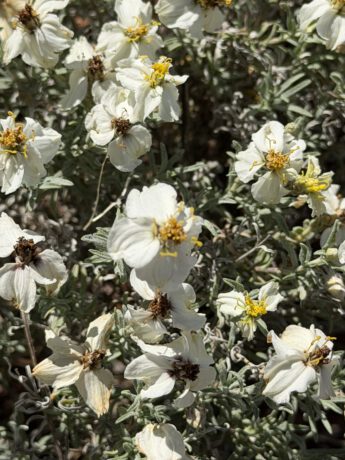
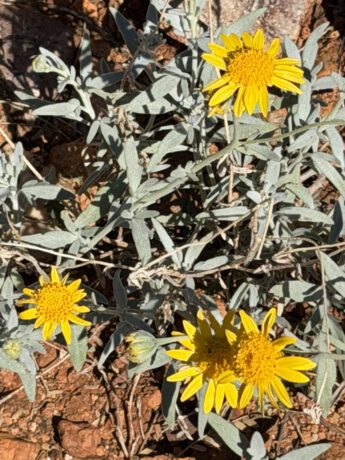
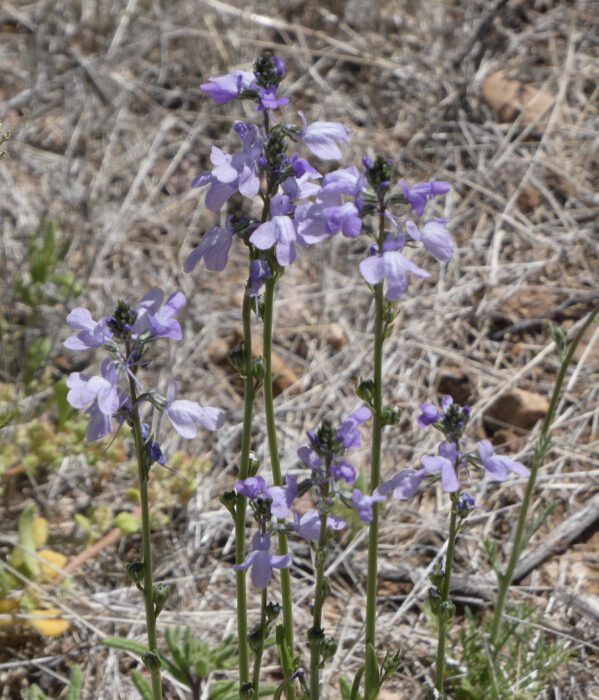
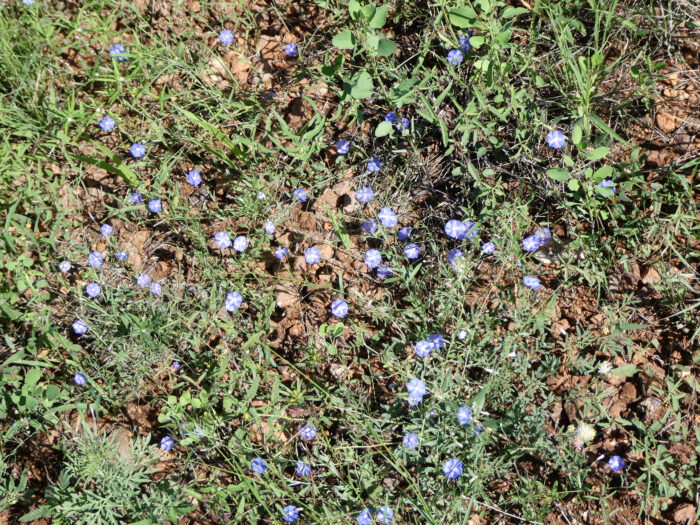
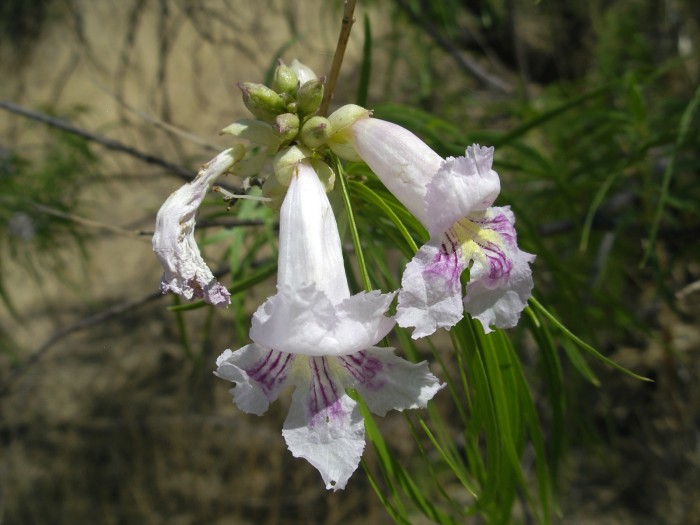
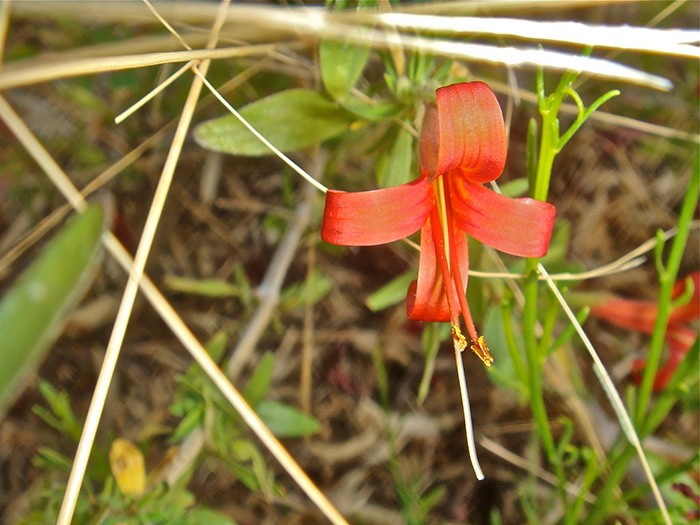
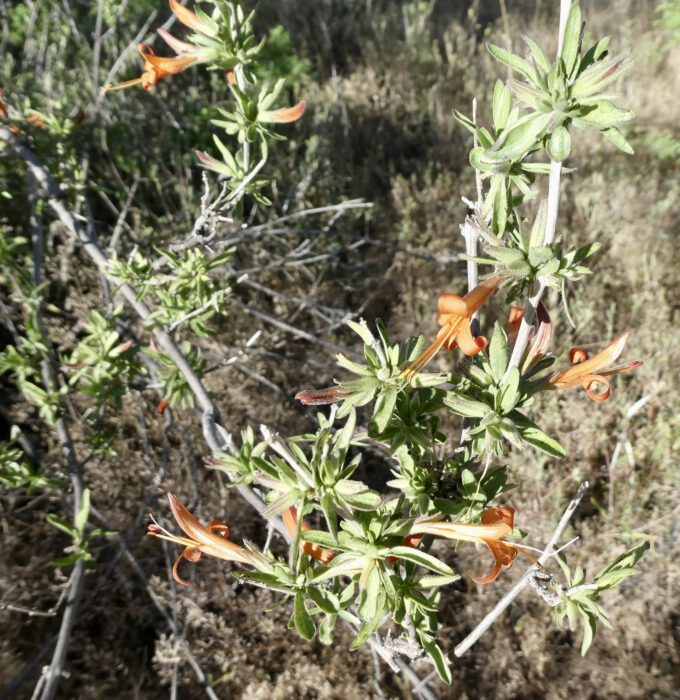
The color, shape, scent, and texture of each wildflower has evolved to accommodate a narrow or broad spectrum of pollinators. Tubular flowers attract hummingbirds in particular, while plant species with broad flowers afford a landing pad for butterflies and moths, among others.
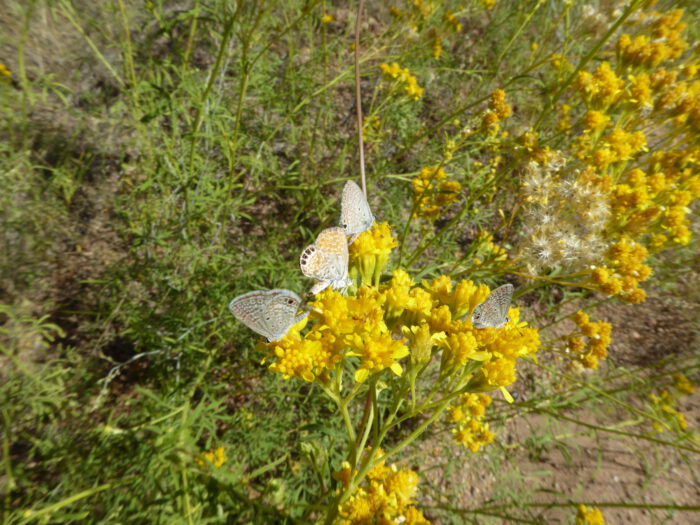
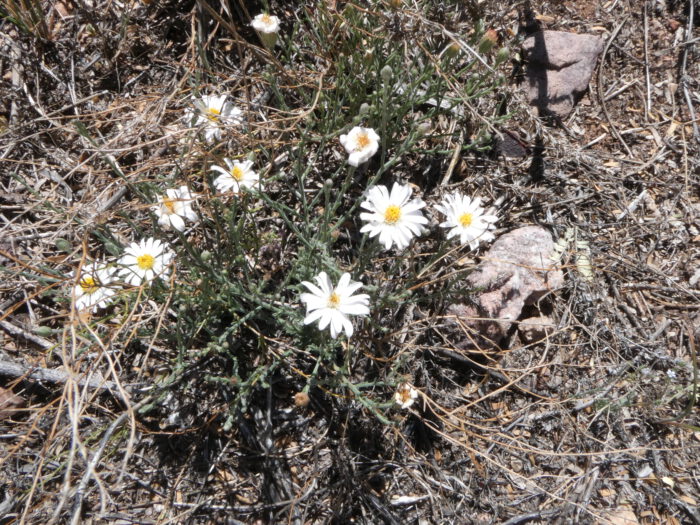
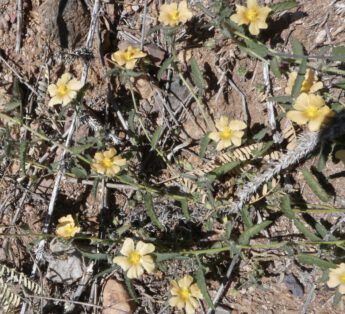
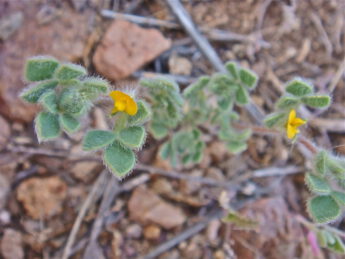
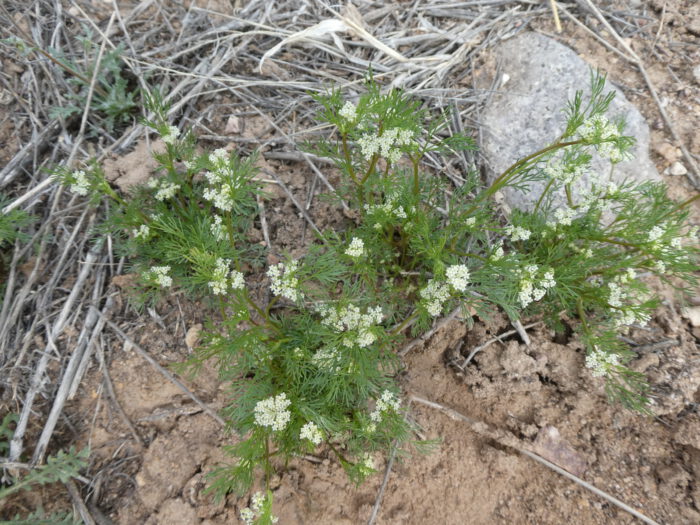
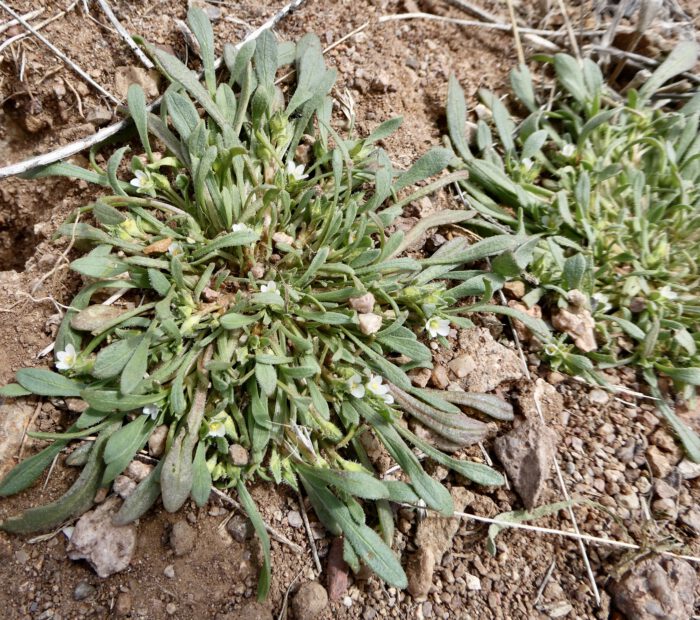
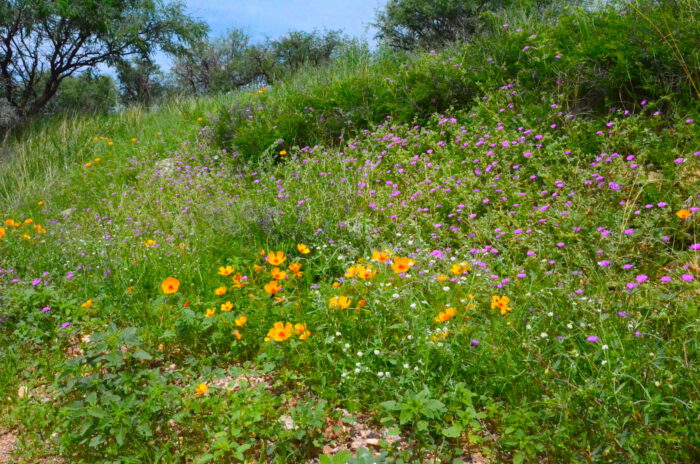
Mid-February through the end of April represents the very heart of winter/spring wildflower season at Raven’s Nest Nature Sanctuary. A kaleidescope of colorful blooms now carpet the ground, varying in both density and species composition according to soils, shade vs sun, slope, aspect (N, E, S, W) and other factors.
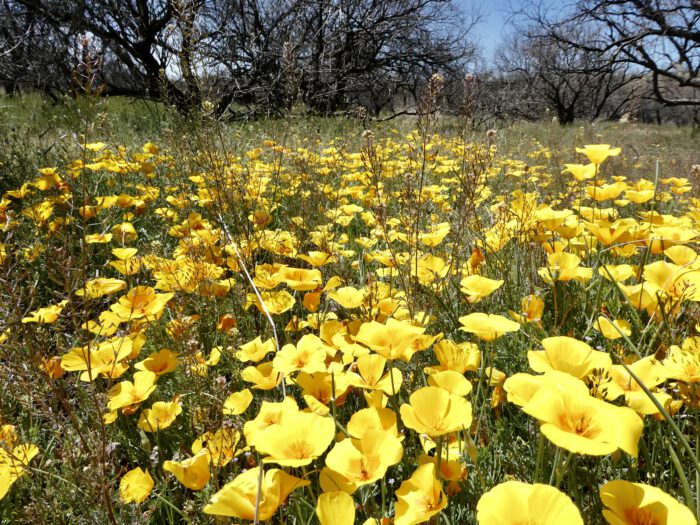
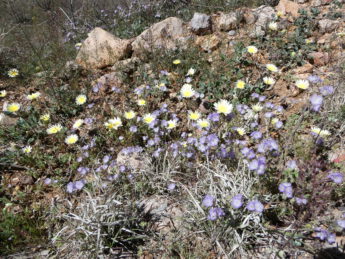
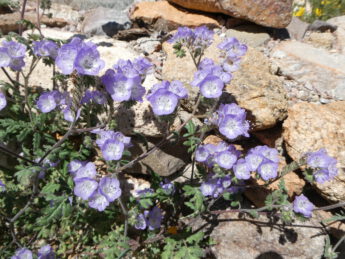
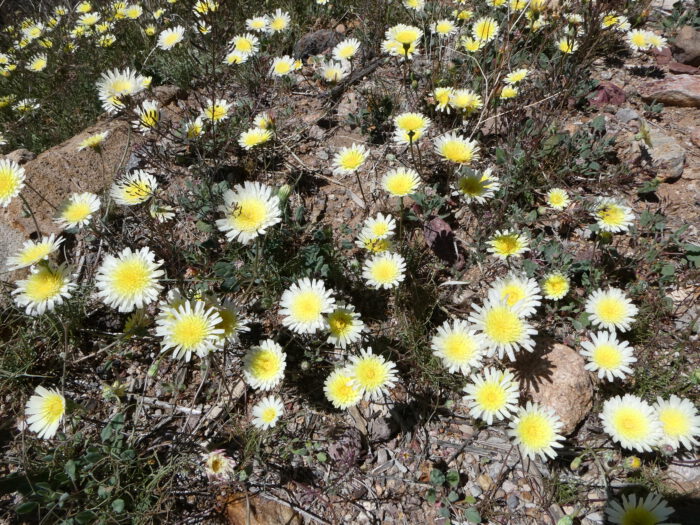
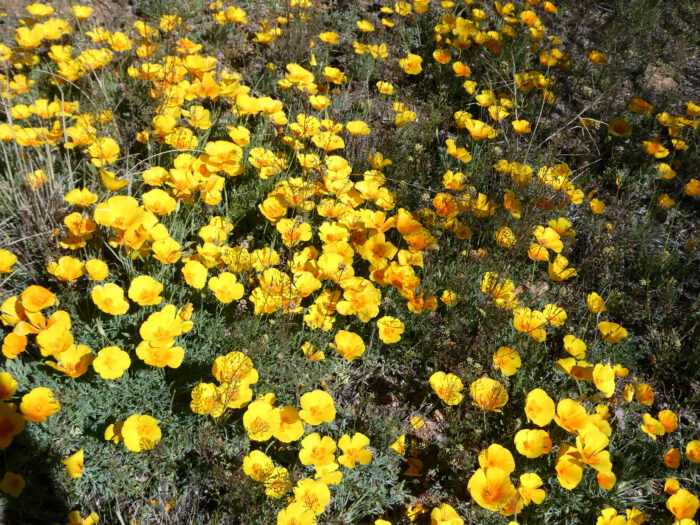
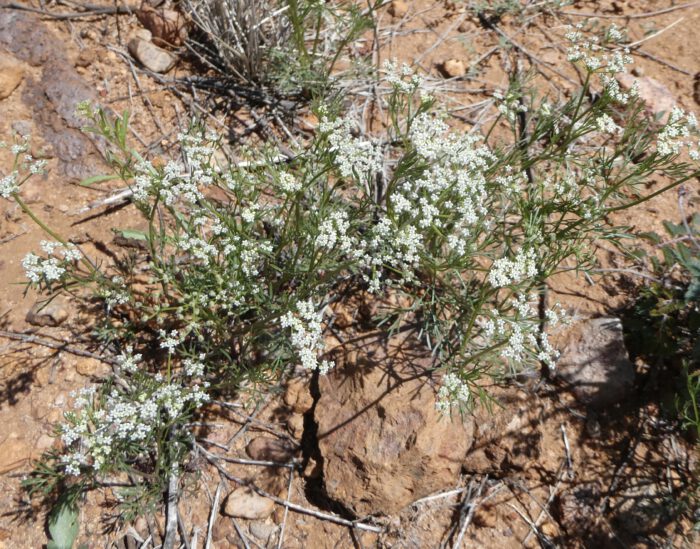
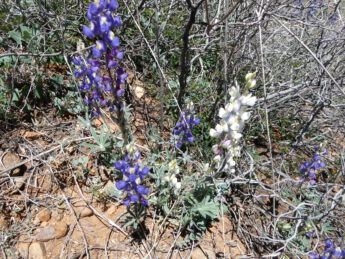
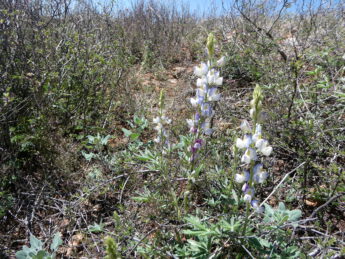
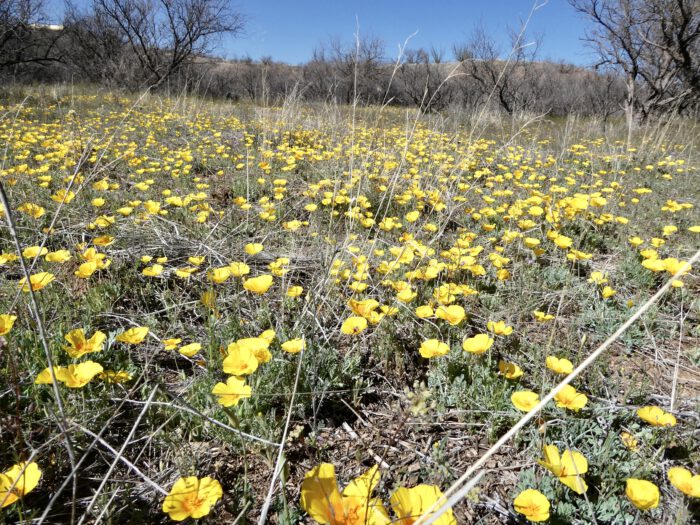
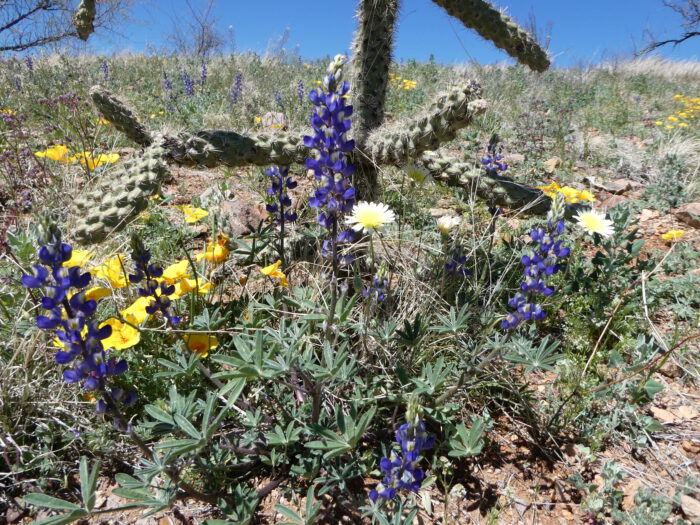
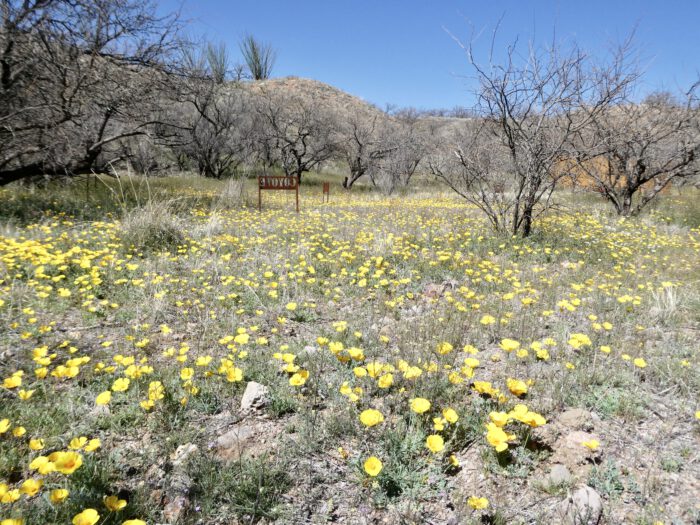
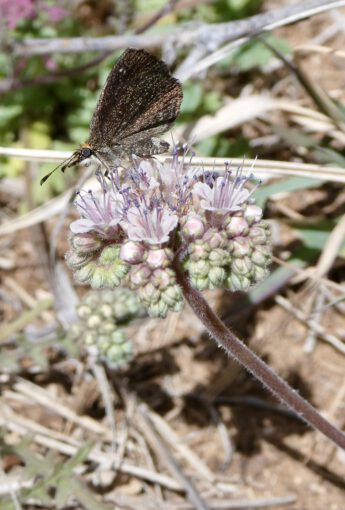
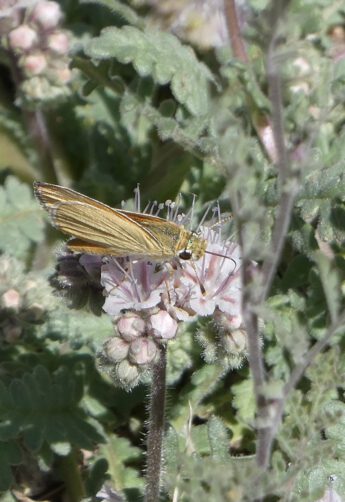
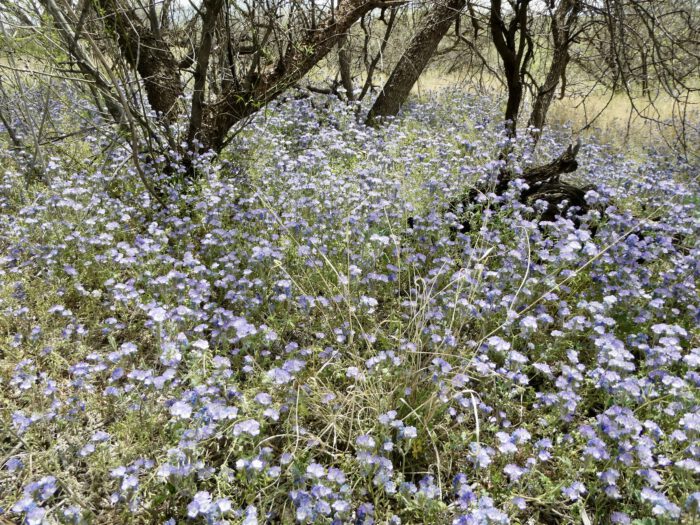
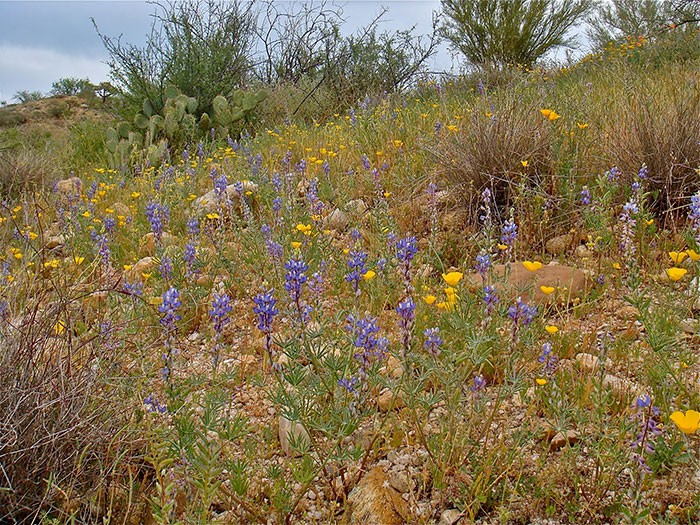
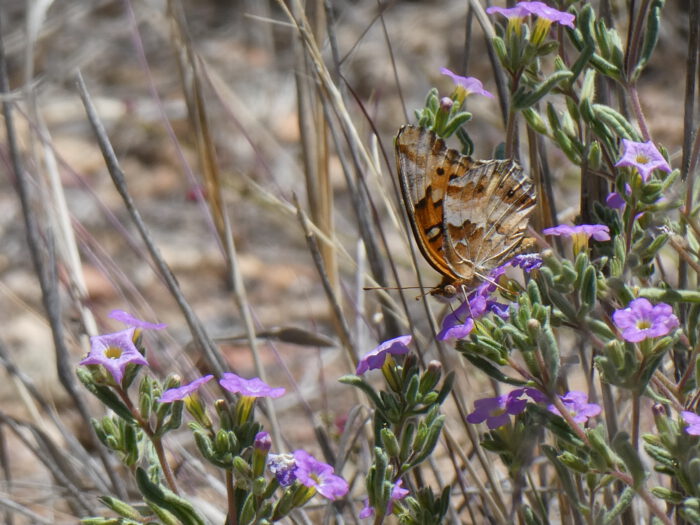
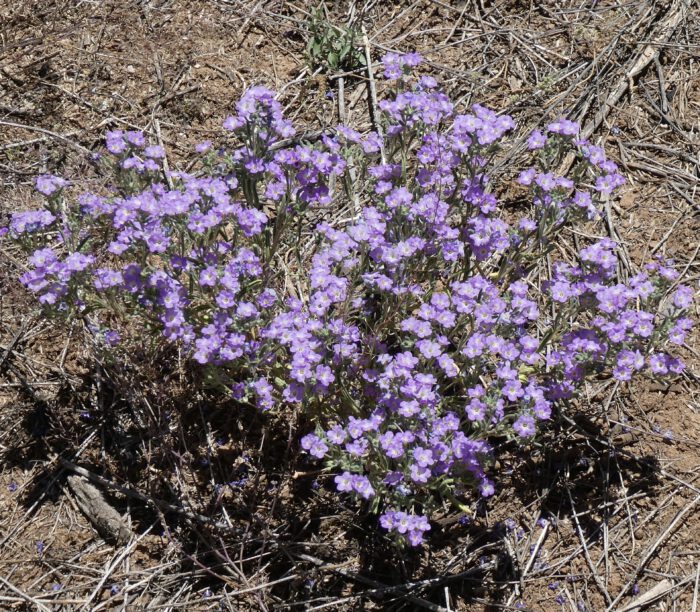
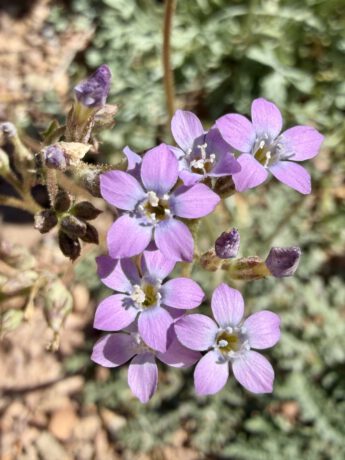
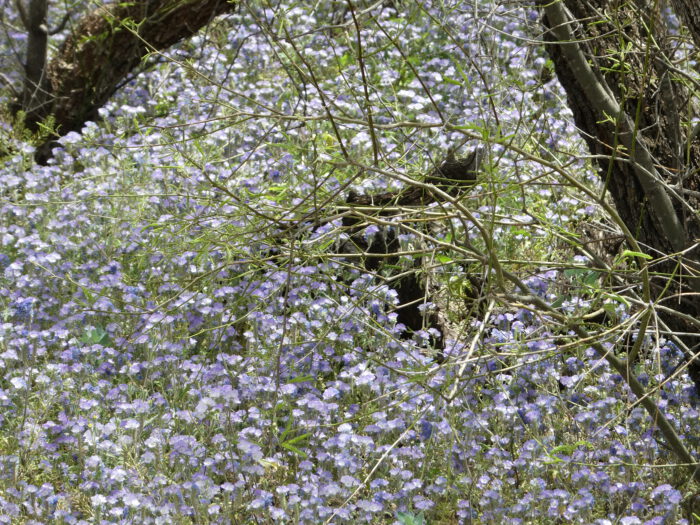
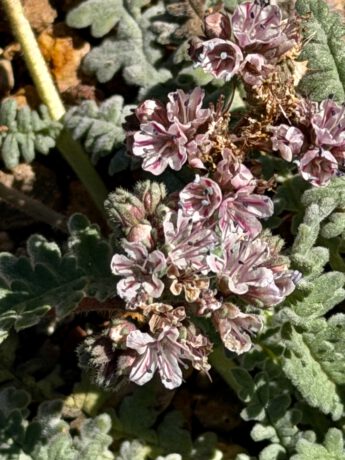
The majority of winter/spring wildflowers at the preserve are annuals – species that die after flowering and which are survived only by their copious seeds. Various species of annual Desert Bells in the genus Phacelia join California Poppy, creating a spectrum of violet-to-pink hues amidst the vibrant yellows. Many are visited by early season butterflies and native bees. These warmth-loving pollinators shed light upon why the vast majority of winter/spring wildflowers here grow so low to the ground. This trait both helps the plants survive the vagaries of weather, while placing flowers in the warmest and most wind-free zones for visiting insect pollinators.
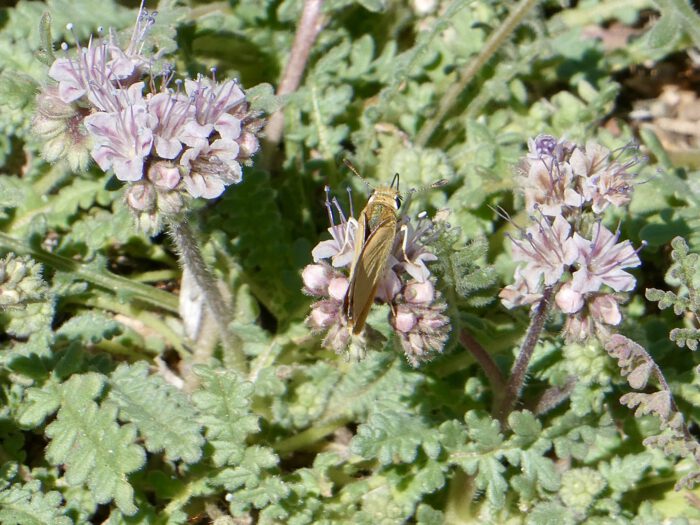
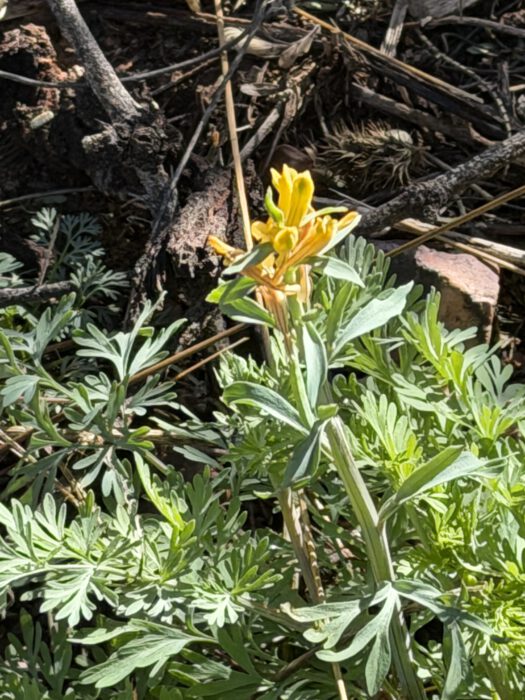
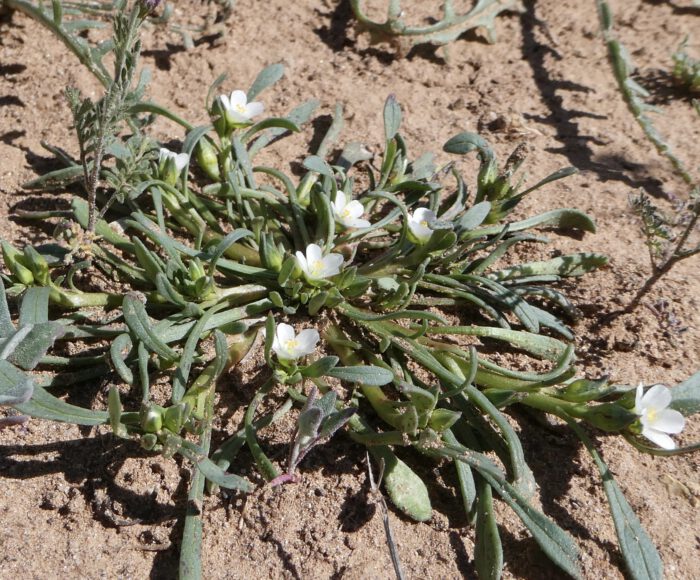
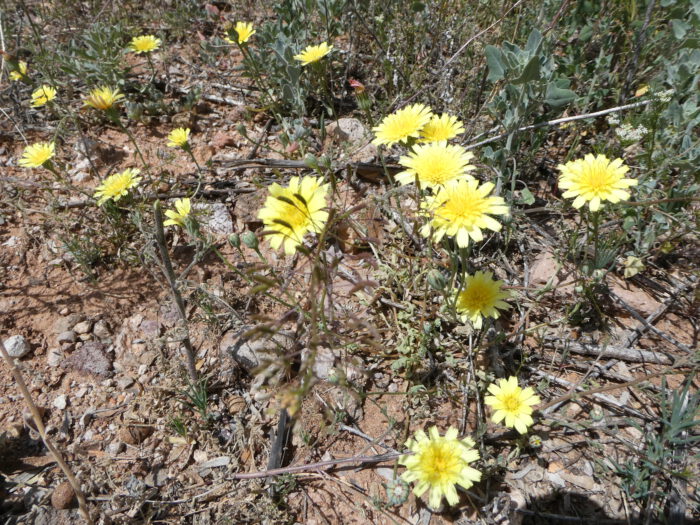
A good number of winter/spring wildflowers are heavily covered in hairs, helping to reduce moisture loss as well as decreasing herbivory. All contain various phytochemicals, which have evolved to protect them from being eaten and from the vicissitudes of weather.
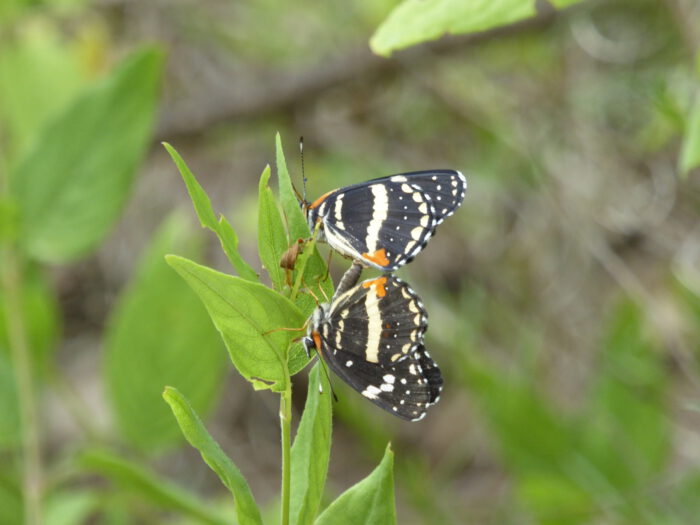
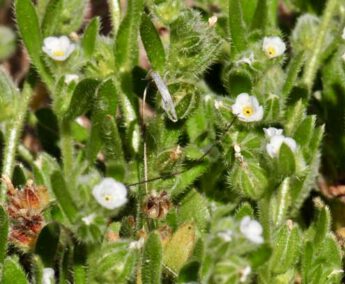
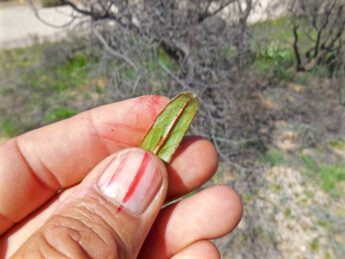
Bloodweed in the forget-me-not or borage family even produces a red color that readily bleeds off of the plant from the underside of its leaves, which apparently helps to maximize photosynthesis as well as the plant’s thermal environment.
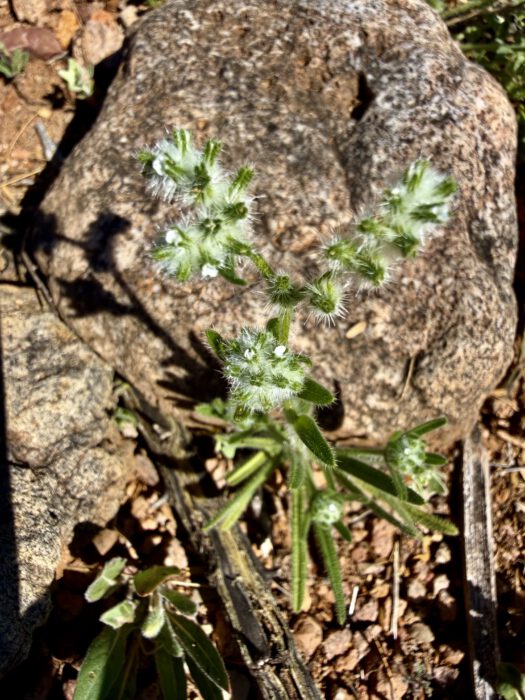
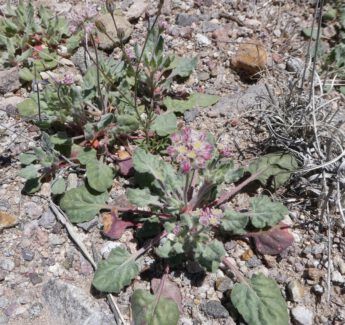
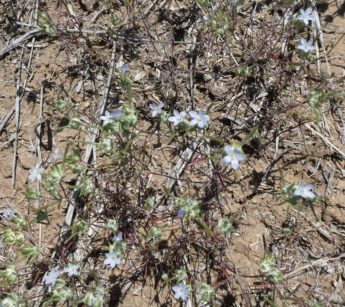
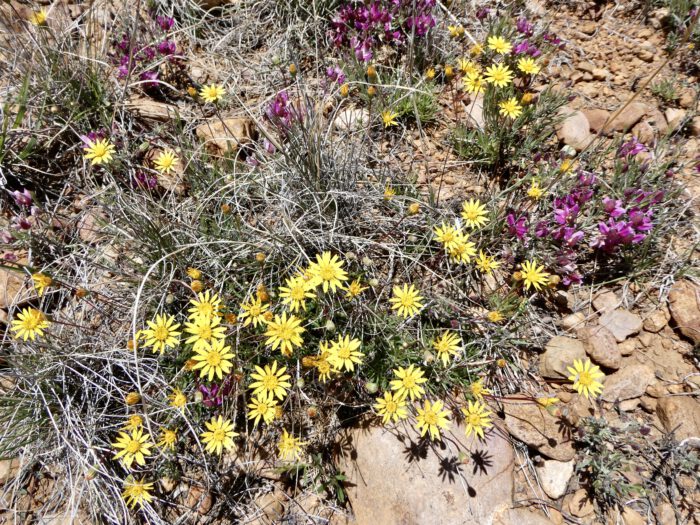
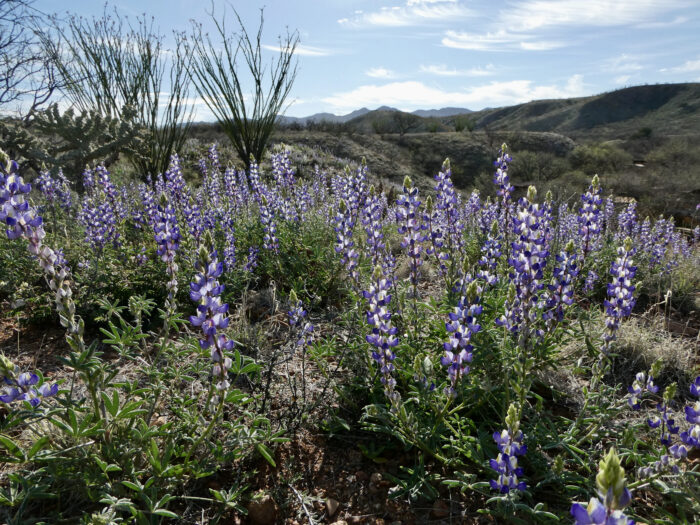
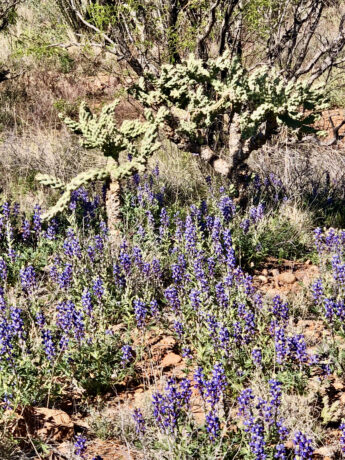
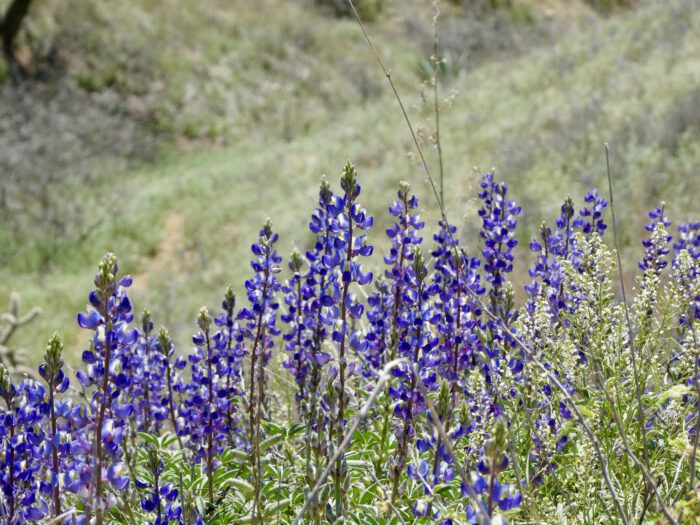
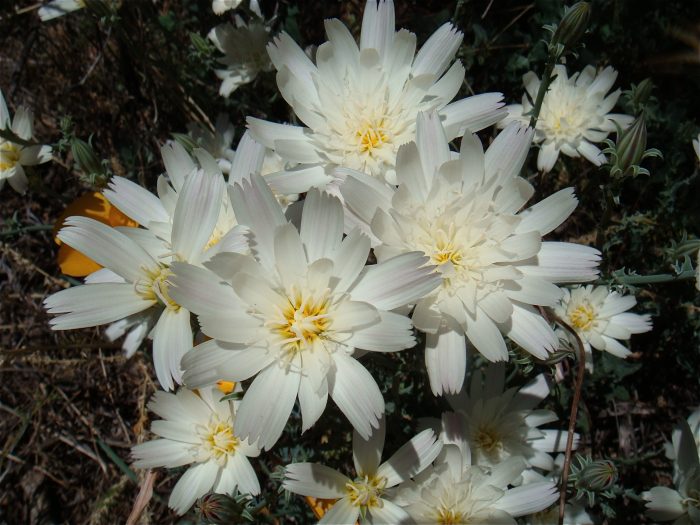
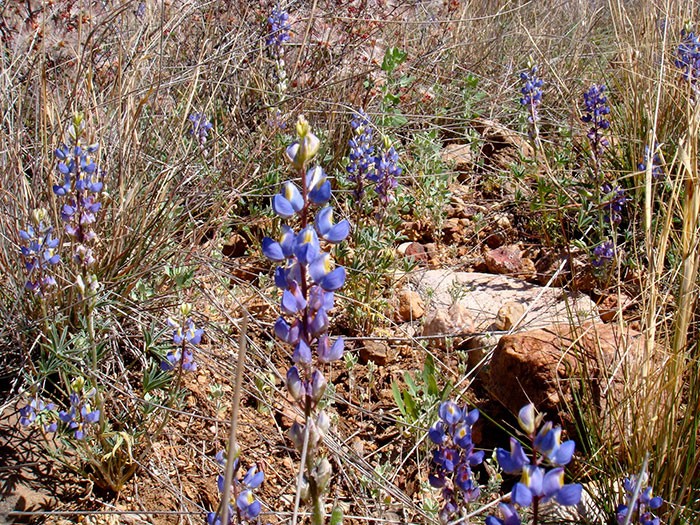
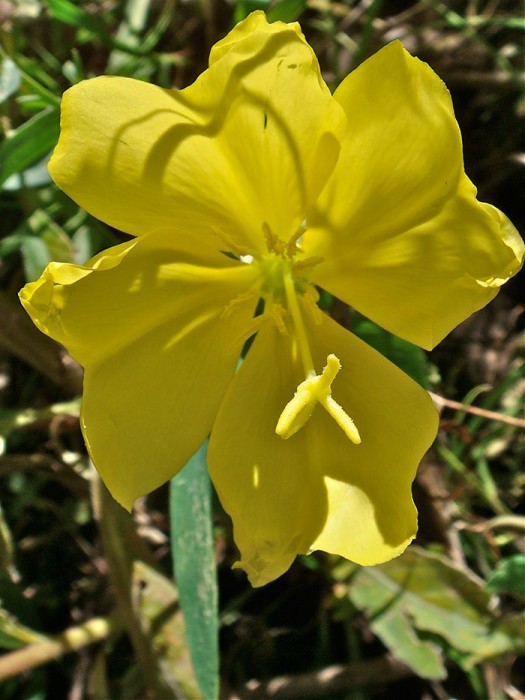
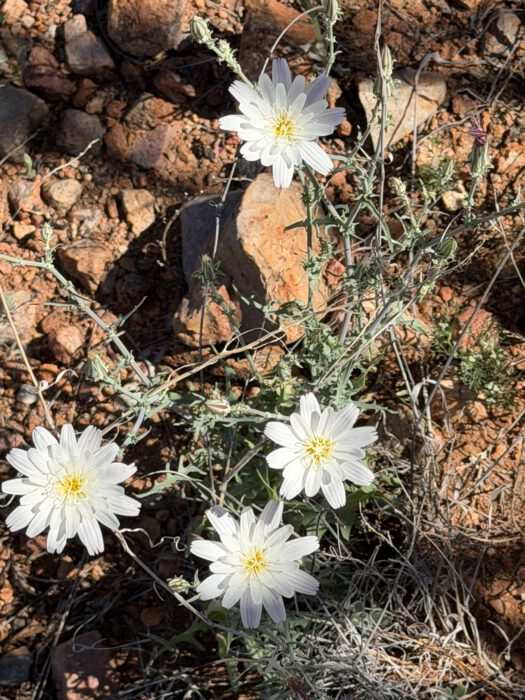
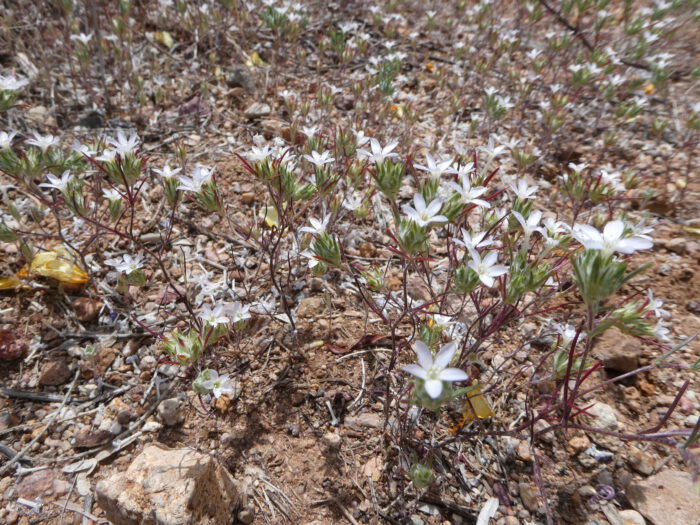
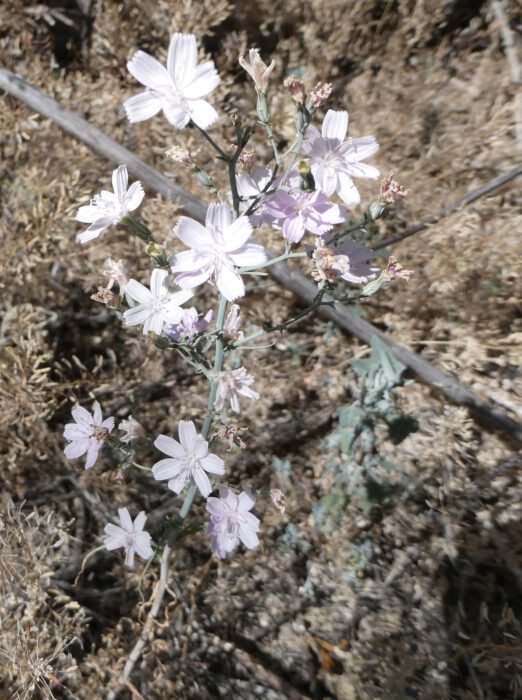
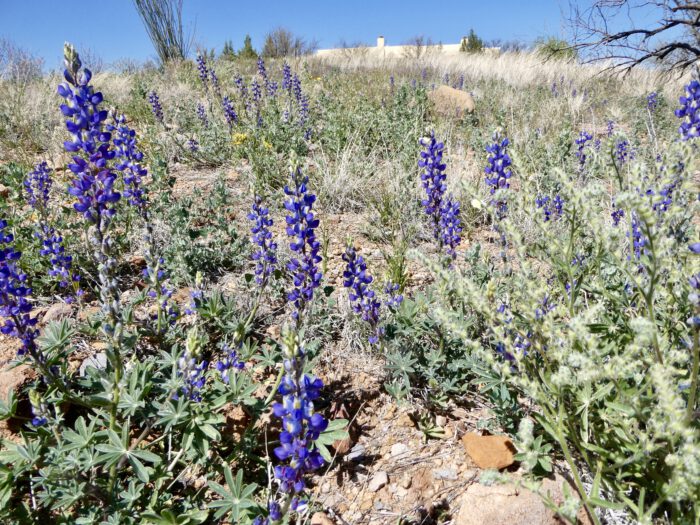
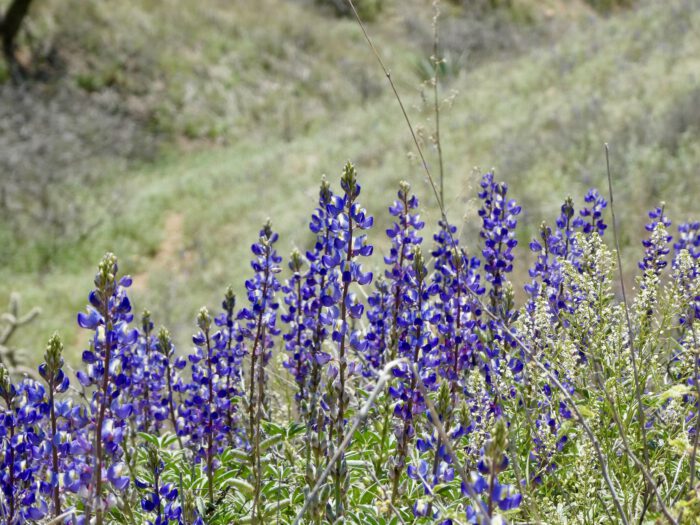
As March and April roll around, other native annuals crowd into the ever-growing wildflower ranks. Ground-hugging Evening Primrose, succulent and dainty Red Maids, bristly Popcorn Flowers in the forget-me-not family, powder-blue Miniature Woolstar, shockingly white Desert Chickory, several species of Wild Buckwheats, deep purple Desert Lupines on hillsides, two species of Desert Dandelions….the list goes on with over 30 species of winter/spring native wildflowers burgeoning at Raven’s Nest in good years!
A few wildflower species possess potent aromas – not only from their blossoms, but also their foliage. Even botanical scents that seem pleasing to humans have generally evolved to help repel herbivores, minimizing the damage that they do to each plant.
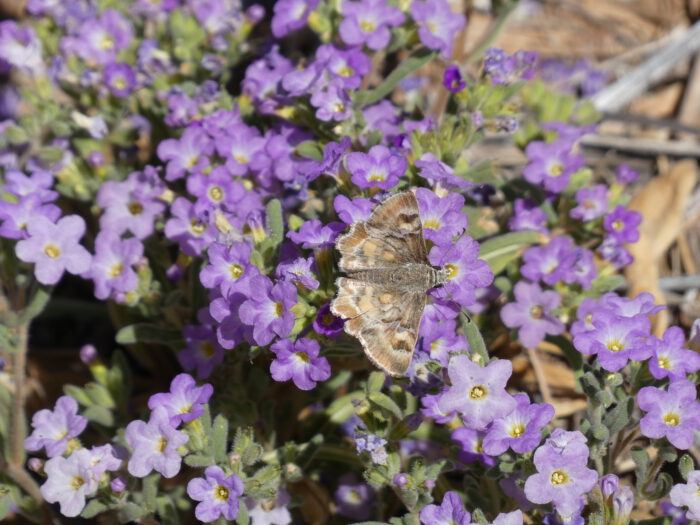
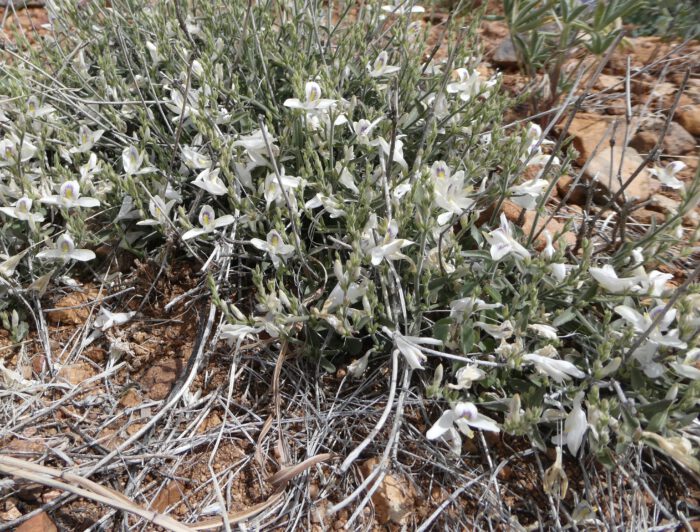
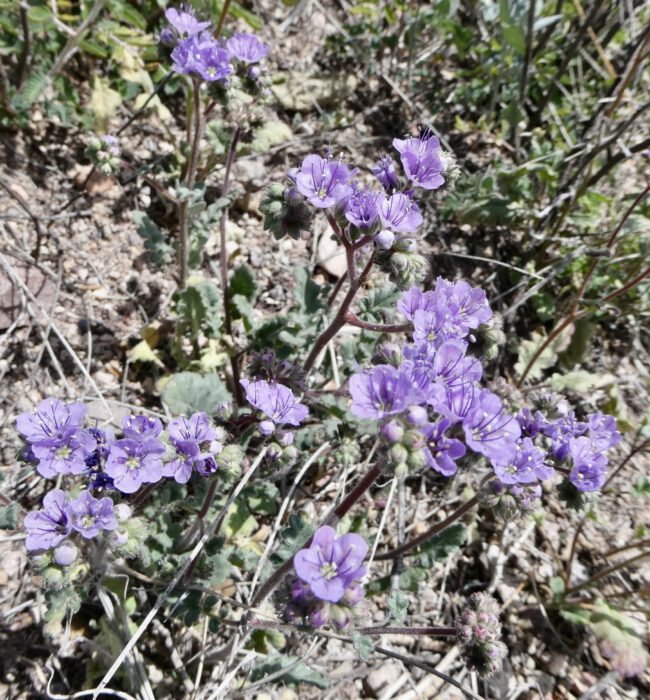
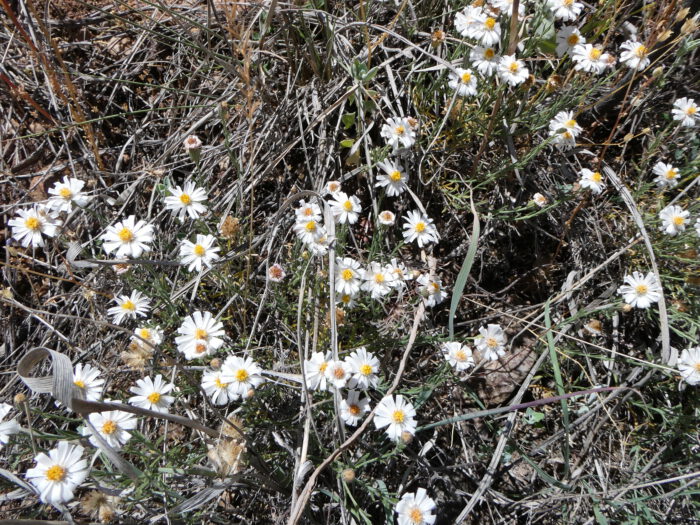
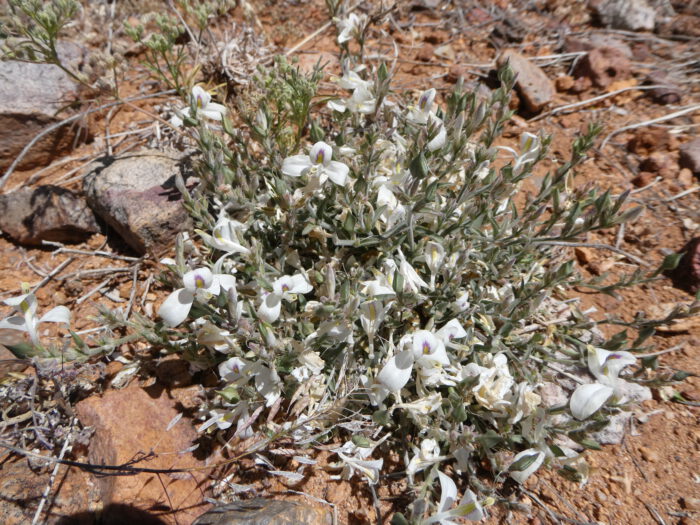
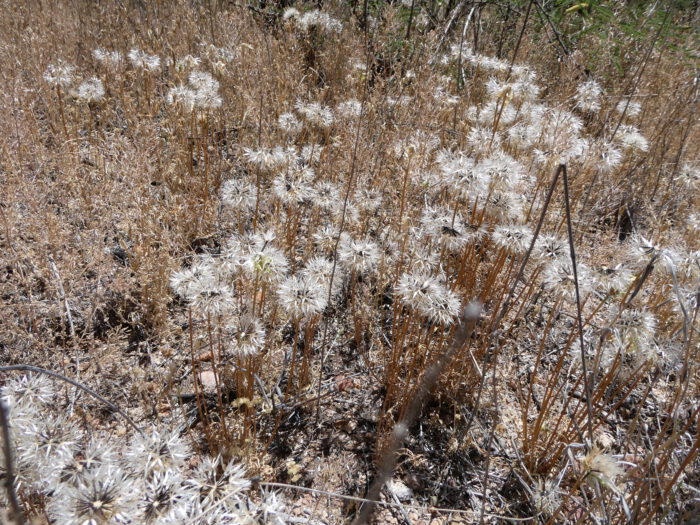
Once a flower has been successfully pollinated it sets seeds, which in some species are actually more showy than the blossoms themselves. Such is the case with the aptly named Silver Puffs in the aster family. Its small, yellow, dandelion-like flowers are followed by globes of silvery-metallic seeds that shimmer in the sun.
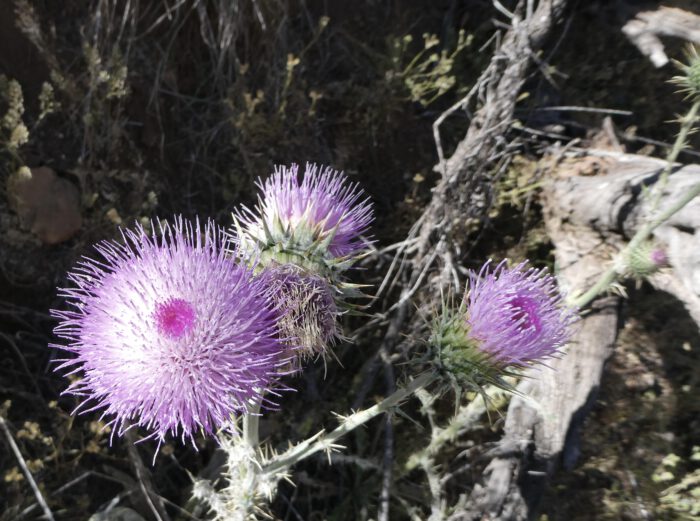
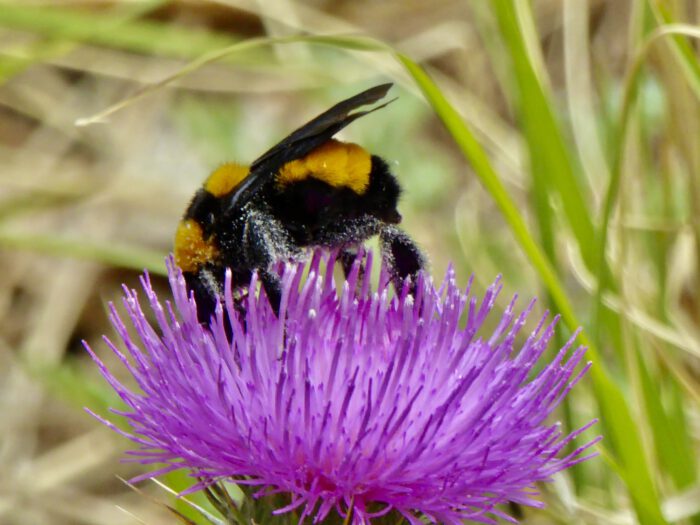
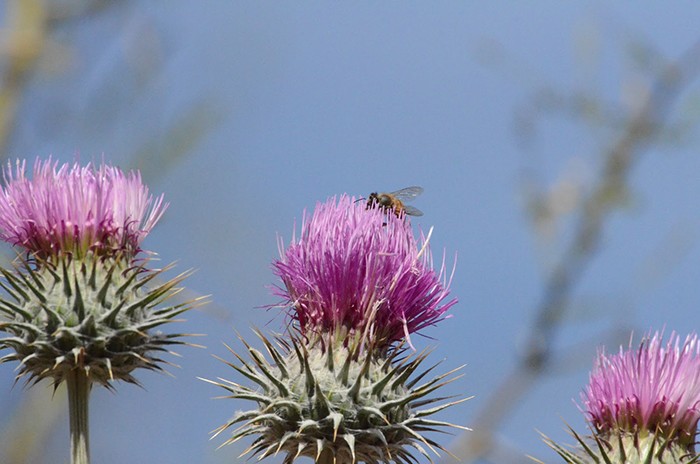
Joining the swelled ranks of the annuals are biennial New Mexico Thistle. Taking two years to complete its life cycle, this species breaks the low-to-the-ground flowering trend, growing up to nearly 4 feet high at times. It lures in not only insects, but also hummingbirds to its bright pink blooms. Later, its seeds are a staple food of Lesser Goldfinches.
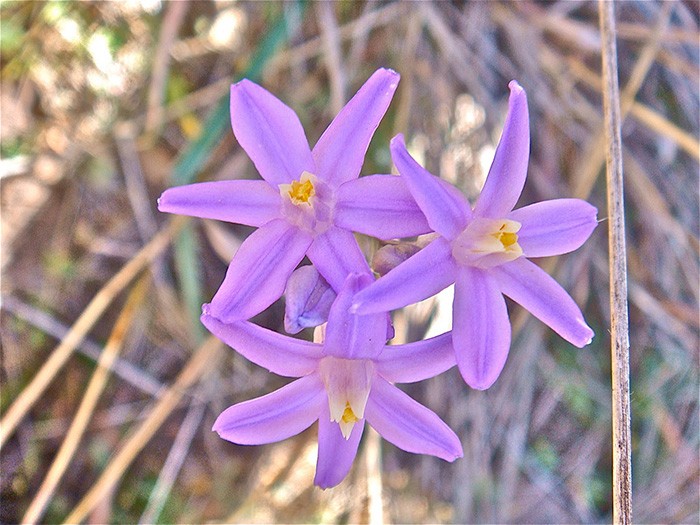
A handful of showy perennials also join the wildflower extravaganza. Most obvious early on is Papago Lilly or Blue Dicks. Formerly considered a true lilly, DNA research now indicates that it belongs in the asparagus family along with giant succulents, such as Palmer Agave! Its corms – underground food-storing structures – are relished by Collared Peccaries, who dig them up with both snout and hoof. Later in the season, perhaps the most eye-popping wildflower of all steals the show.
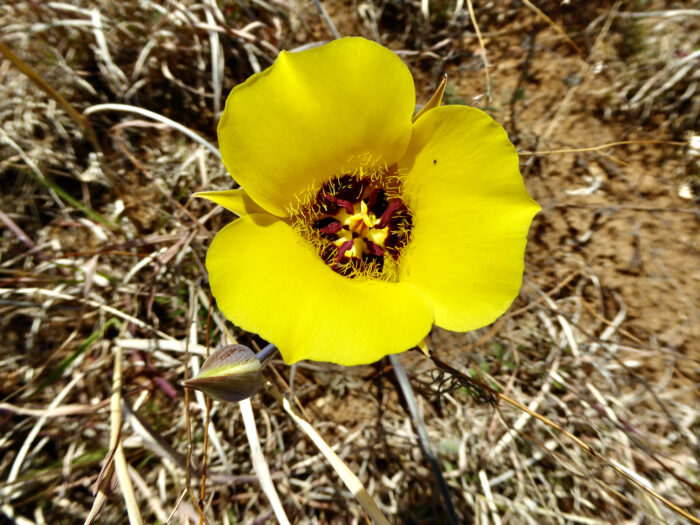
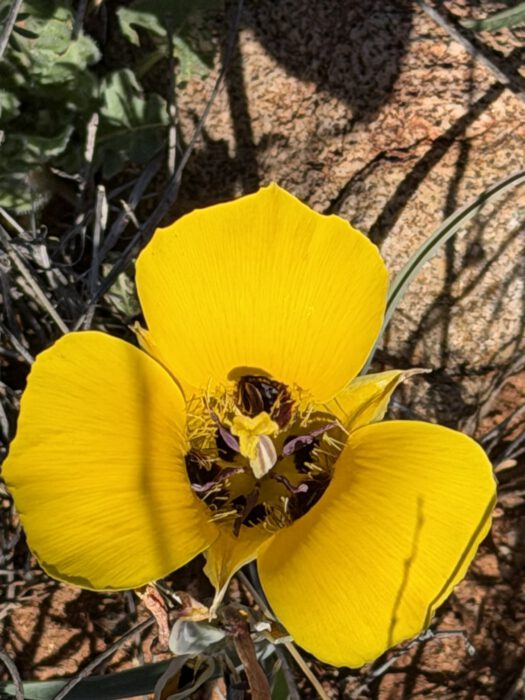
Mariposa Lilly, a true lilly, with its deep yellow flowers and complimentary maroon stamens truly is a delight. It too possesses edible corms and along with Papago Lilly was/is eaten not only by wildlife, but also by humans.
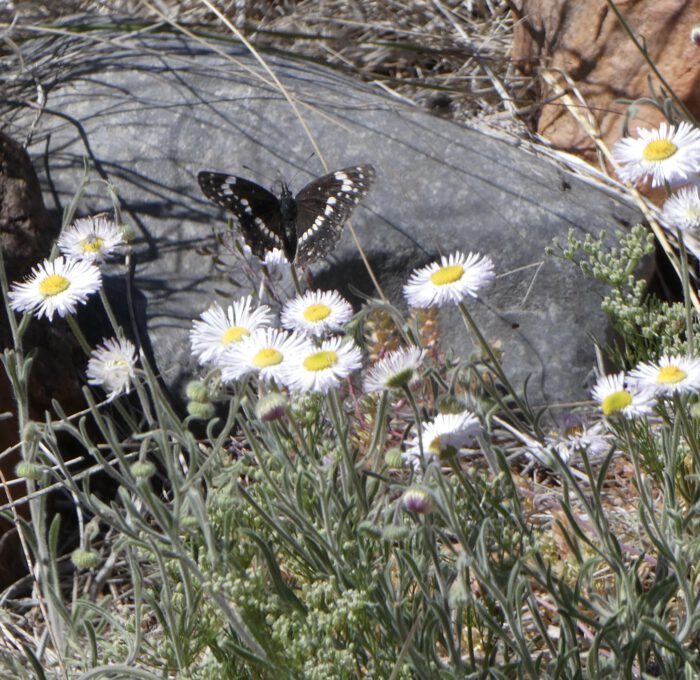
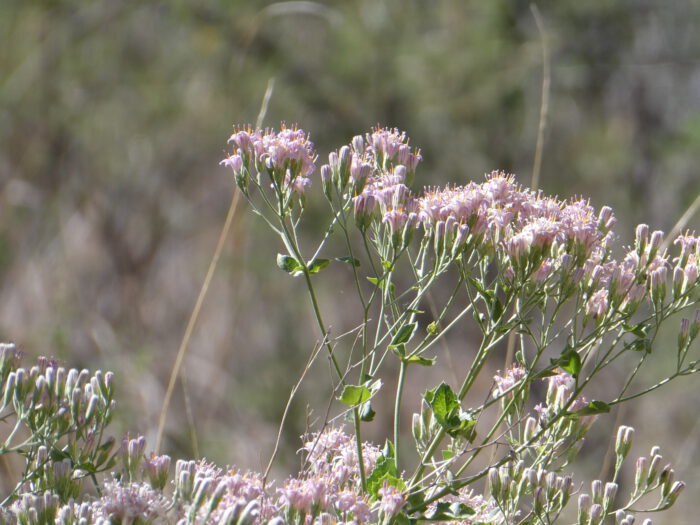
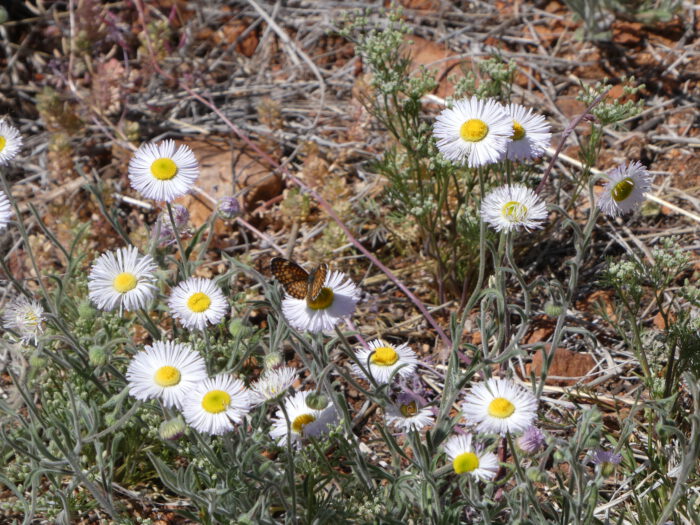
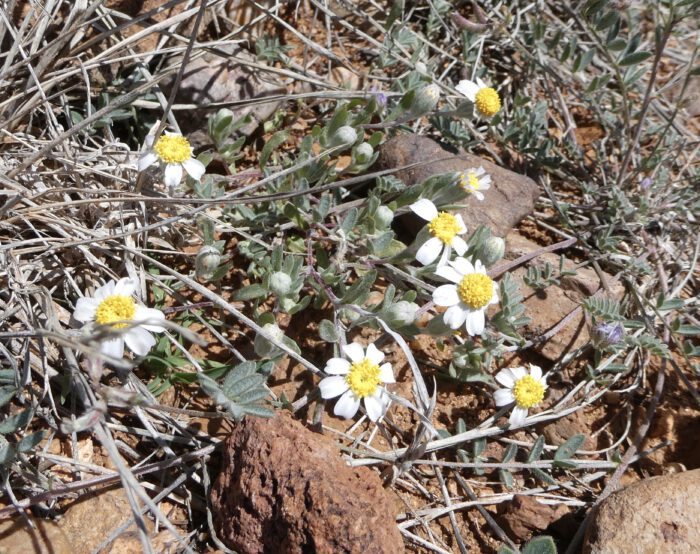
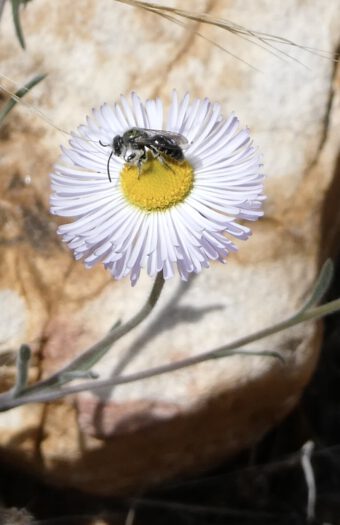
Adapted to reproduce as an annual, biennial, or short-lived perennial, Spreading Fleabane covers all bets in its efforts to reproduce the next generation. Along with many other winter/spring wildflowers, it attracts both butterflies and native bees. Come monsoon season it may flower a second time.
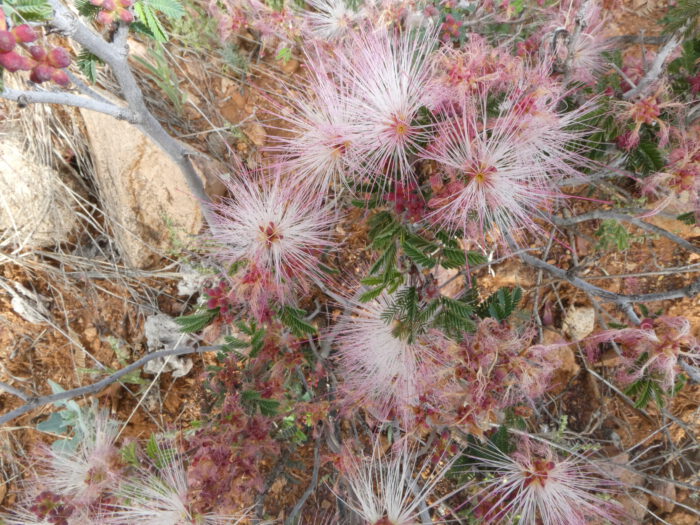
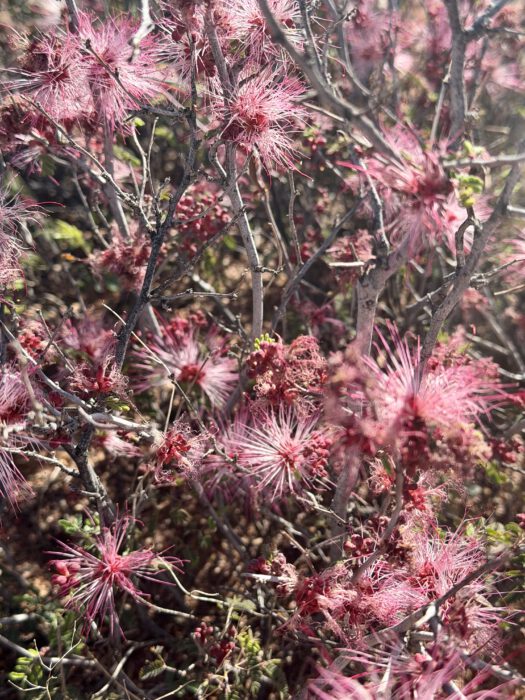
Another adaptable plant that often first flowers in the cooler months is the sub-shrub Fairy Duster. Lacking obvious petals, this species nonetheless is quite eye-catching. The long pink-red stamens serve to lure in pollinators, including large sphinx moths and hummingbirds. Fairy Dusters often flower in both monsoon season and autumn as well. Whenever they heavily bloom, this species infuses the air with its sweet aroma – a come hither clue to pollinators.
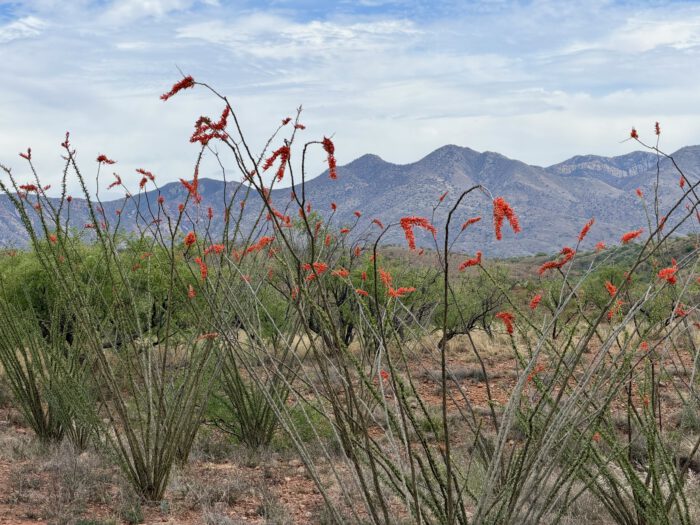
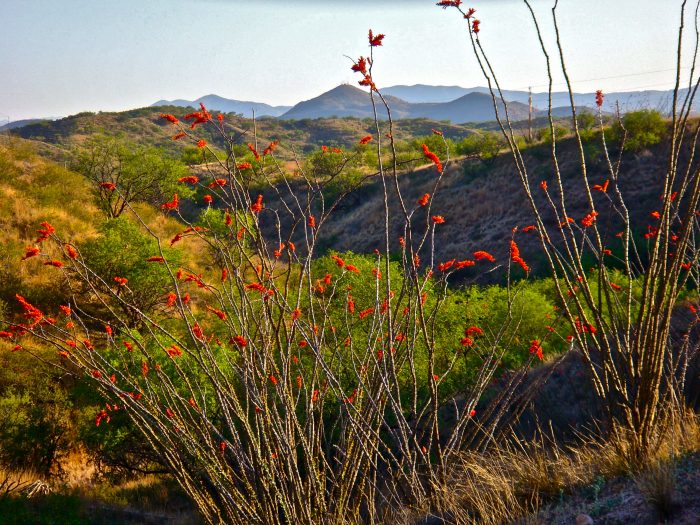
Perhaps the penultimate winter/spring wildflower resides on a rather bizarre plant. Ranging across the aridlands of the American Southwest and deep into adjacent Mexico, Ocotillo commands the botanical stage come March through early May.
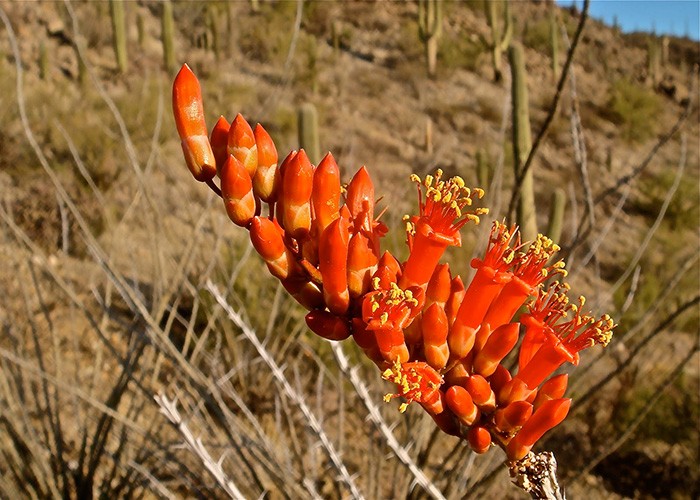
Unlike many plants, this species flowers regardless of rains, relying in part upon stored water and other resources to propel its reproduction.
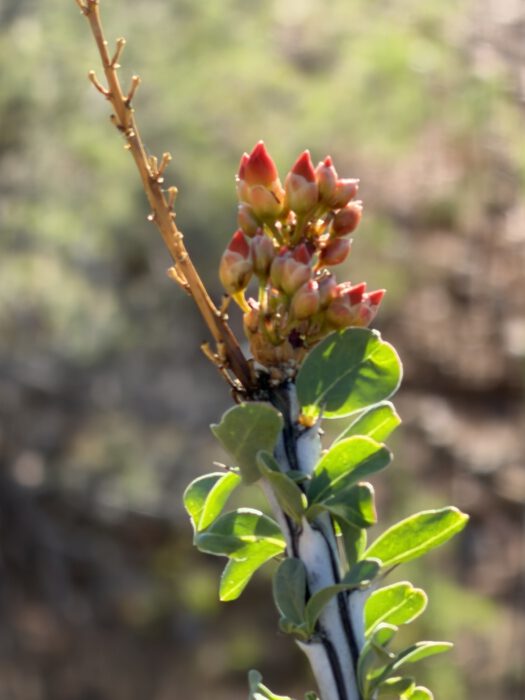
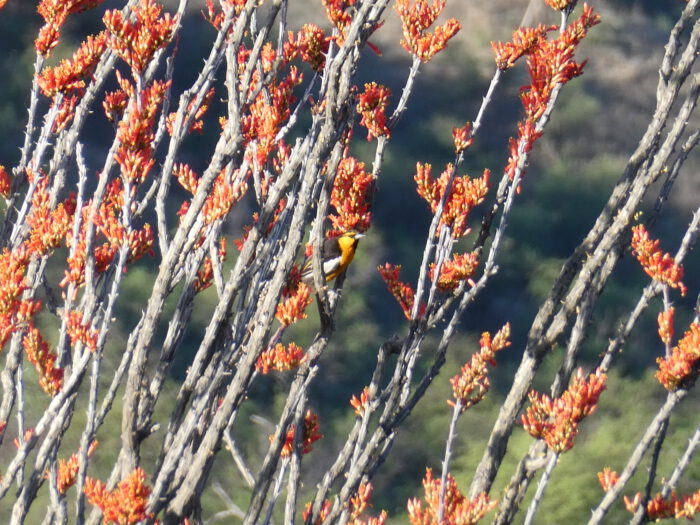
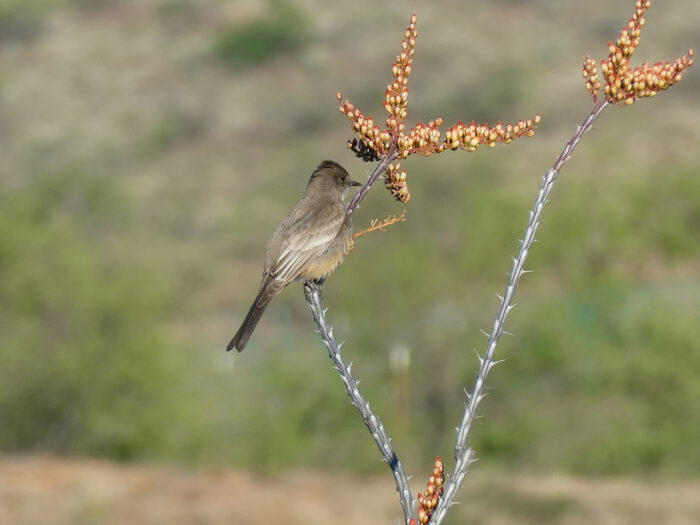
During its flowering heights, Ocotillo is a major draw for both resident and migratory birds. Its blooming time coincides with peak hummingbird migration. Other avian visitors seeking its nectar and/or pollen, as well as the flowers themselves, include: Scott’s Oriole, Bullock’s Oriole, Hooded Oriole, Pyrrhuloxia, Northern Cardinal, Black-headed Grosbeak, House Finch, Lesser Goldfinch, Lucy’s Warbler, Nashville Warbler, and Virginia’s Warbler to name a few.
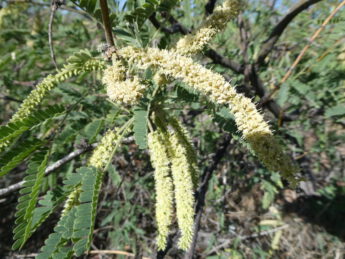
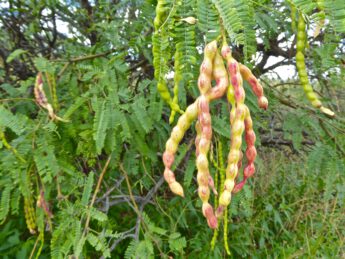
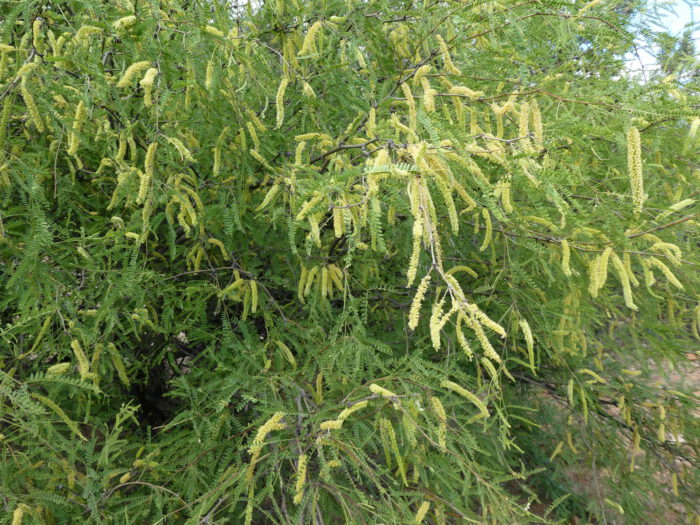
One of the most ecologically significant events of the cooler months is the blooming of Velvet Mesquite. Not only does it support a myriad of pollinators, but the resultant sweet seed pods are a staple among species ranging from small insects up to large mammals. Though Mesquites often flower again in monsoon season, March through early May is their true reproductive bastion.
Pre-monsoon Season
Starting in Mid-May and extending until about the end of June, the Sky Islands experience a hotter, drier period that would seem to negate the possibility of any flowering plants.
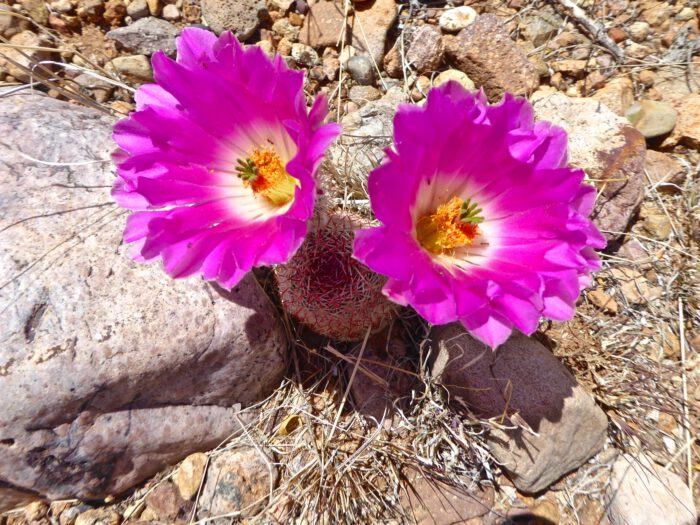
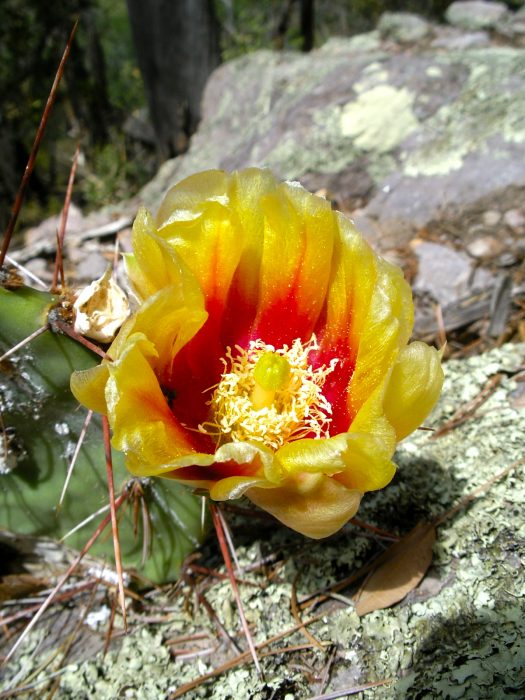
A number of succulents and other hardy native plants, however, have evolved to take advantage of the general lack of competition for pollinators. Housing perhaps the greatest diversity of bees on Earth, the Sky Islands easily fill each plant’s needs, even in the heat of the pre-monsoon.

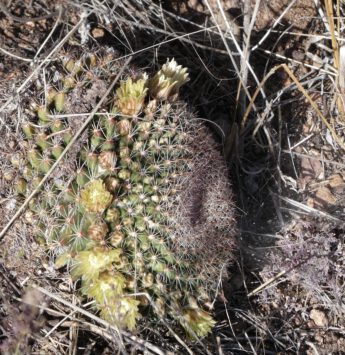
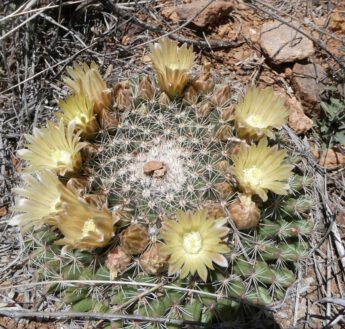
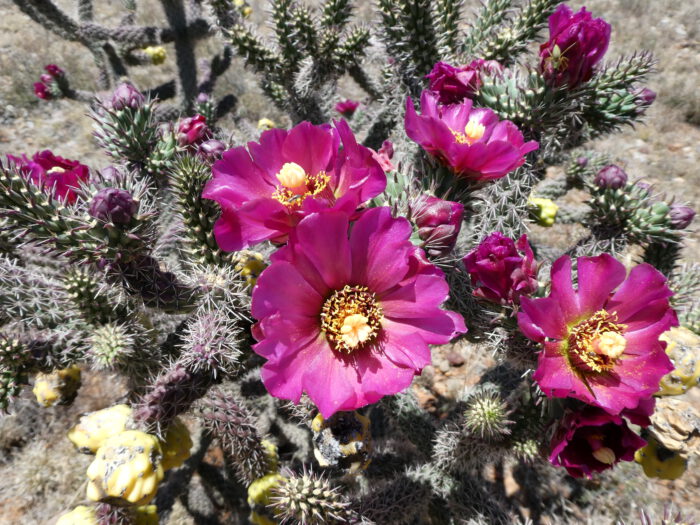
Cacti lead the way with both Cane and Jumping Chollas abuzz with bees, both small and large.
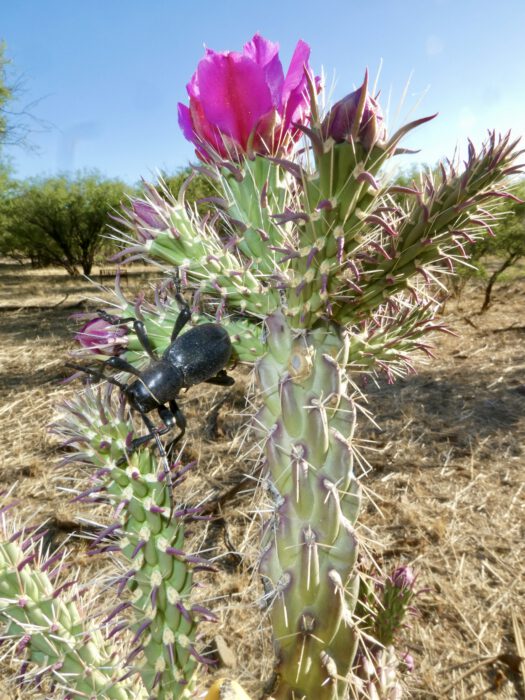
Three species of Prickly Pear – Variable, Engelmann’s, and Santa Rita – join their cousins in proffering flowers.
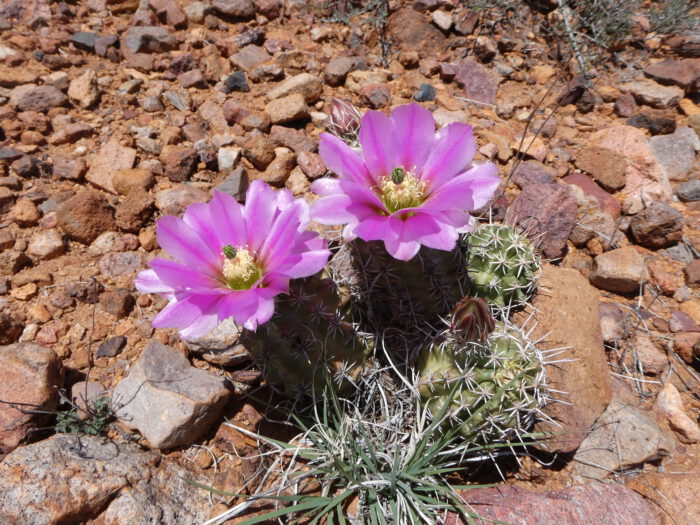
Nearer to the ground, Fendler’s Hedgehog and related Rainbow Cactus sprout large pink and magenta flowers, respectively.
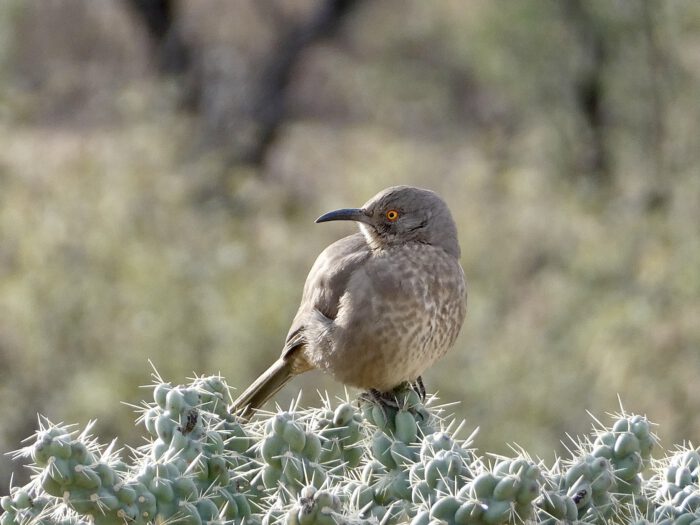
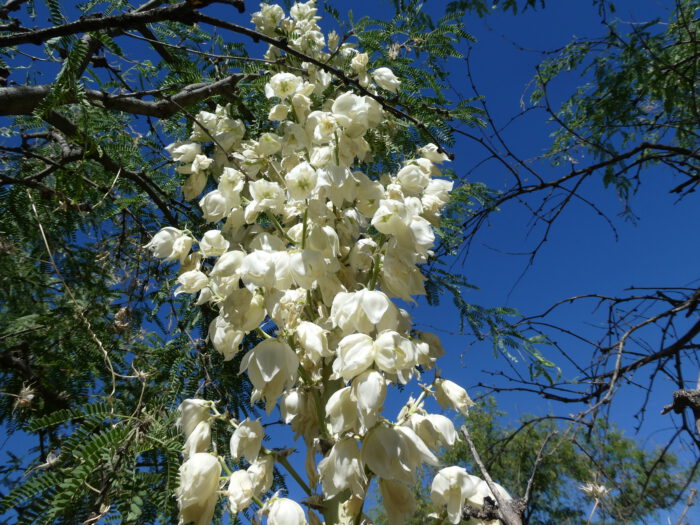
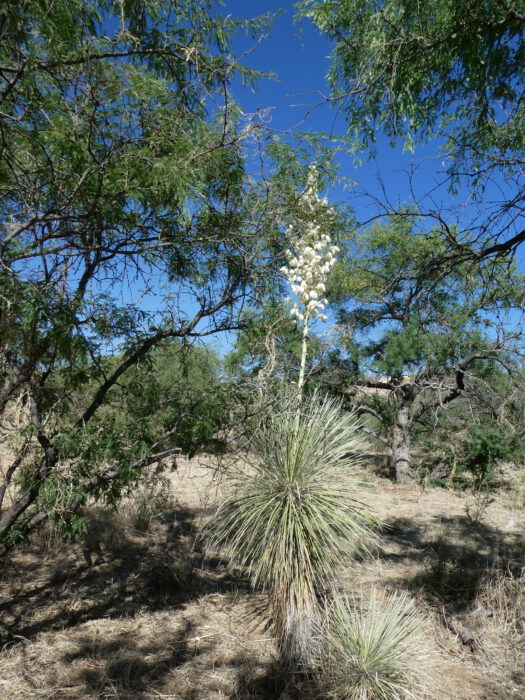
All 3 species of Yucca at Raven’s Nest – Soaptree, Mountain, and Banana – can also flower now. Each is pollinated by a lone species of small Yucca Moth unique to each plant.
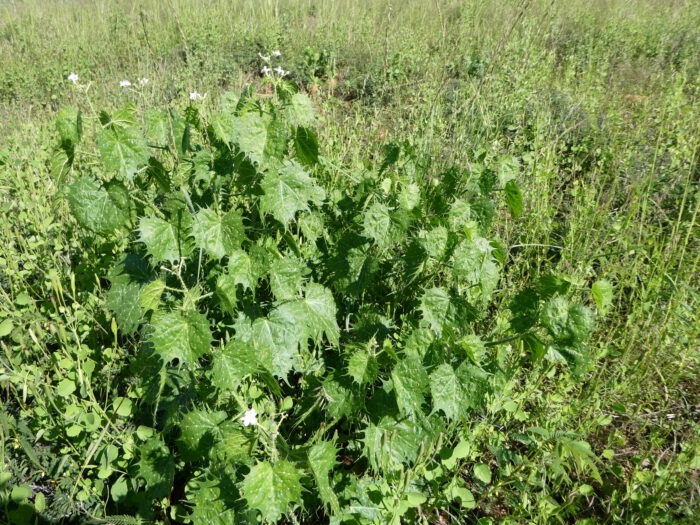
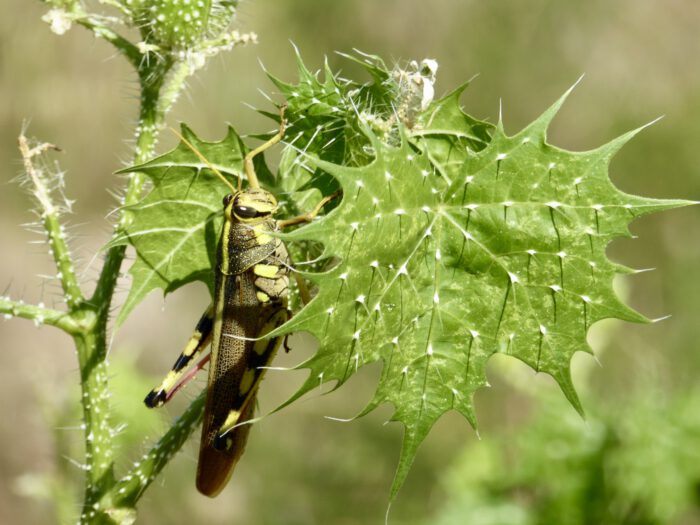
In wetter years Mala Mujer, a violently stinging plant in the spurge family, pokes above ground from its large tubers during the pre-monsoon. When its bright white flowers appear, butterflies flock to them. A second, larger flowering season follows during the summer rains.
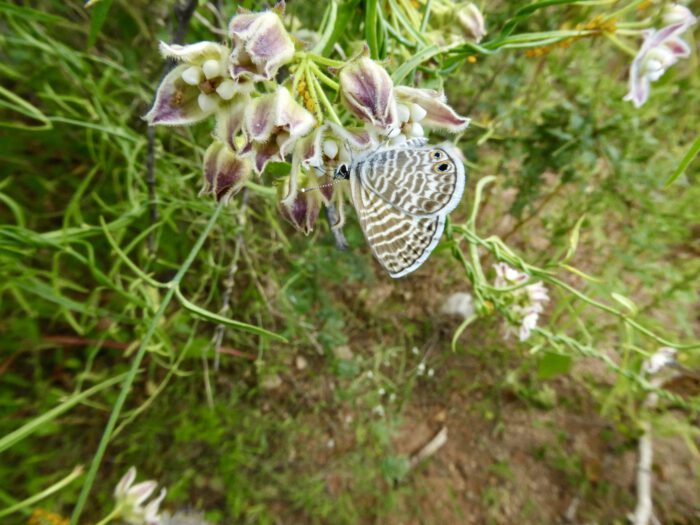
Another dual-season flowering plant at the preserve is Twinevine in the dogbane family. Trellising heavily upon itself and anything else that doesn’t move, this showy vine is a butterfly favorite. The cream pink-white blossoms smell similar to vanilla. They are followed by vanilla-like pods which contain seeds with fluff for air born dispersal.
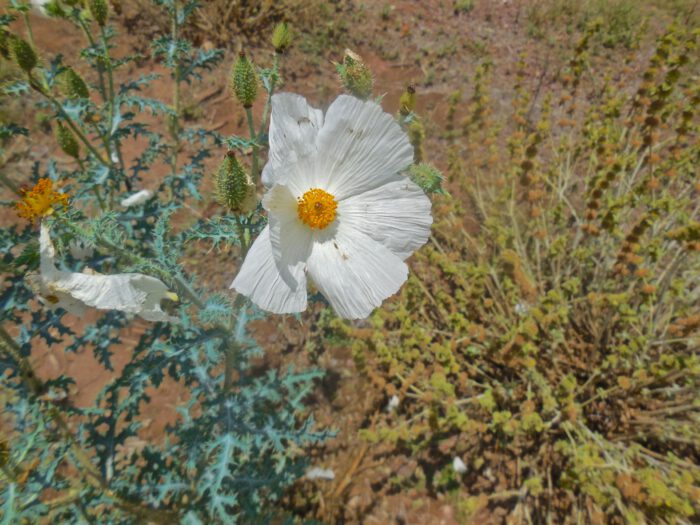
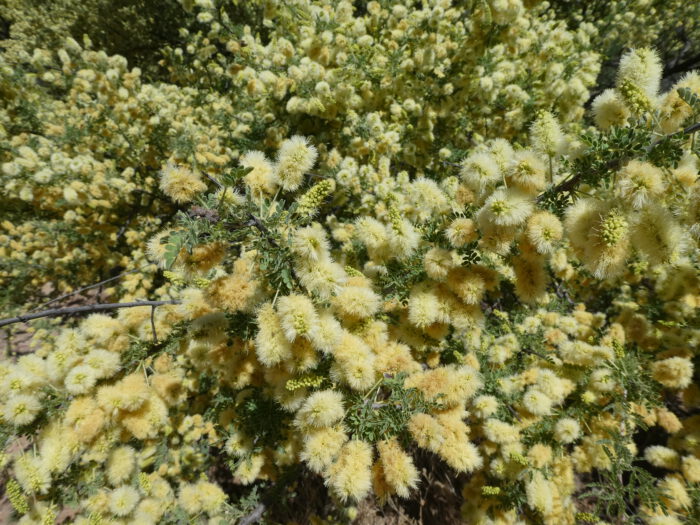
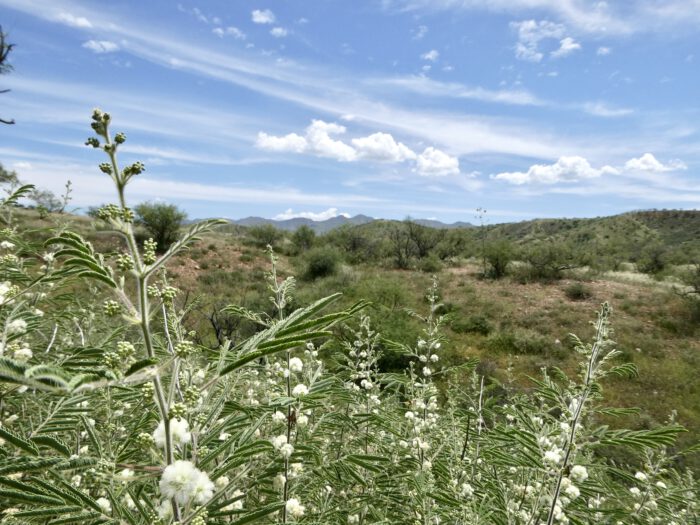
Prickly Poppy in arroyos often commands attention at this time. Following in the footsteps of its relative, Velvet Mesquite, Catclaw Acacia blooms in a transition from the winter/spring period to the pre-monsoon – generally in mid-May. Even more than its cousin, the acacias are swarmed by butterflies, bees, wasps, ants, flies, moths, and other pollinators.
Monsoon Wildflower Season
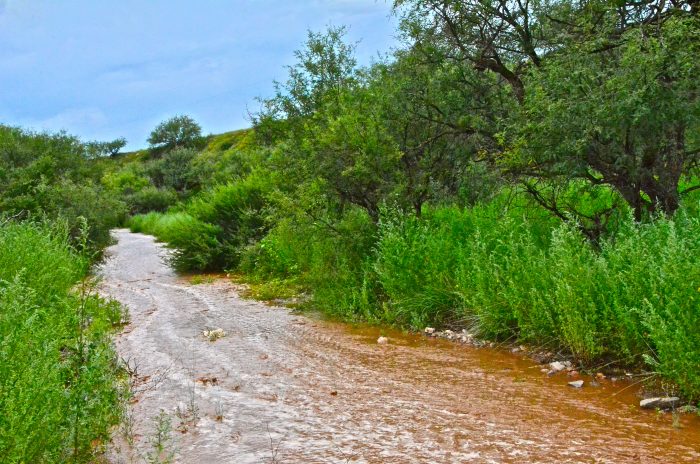
The North American Monsoon is a meterological event that profoundly affects summer weather in the Sky Islands. On average it delivers approximately 65% of the annual precipitation in the southern portion of the region.
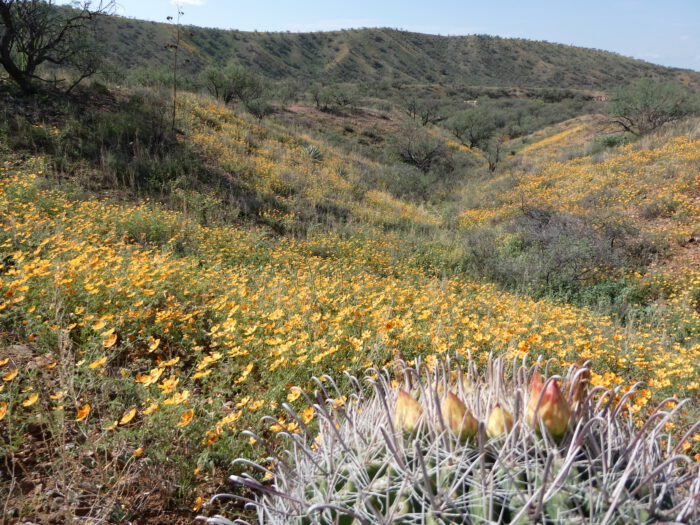
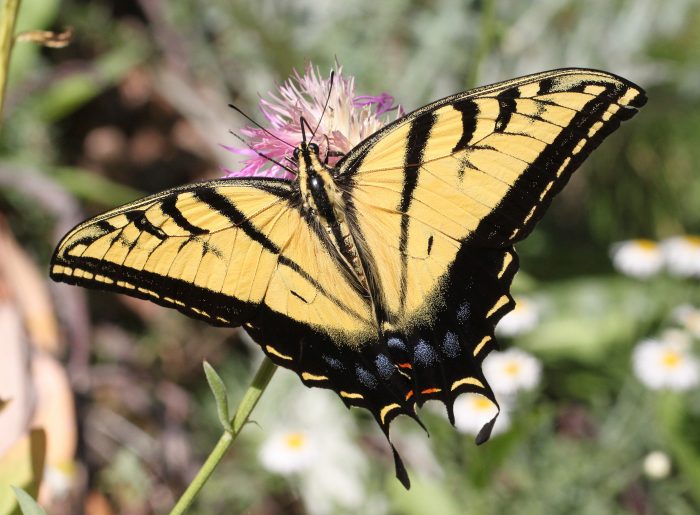
Coinciding with warmer summer temperatures, this set the stage for a truly spectacular proliferation of native plants during the monsoon, sometimes easily rivaling spectacular winter/spring wildflower years.
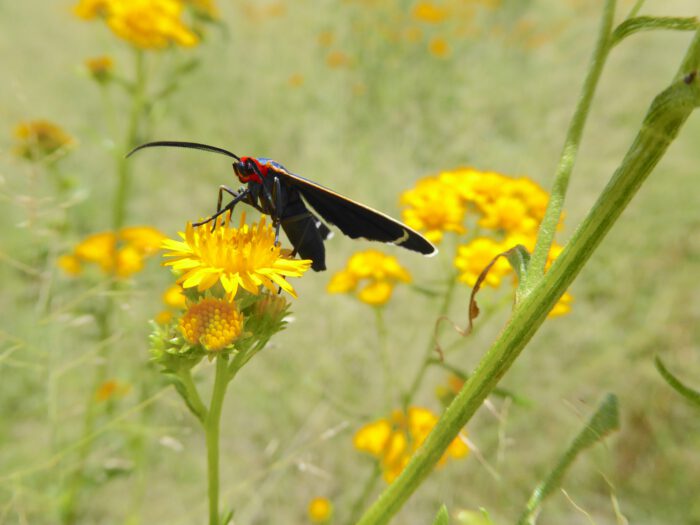
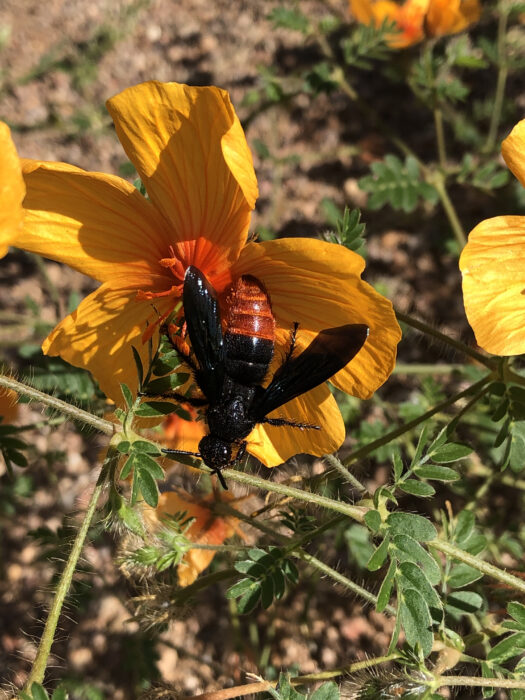
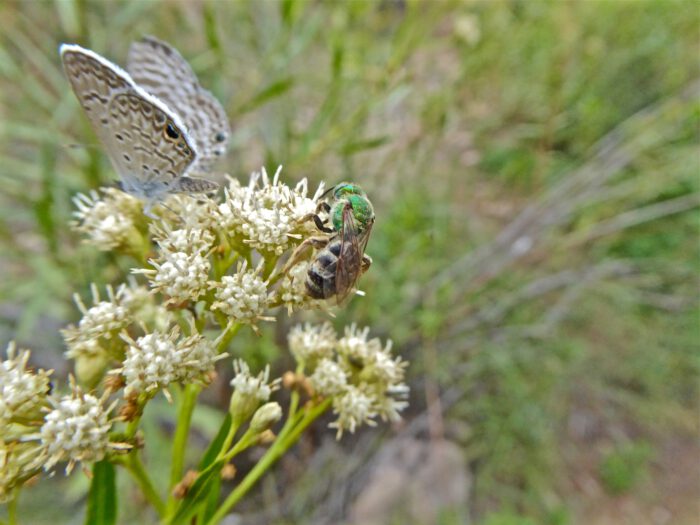
If the first significant rains arrive in June, which is sometimes the case, many plants start to sprout in anticipation of further precipitation. More often, the real rains arrive in early July in the form of afternoon thunderstorms or even more gentle soakers.
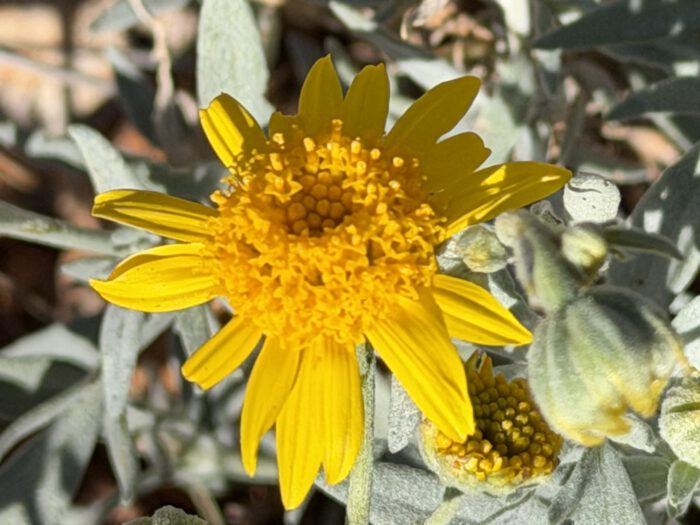
Now the botanical race is on with a broad diversity of plants emerging to mate while soil conditions remain wet. Tuberous plants such as Saya with its ostentatious orange flowers, Orange Flame Flower, and Jagged Jatropha all spring to life. These and other perennial wildflowers dominate the summer blooming period.
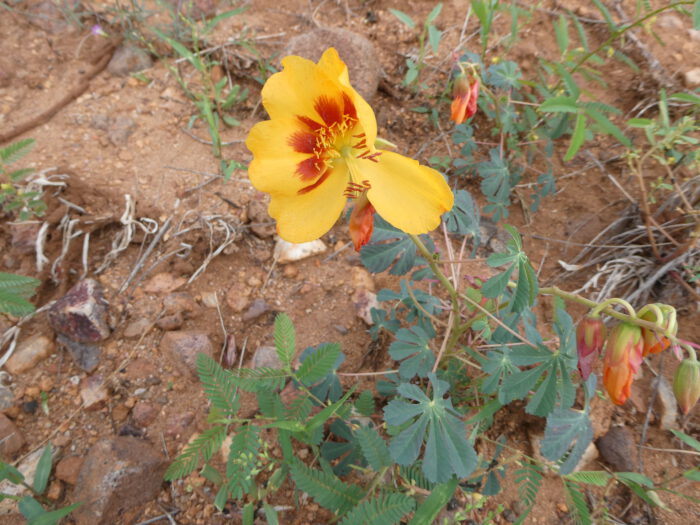
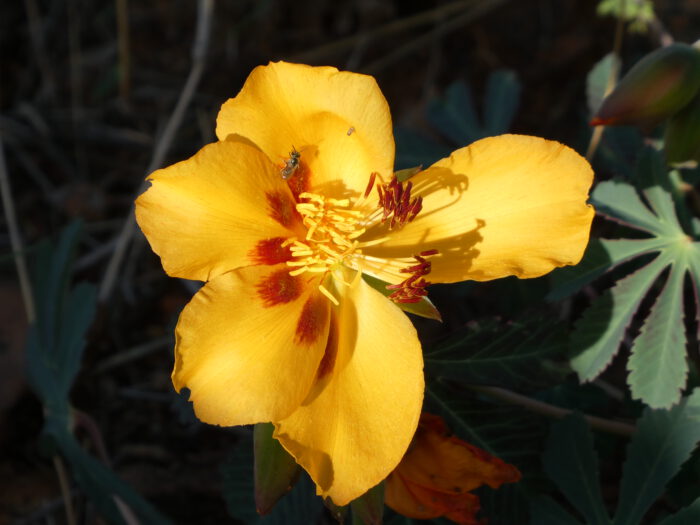
Ranging all the way south to Colombia, Saya occurs only within a few southern-tier counties in the entire U.S. The whole plant – especially the large starchy tubers – were historically consumed by many traditional cultures across the plant’s broad range. Meanwhile, select pollinators are drawn in by the large flowers that literally flag them down. Native solitary bees in particular are effective pollinators of Saya.
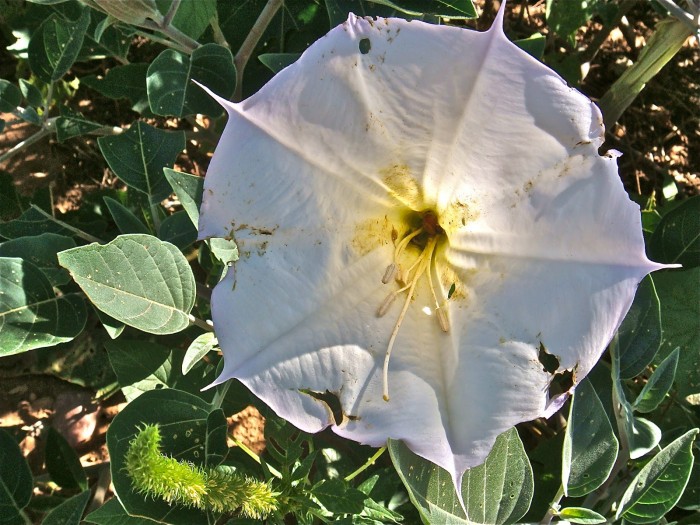
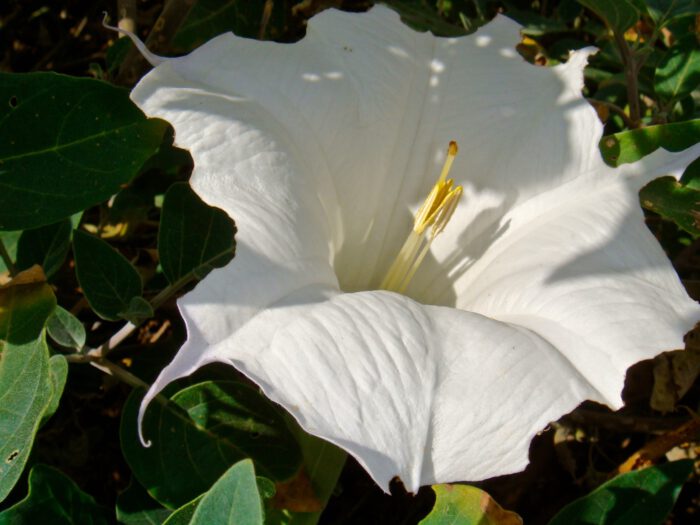
Night-blooming Sacred Datura also thrives during monsoon season. Its huge white flowers lure in hummingbird-like sphinx moths, beetles, bees, and even nectar feeding bats.
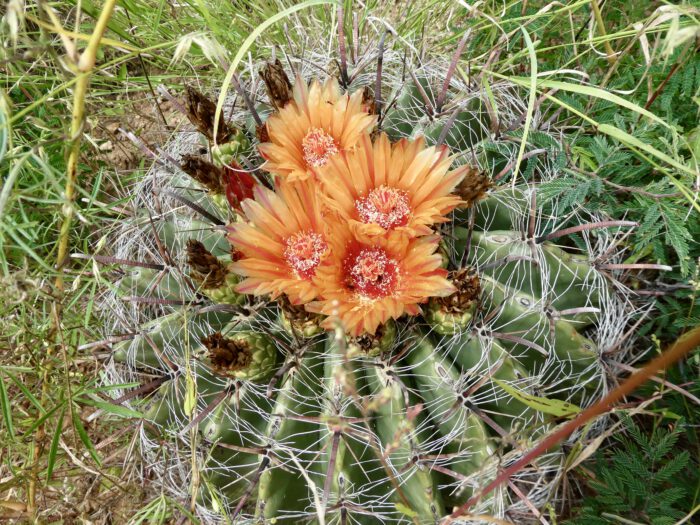
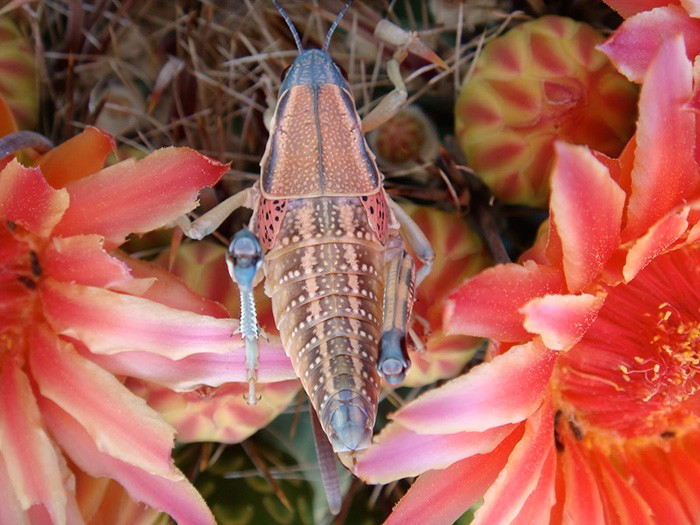
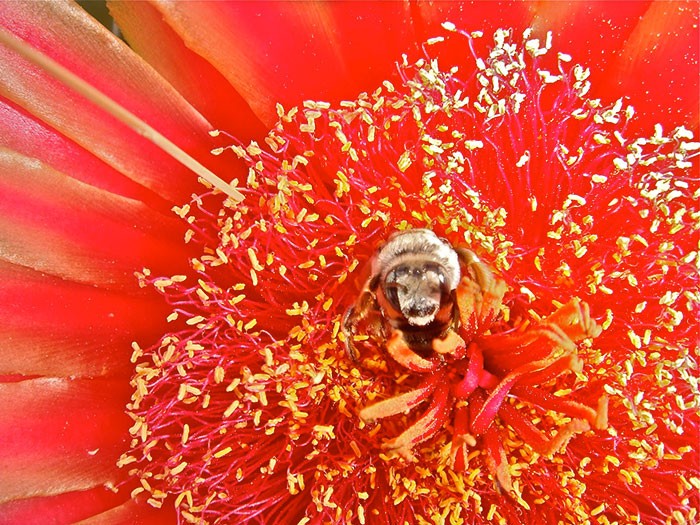
Bucking the cacti trend of late spring or pre-monsoon breeding, Fishhook Barrel Cactus flowers in July and August. It employs native bees as pollinators, who often disappear in the numerous stamens of the blooms. It is not unusual for this fiercely-spined, massive cactus to simultaneously display unopened flower buds, fully opened flowers, and setting fruit.
This iconic and striking cactus is common at Raven’s Nest Nature Sanctuary. It has a plethora of wilderness survival uses, including: fishhooks, food – buds, fruit flesh, and seeds, music – carefully plucked spines, and emergency liquid in lieu of water. Another, potentially life-saving use is as a natural compass. Most Fishhook Barrel Cactus individuals lean decidedly south, allowing lost people to navigate with some level of certainty.
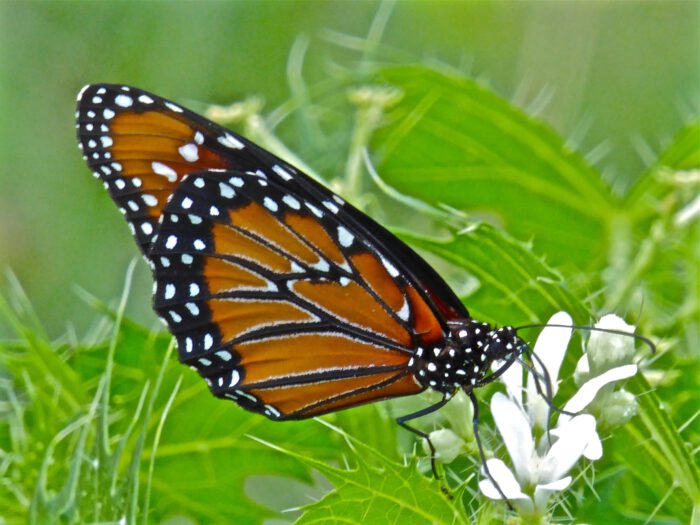
It’s not all perennial wildflowers stealing the spotlight in monsoon season. Several species of Summer Poppy – actually in the caltrop family along with Creosote Bush and not a true poppy at all – may blanket the ground when rain is abundant.
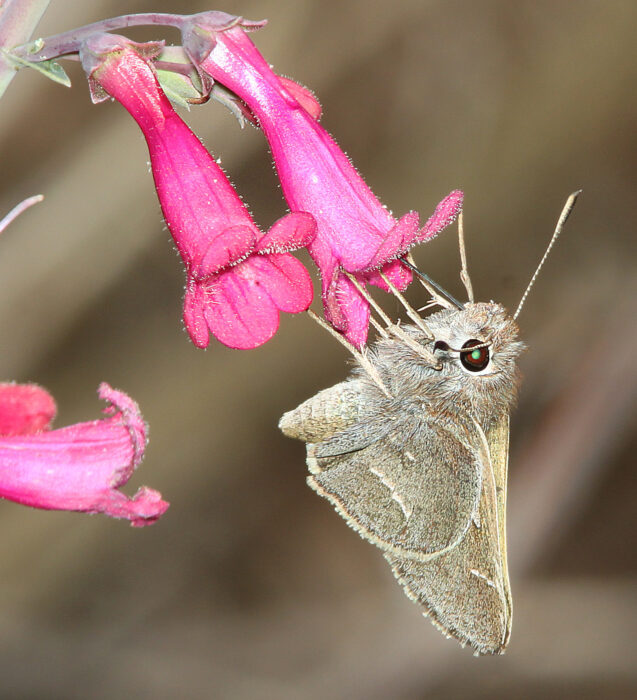
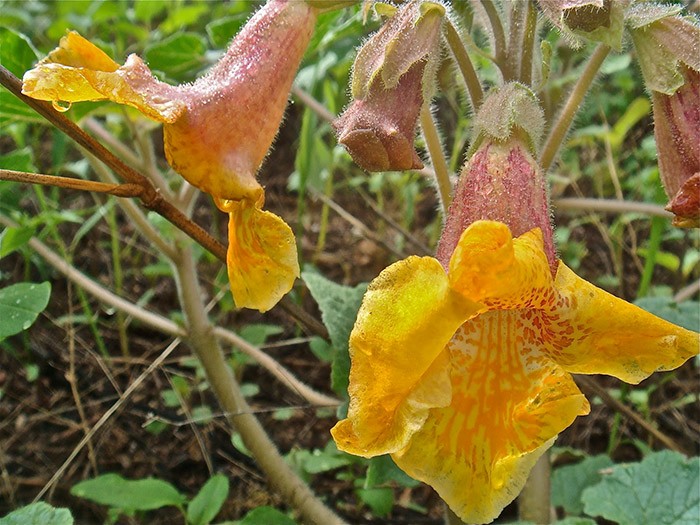
Meanwhile, both perennial and annual Devil’s Claws burst onto the summer scene. Each of these bizarre plants produces the namesake seed pods which split into a botanical set of calipers. Once dried, they lay in wait to hitchhike on a passing mammal, such as a deer or human.
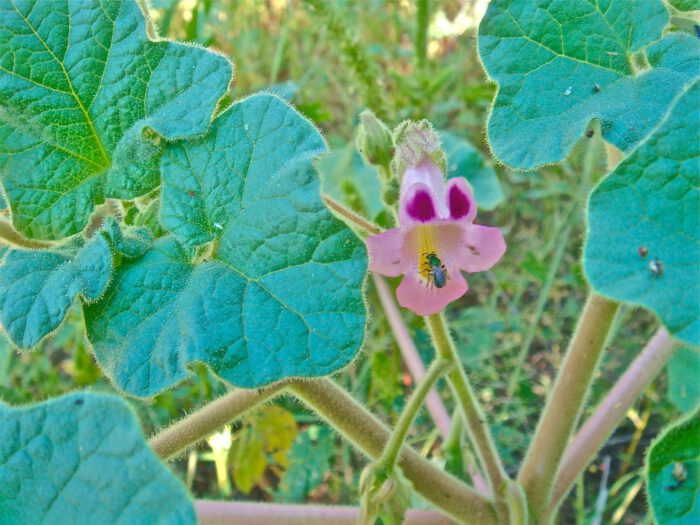
Once caught on an appendage, the seed pods get dispersed both near and far. The most effective dispersal agents of Devil’s Claw species were likely extinct Pleistocene mega-fauna such as native horses, giant ground sloths and mammoths.
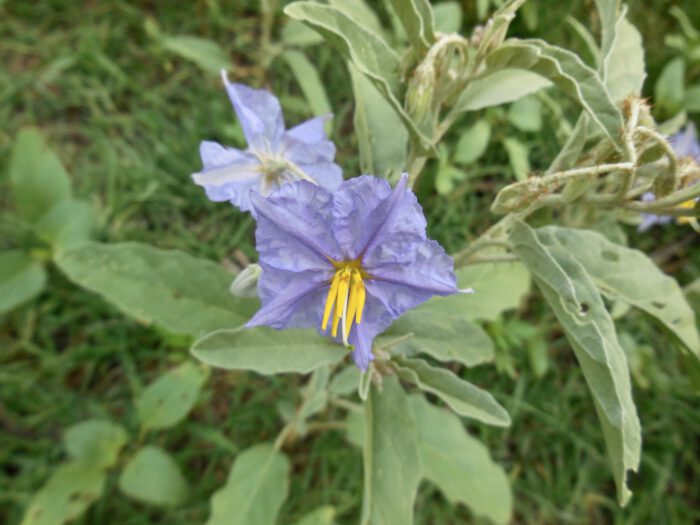
Shrubs, trees, and vines also join the monsoon breeding frenzy, which often collectively renders the landscape a visual proxy of Costa Rica!
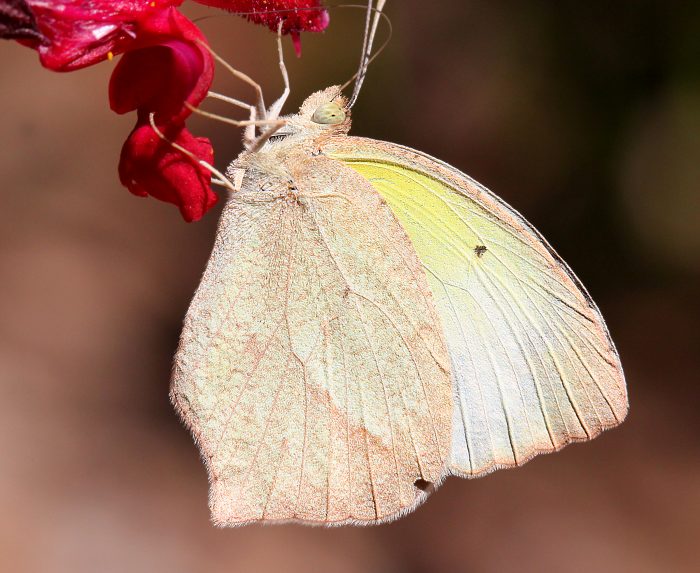
Two species of Catclaw Mimosa – one with spherical white flowers and the other with cylindrical pink one – bloom in summer and are a favorite of nectaring butterflies. So too the white flowers of related Fern Acacias.
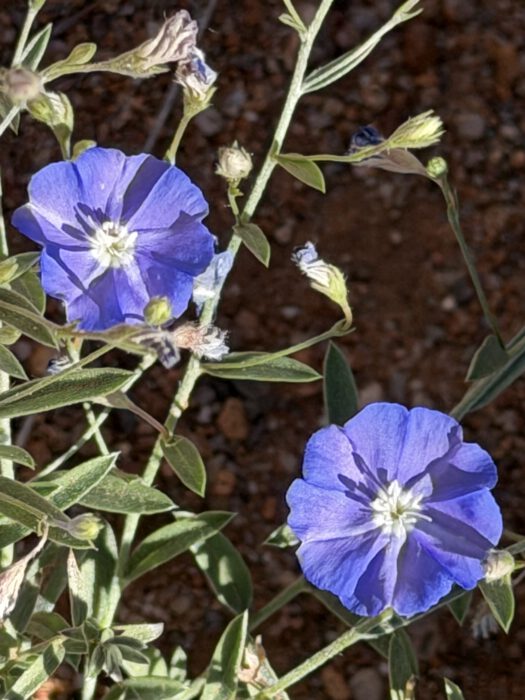
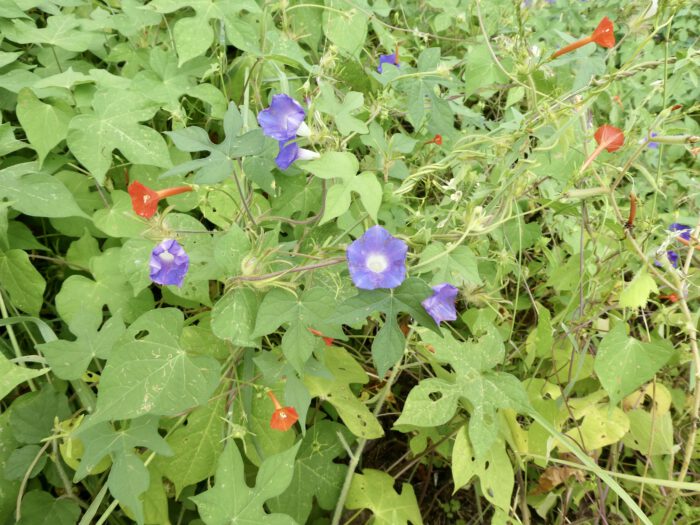
Various species of vining Morning Glorys trellis up trees and shrubs, eventually producing tubular flowers heavily patronized by hummingbirds. Other summer vines include trailing Loco Melon with its deeply sweet yellow flowers and climbing Wild Cucumber that sprawls up woody plants.
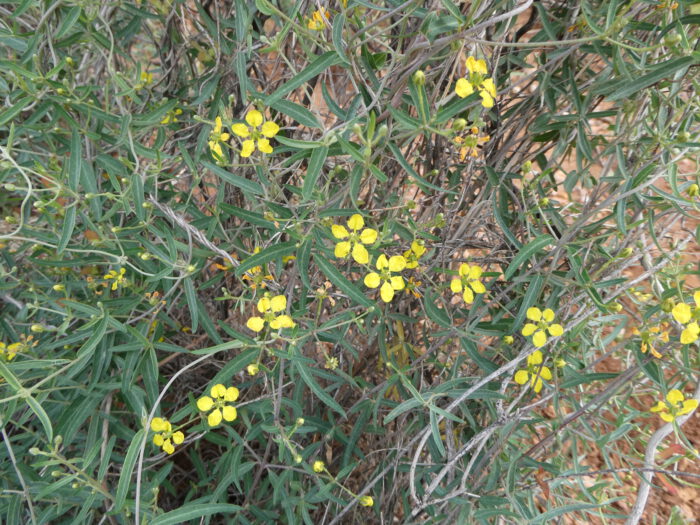
Among the most unique and tropical vines at Raven’s Nest Nature Sanctuary is Janusia. This dainty vine wraps both around itself and woody plants.
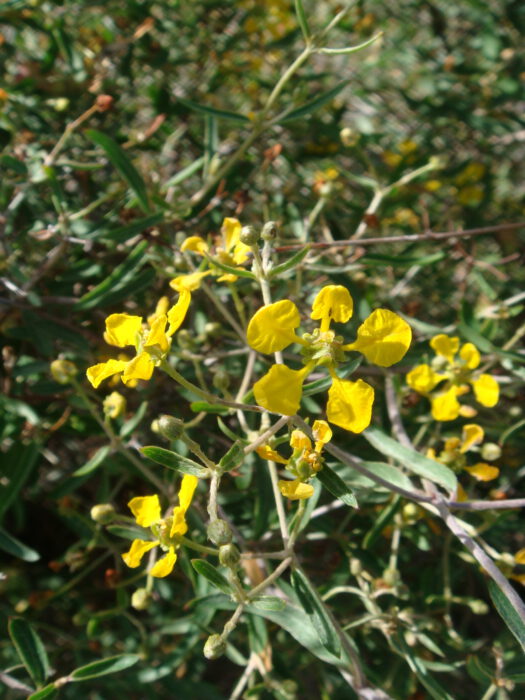
The yellow flowers of Janusia are rare among North American plants in that the flowers offer visiting pollinators – mainly Pale Digger Bees in this case – a specialized floral oil as a reward for their services. Normally nectar and/or pollen are the “payment” from flowers to their pollinator partners. Out of over 17,000 native plant species in the U.S., less than 1% produce floral oils as a gift to pollinators.
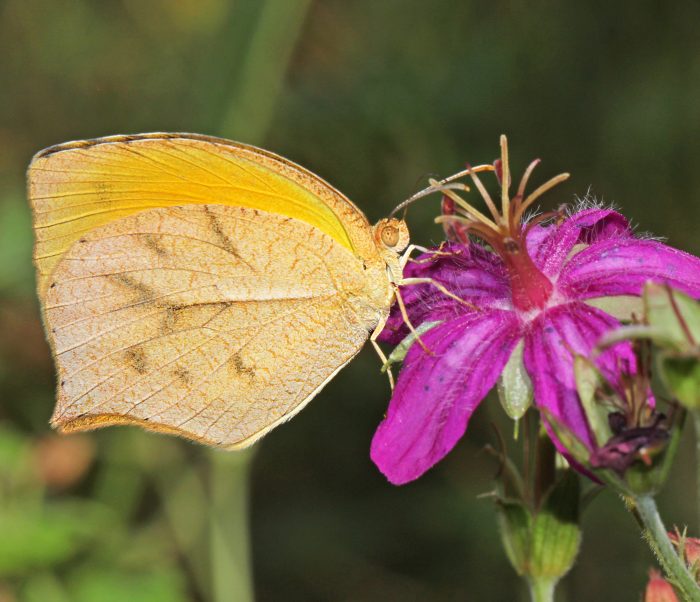
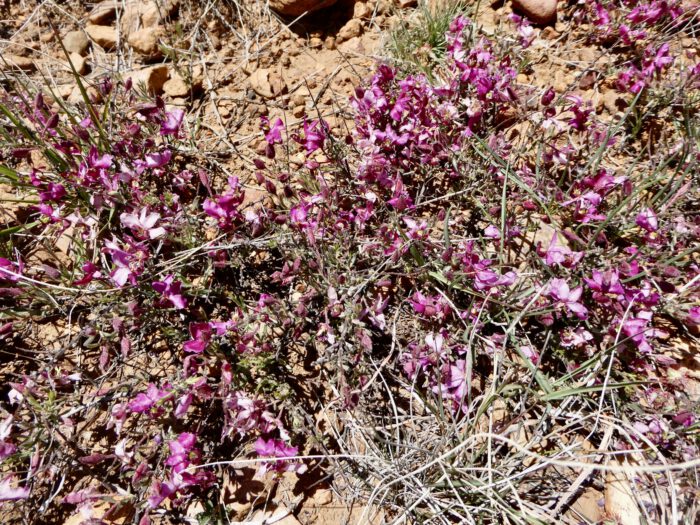
The sub-shrub Range Ratany with its orchid-like, magenta flowers also offers liquid wax to its pollinators. Digger Bees are once again the target pollinators.
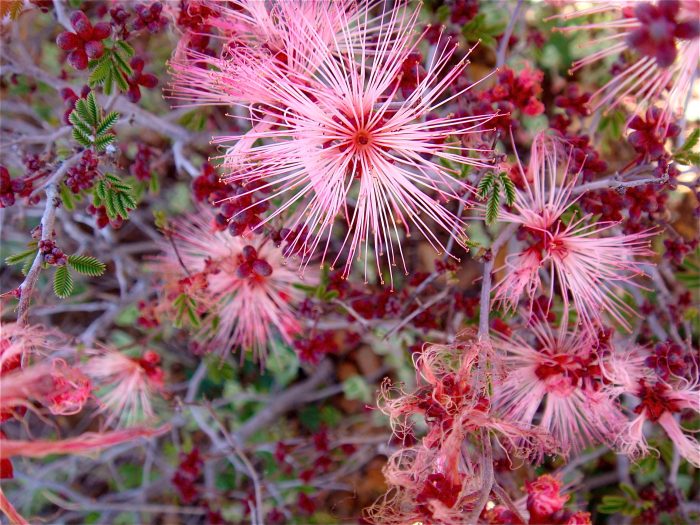
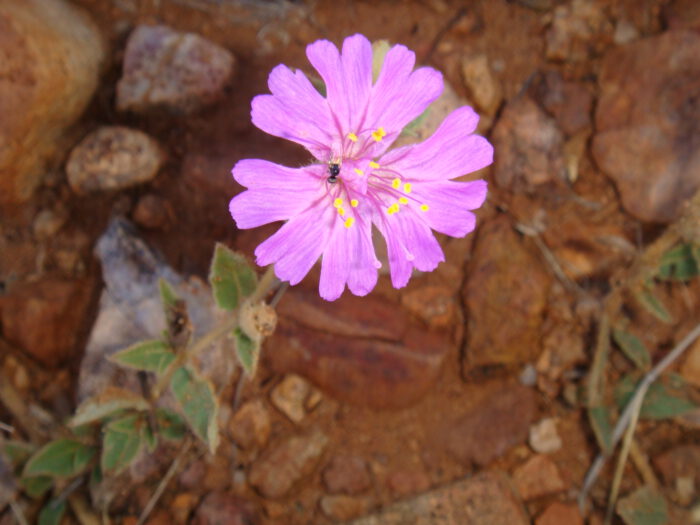
Less picky wildflower species, including Spreading Fanpetals in the mallow family, Trailing Windmills in the four-o’clock family, and leguminous Fairy Duster can bloom any time of year that sufficient moisture and warm temperatures coincide. Naturally, then, they take full advantage of monsoon greenhouse conditions.
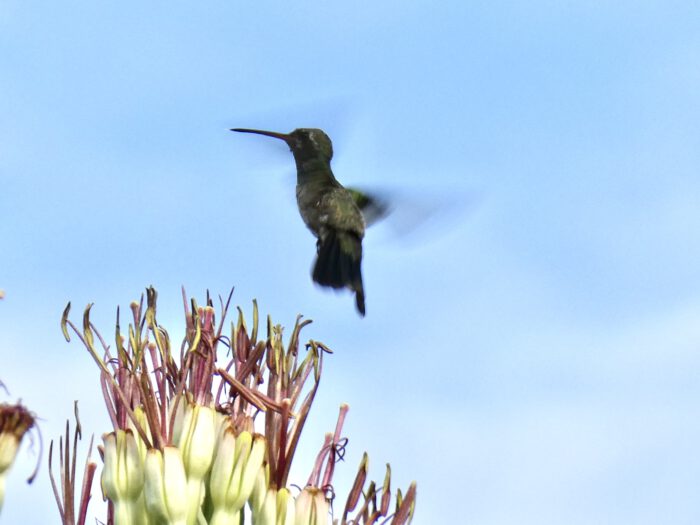
While it is hard to pick one iconic plant to represent the floral abundance of monsoon season, surely Palmer Agave is a strong candidate. This giant succulent in the asparagus family is monocarpic, meaning that it lives for many years – generally 7 to 15 years, but up to 30 in exceptional cases – before flowering, then dying soon afterwards.
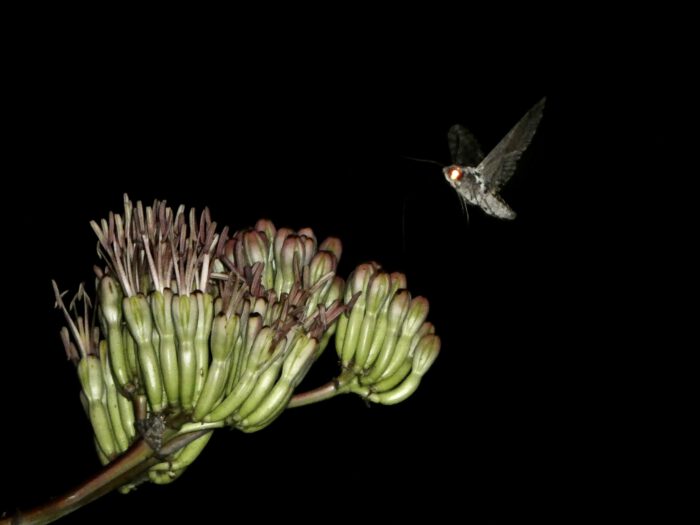
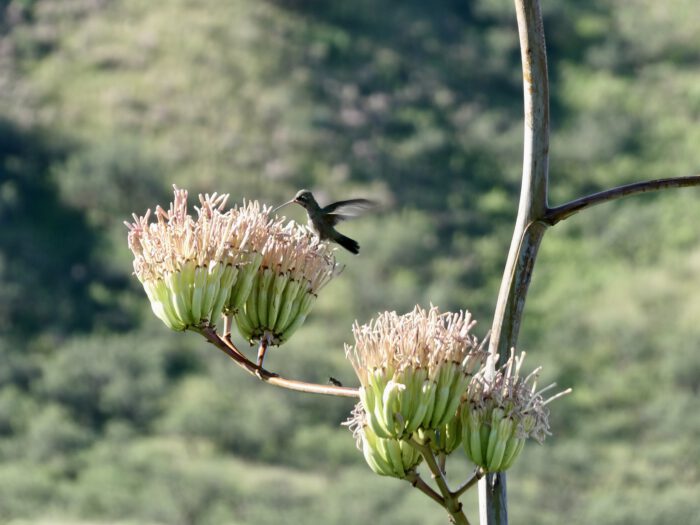
Given its extreme reproductive path, Palmer Agave has evolved to attract a myriad of potential pollinators. By day Broad-billed and other Hummingbird species faithfully visit the flowers, conveniently perched high on a flowering stalk that can reach up to 20 feet tall! Other avian visitors include various orioles, Pyrrhuloxias, House Finches, and Gila Woodpeckers. Bees, wasps, ants and other insects also visit the flowers by day.
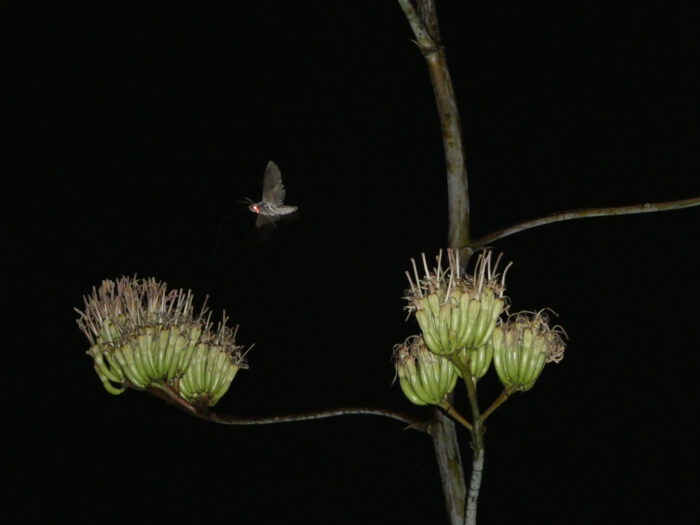
Come nighttime, the pollinators of Palmer Agave switch mainly to several species of specialized nectar-feeding bats and various sphinx moths. Since 2008, the population of Palmer Agaves has exponentially grown at Raven’s Nest, proving a boon for both wildlife and fascinated humans alike.
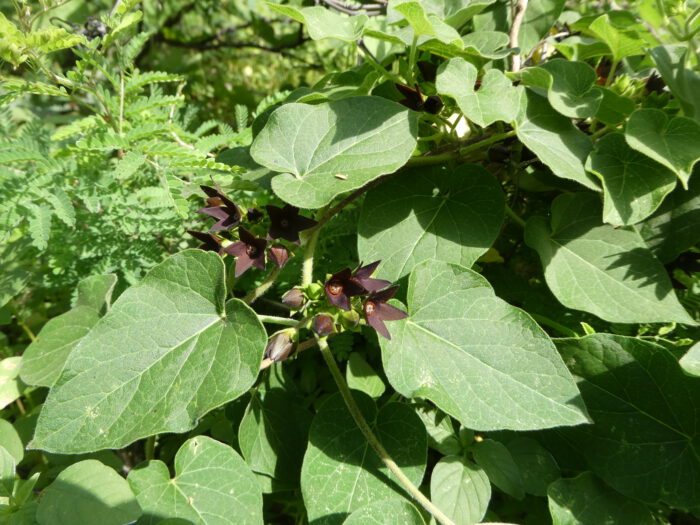
Hyper-rare in the U.S. with just a handful of recognized locales, Vulture’s Star in the dogbane family reproduces during summer. Its deeply maroon flowers seem to mimic rotting flesh in both color and scent in an effort to attract carrion-loving flies and other insects as pollinators.
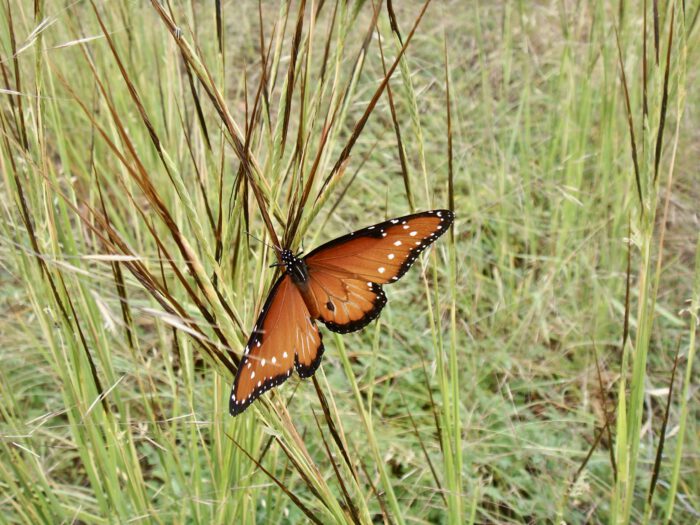
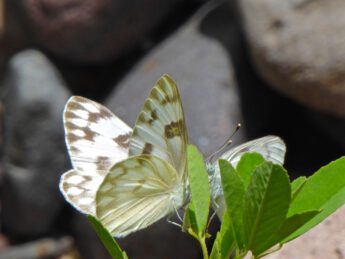
Many warm-season native grasses also bloom during the monsoon. While the flowers are non-showy, the resultant seeds are a staple of many invertebrate and vertebrate species alike. A unique relationship exists between the attractive grass Tanglehead and butterflies, particularly the American Snout. These and other species of butterfly heavily visit the curing seeds of Tanglehead.
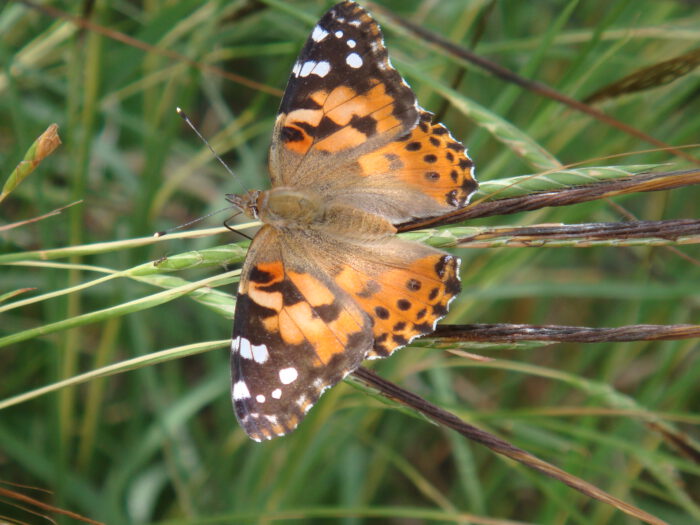
There, mainly male butterflies gain vital minerals, such as salt and other micronutrients, that they can pass on to their eventual mates as a sort of “nuptial gift”.
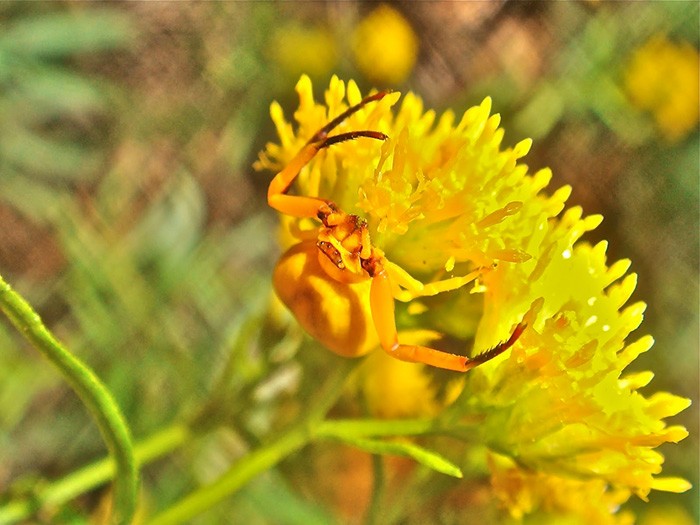
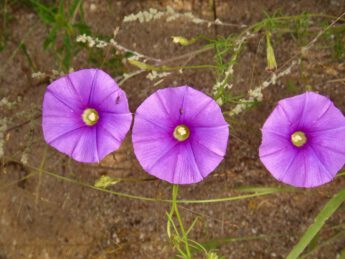
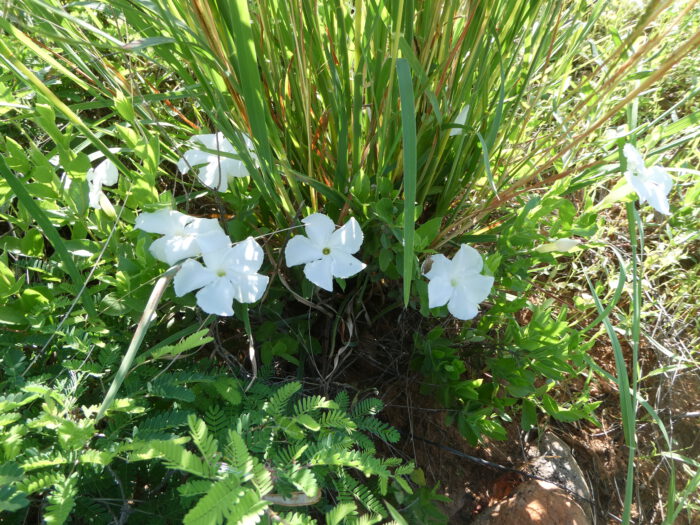
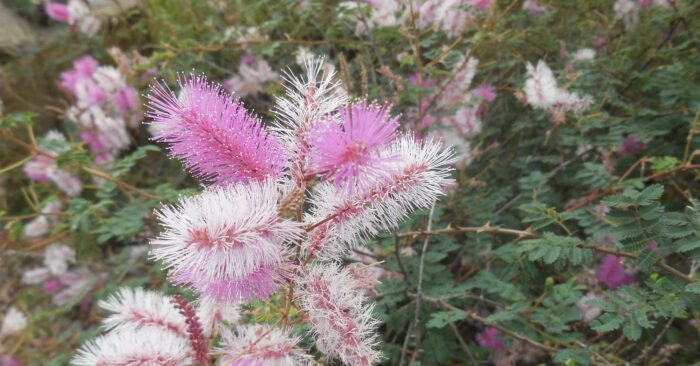
While the visual pleasures of monsoon wildflowers certainly dominate the senses, olfactory delights also abound. The “candy-cane” scent of pink Catclaw Mimosa flowers, the deeply sweet aroma of Rock Trumpets, and even the spicy smell of crushed Bolivian Cilantro leaves all add a special dimension to the monsoon floral pageant.
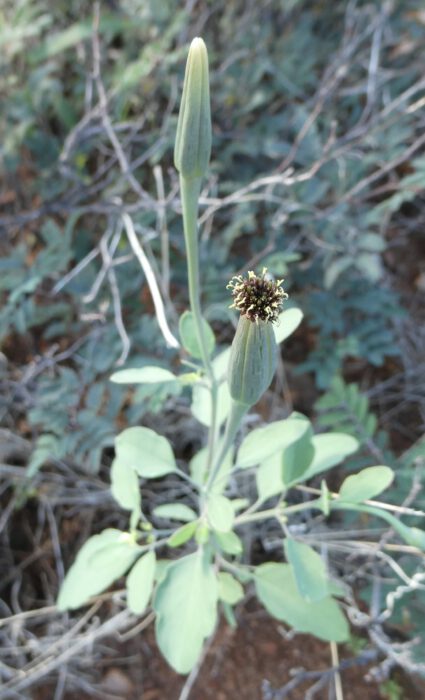
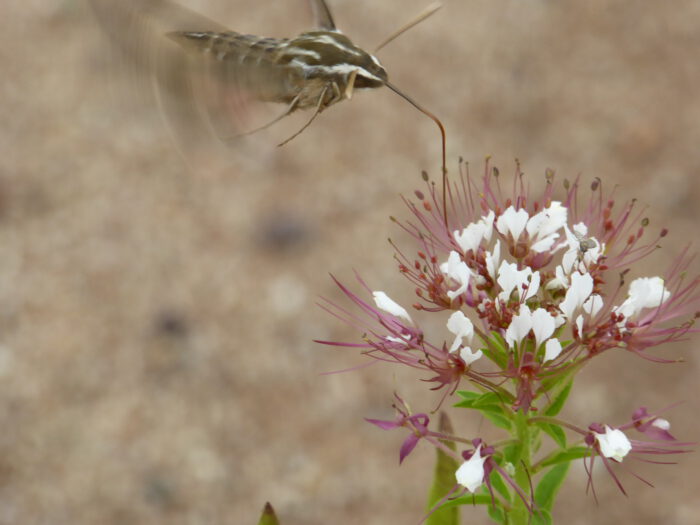
Annual Western Clammyweed lives up to its billing with sticky of “clammy” foliage and stems that serve to deter both insects and mammals seeking to consume it. The scent of the plant is a dead ringer for freshly cut green bell peppers. Its unique flowers draw in flies and sphinx moths, among others.
Autumn Wildflower Season
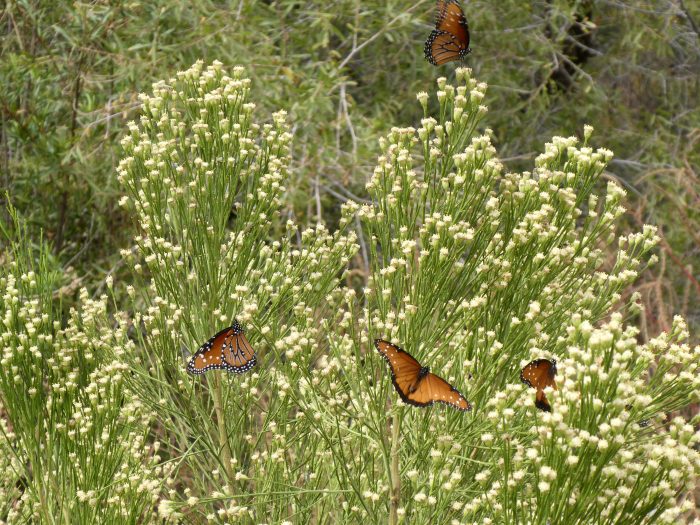
The blooming year at Raven’s Nest Nature Sanctuary concludes with fall flowers. Members of the aster family tend to dominate the flowering species at this time.
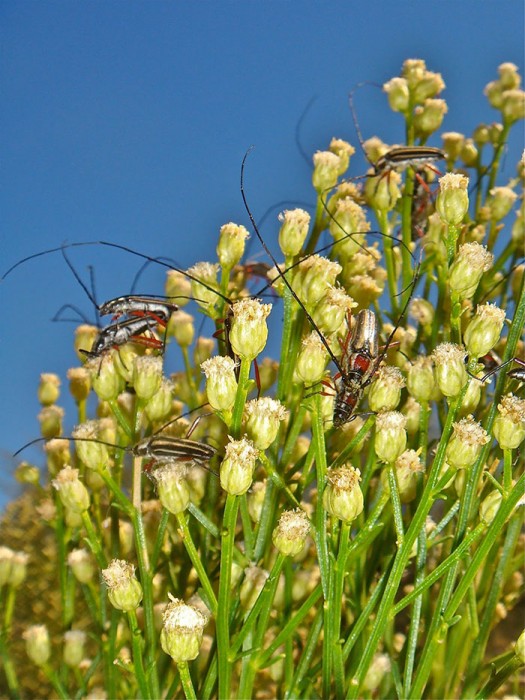
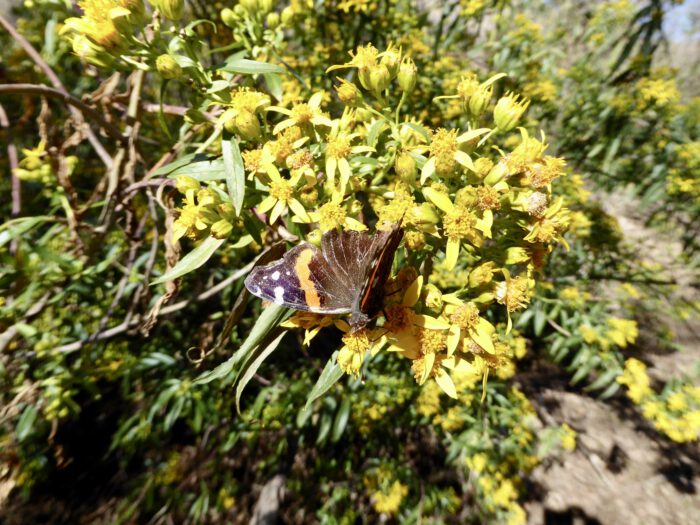
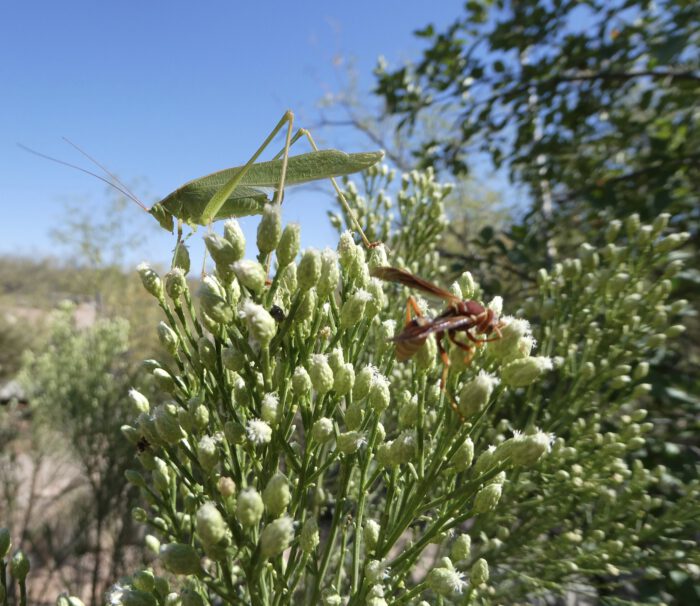
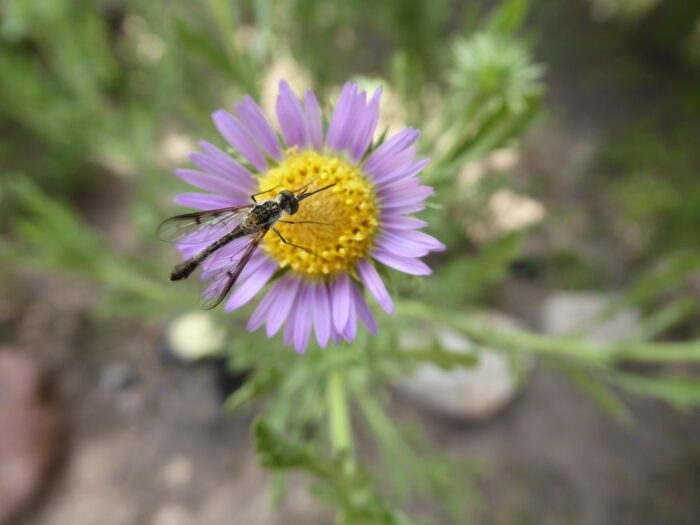
Purple Spine Aster, Grass-leaf Sleepy Daisy, and shrubby Broom Snakeweed are among the most reliable autumn wildflowers at the preserve. All serve as key pollinator resources as monsoon season comes to an end. Desert Broom in particular becomes abuzz with butterflies, beetles, wasps, bees, and other insect visitors.
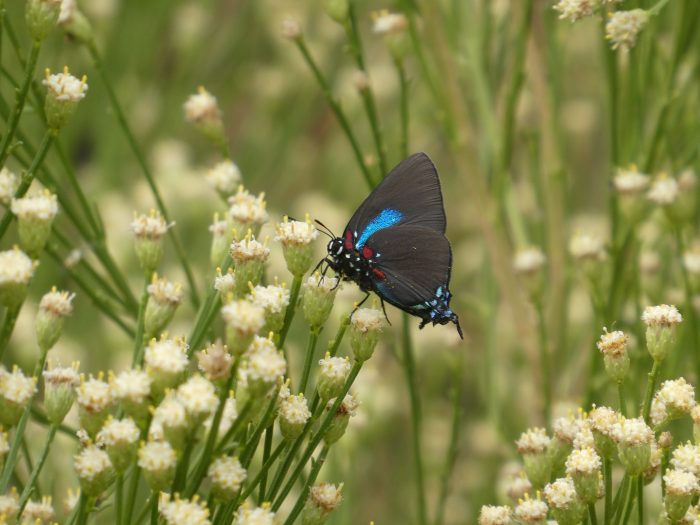
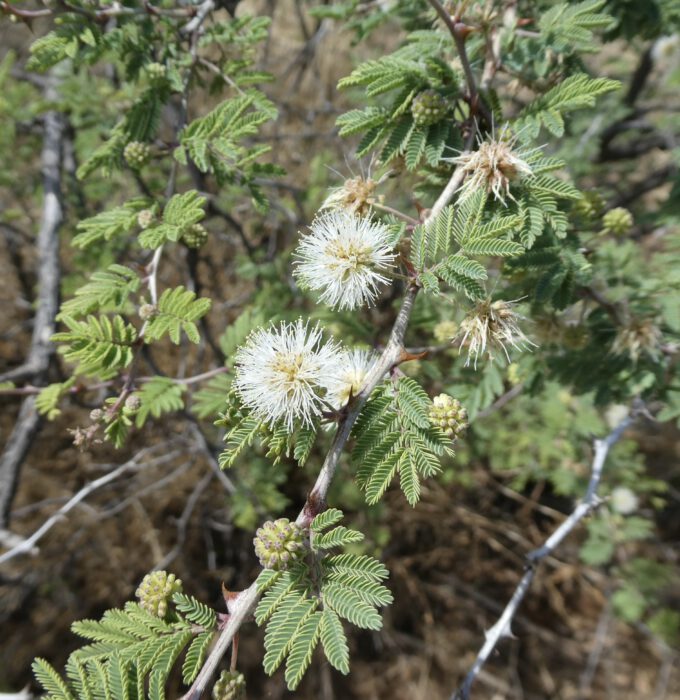
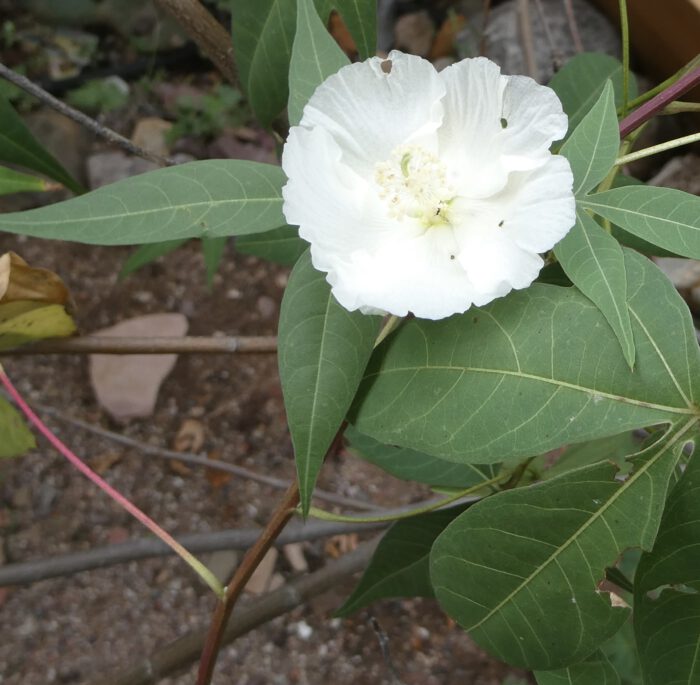
Other fall flowers include Wild Cotton, Crested Anoda, and Tropical Blazingstar. The last species barely enters the U.S. and only in a few southern Arizona counties, continuing south into Argentina.
Coming full circle, autumn and early winter rains once again bring the prospects of winter/spring wildflowers to the fore.
Mexican Specialties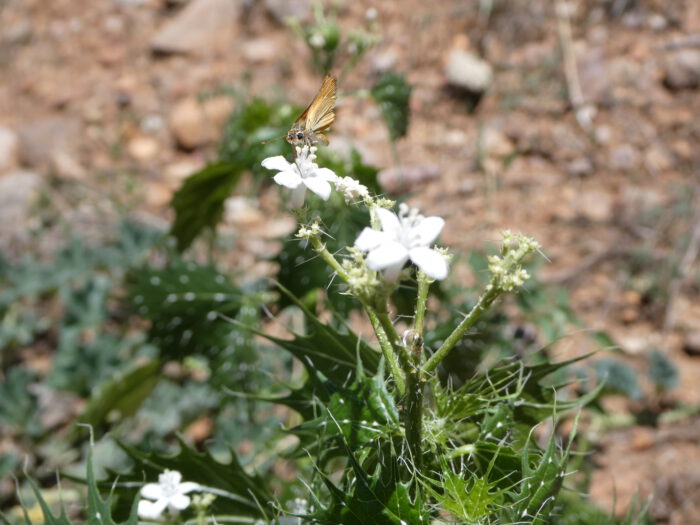
Just as with other taxa, such as birds and mammals, a good number of native plants at Raven’s Nest are “Mexican Specialty” species – ones that barely enter the U.S. from their more southerly/tropical distribution. Mala Mujer in the spurge family and Tropical Blazingstar in the stickleaf family along with many others at the preserve fall into this unique category. Ecologically and botanically speaking, then, Raven’s Nest has a strong tropical influence that makes living here more akin to a trip to Mexico or points south than the rest of the U.S.